Genady
Senior Members
-
Joined
Everything posted by Genady
-
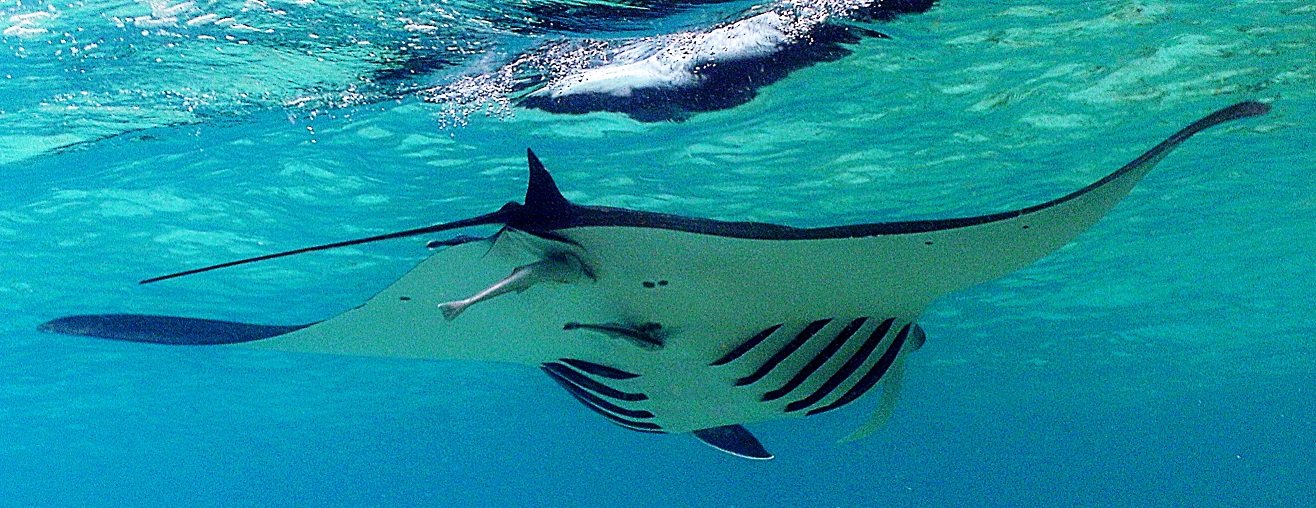
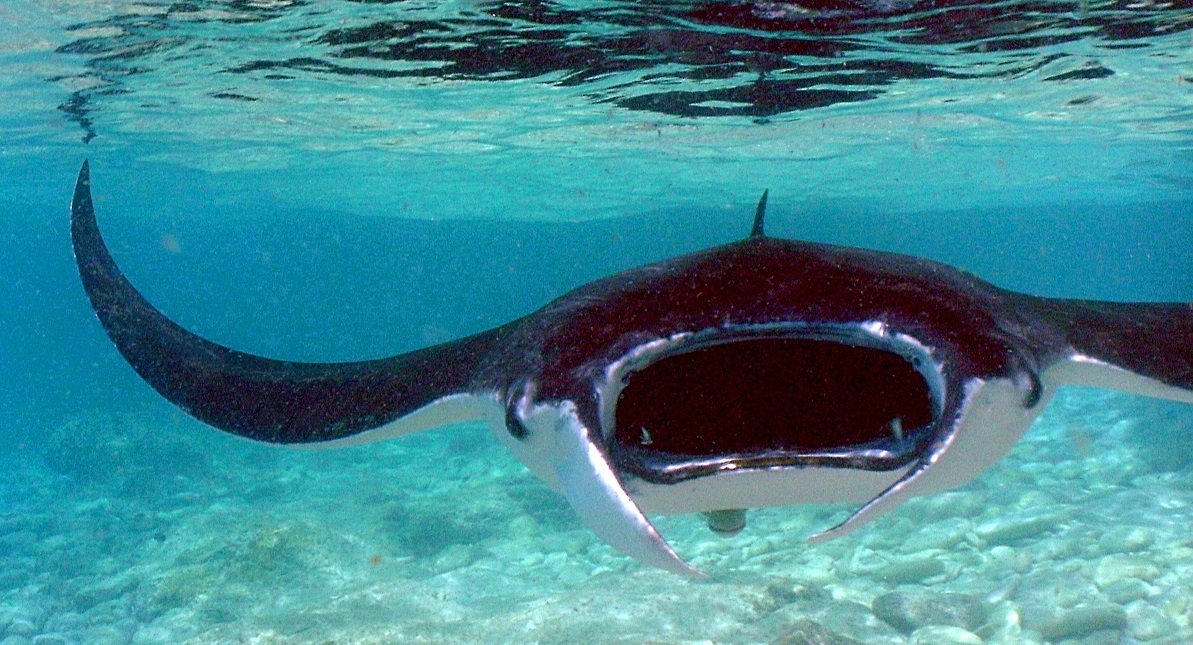
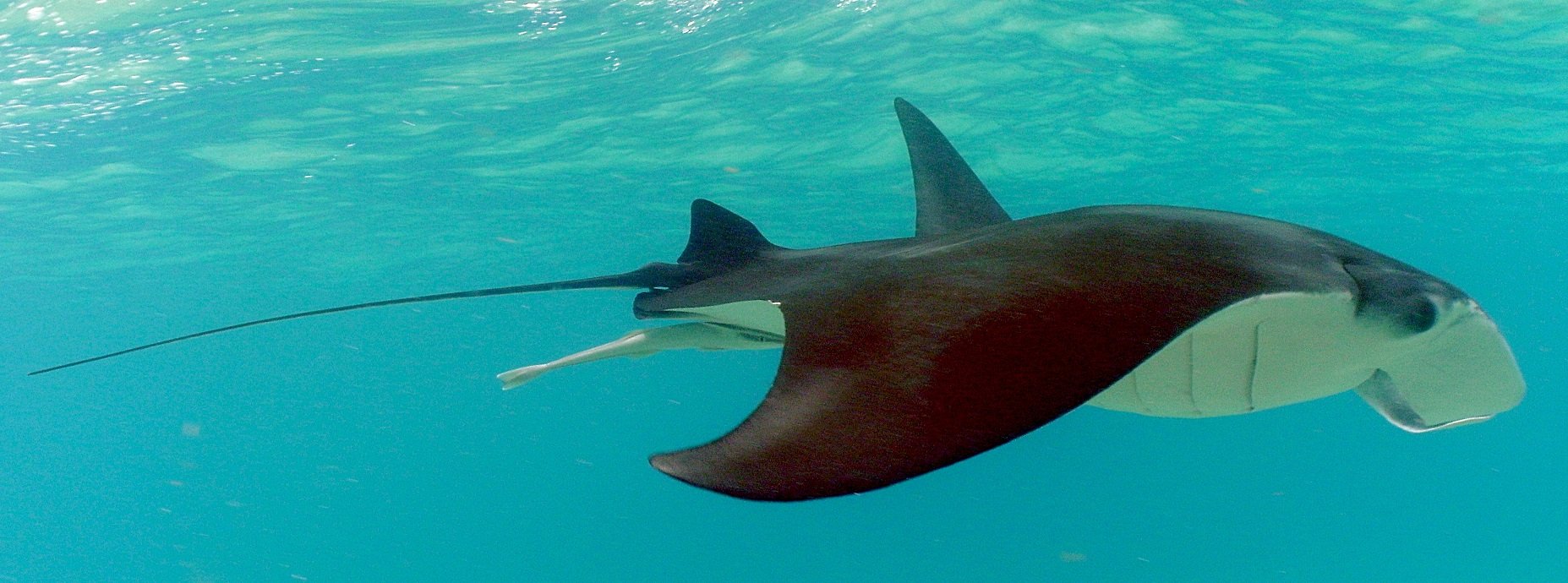
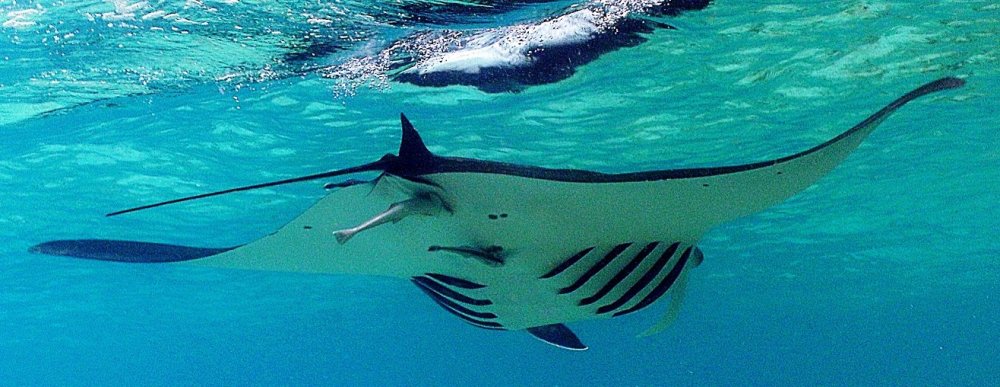
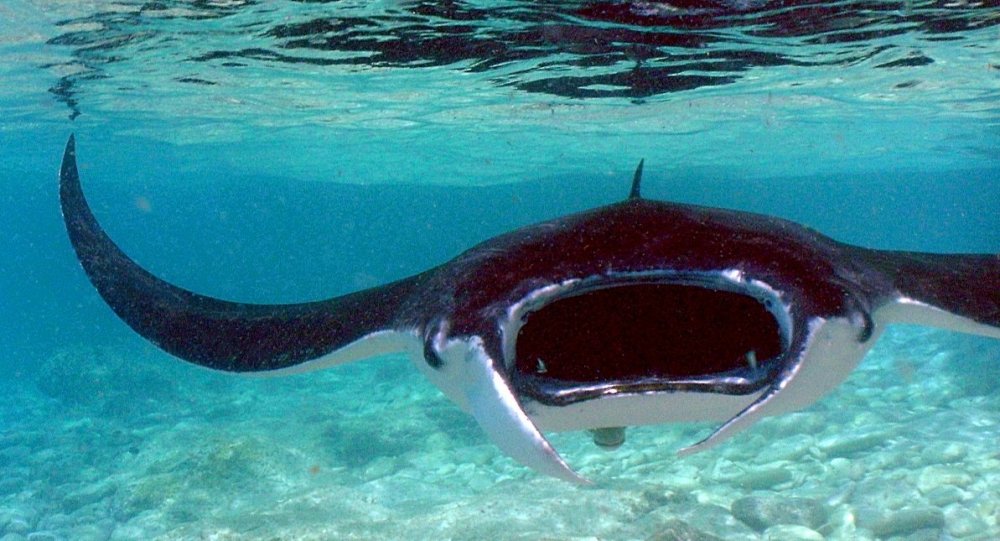
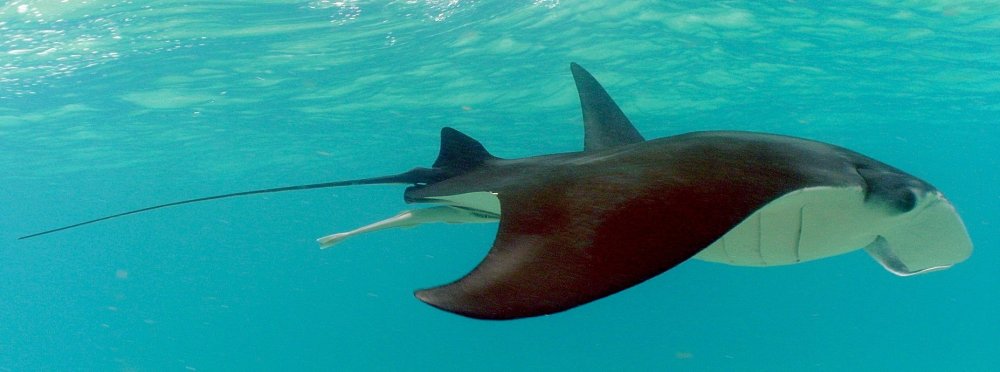
This manta ray with two remoras attached passed right over my head at a shallow water: Then it turned around and went straight back toward me: It was circling around me and going away and back, even touching me with its wing, for several minutes.
-
P.34: "When we talk of an interpretation, this means that, even if we find it hard or impossible to identify the ontological basis, the mere assumption that one might exist suffices to help us understand what the quantum mechanical expressions normally employed in physics, are actually standing for, and how a physical reality underlying them can be imagined."
-
It is just a coincidence that the 6 in numerator and the 6 in denominator cancel, in this case. Take 3 out of 9 instead of out of 8. You get 9*8*7/6. You got to divide.
-
Oh yes, he makes it very clear from the beginning that (a) there still is MUCH work to do, and (b) it is NOT to replace or modify QM, but to give it a deterministic interpretation. The goal is to define a way how to think about QM and, maybe, about "quantum gravity", rather than change a way of doing QM.
-
't Hooft insists that this work is not a follow-up on the Wolfram's one: An extensive study of the role of cellular automata as models for addressing scientific questions was made by Stephen Wolfram in his book A New Kind of Science. He attached a special philosophy to his approach. Since cellular automata have complexity and computational universality in common with many models of physical systems, Wolfram suggests that experiments with cellular automata themselves can reveal many special features of such physical systems. The reader might have the impression that our book is a follow-up on Wolfram’s pioneering work, but we do not have such ambitions as yet. The classes of models considered by Wolfram may well be too restrictive for our purposes, and furthermore, our basic question very specifically pertains to the origin of quantum mechanical phenomena. Both Zuse and Wolfram already speculated that quantum mechanical behaviour should be explained in terms of cellular automata, but did not really attempt to get to the bottom of this—how exactly do we explain quantum mechanics in terms of a cellular automaton? Do we need a very special automaton or does every automaton sooner or later produce quantum mechanical behaviour? Computational scientists have studied many features of cellular automata that will not be used in this work; this is because these issues involve quite special initial states, while quantum mechanics will force us to consider primarily generic states.
-
One of - a few - advantages of being Jewish is that one is allowed to tell Jewish jokes
-
Me too. It's unfortunate that I couldn't stay and wait for the end of this interaction.
-
Yes, no effect whatsoever. I don't think crab expected a mechanical effect either. Rather to make his request clear to the octopus. It might've been a game on the octopus' side.
-
All this, plus... There were other arrow crabs in that crevice... This crab was marching straight toward it until he got to the octopus... He even visibly pushed on the octopus sidewise...
-
I've observed this little arrow crab "asking" the octopus to move away from the crevice behind it which was the crab's place. Or, it was how this interaction looked to me.
-
I've just started reading this book (2016). Feels very refreshing and promising. Are you familiar with it? What do you think?
-
1. It was not about the original Schrödinger’s scenario. I have described way back, up in the thread, scenario which is based on a photon in a genuine superposition state. In this scenario, the unitary evolution establishes a superposition state of the cat. 2. Yes, perhaps after it gets established, the state quickly drifts away from being a quantum superposition and becomes a set of classical probabilities, either dead or alive. This happens due to interactions with classically probabilistic environment and, I think, this can be analyzed using a density matrix. This was not a point of the question. The point was that a macroscopic body can be in a state of quantum superposition and could stay in such state in principle, albeit it is difficult to maintain it in practice. 3. As I see it, the question is answered.
-
Yes, you're right. There is no even way to represent an impossible state like |alive and dead at the same time〉. Like a state of electron's spin being |up and down at the same time〉. If an electron spin were |up and down at the same time〉, we could add them and would get the total electron spin = 0. But electron can't have spin 0! Got it: spin |left〉 = |←〉 spin |right〉 = |→〉 spin |left and right at the same time〉 = |↔〉
-
The state |dead〉 + |alive〉 is not the same as the state |alive and dead at the same time〉: |dead〉 + |alive〉 ≠ |dead〉|alive〉 The latter is impossible, the former is not.
-
OK. How it can be applied to explain that cat is not in a superposition state? PS. In my opinion, it IS in the superposition state and there is nothing wrong about it. But my opinion will immediately change as soon as I see how it goes out of it, with a math, not words.
-
I did not mention consciousness. "Cat" is just a label for a familiar thought experiment. Saves paper and ink to describe what I refer to. I don't understand this example. Could you please elaborate? It has to do with populations?
-
A measurement, I think.
-
I think so. I don't see why not. We could go into more details of the system, if we want to. We could consider a state of the photon P after the beam splitter, P left or right. And, a state of the detector, D yes or no. And, the weapon, W on or off. And the cat, C dead or alive. They are entangled and the state of the system is (dropping the normalization for simplicity): |P left, D yes, W on, C dead〉 + |P right, D no, W off, C alive〉 Projection of this state onto the two-dimensional space of the cat states gives: |C dead〉 + |C alive〉 Regardless of how much detail we add, the state remains a superposition state. What would make it into one of the basis states, |C dead〉 or |C alive〉 ?
-
I am not sure. If it is dead because of a hole in its head, for example, I don't think a connection to the quantum states of the individual atoms is important.
-
I am very happy to hear that in principle cat can be in a superposition state. Next, I'd like to understand where / how a superposition state, e.g. (1/√2)|dead〉 + (1/√2)|alive〉, becomes an eigenstate, e.g. either |dead〉 or |alive〉. I don't see a difficulty to establish such a superposition state in the first place, like this: A photon source emits a single photon aimed at a beam-splitter, whereupon the photon’s state splits into a superposition of 2 parts, e.g. (1/√2)|left〉 + (1/√2)|right〉. In one of these, the photon encounters a detector, triggering a murderous weapon that kills the cat; in the other, the photon escapes and the cat lives. Unitary evolution results in a superposition of a dead and a live cat, (1/√2)|dead〉 + (1/√2)|alive〉. Then the question becomes, what happens to such superposition next?
-
Yes, like this: |cat〉 = (1/√2)|dead〉 + (1/√2)|alive〉
-
Just this question.
-
How about Russian farmers on Mars?
-
It could've been worse
-
I don't think Google "sees" a word 'park' in this text, only 'parking'. The latter is a noun and is associated with vehicular traffic in all three languages unambiguously, based on the entire list of its optional translations Google offers. Equally, it doesn't deal with 'attend', only with 'attendant'. And it offers nouns and adjectives for its options in the other two languages.