
Genady
Senior Members
-
Joined
Everything posted by Genady
-
is it not?
-
We don't have a choice. We can think about past and anticipate future, but we do this - as well as everything else - in the present, i.e., in the moment.
-
Since Sir Isaac Newton invented gravity, "Newtonian gravity" is a well-defined notion, i.e., gravity as per Newton. Thus, we are free to talk and to mean whatever we want discussing Galilean, Aristotelian, Keplerian, Pythagorean, Copernician, etc. gravities. What is attributed to Galileo is a notion that a constant velocity does not modify bodies' behavior. This means that in a system S' that moves with velocity v relative to a system S along x-axis, x'=x-vt t'=t Any model of anything which assumes this coordinate transformation, is Galilean. Newtonian is such. GR is not.
-
Not necessarily. E.g., (-1) + (-1) = (-2)
-
It does indeed.
-
I am interested. I think this article is directly related although I didn't read it: Free_fall_in_the_Schwarzschild_field.pdf
-
What is your belief about the sub quantum/sub electric nature of the universe? Why is the standard model doesn't even describe where positivity and negativity come from? The universe is infinitely unique. No, I've asked first: Why is it unlikely?
-
We could say that his second law was F=mv, and his first law was the tendency of things to go back to their natural place. And these two laws were mutually inconsistent. So much to Aristotelian logic.
-
Is "Aristotelian gravity" a thing?
-
I don't see why not. Why?
-
A curious observation about past, present, and future as reflected in a language. English has a simple system that only distinguishes between past, present, and future, just like SR. However, some languages have a system that obligates a speaker to make a finer distinction regarding when an event occurred. For example, whenever a speaker of Yagua (Peru) wants to refer to an event in the past, they must specify one of five different degrees of remoteness from the present: a few hours / couple of days / weeks up to one month / months up to a couple of years / distant or legendary past. Looks like not only the past is subdivided, but also the scale is "logarithmic" rather than linear.
-
Exactly. This was the reality and people learned from it. My point is that it doesn't matter very much what one is taught, by parents, teachers, leaders, etc.
-
I think that the notion of time evolved with us as we evolved as species. We needed it to survive, and it had to evolve as our environment changed. It evolved to deal with short intervals, order of .1s, important for fast responses, and with long intervals, of years, important for events on our life scale. Biological evolution didn't need to deal with nanoseconds, billions of years, star masses, or speed of light. But we deal with such environments now and thus the notion of time continues to evolve to include them as well.
-
C will be already in bits.
-
I'm talking about the old USSR. We were taught that there the money rules, but not here. However, everyone got the idea that it does anyway.
-
Or Portuguese, bom ar, bons ares... I think that one of the points in support of the Caquetio origin, Bonay, is the fact that it is name of a place and there are many local places - as well as local plants and fishes - that still retain their Caquetio names in the local language, Papiamentu. In which the island is called, Boneiru.
-
I agree, but the etymology is not clear: (Bonaire - Wikipedia)
-
I don't think so. Children are taught many things, but that is what they learn. In non-capitalist countries they are not explicitly taught this - but this is what they learn anyway
-
How is this information conveyed to human senses? I don't know. Perhaps, various ways can be designed. It seems rather a question of our perception than a question of a nature of time. Some macroscopic instrument "readable" by us is needed. Perhaps, some visual representations on a screen. But might be something ticking... These, 1, 2, 3 above, are examples of changes which are not movements, but which have time duration. Yes, number 3.
-
I mean that this formula describes velocity of a radially free falling body that starts at rest at infinity, in a Schwarzschild metric with the given rs , at distance r from the center, in the coordinates of the far away observer. I don't know why you say it does not.
-
Yes, I assume a radial free fall of C from B to A. No, the formula is not specific for black holes. It is general formula for the Schwarzschild's metric.
-
This is wonderful. But then it's not a puzzle.
-
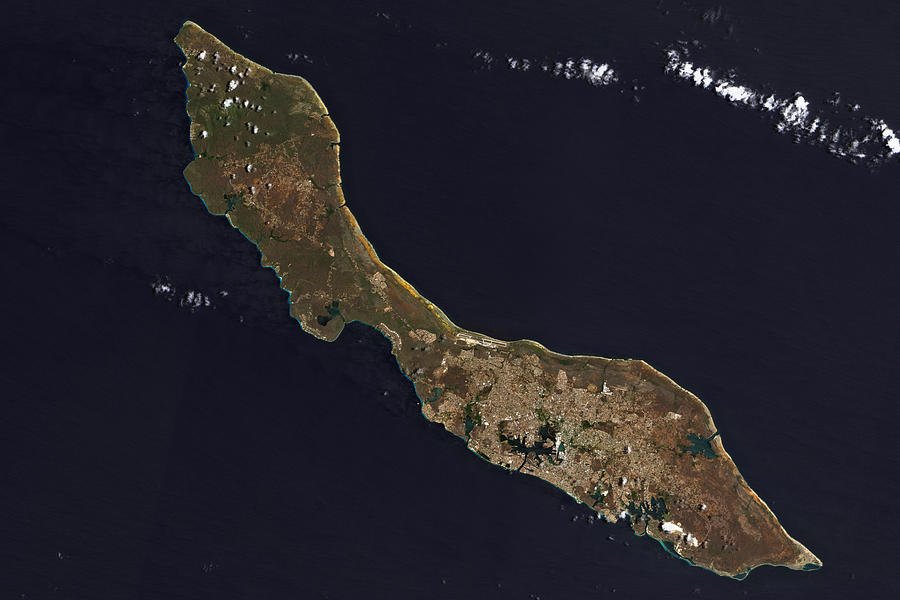
I think it might have to do with the island's shape and orientation, so that the sunset time and the sun's angle are not the same in different parts:
-
I understand and "approve" the first two points. I don't think I understand the third one. "Enough"?
-