
Genady
Senior Members
-
Joined
Everything posted by Genady
-
Right. Also, there are no statistics about people feeling things, not saying, and nothing happening.
-
Of course, there are many holes in science yet to be filled. Otherwise, scientists would be out of job. But I want to say a few words about statistics. So, you turn switch once and a device blows - coincidence, but if you turn switch 20 times and 20 devices blow is less tenable? No, it is not. If it was 20 out of 20, sure. But if it was 20 out of 1000, not. 2% still mean coincidence. Did it really happen each time? Do you have these statistics? Another statistical consideration is like this. Let's say that on average it happens 1% of times. This means that there is one person in, say, 100 to whom it happens 2% of times. There is one person in 1000 to whom it happens 3% of times. There is one in 10000 to whom it happens 4%, one in 100000 with 5%, etc. Could you just happen to be that one out of 100000? Somebody is. Maybe this is the explanation why things like this happen to only some people? Straightforward statistics? There are statistical methods to refute null hypothesis with a desired level of confidence, but they need data.
-
I don't know how to talk to a five year old, but I tried to make it clear: It starts fine, but then goes into a nonsense: Here I gave up.
-
If the two V's move toward each other with the same speed relative to the fluid, then in the fluid's reference frame they have the same flattened shape and they nicely go into each other. The fluid being at rest relative to one V or to another, or neither, are different physical scenarios, and the different outcomes don't constitute a paradox. The whole point of the analysis is that you need to consider not only the length contraction effect, but relativity of simultaneity. Compare to the ladder/barn paradox with one V being a "ladder" and the other being a "barn". Ladder paradox - Wikipedia
-
My response was, and still is unless I am wrong, that the answer depends on how the fluid moves. If it moves together with the green V, i.e., rests relative to the green V, it will be trapped. If it moves together with the purple V, i.e., rests relative to the purple V, it will escape.
-
It seems to get worse. Me: It: Me: It: I guess, I am a bad teacher. I don't have the patience...
-
To see what happens to the fluid you need to analyze the order of events in its reference frame. The result will be different depending on how the V's move relative to the fluid / how the fluid moves relative to each V.
-
The null hypothesis: coincidence.
-
Yes, the night skies will be starrier.
-
Yes, this is a crucial condition:
-
I did: and the response was: Fail.
-
But computers are electronic rather than mechanical devices.
-
I wonder how this experience fits into the idea of tapping into a collective unconscious.
-
I don't think it is new. I also think that it is pointless.
-
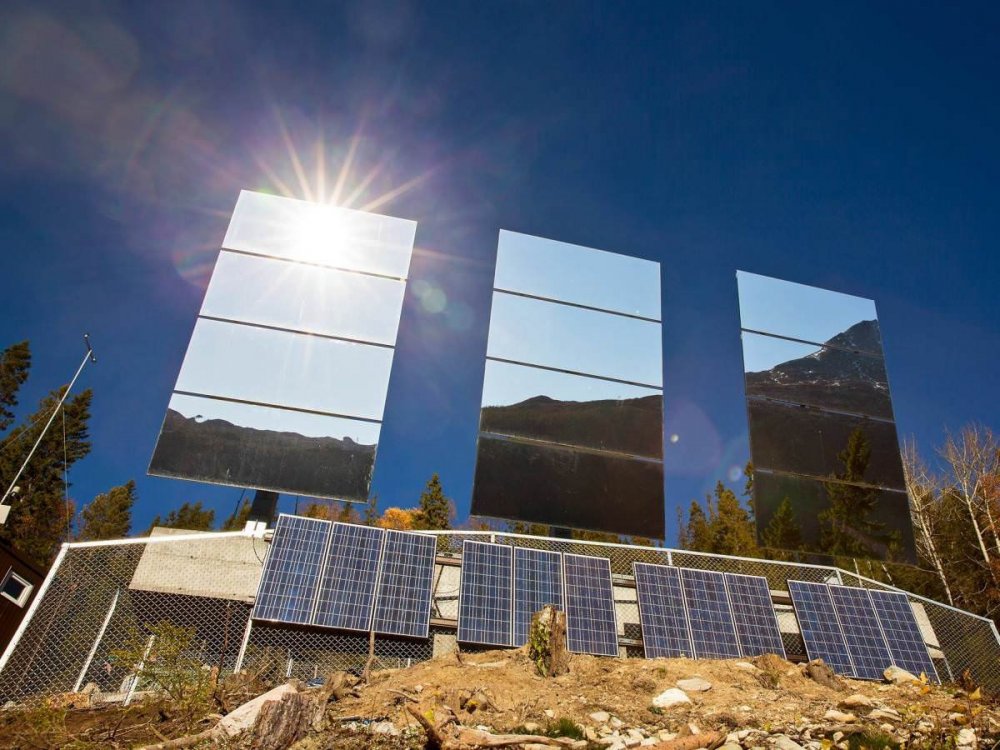
If the mirrors were convex it would show in this picture:
-
Yes, it is developing in a fast pace, but IMHO the direction of this development is tangential to the evolution we are discussing here. It goes in the direction of efficient emulation of human activities, but there is nothing yet to suggest an emergence of independent intelligence.
-
Neutrons don't have electric charge. They are not affected by electromagnet.
-
You can change the mass by attaching to the moving body "on the fly" two other bodies of equal mass coming to it from two sides with equal speed and moving with the same speed in the same direction as the central body. Can you rephrase you question for this scenario?
-
Some clarifications required: 1. If it is pushed, before the mass change, it is not moving with a constant speed, but rather accelerates. 2. What is "kinetic force"? I am familiar with "force" and with "kinetic energy", but not with "kinetic force". 3. What "antigravity" has to do with mass change?
-
Sorry, you are right. I didn't notice the minus sign in this image: My apologies. The final expression in the OP was incorrect, but you have corrected it.
-
Perhaps, the pictures here, Giant Sun Mirrors of Rjukan – Rjukan, Norway - Atlas Obscura, give the idea. The mirrors are flat, and the light spot is not big. More story and pictures here: The dark town that built a giant mirror to deflect the Sun - BBC Future.
-
IOW, thinking Absolutely! Agree 100%. Me too. Maybe a bit earlier. Been a member of Baku youth astronomy club between about 9 and 14 yo. Wonderful lifelong memories.
-
No, these two expressions above certainly do not equal each other. I can prove it. Moreover, the second expression cannot be a probability at all.
-
Some clarifications here: optics - Is light dispersed over distance by flat mirrors? - Physics Stack Exchange
-
I know. I mean, the formula as it appears here https://www.scienceforums.net/topic/131457-computing-the-probability-of-voting-of-the-member-of-parliament/?do=findComment&comment=1238311 is incorrect.