

TheVat
Senior Members
-
Joined
-
Last visited
Everything posted by TheVat
-
Seems a small semantic knot over how physical is defined. My understanding was that all events that can be measured, i.e. which interact with something else, be they force-carriers or massive particles or monopoles (if they are ever discovered), constitute "the physical." So "nonphysical" seems to be more of a philosophic postulate. A neo-Platonist for example would view natural laws as nonphysical, i.e. they can somehow exist independent of physical interactions. A dualist, for another example, would view mind as nonphysical, capable of existing independent of brains. Since we are physical entities who use physical means to apprehend our universe, there are no readily available testable hypotheses about nonphysical, i.e. noninteracting, things. So far, it looks like a "law," rather than being something that exists independently (perhaps written in some ethereal tome called How to Run a Universe), is an abstraction derived from the observation of the physical world which refers to a perceived regularity in the patterns of nature. But it's very easy to start confusing abstractions with things - in philosophy that's called reification. That's how one falls into intellectual potholes like "the ghost in the machine." Or "mind was there, before matter."
-
This administration parodies itself.
-
I love latkes. My Scandinavian relatives also cooked them, called them raggmunk. Served with lingonberry jam they were heavenly, and took care of calorie needs on a winter day. Jewish friends would eat them with applesauce and sour cream.
-
Funny how this thread OP is asking if God is a jerk, which strikes me as an entirely theological topic, and it's stuck looping endlessly on abiogenesis and the creationist totally not creationist totally metaphysically neutral conjecture that it couldn't arise from natural chemical processes and spontaneous local decreases in entropy via self-organizing structures.
-
But egg prices are dropping. Someday. Trump will talk with the birds. Bird flu will be over in a week. Nobody wins when they play chicken with Trump!
-
Seems to reduce oxidative stress and apoptosis. < 4%. https://pmc.ncbi.nlm.nih.gov/articles/PMC5731988/#:~:text=H2 mediates oxidative stress,gas in the human body. It was previously considered physiologically inert in mammalian cells, and was not thought to react with active substrates in biological systems. Recently, H2 has emerged as a novel medical gas with potentially broad applications. Dole, et al. first reported the therapeutic effects of H2 in 1975 in a skin squamous carcinoma mouse model [10]. Thereafter, inhaling high pressure H2 was demonstrated as a treatment for liver parasite infection-induced hepatitis [11]. In 2007, Ohsawa and colleagues discovered that H2 has antioxidant properties that protect the brain against I/R injury and stroke by selectively neutralizing hydroxyl radicals (·OH) and peroxynitrite(ONOO-) [1]. To date, H2 preventive and therapeutic effects have been observed in various organs, including the brain, heart, pancreas, lung, and liver. H2 mediates oxidative stress and may exhibit anti-inflammatory and anti-apoptotic effects [12–14]. H2 not only provides a safe and effective disease treatment mechanism, but also prompts researchers to re-visit the significance and benefits of medicinal gas in the human body. This review summarizes recent progress toward potential preventive and therapeutic applications of H2 and addresses possible underlying molecular mechanisms...
-
Not the founder. Ibn al-Haytham five centuries before Bacon was an early pioneer in the scientific method, setting out much of the empirical and experimental framework that later Renaissance scientists adopted. I really tire of seeing this founder myth of Bacon perpetuated.
-
The scriptwriter of The Devil in the Dark episode of Star Trek was more attentive to other bonding issues when it came to silicon based life forms...
-
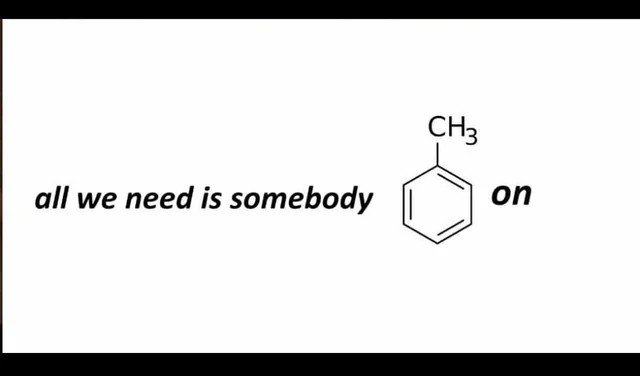
Ha! My favorite line in the handbook description is Arsole is only moderately aromatic. Our class jokes were more like...
-
And if that doesn't work, that's where the more serious and dedicated dictator declares martial law. Though El Douche will probably save that move for 2028 if it looks like the voters who were suppressed in 2024 are jumping over the various hurdles next time they try. https://www.gregpalast.com/trump-lost-vote-suppression-won/
-
Chemistry was my strongest subject as an undergrad. Probably a fork in the road there, ca. age 20. Wouldn't have taken much to push me over towards biochemistry or forensic chemistry. An interesting road not taken. Yep. The good grade I received in organic chemistry really meant something to me, because I had to work my ass off for it. I recall being delighted at learning how Kekulé has first visualized the benzene ring - dreaming of the snake biting its own tail. Our prof also liked to draw visual puns employing the benzene ring on the blackboard.
-
One of my favorite Bierceisms - used to have it as a current affairs forum tagline. Our education systems have much culpability in all this - combined with many homes where books and extracurricular learning have little traction. Both church religion and the dollar religion rush into the vacuum. In any sane reckoning of what religion and nationalism mean, the term Christian Nationalism is an oxymoron. Pluralistic society is messy and complicated. There is always a tendency for people, especially for more homogeneous rural populations, to want to regress to a small town ideology where their church is the center of life and very cozy with local politics. The current regression, as others have noted, is very anti-urban. Our new VP wrote a whole book about the wisdom and virtue embodied in his grandma/caregiver and her rural roots.
-
The teacher seems to miss that what is actually pictured is a partial disk and not a semicircle. A semicircle has no corners, but a partial disk clearly does. A straight line meets a curved line - that is a corner. Humans are very visual, and will respond to what an image conveys. This tendency should work in the student's favor, not to cause confusion over the wording.
-
Flying squirrels eat children's testicles. They evolved on the Moon and migrated to Earth during the French Revolution in hermetically sealed coconuts. Now that you've been told, I'm assuming we in the Moon Squirrel Threat Mitigation Party can count on your future vote.
-
Actually there is quite a bit of progress on this hypothesis, which is making it a leading hypothesis now on the path from prebiotic chemistry to simple life. Here is a good summary (from about ten months ago) on Salk Institute research on RNAWH: https://phys.org/news/2024-03-life-evidence-rna-world.html New research at the Salk Institute now provides fresh insights on the origins of life, presenting compelling evidence supporting the RNA World hypothesis. The study, published in Proceedings of the National Academy of Sciences (PNAS), unveils an RNA enzyme that can make accurate copies of other functional RNA strands, while also allowing new variants of the molecule to emerge over time. These remarkable capabilities suggest the earliest forms of evolution may have occurred on a molecular scale in RNA...
-
LMAO! Whew. (wipes eyes, blows nose) Anyway, I would recommend this think tank: https://en.wikipedia.org/wiki/RMI_(energy_organization) RMI, formerly known as the Rocky Mountain Institute, is a think tank in the United States co-founded by Amory Lovins[3] dedicated to research, publication, consulting, and lecturing in the field of sustainability, with a focus on profitable innovations for energy and resource efficiency. The Rocky Mountain Institute was established in 1982[4] and has grown into a broad-based institution with over 600 staff and an annual budget of $120+ million. RMI's work is independent and non-adversarial, with an emphasis on market-based solutions.
-
I was going to refer to "flooding the zone," but I see @Phi for All et al beat me to it. I'm inclined to take a break from reacting to the initial wave of provocative and performative EOs and unfunded mandates from the grifter in chief and his congressional bootlickers. The web will continue to approach saturation of apparatchiks, maga trolls, and RW gloaters. (not mutually exclusive categories) The only actual excess of Spanish I've personally witnessed was in a public school about 10 years. Bilingual signs were posted, including for the cafeteria. Below the sign in English was the sign bearing the Spanish word for cafeteria. Which was: cafeteria.
-
Let's be grateful he hasn't delved into cytoskeleton microtubules and their tubulin dimers as potentially containing qubits. Because bumbling down that rabbit burrow could mean never grasping the quantum decoherence problem and wandering for eternity in QM confusion. (like you know who, at you know where dot com) I compare it to continually checking Schrodinger's litter box and hoping it cleaned itself.
-
Not sure he was ever "in," beyond being a placeholder at DOGE while he was figuring out whether to run for Senate or governor. Sounds like he's picked governor. Musk can strut around pretending to be the DOGE prince as he has flunkies turn in vague reports on government waste that are handed to Trump who will never read them. Musk will continue on in his role as Groom of the Stool. https://en.wikipedia.org/wiki/Groom_of_the_Stool
-
Not taking that bait, chum.
-
Maybe. Though my temperament is more of the stay and join the Resistance, I admit to having perused Vancouver real estate ads. I used to think minority rule (which MAGA is) couldn't fly here, but the apathy of half of voting age citizens has collapsed that theory. One can always find parallels to Rome. Trump seems to have elements of both Nero and his uncle, Caligula - whose brief reign (four years) included him planning to appoint his horse as a consul. Of course when we look back that far in history, the lens can be smudgy, so it's hard to say how accurate such reports are.
-
The "browning of America" seems to be what triggers the nativists. Two of my grandparents came from far northern lands where those emigrating were pale, Protestant and quickly learned English - they got zero nativist resistance. Current immigration is actually helping stave off the inverted pyramid situation, where the elderly dominate and young workers are scarce. One projection is an increase in automation to compensate for the constriction of the population pyramid's bottom. Another is that assisted living workers and other occupations serving older people have their wages rise, as labor (the types where automation would be less welcome) supply drops. Grandpa flushed the bot's CPU down the toilet.
-
I remember it. One of the Irwin Allen sci-fi shows - the other two were much more successful - Voyage to the Bottom of the Sea (my favorite), and Lost in Space (which seems to have indelibly printed itself on the synapses of every American brain of our generation). We watched it a few times but didn't much get into it. IIRC, it premiered the same time as Star Trek, which may explain its poor ratings and cancellation after one season. Our parents were fairly anti-TV, so there may have also been some rationing on cheesy sci-fi. And TT was definitely cheese.
-
Plus 1 for this. I added a vote for Travelers to the poll. Loved the nuances of this show and the psychological and ethical conundrums as the team inhabits these other bodies. It only took me a year to notice this thread.
-
I think he means abiogenesis. And he keeps ignoring that we also haven't observed the big bang or macroevolution. Bob and weave. SSDD.
