Ghideon
Senior Members
-
Joined
Everything posted by Ghideon
-
Some feedback for your idea: 1: Your example requires that the word "area" existed before anyone came up with the idea how to calculate area? Why would that be so, and why would it be so in general for new discoveries? 2: If we assume 1000 words (a small subset of English) and that a sentence of 10 words is sufficient to describe a novel discovery (I guess that is not nearly enough) then you have 2.6E+23 (263409560461970212832400) sentences* to choose from. Sorting out the interesting ones would require quite some effort? 3: Let's try the words in your first reply: Here are three examples using words from your sentence: I understand you very well. You don't understand very well. You don't understand. What algorithm should a computer (or human) use to select the sentence that "makes sense" unless it is already obvious? (I note that OP has hit the max 5 posts for first day.) Side note: Using a more advanced model for generating sentences can get interesting results. The Generative Pre-trained Transformer 3 (GPT-3) is capable of generating human-like text. But I would not expect it to autogenerate papers containing novel scientific discoveries. https://en.wikipedia.org/wiki/GPT-3 *) Algorithms could be used to not generate clearly invalid sentences, the example is just an illustration of the number of combinations.
-
Because they have syntax errors. Trailing back slash is not allowed* Also note that what ever the arrows are supposed to mean they have no special meaning in regular expressions. The arrows will be matched literally *) In the regex I am familiar with, as described above there are different styles.

-
Is this still regarding regular expressions?
-
Sorry, that is not very clear. Please explain, preferably with an example. There is something about the exercise formulation I do not understand. Two primes A and B have the product C=A*B. The product, C, can't be a prime.
-
Are you sure about the formulation? If you multiply primes from a sequence of primes how could the result be a prime number?
-
That work seems related to crop circles rather than concepts of mainstream science. I would recommend other sources such as those provided by @Phi for All.
-
That seems pretty close. Add the missing " after the string and the code will run:
-
https://www.w3schools.com/python/ref_string_find.asp
-
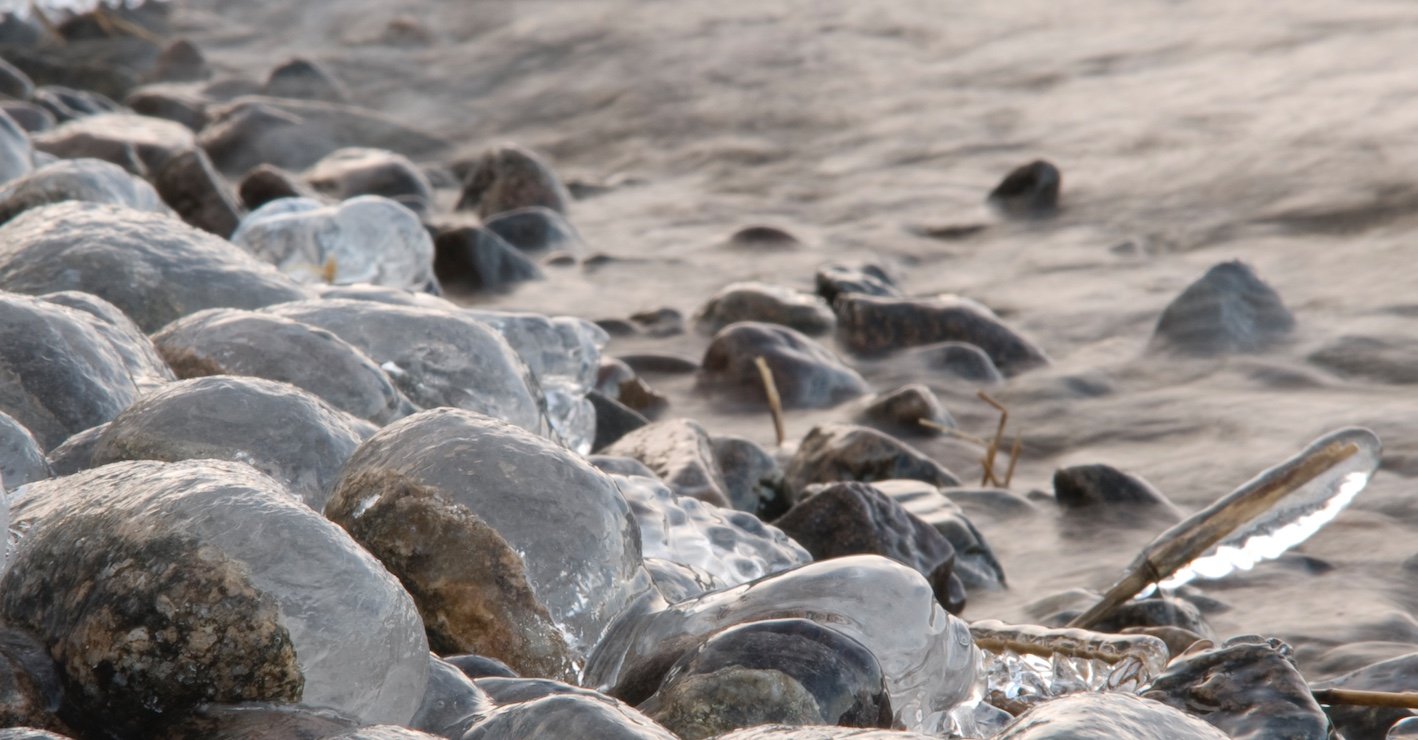
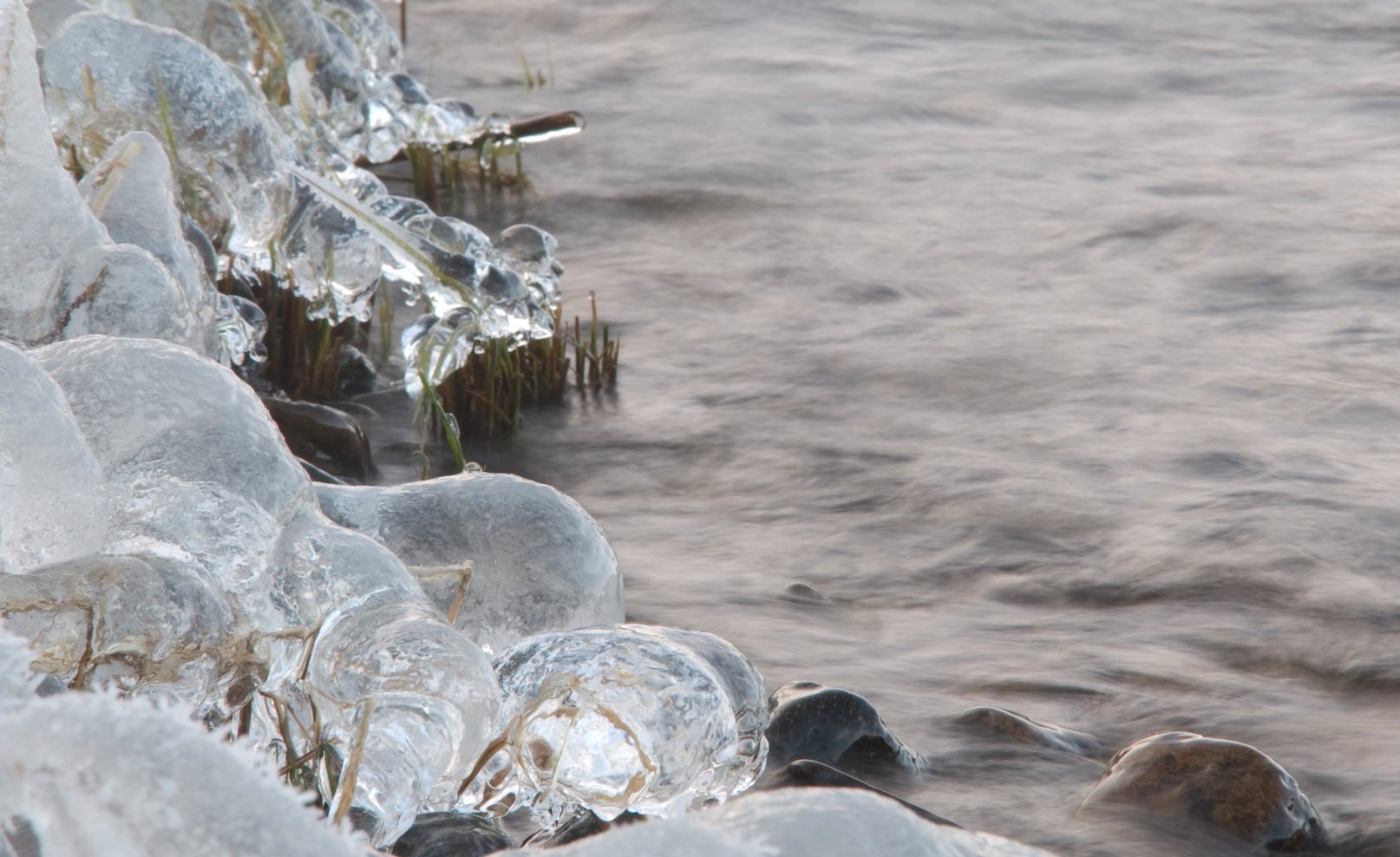
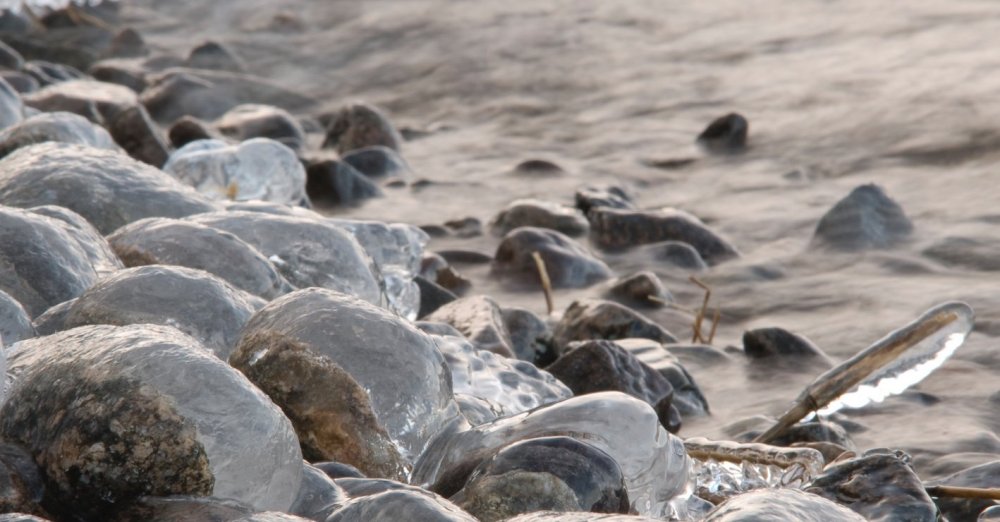
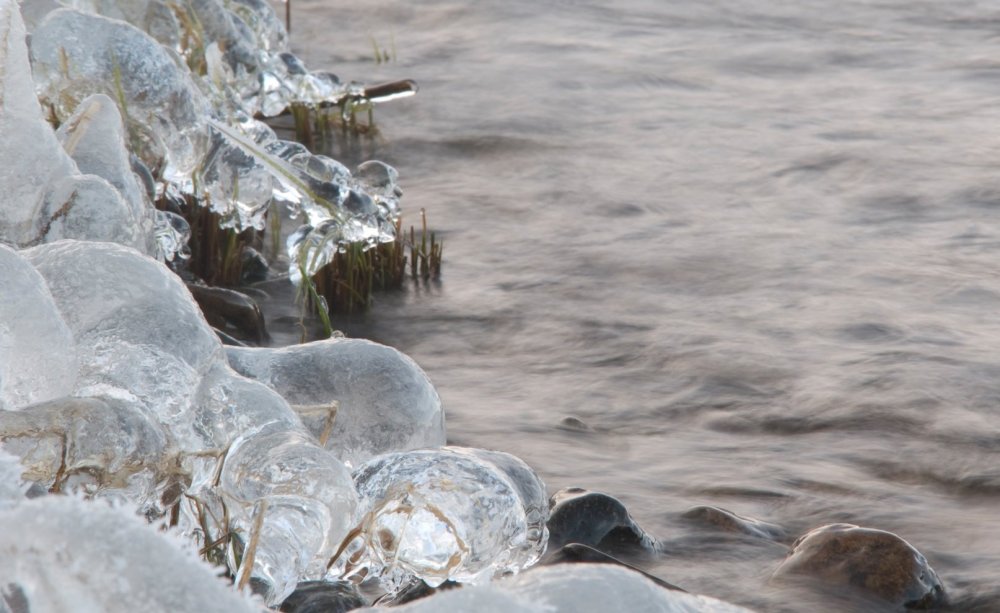
@MigL: Bug free images. When conditions are right the water from the gentle waves in the lake embeds the stones and vegetation in almost transparent ice bubbles. (Getting into a better position or angle to take the pictures was not worth the risk. Or maybe I was getting too old and lazy)
-
Probably. But more likely I tried to point out the holes in another members argument regarding outwards acceleration and I went off on a tangent.
-
Recently I returned to a discussion after a break and I was suddenly accused of not taking centrifugal forces into account. I guess I was out of the loop for a while.
-
I missed that the forum handles backlash + parenthesis specially. I meant: \(regexp\)
-
Today I learned that when analysing the system behaviour of a centrifugal clutch* both the fictitious centrifugal force and the reactive centrifugal force can be used. *) according to wikipedia: https://en.wikipedia.org/wiki/Reactive_centrifugal_force#Applications
-
I agree. Good list of special characters. Just an additional note @zak100: You never told us what you or your teacher uses so you need to be aware that in some cases the escaping differs among regular expression styles. Some platforms use backslash to escape parenthesis: \(regexp\).
-
Can you show us a reference where the teacher tells what kind of regular expression they use? Are you sure they actually discuss regular expression? It is a character. The regular expression U has a match in the text ”Us” but there is no match in the text ”Bar” In other words, there is nothing special about U. reference: https://www.rexegg.com/regex-quickstart.html
-
Ok. Then we can drop the examples and start from the basic. For instance what kind of regular expression you use. There are different variants with different syntax. If you want to use your own personal syntax you need to tell us all the rules you have invented.
-
Good point! Also points at the issues with the opening question. In regular expression union is represented by "|", it's not represented by the charter "U". @zak100 Maybe you could clarify if actually wish to discuss regular expressions* or something else? Its not obvious if you try to solve an issue with programming syntax or have a more general issue with sets, logic or similar. Also, just a friendly reminder; we are on a discussion forum, your short questions "please tell me", "please give examples" etc does not, in my opinion, promote fruitful discussions. They are more suitable for entering into a search engine for a quick and precise answer. *) https://en.wikipedia.org/wiki/Regular_expression
-
Sorry, I thought you were familiar with regular expressions. I'll explain later Your answer is incorrect. You seem to assume that the cheater "U" has some special meaning. That is not correct. See my first post.
-
The first regular expression gets at least one match in any input string, since the whole pattern is optional due to the placement of the star "*". It has one capturing group. The second regular expression requires the string " U " (Capital U surrounded by spaces) to occur once while the two patterns "bba" and "aab" are optional This regular expression has two capturing groups. Why do you think they are the same? It is easier to guide if you give some hint about your reasoning. Example: First regular expression matches for instance the whole string: "bba U aabbba U aab" (The second regular expression matches the initial substring "bba U aab") The second regular expression matches for instance the whole string: "bbabbabba U aabaabaab"
-
Archimedes: Zeno's chicken crossed the road; my methods take into account the fact that under the conditions stipulated the amount of time taken at each step is geometrically decreasing
-
Maybe we should add some unsourced ones and have a guess who? "Here is a helpful animation displaying the relativistic effects when a chicken crosses the road, as seen from a stationary observer." "The chicken crossed the road in 18.3400000000021 seconds, measured in the chickens frame of reference." "No model. No math. You have no theory. Your idea how the chicken crossed the road have been debunked over and over. Thread closed!" "A charged chicken crosses the road at an angle of 90 degrees, in what direction will there be a magnetic field?"
-
Paul Dirac: The chicken operates the quantum lab from home. Non commuting operators do not need to cross the road.
-
Erwin Schrödinger: My chicken is dead and alive; it sneaked across the busy road while I was looking the other way.
-
In what kind of journal you intend to publish? The kind that will neglect the issues raised in this thread? Question: your new edition contains a relation between charge and the value of Hubble 's Law*: As the parameter [math]H_0[/math] changes over time, does that mean your idea is that for instance an electron's charge changes over time? Does that macho observations? *) It's tricky to quote your paper, trying to use screen shot.
-
Thanks for the update. The new edition does not adress the open questions above. That material is still in the updated version. To make things easier, how about posting a revision that only includes the correct material you wish to discuss?