

sethoflagos
Senior Members
-
Joined
-
Last visited
Everything posted by sethoflagos
-
Not excessively so I think and it's recycled within the process. As stated in the OP, siderite must be handled and stored in anaerobic conditions. Could be critical. Is there a dynamic equilibrium balance between iodide/iodate which could regenerate iodide when its concentration falls? Not sure what you're trying to say here. Solar electrical power?
-
Getting shot of huge amounts of CO2 requires proportionately huge quantities of sequestrant. One sequestrant that could fit the bill is Fe2O3 (haematite) that comprises the much of the extensive banded iron formations which are globally distributed. My thoughts on this drifted to the following schemata which needs input from a proper chemist to evaluate. Fe2O3 + 6HI(aq) > 2FeI2 + 3H2O + I2 Note Fe3+ reduced to Fe2+ 4NaOH(aq) + 2CO2 > 2Na2CO3 + 2H2O Stripping process from rich CO2 stream 2FeI2 + 2Na2CO3 > 2FeCO3 + 4NaI Precipitation of siderite (desired product) for anaerobic disposal 4NaI(aq) + 4H2O > 4NaOH(aq) + 2H2 + 2I2 Electrolytic regeneration of NaOH H2O > H2 + 1/2O2 Further electrolysis of NaOH(aq) to balance H2 demand 3H2 + 3I2 > 6HI Regeneration of HI (fuel cell?) The overall reaction sums to Fe2O3 + 2CO2 > 2FeCO3 + 1/2O2 ... which I'm sure is endothermic but not I think in the ballpark of the exothermy of carbon combustion. What are the howlers I need to address? Is there a better reducing agent than iodide (eg scrap iron)? Any other positive input welcome of course.
-
I'm not surprised. It is a very poorly structured question and the above post by @TheVat shows that much of it's premise seems to be factually inaccurate. So how do you tackle a question like this? The best results should be gained by reproducing verbatim the texts provided on the topic during your coursework. This is what the examiners will be expecting. However, if you have missed many of your classes, and have been unable to catch up for one reason or another, that option is unavailable to you. If you decide to attempt the question (a case could be made for skipping it), your first challenge is to decide whether the 'this' in the last sentence applies to only the preceding sentence, or the two introductory sentences as well. It isn't at all clear. The second sentence is a partial answer to the opening statement. But we can add a little to that and maybe gain an extra mark. Mainly we should focus on expaining the third sentence. I would present something like this: Probably, not exactly what the examiners were looking for but I'd be reasonably confident of getting a couple of marks for that.
-
Not being a chemist, I have the less poetic Fox Claws Brummie In Attack for the halogens to remind me of the correct symbols. I've one or two of those also. No idea. All I know is that I'm not supposed to call it Group IVB any more. Tetrel says 'carbon' to me more than Group 14, which I believe is the current IUPAC preference.
-
Perhaps committing the periodic table to memory isn't everybody's cup of tea, but it occasionally spares a bit of embarrassment if someone asks whether polonium is a pnictogen or a tetrel. It's good to be sure that it's neither. One mnemonic I quite like is - Bored Alien Gave Indians Telepathy - for the triels. Some are a bit clumsier - (Actually,) Thorin's Pack Used Napalm. Plucky Amy Came Back. Coffee Estate Farm Made No Lard. - for the Actinides. Anyone care to share their own versions, or do we no longer need rote learning now we have the internet?
-
Watch this space: 'A Unified pH Scale for All Phases'
-
Same for me if I were trying to compose a sentence in French for example. I would need to see each written word in my mind's eye. I don't need that for my native language where much of the composition effort can run on autopilot.
-
It almost certainly varies with the individual and the context. I've considered this subject more in relation to musical performance where there is quite a variety of cues influencing the mechanical execution (and many more body parts having to act in synchrony). I think typing is quite a bit simpler, and since I invariably dictate each phrase (in my mind) while I type, I think the main motor cue must be the sound picture of the word. The vast majority of my written output during adult life has been in formal technical English reporting, so not so much room for emotion and nostalgic reminiscence there. Others may differ. The richness of life lies in its diversity and all that.
-
This is a typo that I make all too frequently. I believe that it's because I've written or typed these words so many thousands of times that I don't need to think about the individual letters; the pattern for typing the entire word is firmly ingrained in muscle memory and can be reproduced automatically as a single unit. Exactly the same way an experienced musician can execute fast scales and arpeggios without thinking about the individual notes. The problem is that these words are also homophones, so if the trigger for generating the motor pattern is the sound of the word in your head, the brain has three different patterns to pick from. Inevitably, it may pick the wrong one from time to time. Also none of these examples are typically emphasised in a sentence, and the mind is likely to be focussed elsewhere. So I can't see myself confusing weir & we're for example, though I might have to watch myself with wares, wears & where's. Those who dismiss such errors as illiteracy or laziness might perhaps take a quick glance into a mirror.
-
Apologies. Not aware there was one. Where do I find it? Done.
-
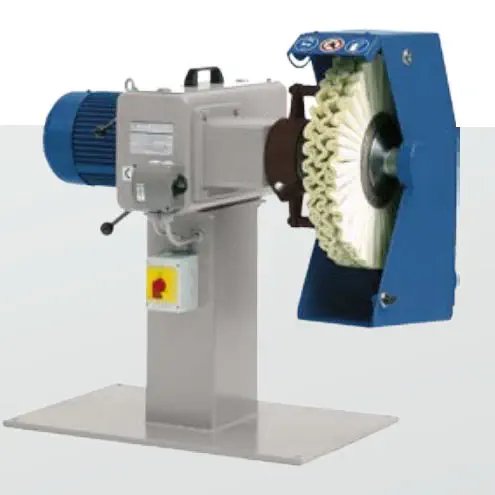
No, it's not quite so easy. The diffusion function you seem to be looking for is an appropriate solution to Fick's 2nd Law for your specific geometry. Have a look at https://en.wikipedia.org/wiki/Fick's_laws_of_diffusion and in particular the section "Example solution 1: constant concentration source and diffusion length".As there seems to be some link to a physiological context, might the OP be referring to neural firing rates? Not my field but I think it's common knowledge that nerve signals are either on or off, and therefore have to convert stimulus amplitude to frequency as and when required (eg pain receptors etc.). I can see diffusion rates of neurotransmitters etc released during the off and on states possibly playing some part in setting the time period(?). Just a guess. Post Script - I just pulled up the calculator link provided by the OP and there's a heavy emphasis on neurotransmitter diffusion. So less of a guess now.Given the scenario presented, the occupants are hit by a surge wave (essentially water-hammer) generated by the almost instantaneous deceleration of the incoming flow reaching something it can't shift (the water coming in the opposite direction). We generally estimate this initial spike with the Joukowski formula which is summarised here. From the figures given, the Joukowsky 'spike' looks to be around 0.6 GPa (~6,000 bar), so 'Yes', very much so. In passing, I would be very surprised if there were any significant heat transfer during such an extremely rapid deformation process. Simply not enough time.I was told to rotate the workpiece 900 at every grit change. Different set of objectives perhaps.Depends on how exactly the word is understood. I guess there's an unspoken assumption here of the early 20th century switch in meaning to modern pantheists and nature-worshippers of a distinctly English tradition (a far cry from its original meaning of 'peasant'). If that's the concept we're working with then I'd tend to look at trends in book and DVD sales of Lord of the Rings rather than tiktok polls. I feel that being a 'free spirit' and self-identifying as part of a countable group are mutually exclusive.I did my apprenticeship in a paperboard mill where we regularly ran a grade for conversion to fish boxes for storage and transport of frozen fish. Typical product range details can be found at https://diepvriesurk.nl/en/packaging/carton-packing/ Storing such boxes in strong direct sunlight would not be recommended. Why would anyone want to do this?Guess I'm fortunate that all my stainless polishing needs (trumpet valves mainly) are quite adequately met by Duraglit. Well-over 50 years regular use and no freakish accidents yet, touch wood.GRIND GRIND GRIND GRIND GRIND GRIND GRIND GRIND GRIND GRIND GRIND GRIND buff buff buff Many. This is a typical medium duty one for an industrial workshop. From whatever a decent domestic power drill costs these days upwards. Consider looking at taking a training course in basic metalworking first. It is REALLY easy to lose an eye or a finger with these things if you get it wrong.
 It was indeed. There are quite a few episodes of Up Pompeii floating around Youtube space.The 2nd Law formally states that the primary prerequisite for an isentropic process is that there is no nett exchange of heat with the surroundings. Since heat transfer (and other dissipative processes such as friction) are relatively slow processes then fast processes lean toward the isentropic. Like a power station? Near isentropic compression and expansion through the boiler feedwater pumps and steam turbines respectively are extremely rapid. But the working fluid spends far more residence time exposed to the heat transfer surfaces. The steam condenser is intrinsically near isothermal in operation, and although the radiatively heated water wall is not, the ancillary surfaces: deaerator, economiser, superheater and reheater bundles; are sized and positioned so as to maximise overall station thermal efficiency. Which is equivalent to saying that they are designed to fit the station cycle to the Carnot optimum theoretical cycle as closely as possible. I guess this is not what you envisage when you write 'engine'. A better word may be 'machine' which has a precise engineering meaning: a device that transforms one form of energy into another. Heat engines, electrical transformers and power stations are all machines by this definition.Fast processes tend towards the isentropic. Efficiency and overall economics work hand in hand. Isothermal processes in extremis call for infinite cycle time and/or infinite heat transfer area. The economics just don't work as a practical proposition so we have to compromise. There is really no such thing as a Carnot design as it is an abstract theoretical concept: not a tangible object like an Otto or Stirling engine. Some designs can approach the Carnot limit more closely than others and that's all there is to it. Closer approaches need bigger budgets with ever-declining potential Return On Investment.Bump.'Half-empty' is a misleading concept when your gas density is >80% of the liquid density as in this case. Even if the receiving cylinder were free of liquid, at pressure it's still > 80% full. A syphon discharge from below the liquid level of the main storage vessel will definitely get a few more pounds delivery, though some of this will evaporate on transit. If the deficit is so important, then you could consider placing the receiving cylinder in a bath of iced water both prior to and during filling. This will condense everything coming in from the supply vessel. Even if the supply vessel pressure falls to 40 bar or so, the receiving cylinder will repressurise when returned to ambient so maybe think twice before exceeding the cylinder's rated CO2 weight capacity.

Important Information
We have placed cookies on your device to help make this website better. You can adjust your cookie settings, otherwise we'll assume you're okay to continue.