tylers100
Senior Members
-
Joined
-
Last visited
Everything posted by tylers100
-
Contextual Efficiency Contextual efficiency seems to be a potential key. Which energy source is more efficient (and safe & clean) for a motion of things (e.g. like a spacecraft) with specified speeds (e.g. slow, average, and fast; Pros and cons for each speed)?
-
Temporarily Stop I think I better stop temporarily from focusing on the gravity thing for time being. Scientific Definitions I thought I understood a bit about the gravity, but not according to standardized or scientific definitions of gravity said by you guys. Tools and Skills What I would need some kind of research tools to experimental test objects for gravity and its behaviour, also have some grasps of mathematics knowledge and skills. But I have nearly none of that at this moment. Mathematics I think I might will try foundational mathematics and other topics related to it in future or so, if time permit. Thank You Thank you guys for participating in this thread.
-
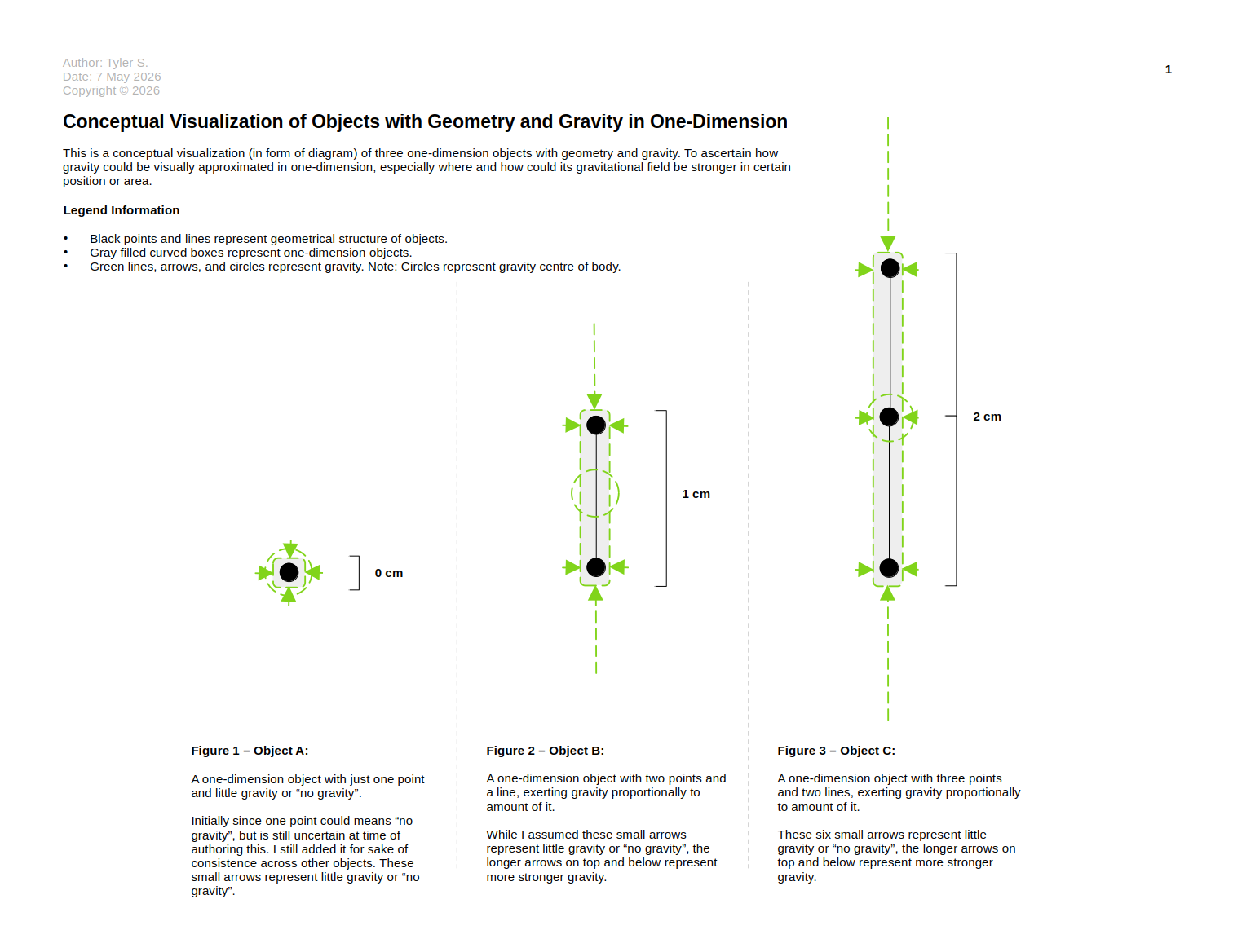
The one dimensional object conceptually could be an object that exist in one dimension like an ultra thin and small ruler as example, and three points and two lines are geometry structure. Just for approximation. It is just that if I can understand gravity in one dimension with one dimensional objects then could apply that understanding across some dimensions like 2D, and 3D - e.g. from bottom to up. I figured if gravity doesn't work in one dimension, then maybe it couldn't work in other dimensions too because of consistence thing.
-
@studiot "Gravity is a two way process." I don't think I gave that much thought in past till now. Is that because of gravitational centre of body inherited in every object thus mutual common of having a tendency to toward centre of body? "So the Earth pulls on the Moon and the Moon pulls back on the Earth." Earth and Moon should be technically closely tight together and having a party.. but not so because of motion? Note: I was just making a joke about Earth and Moon having a party. An attempt at humour.
-
"What do you mean by 'exert gravity'?" As in causing a gravitational pull.
-
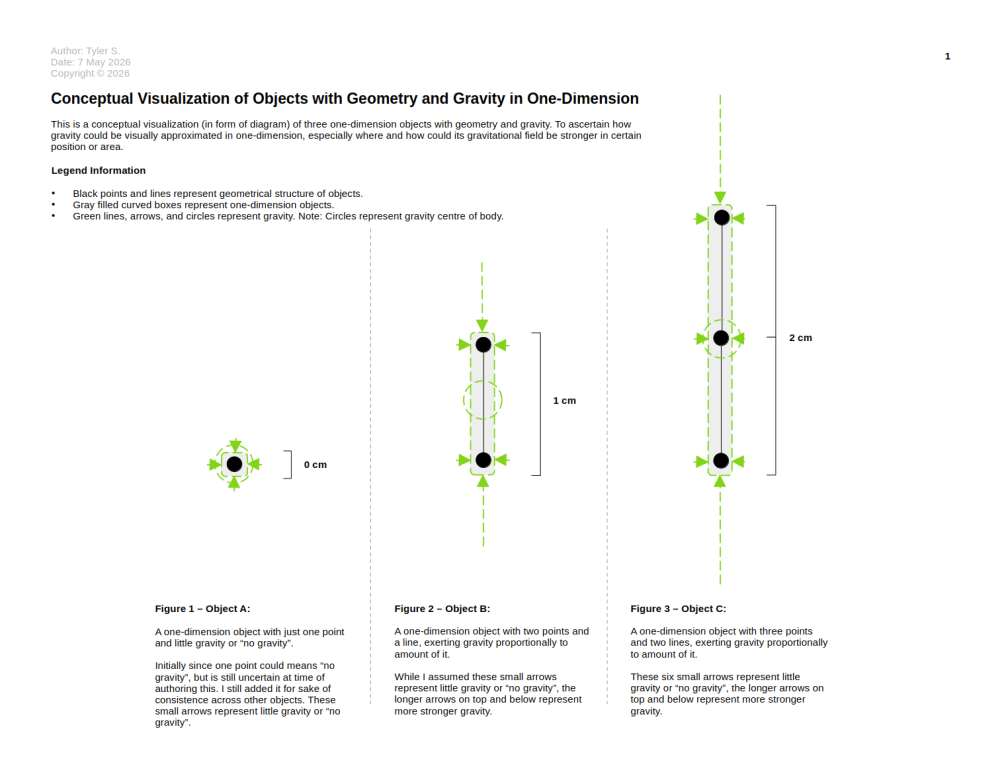
Diagram Picture See attached conceptual visualization in form of diagram picture. It is a way of how I picture gravity with a question below. Question Could it be true that the longer structure makeup of object along a line, exerts more gravity than its sides? Example like a ruler or rod; its would exerts gravity more on its top and bottom than its sides because since its structure makeup is longer from top to bottom thus more gravity on these areas (top and bottom)?
-
Geometry and Gravity Maybe geometry does change but in proportion way, that change alone likely doesn't result in gravity. Geometry arrangement along with being neutral direction whether relative or fixed does. See: Link Examples "Figure 2: The field through a cube sliced in half through the faces. We can observe the slight distortion of the field lines between the edges and the center of each face." ... "Could a moon or satellite, orbit this cubic planet? We notice that there is slightly greater gravitational force of attraction over the corners of the cube, and hence an orbiting satellite would significantly couple with the spin of the cube, refer Fig. 3." From link: https://ar5iv.labs.arxiv.org/html/1206.3857 (originally link provided on https://www.scienceforums.net/topic/125952-question-about-basics-of-gravity/page/5/) Point The point is geometrical arrangement (e.g. of corners) in symmetrical or proportion way while in relative or fixed neutral direction could result in like-hood of gravity.
-
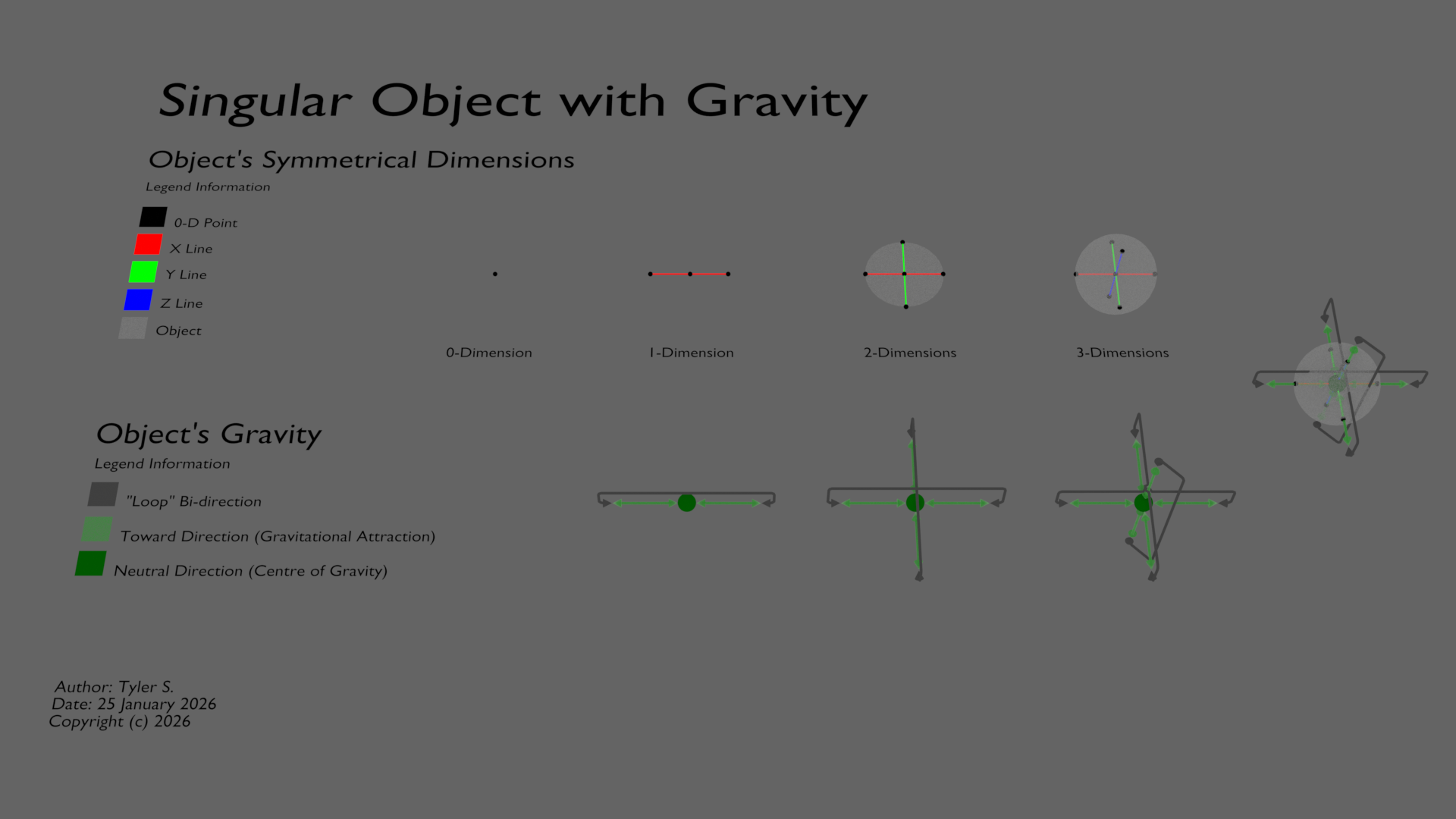
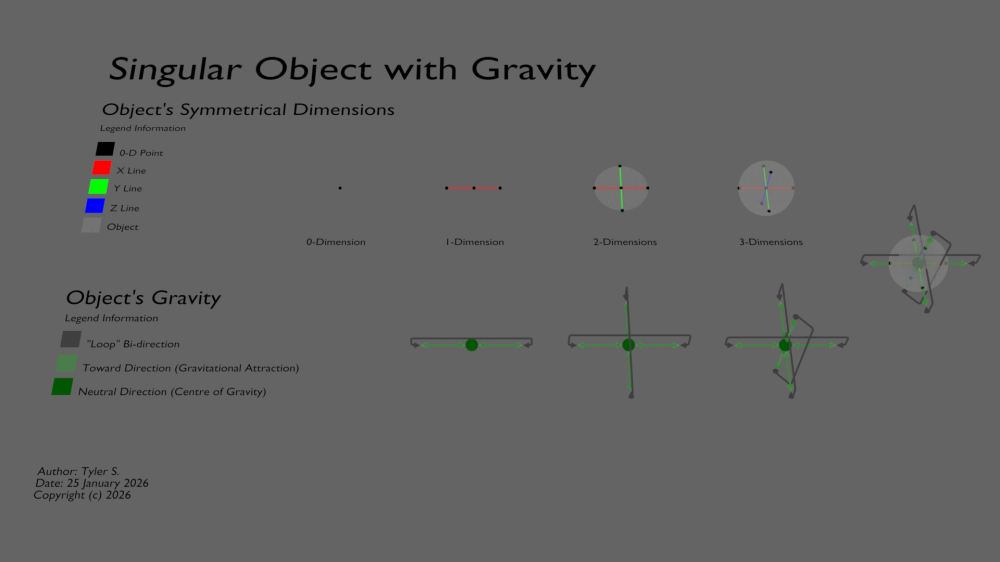
I'm not so sure about that now. Because: First I think firstly before trying to understand momentum, motion, etc in regards to gravity, better to try understand the gravity while it is stationary (or neutral direction) and singular before delving into relation, momentum, or motion which is what constitutes complexity. Singular Object with Gravity See attached picture. Here is what I see and think: Newton What Newton described is gravity (i.e. neutral direction as centre of gravity with toward direction as gravitational attraction towards it). Einstein What Einstein described is curvature of spacetime (i.e. loop bi-direction connecting end points of each axis dimension). Kind of similar to the train scene in Matrix 3 when Neo was struck inside a train station for some time, he ran into a train rail underground but only arrived at back where he started. The concept is similar to that. But uneven distribution of geometry... maybe not so. Gravity could be symmetric in nature, possibly not uneven distribution of geometry.
-
Yes, I think so.
-
If something in subatomic particles is neutral direction whether if relative or fixed, it acts as centre of gravity so other subatomic(s) point to it (gravitational attraction)... could that be possible? "Thought experiment approaches have been suggested as a testing tool for quantum gravity theories.[9][10] In the field of quantum gravity there are several open questions – e.g., it is not known how the spin of elementary particles sources gravity, and thought experiments could provide a pathway to explore possible resolutions to these questions,[11] even in the absence of lab experiments or physical observations." From link: https://en.wikipedia.org/wiki/Quantum_gravity
-
Density of Itself-Pulling Speed Maybe Density of radius's itself-pulling speed, maybe. I'm still a bit unsure, tbh. The density power was specified based on my guesswork in order to obtain the most minimum length number ever possible before hitting nearly 0 without really thought about what the density is of what exactly. I think back to what @MigL said about density of what exactly. So, maybe I'm nearing on the speed?
-
Earth's Radius I tried the following: Earth's 12742 km diameter converted to 12742000 metres then divided into half (6371000 metres) to obtain radius: 6371000 metres / 2^53 density = 0.000000001 So the 53 density is nearly maximum number. But now, I don't know how useful that 53 density could give answer or something useful about gravity. And the result, I'm not sure but possible time? Similar to the time formula: time = distance / speed Maybe Invalid Formula After All Maybe the formula I made is similar to the time formula? Somehow I express some doubts about the formula I made and its usability. Maybe it is invalid after all.
-
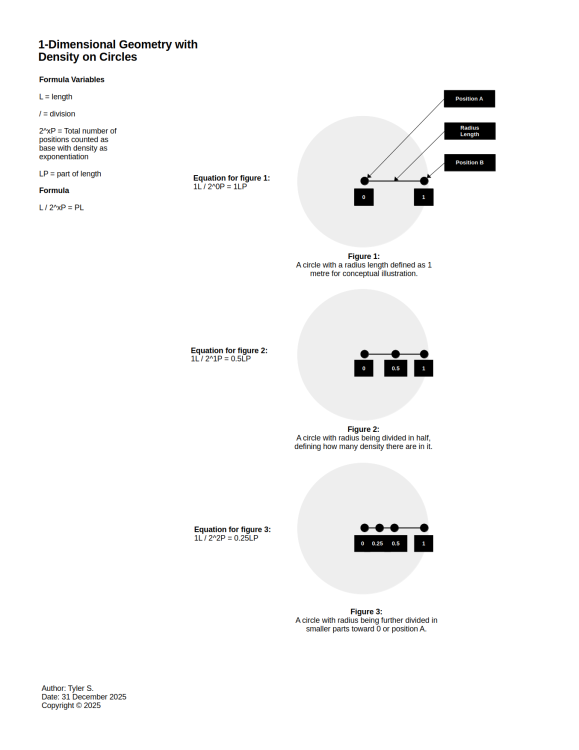
Re-assessment of the Formula Formula Variables: L = length 2 = proportion P = density PL = part of length Formula: L / 2^xP = PL or L / 2^P = PL The formulas is seemingly a mostly geometry formula that divides a length into smaller parts until 0. That is when a limitation is reached. Maybe the formula has some uses for understanding a potential limitation when dividing in proportion way because of the 2. Equation Example 1 L / 2^31 P = 0 Once reached 0, that is when a limitation is realized. Then a decrement of density power by 1: 1 L / 2^30 P = 0.000000001 (this had a nearly maximum number of density power to determine a minimum number of available length) That could be a good thing, because without limitation - how does one begin and end at what point? The 2 is for proportion reason, a part of symmetry I later considered. Useful or Not I'm not sure whether if the formula is useful or not, just the realization of the limitation in length due to 2 proportion in 1-dimensional geometry of what I was doing. Previously, I thought the formula divides length into smaller parts with decrementing lengths toward 0 thus appearance of density of that. But now, it might be possible that these divided parts in 1-dimensional length according to the formula could be still of uniform case of decrementing division because of the 2 proportion thing. I think the formula determines from top down to bottom, not bottom to up. Premise Maybe the premise was that if a 1-dimensional diameter or radius (e.g. singular focus on a planet or moon) factored into the formula then could determine proportional limitation and gravity yield in that. And after all, the gravity acceleration 9.8 m per second ^ 2 is approximated to be at every location on this planet Earth thus a possible 1 dimensional understanding could achieve that. Maybe not. Maybe this is just another one of my struggles to understand gravity in a different way.
-
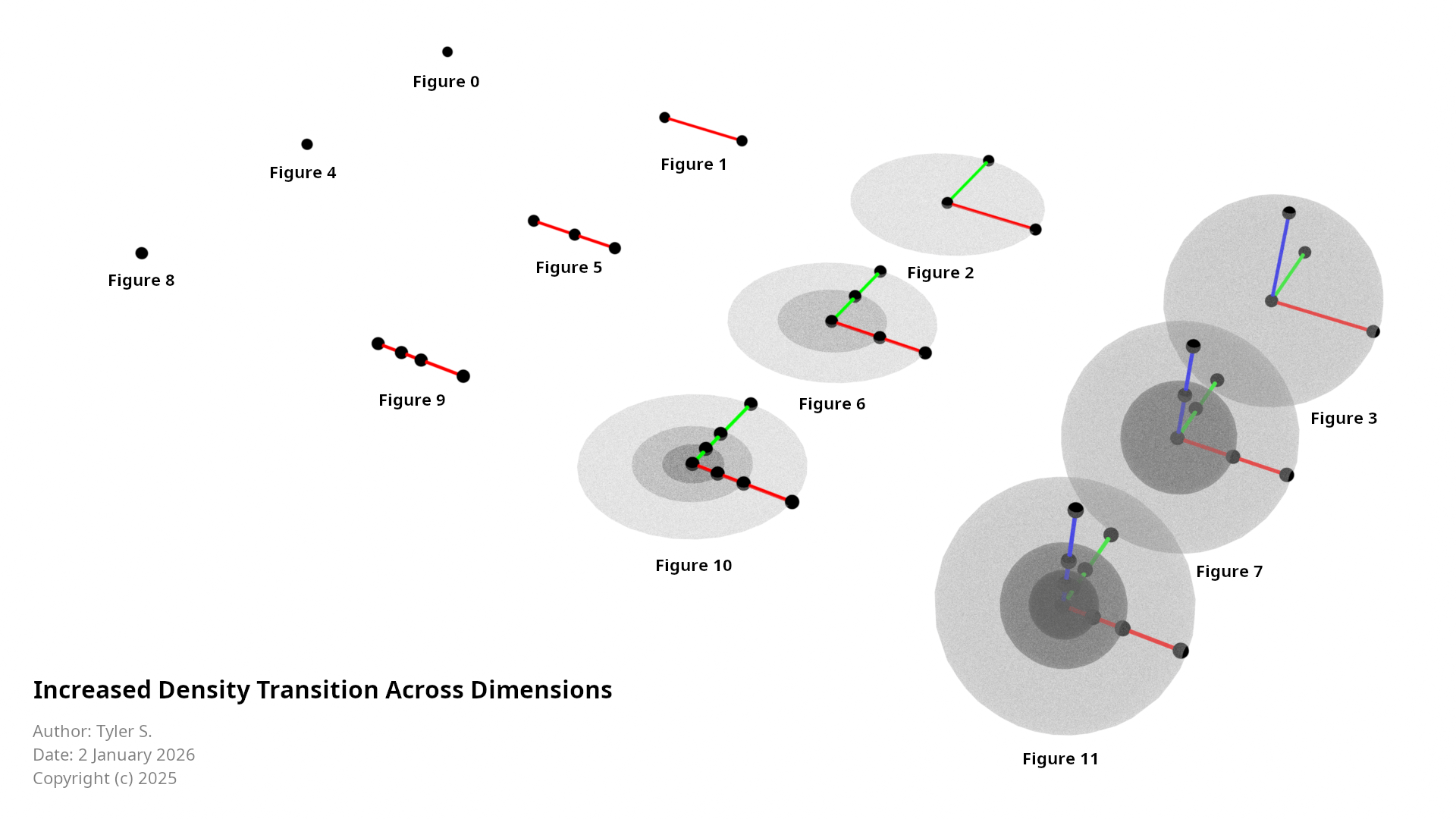
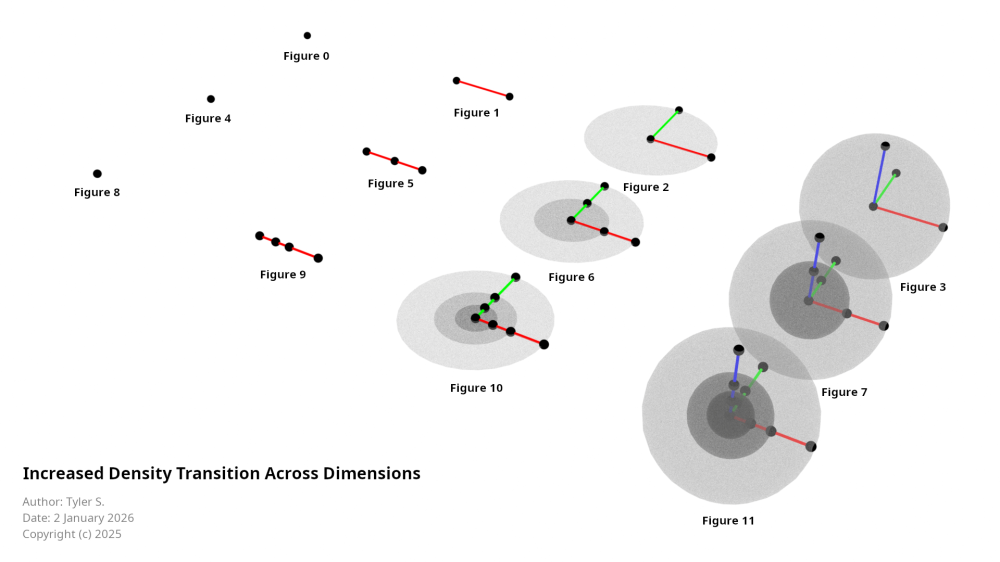
More Density = More Mass Fill in I think the formula; l / 2^xP in geometry terms specify how increased density can be created thus allowing more mass to fill in then maybe a bit more gravity? Questioning and Self-Doubt But I'm a bit confused now because the formula includes division which divides length into half by 2 number of times until 0 is reached. It divides whereas increased density should be multiplicated? I'm not sure. Limitation But there is a catch; once the formula if it such one at that; l / 2^xP - specifically P (increased density) make length reach 0, that is when a limitation is reached for increased density. Attach Visual version titled, "Increased Density Transition Across Dimensions"
-
Maybe I think to potentially see if can understand and see if can conceptually create an artificial gravity - a plating on ground via density method, for onboard spaceflight and exploration. Kind of alternative, maybe more better than rotating version. But you guys pointed out density doesn't matter.
-
Simplest Terms The formula tells how many times to divide a length by 2, into smaller parts toward 0. These smaller parts toward 0, are increased density. Confusion Now, I'm a bit not sure because maybe I'm confused. For some reason, these smaller parts look like increased density to me - because they are so packed closely to each other toward 0. Maybe I confused myself between visual and mathematics.
-
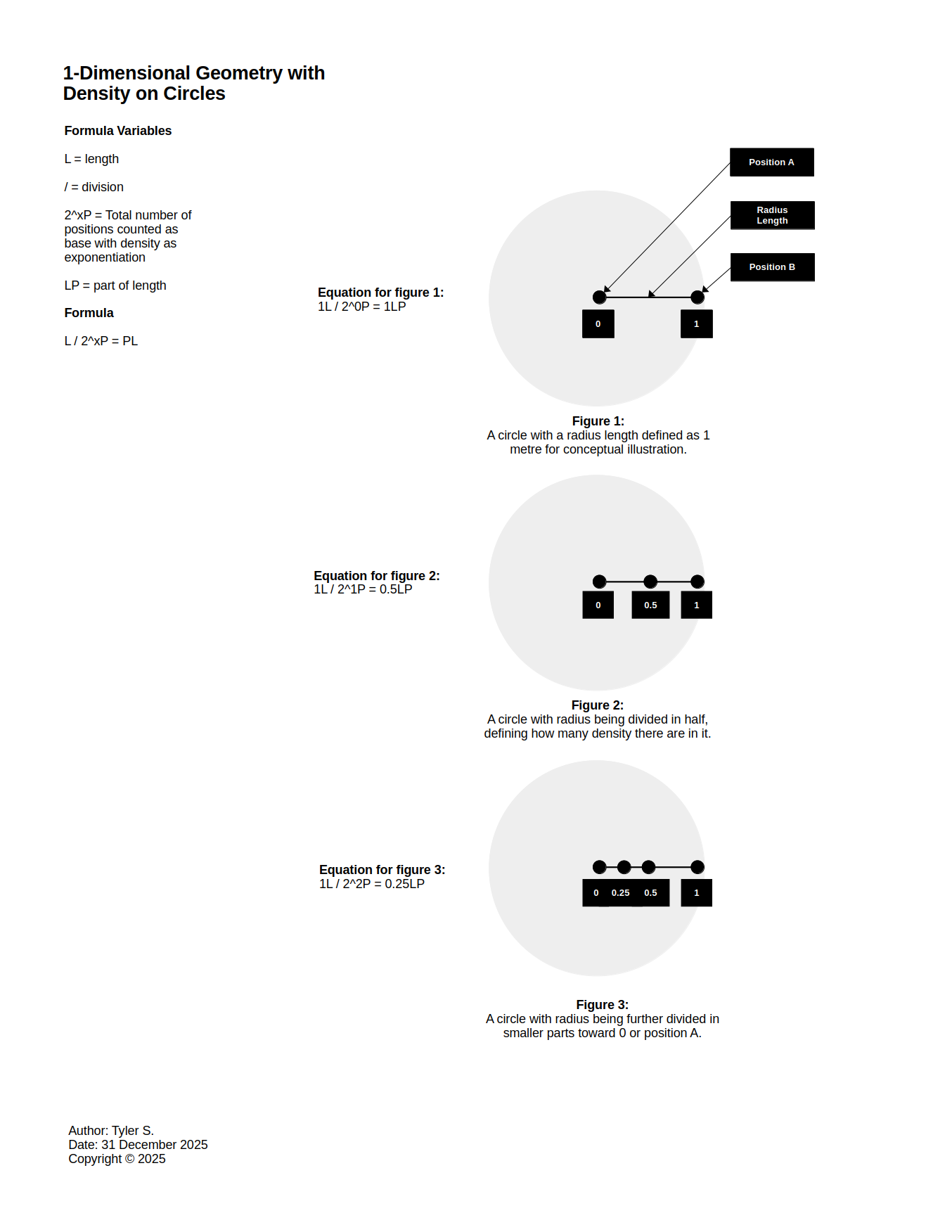
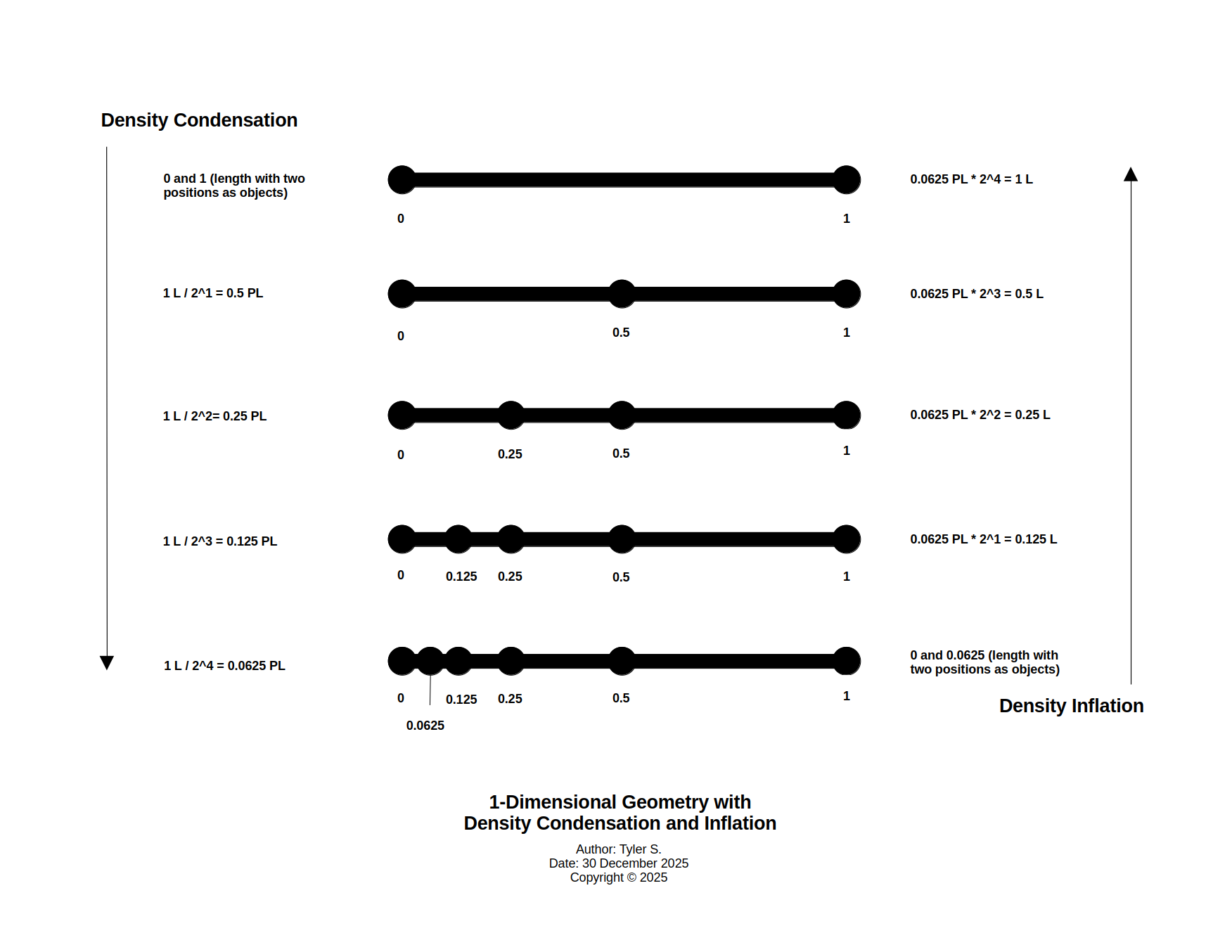
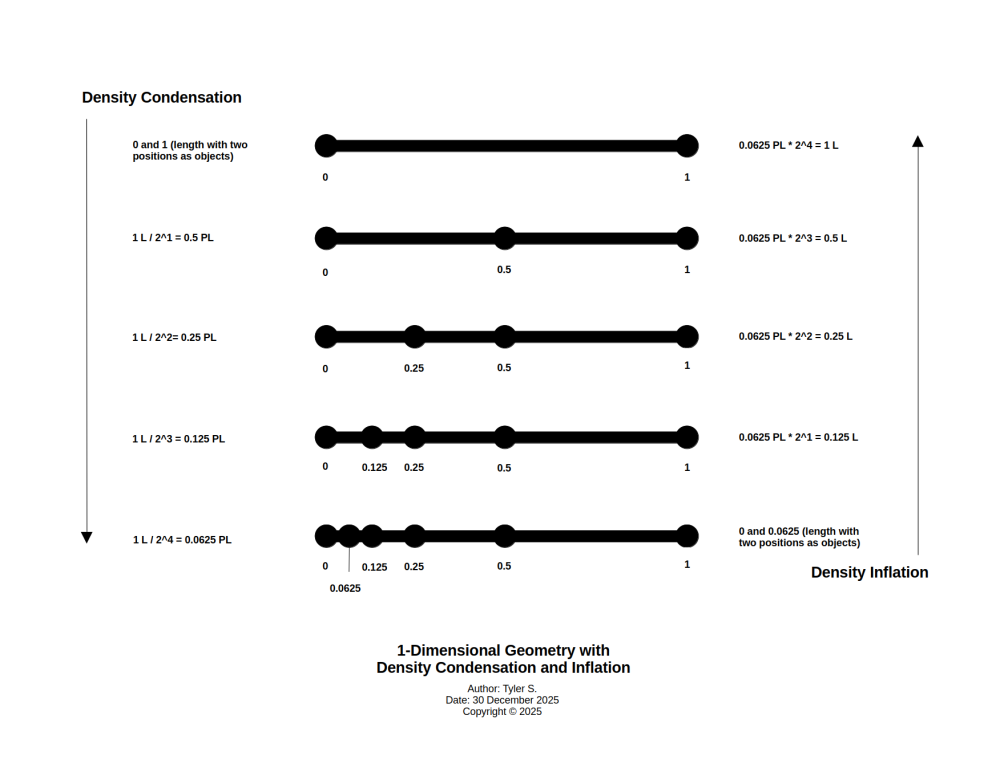
Gravity Equations I'll make some time to re-look into existing gravity equations on wiki and etc. Meanwhile The 1-dimensional geometry with increased density is something I think may be important as it may could be responsible for driving the gravity acceleration here on Earth. I mean, yeah total mass as baseline for gravity strength since proportionality and all but that maybe only gives a pulling constant rate of falling or constant rate of gravitating toward whereas gravity acceleration which happen to be around 9.8 metres per second ^ 2 meaning objects falling with increased rate over time because of: increased density might does that - effective strength of gravity, I think. But honestly, I'm still learning about distance, time, and speed equations and how the geometry with increased density can factor into all of that. The geometry with increased density as I'm currently talking about, could be what "uneven distribution of mass" that Einstein referred to. Maybe not. "Gravity is described by the general theory of relativity, proposed by Albert Einstein in 1915, which describes gravity in terms of the curvature of spacetime, caused by the uneven distribution of mass." https://en.wikipedia.org/wiki/Gravity Attach I have attached another picture I developed that may help you understand what I'm talking about. Also, I realized on my previous post along with 1st attached picture titled, "1-Dimensional Geometry with Density Condensation and Inflation", didn't include P variable referring to density increase so I have included P this time.
-
"What is density condensation?" More density; denser. Gravity Equation Okay. I'll try to spend some time with already existing equations to understand better.
-
Introduction Using a and b positions on a length as base with density condensation power as exponentiation along with division to determine number of times a length can be proportionally divided into smaller parts toward position a (i.e. 0) from position b. This kind of creates a case of uniform density condensation. I connected this formula to gravity because of the way gravity of this Earth gravitates things toward it - meaning mass and energy surely could be dense deep into the core or something like that if so. The formula visualizes that in a simple way, 1-dimension only. Formula 1. L / 2^x = PL 2. PL * 2^x = L (to double-check #1, I called it density inflation) Formula Definition L = length / = division * = multiplication 2^x = a and b position on length (beginning and ending) as objects (i.e. 2) with density condensation power as exponentiation. PL = Part of length Equation Examples I have attached a picture I developed to this post, illustrating what I'm talking about. Question How to make formula more useful in understanding areas of gravity if it is applicable, that is?
-
Would it be workable if I adjust the mass formula to following, to make it nearly universal across spatial dimensions or is mass exclusive to length ^ 3 only? Mass formula: ( density * ( length ^ spatial dimension ) ) mass
-
1. Formula: E = mass * c ^ 2 2. Looked up the mass and light speed constant information on Google search. 2. Equation with units specified: E = 5,972,200,000,000,000,000,000,000 mass * 299,792,458 metres per second ^ 2 4. Equation entered into the calculator software I used, and it automatically returned with result (I was in the basic mode, not advanced, yet it still returned with scientific notation.. maybe a software bug?): 5972200000000000000000000*299792458^2=5.367545678×10^41 5. TBH, I wanted non-scientific notation result but the calculator I used on my computer is the only one calculator I used at this moment and it returned with exponent to powers which I don't really know how to read. Also, I didn't know that the emc2 didn't mean it can convert energy to mass meaning it only show how much energy joules there are in mass. 6. I was probably in good mood when posting this thread and guess I was in xmas / holidays spirit season to speak, but now.. sorry, I probably shouldn't had jumped ahead with this thread without properly knowing how to express in scientific way. After all, this forums is science.
-
Imagine if Earth was suddenly converted to energy via emc2 just on time for xmas and holiday season, it would shine almost as mini-star or something like that, surely so? English translation: Energy = mass * light speed constant squared Formula: E = m * c ^ 2 Equation with Earth's mass: 5972200000000000000000000*299792458^2=5.367545678×10^41
-
Clocks are made from materials constantly effected by gravity and other fundamental interactions.. in other words, clocks aren't immortals.
-
I don't know for fact, but I imagine some clocks would be surely heavier in some zones affected by different heights (e.g. gravity) and materials made.
-
Not Sure Exactly I'm a bit not sure too about what I said in regard to density of time. Maybe Gravity Maybe it was something from my learning and doing thought-experiment with the gravity, density is part of it. So, maybe the density word and its meaning connected with time by myself to define time dilation or time speeding up (e.g. "time flies") as part of subjectively experience but not sure about objective though. Scaling to Factor Density Maybe Constant ruler measurement and constant time, but scaling to factor density in. TBH TBH, I'm still learning about physics and mathematics but still not sure what I'm talking about, but approximation to best can do.