
Genady
Senior Members
-
Joined
Everything posted by Genady
-
As an alternative to Sensei's C/C++ code above, here is an Excel VBA code. Not polished and without an attempt for optimization but uses recursion. Runs quite fast, too. Stops at the first answer. Dim itry(1 To 10) Sub main() puzzle0 1 End Sub Sub puzzle0(k) For l = 0 To 9 itry(k) = l For i = 1 To k - 1 If itry(i) = itry(k) Then GoTo line1 Next i If k < 10 Then puzzle0 k + 1 Else x = itry(1) * 10000 + itry(2) * 1000 + itry(3) * 100 + itry(4) * 10 + itry(5) y = itry(1) * 10000 + itry(6) * 1000 + itry(7) * 100 + itry(1) * 10 + itry(8) v = itry(9) * 100000 + itry(7) * 10000 + itry(1) * 1000 + itry(7) * 100 + itry(6) * 10 + itry(10) If v = x + y Then Cells(13, 5) = x Cells(14, 5) = y Cells(15, 5) = v GoTo line0 End If End If line1: Next l line0: End Sub
-
Thank you for your reply. Unfortunately, there is a mistake in your calculations: 17 apples with the weights you suggest go up to x17 = 233 rather than 231. Thus, their total weight is 3689. Let's remove x2 now. The total weight of the remaining 16 apples is 3486. Half of it is 1743. As this is an odd number, there is no way to get it by any combination of 8 of the remaining apples. Thus, the puzzle is not solved, and I have nothing to inform my farmer friend. BTW, this is a mathematical puzzle, and they could be snails instead of apples as well. We can use any convenient real numbers. 1 to 33 are easier to deal with than 201 to 233, with the same result.
-
Right. There should be an even number of answers because for each answer the Y and H can be interchanged as they don't appear anywhere else. +1
-
These are good examples. +1
-
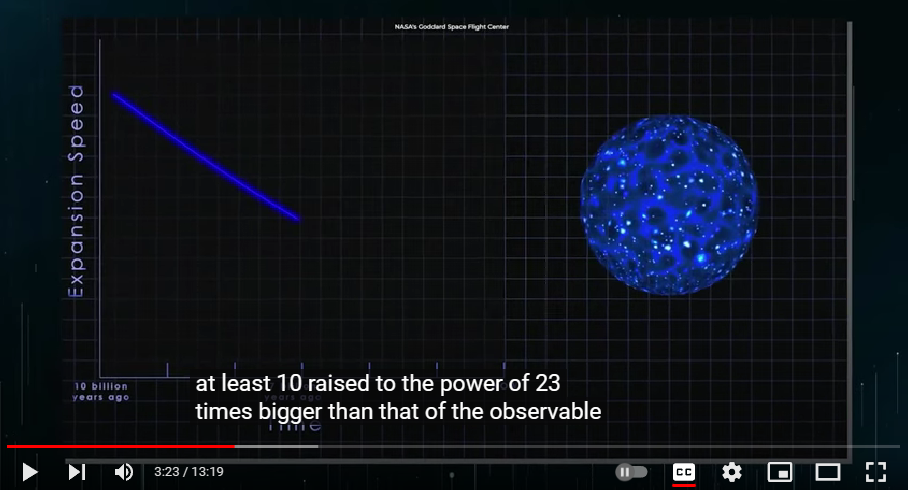
It says, that the entire universe is at least 1023 bigger than the observable universe.
-
In this light, why is the brain teasers and puzzles one of the least popular forums here?
-
Answer: 76925 + 70478 = 147403
-
Thanks. I understand now what the conversation is about.
-
I have difficulty to find any example of observable concept / element of a theory. All examples that come to mind seem to be rather non-observable. Help.
-
@Commander I see you often post puzzles and I hope you are good in solving them as well. I am still looking for a better solution for this one: If you can help with it or have questions about it, please post in that thread. Thanks.
-
Will torturing AI be a crime?
-
So, I made a mistake "eliminating" D = 9. No wonder I don't remember how I did that...
-
I thought that this is what you mean. It is a common effect for sure, but it is also individual. In my case and in case of several people I know, it does not work, by choice.
-
I've eliminated the other possibility, D = 9, but I don't remember at the moment how I did it.
-
Trying to find out how the computer is programming me.
-
Are you sure it has an answer?
-
SFn?
-
I speculate that being smarter than us, AGI will invent a way around any firewall we can come up with.
-
We do notice it. See here (Gravity of Earth - Wikipedia😞
-
D = 0 F = 1 T > 5 R > T Not too many possibilities left to check manually.
-
Yes, there is. There are many ways to lose control, I think.
-
Yes. v2 = 1 - m2/M2 M - initial mass m - final mass v - final speed, in units of c.
-
I don't think you need an equation for this. If you convert the entire mass to something massless, like e.g., light, then that something moves with the speed of light. Regardless of the initial mass.
-
Ah, I didn't realize that you refer to that post... No, the barrier is independent of the frame. In any frame, the faster you move the more difficult it is to add speed.
-
Alright, this is clear. What is the question?