
joigus
Senior Members
-
Joined
Everything posted by joigus
-
I cannot be totally sure of what Bricmont's position is, but from what I can see, it seems compatible with mine, so here goes. At the point of publishing EPR, Einstein was not so much concerned with the possibility of hidden variables as he was with que question of whether uncertainty is just a consequence of our ignorance or goes deeper, as QM suggests. In order to do that, he tried to confront reality with relativistic causality. He might have devised an argument to confront it with the principle of relativistic frame independence or what may have you. But he was firmly convinced that both principles (relativistic causality and reality) must hold. As far as I can see, all the people who later worked on hidden-variables theorems --starting with V. Neumann-- were really working on theorems about reality (whether quantities A, B, C... can or cannot be said to have a value at the same time). The question of locality being in the back of everybody's mind, partly because Einstein invoked it, and partly because the projection postulate does invoke a non-local operation, even though it has no consequences in the way of signals, interactions, and the like. I also find the solution of superdeterminism unpalatable, even you there's always the possibility of saying that, at some point in the past, everything may have been causally connected. The De Broglie-Bohm solution I find the most reasonable, although it is extremely unappealing. In my mind, it could be but a very rough, very crude version of an idea that should be formulated in terms of field theory and gauge invariance. Both elements absent from the original formulation.
-
I wouldn't want to explain Lorentz transformations in terms of some alleged granular structure of space-time for the same reason that I don't need to appeal to a granular structure of space to explain rotations. Lorentz transformations are nothing but the analogue of rotations, but in a plane containing a spatial axis and a time axis. This is perfectly understood since like forever now and there is no need to explain it further.
-
If you don't mind my saying, it looks like you have passion for science, but tend to get too far ahead of yourself. Keep in mind that numbers have been studied for at least 6,000 years now. We don't know everything by any means, and some things we will never know; but chances are that you will gain insight much faster and efficiently if you study what's been conquered so far. Every step of the way you are allowed to take initiative, of course: Can I prove this, what about that? It's a beautiful voyage with far more unexpected vistas than you can even imagine.
-
Good insights, guys. (+1 to both) For @grayson,
-
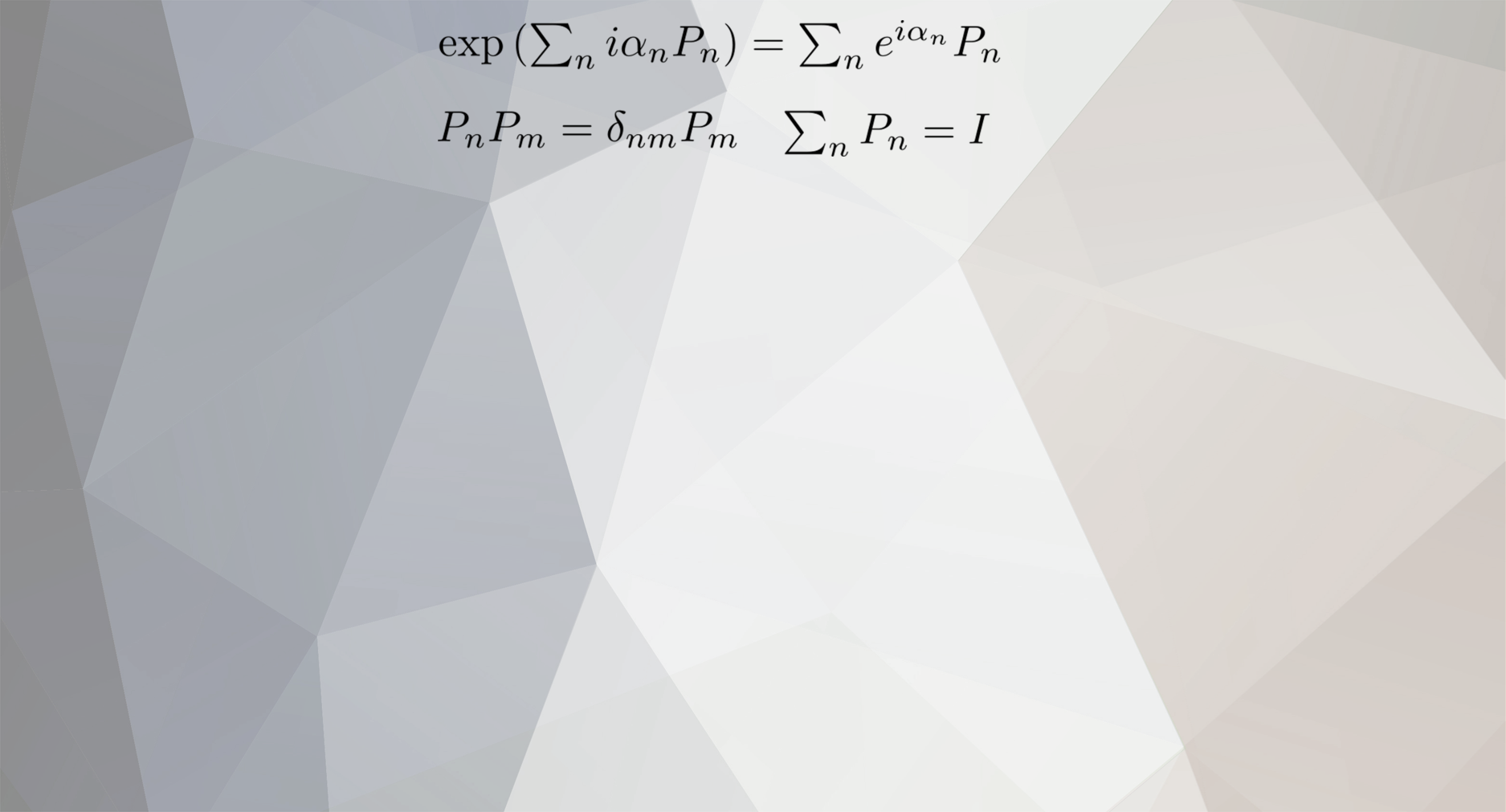
The best approach to a tensor, I think, should be dealing first with Euclidean tensors. Ie, fixed entities that represent multilinear mappings acting on vectors on a flat space. On a flat space we can identify points with vectors quite directly by means of an affine structure. On a manifold OTOH, points are not vectors, nor can they be identified with such. We must introduce vector structures point to point (the so-called tangent space at point x TM(x) M standing for "manifold"). So I would introduce tensors in two steps. First: What they do at a point; then considering how what they do changes from point to point. That naturally leads to a parallel transport as a rule to take vectors at one point to vectors at a different point. Flat spaces have no connection (or parallel transport), even though they have tensors. Another thing that confuses people is the difference co-variant / contra-variant, which occurs long after one finds tensors and has to do with vectors "naturally" having two alternate bases when we are not in an orthonormal frame. Trying to bring all these aspects together into one pictorial explanation is, perhaps, misguided. I don't know. The root "tens-" in tensor doesn't help either. It seems to suggest something directly physically interpretable having to do with tension. They are multilinear operators; that's what they are. Angular velocity is a 2-tensor on a flat space, but in disguise. x-posted with @studiot
-
This is actually a question that's very close to my heart, so I'll be looking forward to derivations into both pure mathematics as well as physics, as Swanson and Hanke have suggested.
-
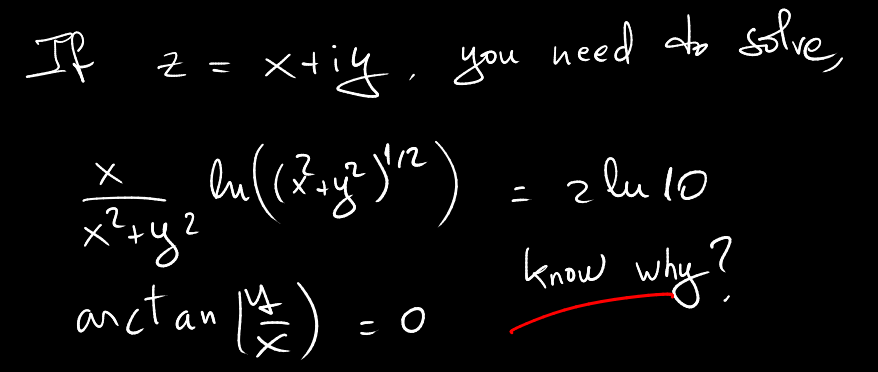
I, for one, don't feel any need to visualize a tensor. Never have, I must say. To me, it's an algebraically motivated concept. In some cases it might be useful to picture something geometric going on (example: the energy momentum tensor in GR). As an example of the converse, the Einstein tensor is very notorious for being essentially the only second-order tensor you can form that's covariantly constant. I'm sure pure mathematicians will tell you that there is no known role that this tensor plays in pure geometry --unless you invoke GR for some reason.Oh, OK. I was confused by your words "you are given a space of unknown geometry". You must be given something. You must depart from some assumption. I think that may be at the root of why some of us have thought you were talking about physics. I've been known to do that...Can you actually provide the example? Otherwise it's like... "I'm thinking of a space... you know. It's fractal here and non-fractal there, non orientable...", and so on. You see what I mean? Which one is it? Meanwhile, in coordinate land, say... f1(x,y,z)= x+y2-1=0 f2(x,y,z)=2x+y-cos(xyz)=0 The implicit function theorem guarantees there are ranges of x, y and z that make this a 2-dim analytic manifold, at least for certain values of x, y, z. Then you can worry about metric, angles, and parallel transport. Thus we would have a metric space with parallel transport, so we can talk about infinitesimal distance, angles, and distance along a path. But dimension is there at the very beginning.Skimming through this very interesting topic, with special emphasis on Genady's quote from MTW. The first thing that came to my mind is that @Genady's question is, I think, equivalent to, Is there any way to define dimension --in pure mathematics-- that can be considered more primitive* than counting coordinates? A connection requires a differentiable structure. For that you have to have to be given your space in terms of equations, whether implicit or explicit, parametric, etc. From there, derivatives allow you to give a sense to the concept of "moving" (vectors). The so-called tangent space. Metric and parallel transport (connection) can be introduced independently. In spaces given in this way, you can start talking about dimension long before you have a metric or parallel transport. Eg, in thermo you have systems defined by eq. of state like f(p,V,T)=0. Even though you don't have any meaningful metric, or parallel transport (although you could talk if you want about a tangent space consisting in the different thermodynamic coefficients); you do have a dimension, which in the example is = 2. MTW's criterion is, I think, based on the topological notion of space. A topological space is basically a set with an inclusion operator on which you can define interior, exterior, and boundary. This I have found in https://u.math.biu.ac.il/~megereli/final_topology.pdf, which in turn I've found by googling for "dimension of a topological space". It seems that this criterion is somewhat different from MTW's, but they agree in that they're both topological. I must confess I'm a tad out of my depth with these "coverings" and "refinements of a covering" in topology. I must also say I'm always baffled by these questions when no analitic example (ie, using coordinates) is allowed. How are you even given a space when no coordinates are allowed? * Relying on fewer assumptions, that is.You don't make sense. More examples: (My emphasis.) This is like saying that Einstein, rather than being a physicist, was German. Thus, whether something is a field, or a high-dimensional state --of what, BTW?-- belong in different categories. And more: (Again, my emphasis.) Blend QFT with ST?! You seem to forget that when people say "string theory" that's just short for "supersymmetric quantum field theory of strings". So string theory is but one kind of quantum field theory. Again using analogy, what you're saying here is very much like saying "we should blend calculus and mathematics". It's obvious to most everybody here that you're not making any sense. You've found a narrative that pleases you in terms of these characters "entropy", "mass", and so on. That's not science.Can you "bunk" it first? It hasn't escaped my attention that you've used the word 'therefore' incorrectly three times since you've been here.Sounds like an appealing approach to physicists and engineers. Thank you, Studiot. Although I've been much less active lately, I was also wondering about Markus. I found I'd missed a brief message announcing he was to be away for a while. I hope he's OK too.There's a reason why science fiction is called fiction. The property you want to circumvent is called "confinement" of the strong nuclear force. It would be interesting to try and see if people have thought about this. I bet it's impossible, but that's never stopped people from trying.You have to learn to distinguish everyday language from technical language. As @CharonY said, "evolution" means something different from the use in sentence "slang evolves over time". Slang does not evolve over time; it's just replaced by a different slang, for reasons well explained in quote by @Genady. Slang doesn't evolve over time in the sense that species evolve, or memes evolve (in the sense proposed by Dawkins). And that's just swell.It is possible that you mean the differential of a function. As @exchemist said, taking the derivative and differentiating is used synonymously. But sometimes people talk about the differential, or to differentiate the variable / function, in the sense of taking small increments, and then using the derivative. \[\Delta y = \frac{dy}{dx} \Delta x \] https://en.wikipedia.org/wiki/Differential_(mathematics)#Introduction Mathematicians are more rigourous, and would say that values of a function close to a given point can be expressed as a linear function of the local values of the independent variable plus a small increment: https://en.wikipedia.org/wiki/Differential_(mathematics)#Differentials_as_linear_maps I hope that was what you meant.No. It means f depends on x. So you might have f(x) = 2*x or f(x) = x2 etc.Sorry, I meant "the derivative of x4 at x=5 is indeed 4*53" I hope that was clear... If it wasn't, please tell me. I'm sure you can.No. It means you can't take x to be 5, or any other particular value. It must be a variable (varying, non-fixed) quantity. So the derivative of x5 is indeed 5x4, while 4*54 'is nothing of' 55. And the derivative of x5 at x=5 is indeed 4*54 But that is not what you said... It seems as if you're getting ahead of yourself. Maybe you need a good calculus book --like Spivak--, instead of calculus for dummies.That must be it.There is no evolutionary point in any change. Evolution comes into play when changes become stable through time. Today's slang is not the same as 18th-century slang.Doubtful. That is plain wrong.Looks like you're having trouble with the properties of powers, not with antiderivatives. Are you familiar with xn+m=xnxm? x-posted with @GenadyThis is pseudoscience.

Important Information
We have placed cookies on your device to help make this website better. You can adjust your cookie settings, otherwise we'll assume you're okay to continue.