Kartazion
Senior Members
-
Joined
-
Last visited
Everything posted by Kartazion
-
 As one might imagine it, the singularity is the convergence of dimensions at a point. The reduction of the field of action of the space time, annihilates the functioning of the elements composing the dimession. It is true that for the big bang and if we had to represent this singularity, the evolution of the energy, gravity and the dimension x, y, z, t, or more, will start from a zero point. It comes back to asking if this value of zero at rest would have a form of matter (the energy would surely be maximum), for indeed the formation of baryonic matter cannot exist, not even the photon during the first moment of primordial nucleosynthesis, either after a primitive expansion of sigularity.
 -
Hello. I don't know but maybe it can help you. cordially. https://energywavetheory.com/atoms/d-orbital-shape/ https://www.quora.com/How-do-I-draw-all-5-d-orbitals-I%E2%80%99m-not-referring-to-the-shaded-globular-kind https://www.vedantu.com/question-answer/draw-the-shape-of-five-dorbitals-class-11-chemistry-cbse-5fa4e2e600dc181063e32005
-
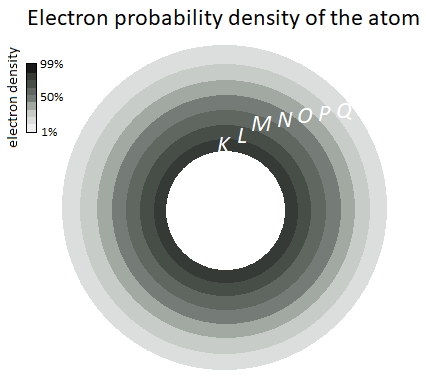
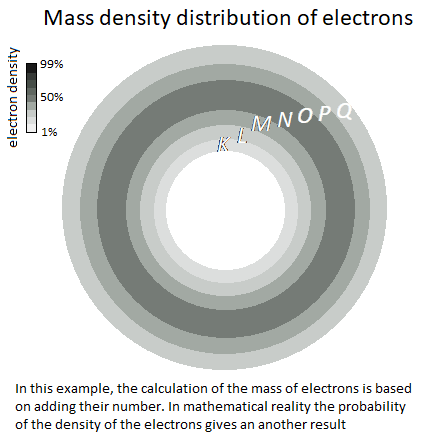
Here is a probability plot of electron density in a heavy atom: Ψ2 gives the probability of finding an electron in a given volume of space. The distance from the nucleus (r) gives the probability density. But if we were to add the mass of electrons in relation to their real numbers, then the electron mass density would look like this: What is the mass density distribution of an electron?
-
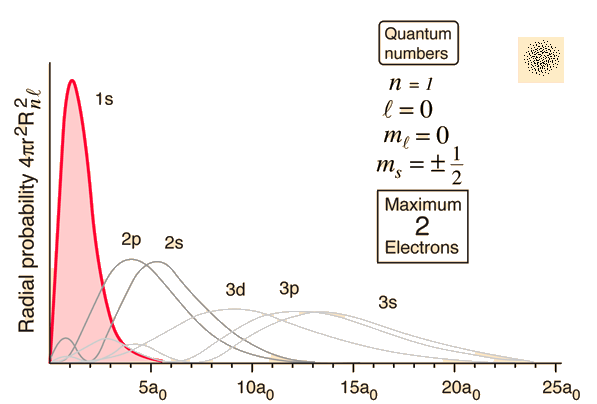
Hello. Alright. I'm working on it. For the electron in the atom, can you please give me an example of a probability density graph? Thanks.
-
This was relevant to be able to make a good analogy. On the other hand, you have rejected my analogy to the detriment of the real behavior of the quantum particle. I recall that this analogy focused on the Pauli exclusion principle.
-
I did not understand... Ok. But I do not see ... Ah ok I saw for the nucleus ...
-
Are you kidding me? My position is to claim the creation of the universe with a single moving particle. Do you prefer the hyperphysics.phy-astr.gsu.edu graph? http://hyperphysics.phy-astr.gsu.edu/hbase/hydwf.html The physics of the field of the nucleus to understand the density distribution of the electron? Can you enlighten me on this subject? This surely has an electric charge ratio. Thank you. It is because you said that I am not a quantum particle. I simply replied that we are made of quantiuqe particles. So I just have one thing to say. John Wheeler is a theoretical physicist who speculates.
-
I'll teach you something. We are made of quantum particles. Believe it or not. That why. Indeed the graphic result confirms my position. I have no questions on this principle. But you told me about it. After three years of discussion between the two of us (yes it is only often the two of us) don't you remember me? Do you? Or are you just following what you've learned? Maybe you save time learning to others. I thought also. But the principle of the single particle concerns the electron’s wave function and probability density. I did not know that the description and speculative links of this forum break the rules of the speculation section of this forum.
-
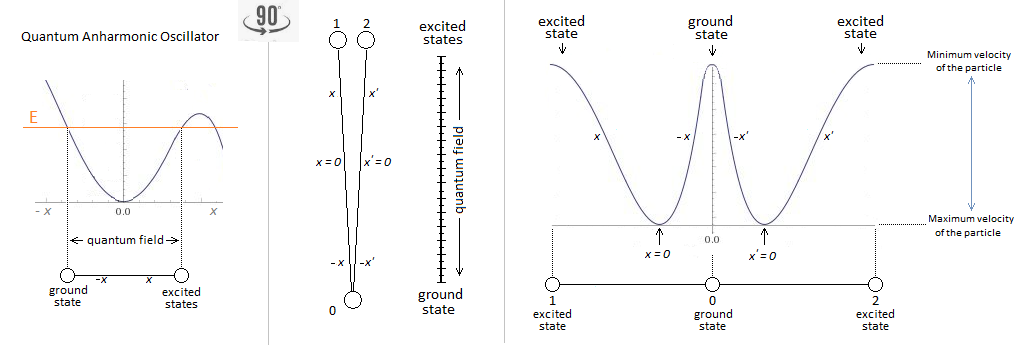
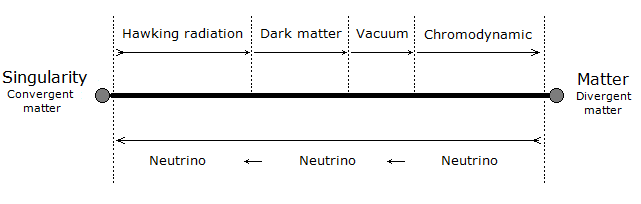
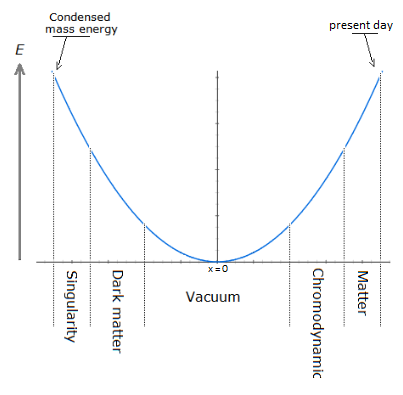
What material are we made of then? Ok Thanks I think I can give an explanation with my unique particle principle to explain a decrease when multiplying the number of electrons. But my question then turns to a Ridberg atom of hydrogen. Is the excited electron subject to this decrease in probability density when it is on a high n shell? PS: You first told me about the Pauli exclusion principle. As you know (we know each other quite well) I am a novice and not confirmed in the discipline of the QM. But I think that analogies are a good tool to be able to best explain certain mechanisms or principles. This makes it possible to have a more understandable approach or thought experience of the subject in question. I know and I think that your task as moderators should not be obvious, especially since I am quite and for my part, persisting in my objective. However, the goal of my talk is to be able to respond to quantum strangeness in a unifying formula. The unification of the principle of the single particle concerns and of course: - Galaxy - Supermassive black hole - Hawking Radiation - Dark matter - Star - Planet - Quantum entanglement - Quantum superposition - Quantum Vacuum and Vacuum Energy - Quantum chromodynamics - Quark - Gluon - Neutrino - Antimatter - CPT symmetry - Supersymmetry - Schrödinger's paradox - Heisenberg Uncertainty Principle - Time dilation - Dark Energy - Gravity - Tunnel effect - Electromagnetic wave - Weak interaction - Electron Remember. I start with this topic: https://www.scienceforums.net/topic/116040-hologram-with-only-one-particle-in-motion/ Then I associated the single particle principle with an anharmonic oscillator where the particle oscillates between singularity and matter: https://www.scienceforums.net/topic/120416-anharmonic-oscillator/
-
I am unique (same size, same name). I am in Miami, I cannot be in Washington DC at the same time and vice versa. But in both cases I'm in the United States, but not in Europe. Yet we are all on earth. It's a subtle and ambiguous question. I now ask you the question: Why the electron probability density is maximum at the nucleus? @swansont I just saw your answer to change or evolve. How is it that there is no "edit" stipulated?
-
Yes seeing that I do not agree .. I am unique. So not identical?
-
Indeed he spoke of mass and charge. Energy was not the right term. Yes I was wrong. But:
-
With all due respect, it is precisely thanks to the Pauli exclusion principle that the electron cannot be in the same state. If the electron is on A or 1, it cannot be on A or 1 on another shell in the same time. In other words, if it is represented on the left, it cannot be on the left on its other orbital. As stated by John Wheeler, the electron is the same everywhere because its mass and its energy is the identical for all electrons.
-
However, since I claim the uniqueness of the electron (even if there are several), it is logical that when there are several electrons therefore in an atom, to find a distribution which attenuates according to the distance from the nucleus. (because it is necessary to represent all the electrons with only one) and the more there is, the less its density presence becomes weak.

-
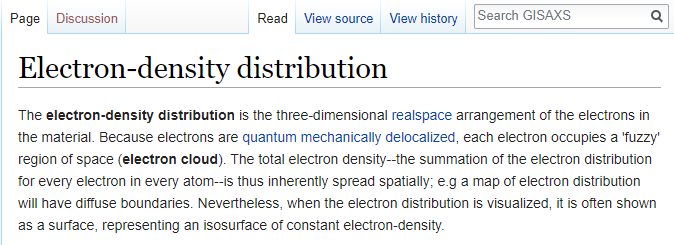
This is because I was writing it when you had already answered. I just made a difference between fine and hyperfine. I always thought that the probability of the electron's density distribution was spreaded over its circumference, no matter how far away from the nucleus (Rydberg). Indeed the distribution is radial and not distributed in circumference.
-
Is it fair to say that?
-
Oups ... It's shell not layer. Electron shell - Wikipedia Ah OK. Therefore: Because
-
Another planetary system: I think this is undeniable. Another hidden (deep sea or underground would be possible examples) civilization: Are they really aliens? Or then hidden or unknown terrestrial beings? Time travelers from the far future: I think that is the answer.
-
Hello. The electron can only be at the closer point of the nucleus only on the electronic layer 1 (n1). Its probability distribution being on the layer itself. No? Or do you want to talk about the probability of distribution of the electron on the different electronic layers which would be very important on the layer 1 (at the most near the nuclei) rather than on a higher electronic layer further away from the nucleus?
-
Conclusion, and if we think about it a little, we can understand that the packet of information (the ping-pong ball) gives the power of measurement, and annihilates itself during its destination to the player. The entanglement is over. The information packet means that the particles can be in 4 possible states; including two superimposed highs and two superimposed low, plus reverse symmetrical top, bottom. This gives a qubit of 4 states. This it is speculation.
-
I'm talking about entangled pairs. As usual, you make frills for your spin story as if it were super-complicated. So I gave you the example of the simple photon as a hello. Anyone is capable of entangling photons at home. To believe you, it looks like it would take 30 years of study to entangle a poor pair of particles. The complexity is found in the explanation of non-locality. This story of how the "spooky action at a distance" acts from particle to particle with an action link that cannot be explained. 100 after with all your instruments and your elites you are unable to do better than me who in a simple explanation succeeds. You were always the only one who balked without ever saying a positive review to anyone. Now you can close this thread as you know so well.
-
Not understood. I agree with that. I'm working on it.
-
The misunderstanding of how quantum entanglement works is in the mechanism of transmission of information. since there can be no hidden variable (that's science). I simply substituted a ping-pong ball for a packet of information flowing between the two entangled particles. This information packet notifies the opposing particle of the discovery of its state by the measurement. Here we have the means of explaining how and when a particle has its left spin, that the other will necessarily have it on its right.
-
The game of ping-pong is there to to remedy and fix the Bell's theorem. No more and no less. Since there is no hidden-variable. To explain the non-local I use the analogy of a ping-pong ball as an information packet. That's it.
-
Why is entanglement instantaneous? Weren't you who said that instantaneness didn't exist in math? If they play at lightning speed, well there will always be a transition time. At 299.792 km / s Sinpmly this corresponds to the speed of the oscillation of information. In this analogy nobody loses the game until an outside intervention, namely the measure. No worries about that. It does not prevent the transition. It's an analogy. The entanglement corresponds to the game of ping-pong. If you don't play anymore, then there is no more entanglement.