
Ghideon
Senior Members
-
Joined
Everything posted by Ghideon
-
Welcome to our sponsored member poll! Answer the questions for a chance to win a premium set of headphones. The selected winner will be PM’ed by our staff. What is your self-assessed level of expertise within your favourite area? (check one option) - Beginner - Average ⌧ Professional What is our self-assessed level of confidence regarding your contributed material? (check one option) - Poor, I never feel that I’m, right - Most of my posts are correct ⌧ I am never wrong What forum section do you most often post in? (Select one from the drop-down list) Speculations If you are drawn as winner, what brand of headphones do you prefer our sponsor to ship to you? - Bang Olufsen - Bowers & Wilkins - Harman Kardon ⌧ Dunning Kruger
-
The second link in OP (https://emilkirkegaard.dk/en/?p=7237) states that the 10% claim is "bullshit". It does not support the 10% claim and gives several reasons why the number may be incorrect. Talk page of wikipedia "List of nonreligious Nobel laureates" states "The main source of this article is not reliable": https://en.wikipedia.org/wiki/Talk:List_of_nonreligious_Nobel_laureates#The_main_source_of_this_article_is_not_reliable Good points, I'll add a local example. Wikipedia lists 32 swedish laureates. During the years of Nobel Prizes Sweden have made several changes* to how church and state are related. Those reforms could impact what individuals would have answered at that time compared to more present times. It would require a lot of rigor to be able to produce reliable definitions and a usable list. This is just an example, for one single country, intended to highlight the difficulty with this kind of material. *) https://www.svenskakyrkan.se/church-and-state until year 2000 state and church was united Swedish only found: http://www.notisum.se/rnp/SLS/lag/19510680.htm Until 1952 you had to belong to a religious community, you could exit stat church only if you registered at another religious community.
-
Today I learned the term aphophenia: seeing significance and meaning where there is none. It has interesting examples in for instance finance and statistics that I did not know had this common term. https://en.m.wikipedia.org/wiki/Apophenia
-
Read it all or skip some parts? I think I'll combine the two above and carefully exclude all of the material for now. But if you are able to post a complete and consistent description of your idea, (preferably together with some math or references backing up your claims), I'll try to read and review it.
-
AFAIK supernova models matches observations pretty well. Since you have reason to believe that to be plain wrong, can you provide a reference?
-
@CharonY have posted good answers, I'll just add a few layman notes. If the sample is indeed unknown or unidentified due to some reason that's all there is to say: "unknown" or "unidentified". Cryptids does not exist according to current evidence available in mainstream science. No lab is going to have big foot, chupacabra or other cryptids' DNA in store for reference. An unknown sample could possibly be classified as a potential new species, related to some other known species and call for further scientific research. But I can't find a scientific argument why "unknown" DNA alone would be evidence for existence a cryptid. Another related thread* was just posted, possibly an example where a DNA test could return "unknown". If a hair sample belonging to an extinct species was analysed, without any context or details known, the result might be "unknown"? *) https://www.scienceforums.net/topic/120650-18000-year-old-dog-found-in-permafrost/?tab=comments#comment-1124191
-
What is a cryptoid*? Is this about Cryptozoology? *) Do you mean cryptid?
-
Since there are different types of DNA tests, what type of test did the hypothetical lab use on the hyptetical hair sample? I guess the experted outcome could be method dependent.
-
Or Which one is it? I have read you material several times. First statement in chapter III is That seems to refer to chapter II, a chapter that you now say does not matter. Maybe you could edit the material so it makes sense instead of repeating the request that it should be read over and over?
-
Repeating it does not make it any clearar. I have tried various ways to get a clear picture what the idea is so it can be investigated with more rigor. If the images I posted are correct, say so. If they are not correctly showing your statments please provide some other description than a repetition. Maybe you can supply a picture?
-
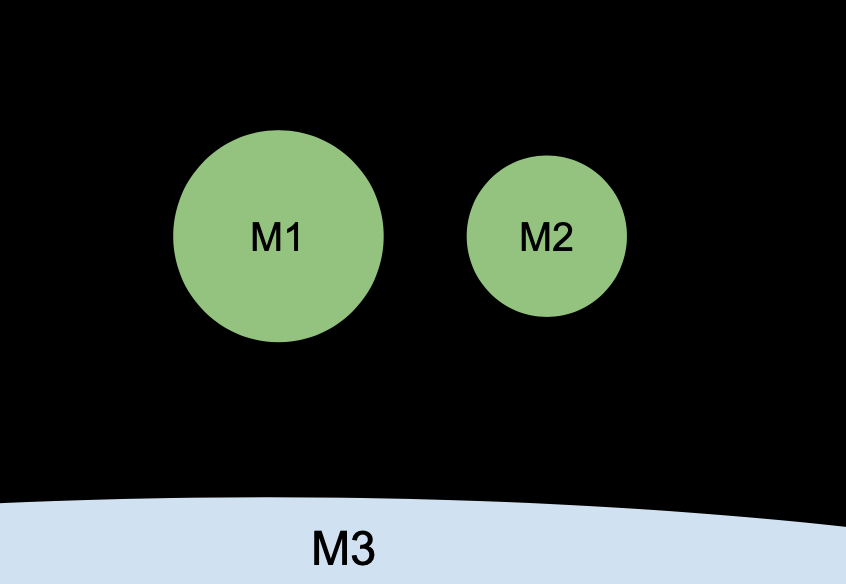
Ok. But then the philosophical part you create must make sense and not contradict what is already modelled mathematically and experimentally confirmed. I'm trying to find out what you actually claim to be similarities between gravity and charge. Here are two pictures, one for each statement: (Two different masses and gravitation from a third, large body) Does the pictures show what you intend to say?

-
How many bodies does the description above include? Two different bodies under influence of the gravity of a third?
-
You could start by providing the equation you use for each of the following two statements: I suppose equations from mainstream theories can be used here?
-
I got it from trying to understand your description. And since it is tricky to understand it I provided math to highlight possible misunderstandings. Can you provide an explanation that includes the math required to show how your idea works?
-
Who makes that argument? Is that something scientists use as argument for, or against, a theory? Observations and experimental evidence supports the mainframe theory of relativity making the theory the best there is at this point in time, within its area of applicability. And we already know that the theory does not correctly describe some concepts. As for the rest, I'll try to comment when having had time to read it properly.
-
This could simply be a language* issue, @studiot could be completely right, we maybe talk about different things. Here are the full set of details behind my reasoning, all my possible mistakes and misinterpretations included, hopefully any misunderstandings can be removed. Statement: different masses means any masses; The statement is general so it must hold for any mass, not just small masses compared to some large mass. have the same gravitational acceleration means there is one acceleration that someone/something have or share with something else. different masses have the same gravitational acceleration I interpret as different bodies will, regardless of their mass, generate identical gravitational fields. This is not true according to equation [math]g= G\frac{M}{ r^{2} } [/math] So let’s try another interpretation: different bodies will, regardless of mass, accelerate identically due to gravitational acceleration generated by some other body. This seems compatible with Galileo reference. But OP state it moves identically in the field. So I interpret OP's statement as two bodies affected by acceleration in one shared gravitational field. With other words, when looking at the one gravitational field generated by two bodies they will both move towards each other. The larger mass will not be stationary. I’ll try some math: Two masses are located on the x-axis, to the right of the origin, with mass [math]m_{a}[/math] at [math]x_{a}[/math] and [math]m_{b}[/math] at [math]x_{b}[/math], with [math]x_{b} > x_{a}[/math] and positive x direction being to the right. [math]F_{ab}=G \frac{ m_{a} m_{b} }{( x_{a}- x_{b} )^{2} } = m_{a} {\ddot{x}}_{a}[/math] [math]F_{ba}=-F_{ab}=-G \frac{ m_{a} m_{b} }{( x_{a}- x_{b} )^{2} } = m_{b} {\ddot{x}}_{b}[/math] Accelerations then are [math] {\ddot{x}}_{a}=G \frac{ m_{b} }{( x_{a}- x_{b} )^{2} }[/math] [math] {\ddot{x}}_{b}=G \frac{ m_{a} }{( x_{a}- x_{b} )^{2} }[/math] Subtract [math]{\ddot{x}}_{b}-{\ddot{x}}_{a}= \frac{ d^{2}}{d t^{2} }( x_{b}- x_{a} )= -G \frac{ m_{b} }{( x_{a}- x_{b} )^{2} }-G \frac{ m_{a} }{( x_{a}- x_{b} )^{2} }=-G \frac{ m_{a}+m_{b} }{( x_{a}- x_{b} )^{2} }[/math] Change variables, let the distance r between masses be xa-xb: [math]\ddot{r}=-G \frac{ m_{a}+m_{b} }{r^{2} }[/math] Hence, looking at different masses in gravitational acceleration they do not move identically in the gravitational field. The acceleration seems to depend on both masses. Different masses seem to cause a different acceleration and different movement in the gravitational field. This may not be what OP intended. *) Or a calculation issue on my part, that is always an option.
-
You are discussing different small masses pulled by one large specific mass (earth). It is not a general rule that is valid for any mass. The formula I know of is [math]g= \frac{GM}{ r^{2} }[/math]. Can you show how different masses M can have the same gravitational acceleration g (for a given radius r)?
-
You mean that matter entering black holes is ejected through stars at some other point? If so, no that is not somerhing observations and current theories would say is physically possible.
-
First comment, your paper says That does not sound correct. It can only be approximately valid for small masses moving in the gravitational field of a large mass. Example; a small masses will accelerate towards earth at 1g. But replace the small mass with a large mass, such as Jupiter. I do not think the result will be that Jupiter accelerates towards earth at 1g.
-
You might want to try the quote function in the sandbox
-
Thanks for the clarification! I suspected that expansion of universe was intended, that's why I stubbornly kept asking. The words have similar meaning over here as well, care must be taken so the correct physical concept is referenced. I'll read your proposed idea again using expansion wherever inflation is stated.
-
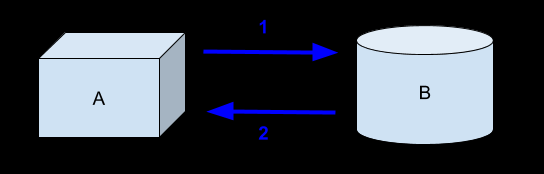
I'll try a logical explanation with more detail without referring to math of specific laws of physics this time: Let's say two hypothetical devices are working perpetually* as a unit without external energy source. Perpetual motion device A feeds energy (1) into device B and then device B feeds energy (2) to device A. Since no external energy is added and operation is perpetual there is no internal energy wasted; efficiency is 100%. Device A runs from the energy provided by B and B runs from the energy provided by A. Hence, over time, A must supply B with the same amount of energy that A would require to operate in isolation. And B must provide A with the same amount of energy B would require to run in isolation. So the result is that the only way the device A and B could work as a 100% efficiency perpetual motion device together is if they could do so in isolation. A and B are perpetual devices on their own or the device (A+B) is not a perpetual device. In other words you can not build a perpetual motion device unless you have a set of perpetual motion devices. This does of course not alter the fact that perpetual motion machines is not possible. It is just a way of showing how OPs setup is not working in a general case. (I answered from phone earlier and was unable to use an image. This is pretty much same as @Janus but I had started drawing already so posting probably does not harm.) *) Not possible! Only used to setup the explanation.
-
No. It makes no difference; perpetual motion is not possible even if combining devices. The overall physical laws still applies.
-
I may have misinterpreted the following: Cosmic inflation does not seem to be as widely accepted as the expansion of the universe. Not all physicists* think there is enough evidence to support the phenomenon. The inflation phenomenon does not push away massive bodies. The inflation ended before massive bodies formed, inflation is an early period of accelerated expansion. Therefore I asked for a reference supporting your statements. Here is paper on cosmic inflation that might be a good introduction. https://arxiv.org/pdf/astro-ph/9901124.pdf. *) See for instance criticisms section on wikipedia: https://en.wikipedia.org/wiki/Inflation_(cosmology)#Criticisms
-
According to current theories inflation ended at some early time. You write as it is an ongoing phenomena: 1: Do you have a reference where atomic physicists state that inflation is pushing objects away? 2: Do you maybe mean the current expansion of the universe instead of the theory of early cosmic inflation?