Ghideon
Senior Members
-
Joined
Everything posted by Ghideon
-
Thanks! I interpreted* the arc over the waterfall in the center (and other arcs) as a constructed bridge. I wonder where the water comes from? *) The solution might be wikipedia.org/Pareidolia, I'm a fan of art that blends nature and (large scale) constructions, for instance Pieter Bruegel's Tower of Babel (wikipedia.org/The_Tower_of_Babel (jpeg) )
-
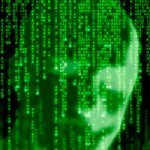
Awesome image! It looks like bridges and buildings in the center, what are those? Example:

-
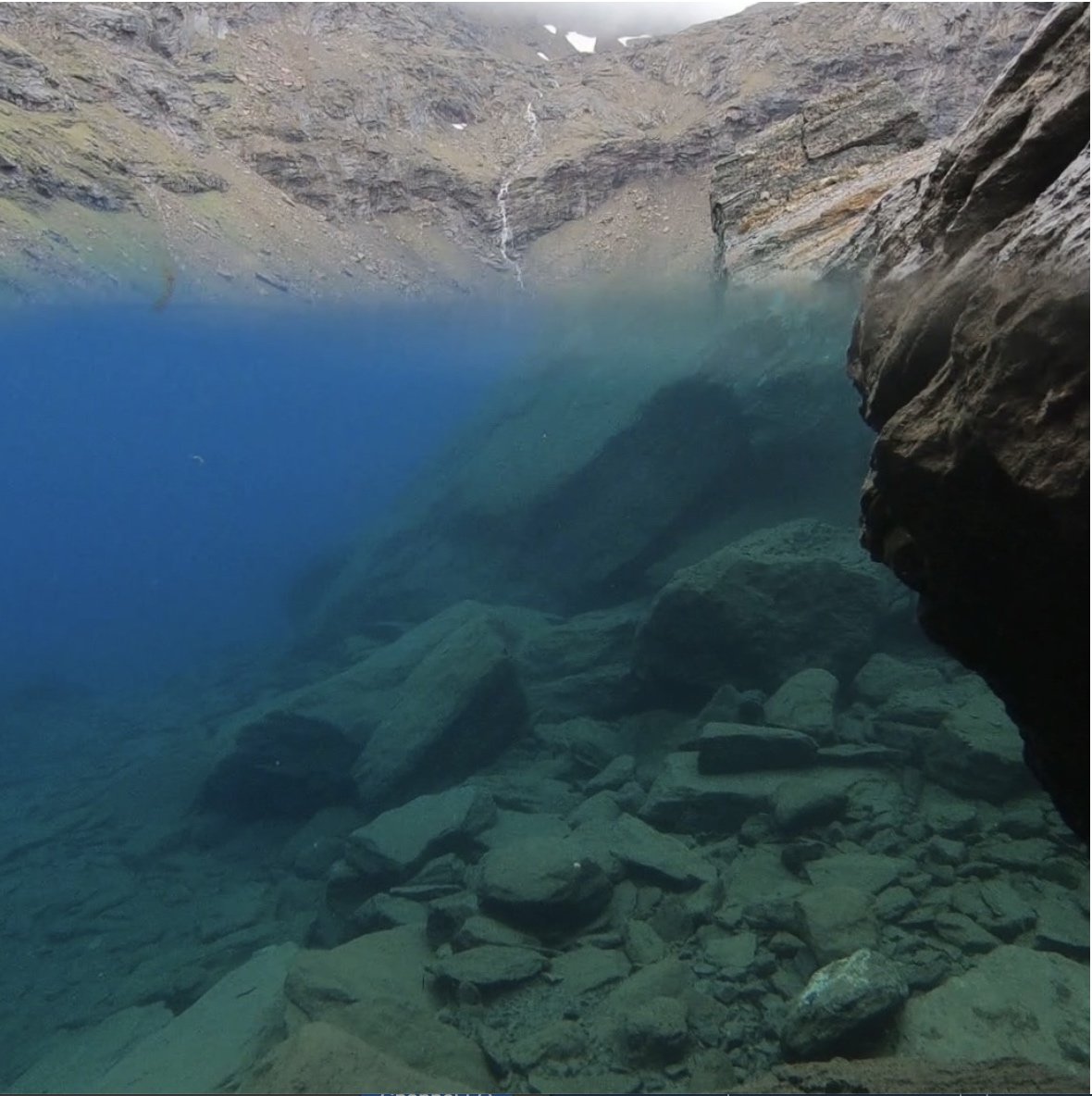
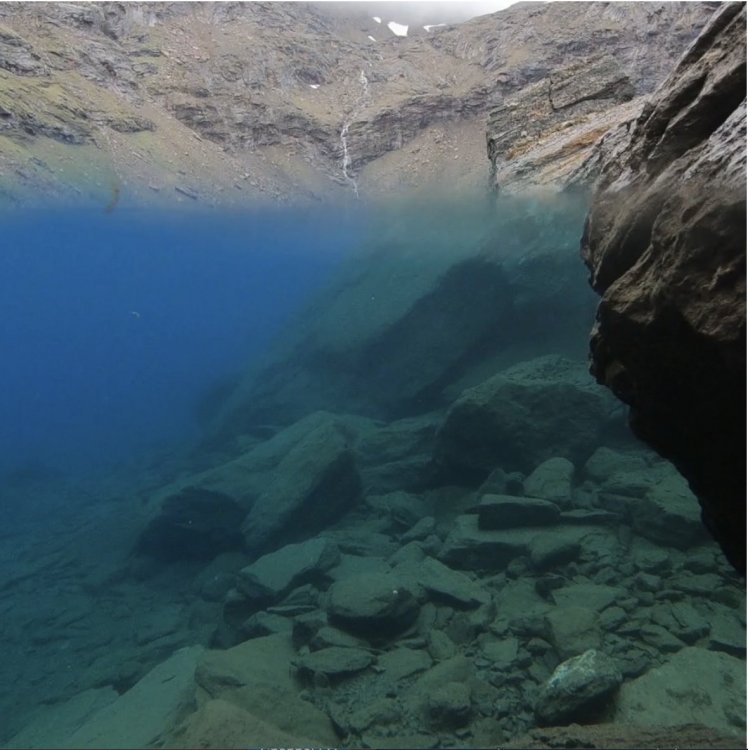
I recently visited what is claimed to be the clearest* lake in the country and this picture was unexpected. I tried to film the clear water and the resulting film was not anything worth sharing, but this single frame from the moment when the camera lens is half submerged turned out pretty well. *) I have not found any conclusive official measurements, maybe it is tricky to perform standardised measurement as the bottom is visible from the surface. https://en.wikipedia.org/wiki/Rissajaure
-
A quick example from physics to show how "A or B" may not be applicable: where do you place virtual particles that appear in vacuum fluctuation? Do they go into A or B per your ideas? https://en.wikipedia.org/wiki/Quantum_fluctuation
-
Ok. As Bob is unable to communicate and hence participate in a fruitful discussion I'll move on to other more interesting threads.
-
That seems to imply that it does not matter what phrase, word or other symbol we use instead of "yes" and "no", for instance Y/N or "0" and "1". Every question with two options will be answered by yes=no (or 0=1 in digital form). This also applies to a question of how to encode Bobs own arguments into text or speech. since yes=no (or 1=0) we may according to Bob write his own arguments as a stream of zeroes 000000... or one single zero "0". From an information theory point of view it means that there is no entropy* and no conversation or information content is possible. The fact that Bob is able to communicate and argue for his case means he is inherently wrong. *) The "informational value" of a communicated message depends on the degree to which the content of the message is surprising. If an event is very probable, it is no surprise (and generally uninteresting) when that event happens as expected; hence transmission of such a message carries very little new information. https://en.wikipedia.org/wiki/Entropy_(information_theory)
-
This comment got me thinking of how libraries are organised and current standards for classification of literature and related material. Maybe @Barmaley could start from an existing standard and remove parts that does not apply to the project*? An example of a standard is UDC: (Source https://en.wikipedia.org/wiki/Universal_Decimal_Classification) The top classes of UDC are: 0 Science and knowledge. Organization. Computer science. Information. Documentation. Librarianship. Institution. Publications 1 Philosophy. Psychology 2 Religion. Theology 3 Social sciences 4 (Vacant) 5 Mathematics. Natural sciences 6 Applied sciences. Medicine. Technology 7 The arts. Recreation. Entertainment. Sport 8 Language. Linguistics. Literature 9 Geography. Biography. History *) Disclaimer: I have not checked if and how these kind of standards, UDC or other, are licensed.
-
The scales in the plots are very different, maybe you mean "patterns" are something like these approximations*? [math]\frac {x^3 * p^{2}}{ p^{2} + x} \approx \begin{cases}x^3 & x \ll p,p\gg0 \\x^2*p^2 & x \gg p^2,p \neq 0 \\0 & x \approx 0\end{cases}[/math]. Note the slightly more general expression using an arbitrary number p instead of 85. I do not see a connection to primes. *) I am not interested enough to try to provide a mathematical proof.
-
I agree. I also agree to @MigLs "yes" answer and the motivation. My "no" answer assumed that the question's "exact" requires that any patterns in the small temperature fluctuations are identical; that a detailed all-sky picture of CMBR would be independent of location. In the words: I assume that an image, such as the on based on WMAP data below, will may not be exactly the same if the data was gathered in a very distant location from our galaxy. (Source: https://map.gsfc.nasa.gov/media/121238/index.html)
-
My answers as I understand the mainstream science*. 1: no 2: no 1: Their map of the subtle fluctuations in temperature would look different. The average temperature of their CMBR measurement could be very similar to the temperature we measure, if we assume they perform their measurements are done at present times. A measurement performed much earlier or later would deviate from our current measurements. If universe continues to expand the cosmic microwave background will continue redshifting. 2: The quasars we observe may not be visible at another location random location. Line of sight and distance are two factors that I think of. *) https://en.wikipedia.org/wiki/Cosmic_microwave_background
-
Thanks for the followup, I have nothing to contribute with regarding this.
-
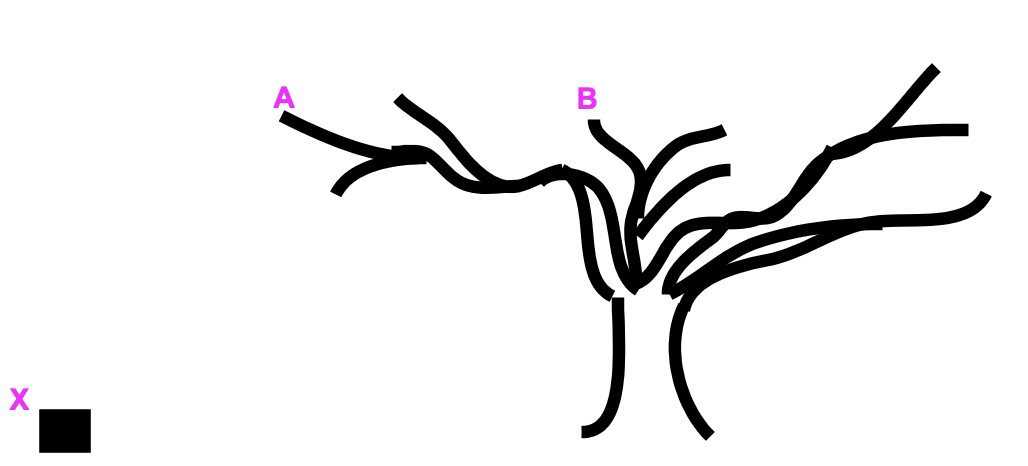
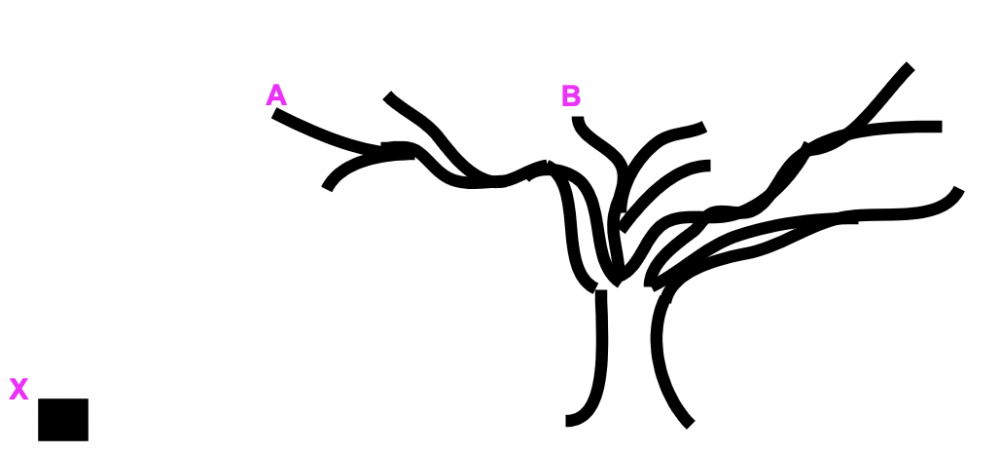
Maybe @kingofjong can clarify if this is more of a "trick question" where the shape of the tree makes difference. Something like this, where position A and B has same elevation but not same distance to the box "X" (I note that "50 yards of the ground" may rules out "A" above if the size of the tree is to be realistic)
-
What is the point with that? The equation [math]x^{3} = \frac {x^3 * pnp^{2}}{ pnp^{2} + x}[/math] has no solutions for [math]x\neq0[/math].
-
What is the definition of the test, a fail and a pass? Note: The expression [math]x^{3} = \frac {x^2 * pnp^{2}}{ pnp^{2} + x}[/math] does not hold for pnp=85 and and x=5.
-
Thanks for the answer. Yes the RSA reference caught my interest. So far the only pattern I see is that however I try to formulate a request for further information about the fundamentals the ideas are based on it gives the same result, a reference to the four equations and that I should use them: My conclusion at this point is that no information exist in the mainstream science or mathematics that can help me gain enough insight in these ideas. At my current level of knowledge and interest the equations are of no interest and not useful. I may revisit this topic if new information becomes available.
-
Does the bold part differ from what I said? (Note that torque and mechanical work is not equivalent; the mechanical work required for or applied during rotation is the torque times the rotation angle. An open differential that applies same torque to both wheels and more mechanical work is required for or applied on the wheel that spins fastest. This is just a clarification and does not change the conclusion; an open differential applies same torque to both wheels.)
-
I agree with the disagreement; "load" is not a good word to describe. Probably "work" is better"? When only one wheel is spinning the mechanical work performed by the engine is related to the spinning wheel, not related to the wheel that is stuck and not spinning. That is ok, and in an ideal situation with no losses and massless wheel my description with energy required (my second post) does not apply. Note my first post, I believe we agree that you are correct. My use of incorrect terminology in the followup may have added some confusion, sorry for that.
-
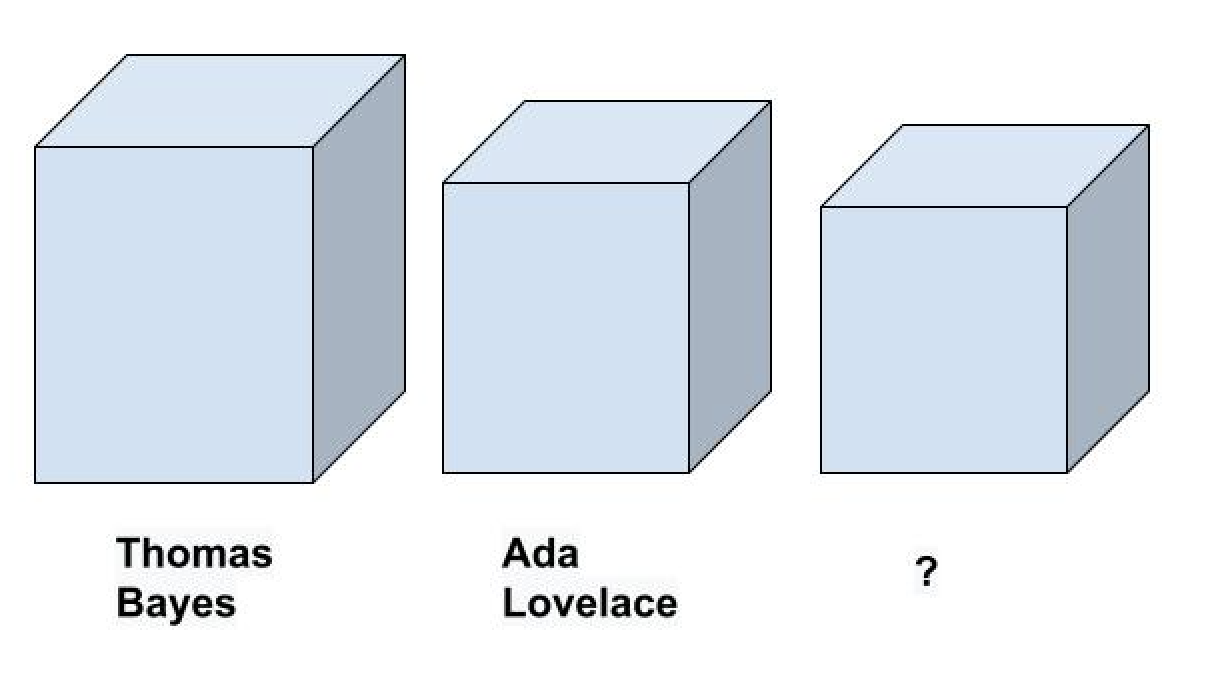
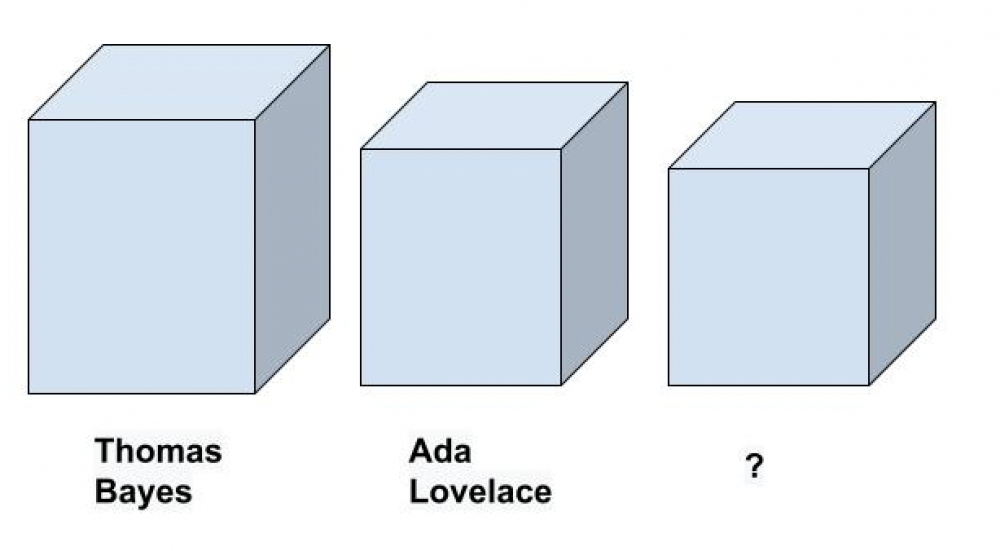
Ok.What is a pattern to you? What is the benefit of a pattern in this claim: Yes. And my understanding of the is that you try the opposite; predicting the person from too few polygons. Crude example: There is a pattern, all my models has one polygon. But that is not enough to find the unknown person below. I would like some explanation of, or reference to, the mathematical principles that you believe could predict the factors of a large semi prime when the factors are random.
-
Just a thought, is it possible that there is misunderstandings* about torque, power and energy? In the case of an open differential: If one wheel slips and spins up while the other wheel stops spinning then energy will be required to increase the angular momentum of the slipping wheel. When only one wheel is spinning the load on the engine comes from the spinning wheel, not from the wheel that is stuck and not spinning. So that one can say something like "open differential will, at times, send all the energy to the one tire with the worst traction". Similarly, since there is friction and other losses, "open differential will, at times, send all the power to the one tire with the worst traction". Not sure about the word "send" in this context, I'm paraphrasing the statement in opening post. *) not @BusaDave9 but in the group referenced in opening post (or in my understanding!).
-
I know where you claim the pattern to be. I want to know how there could be a pattern.
-
Interesting topic. Here is a description that may point at what you wish to discuss. (Bold by me) source http://zhome.com/ZCMnL/tech/Torsen/Torsen.htm (also used on wikipedia at https://en.wikipedia.org/wiki/Differential_(mechanical_device)#cite_note-10) Question: What does "send" mean in this context? Can I assume the differentials in this topic does not have anti slip or traction control or similar? Electronically controlled 'active differentials' (not sure about correct word) may have components that send signals but I do not think that is intended here.
-
An addition in case someone is interested in further discussion of the original topic: Since the Actor Model has concurrency a process calculus* such as π-calculus** applies to the discussion. From Wikipedia (bold by me) My understanding (so far) is that to discuss Hewitt's models one need to have the above in mind. I'll do some more reading and maybe post a followup on the claim in title of the thread "Church-Turing thesis is outdated". *) https://en.wikipedia.org/wiki/Process_calculus **) https://en.wikipedia.org/wiki/Π-calculus Hewitt paper mentioning π-calculus https://arxiv.org/vc/arxiv/papers/1008/1008.1459v8.pdf
-
Thanks for the reply. There are plenty of sources* for proof of NFA and DFA Equivalence. And again: I was curious about nondeterminism in the context of this thread; Carl Hewitt's papers and the mathematics used in the Actor model of computation. It is hard to apply your arguments about nondeterminism if you define nondeterminism in another way than the authors that this tread is about. I addressed this earlier: In the theory of computation there are more than one mathematical model for instance Turing machine and lambda calculus. The actor model, the topic of this thread, is a concurrent model. That needs to be taken into account when discussing determinism and nondeterminism. Yes you are allowed to say that. "Allowed" does not mean it is necessary or appropriate to say it. Example: https://courses.grainger.illinois.edu/cs373/fa2013/Lectures/lec05.pdf
-
This thread is about concepts I have not worked with a lot. I am open to learn new things about computer science, preferably things from the scientific mainstream. I am less interested in personal assumptions, incorrect conclusions or unbacked claims.
-
Ok. Maybe you can provide another source, preferably a peer reviewed paper?