exchemist
Senior Members
-
Joined
-
Last visited
Everything posted by exchemist
-
What I meant is that it is a bit of a stretch to claim the Holy Roman Emperors represent a continuation of the Western Roman Empire. They were not Romans, they ruled over various chunks of continental Western Europe, and did so from places nowhere near Rome, like Aachen.
-
Defying Hitler. Synopsis: "Sebastian Haffner was a non-Jewish German who emigrated to England in 1938. This memoir (written in 1939 but only published now for the first time) begins in 1914 when the family summer holiday is cut short by the outbreak of war, and ends with Hitler's assumption of power in 1933. It is a portrait of himself and his own generation in Germany, those born between 1900 and 1910, and brilliantly explains through his own experiences and those of his friends how that generation came to be seduced by Hitler and Nazism." I thought now would be a good time to read how a demagogue, encouraging a cult of personality, can subvert the institutions of the state and seduce a population, little by little.
-
Sorry typo thanks.
-
Yes but the Holy Roman Emperor was just an honorary title that developed from the coronation of Charlemagne as emperor by the pope, in return for the protection he provided to Rome against the Lombards etc. Whereas the Roman Empire in the East survived in Constantinople until 1543.
-
I don't think so. The basic problem, as I understand it, was over-extension of the Empire and consequently increasing reliance of the army on colonised people to man it. I think competition from the Goths, notably Alaric, had something to do with it as well. But that was not until c.4th AD. I think it was still flourishing in the c.1st.
-
Sounds good in principle but I can't help wondering how the industries affected are going to calculate the numbers to submit on imported goods, and how the EU will be able to check they are genuine.
-
No. The pairing is dictated by the way the H bonds line up and this makes only 2 specific pairs fit together, namely A-T and G-C. This is what ensures that a single strand of DNA, when it has been unzipped, will attract the same sequence of bases as the complementary strand that was unzipped from it, thus making another copy of the previous complementary strand. So your model should have A-T and G-C links only between the strands.
-
Sure, it makes perfect sense. One wants maximum resonance from the body of the instrument. I would presume the use of drying oils, such as linseed oil, would help repel the moisture from sweat. Which reminds me of that joke in the Molesworth books about the boy not paying attention in a biology class about hibernation: Master: "Molesworh, what are you doing? Pay attention. Now, what does a bat do in winter? Molesworth: "Er....er.......It splits if you don't oil it Sir."
-
On the contrary, the covid vaccines have saved millions of lives. I have no doubt that air pollution worsens respiratory conditions and will make the symptoms of respiratory diseases worse, or even reduce resistance to infection. However it is mad to suggest that improving air quality is any kind of substitute for vaccines. That really is tinfoil hat territory.
-
If you want it for musical instruments I think you maybe ought to consider contacting that Greek outfit and asking. They are in the conservation business, it seems, so pretty close to your sort of application. But I take your point about sweat when holding an instrument, such as a violin, while performing. You certainly need something that is not weakened or dissolved by sweat. That is a more demanding application than a picture or piece of furniture, certainly. From looking just now it seems most violin varnishes are traditional, involving things like colophony and linseed oil. There is a lot of stuff about the importance of the varnish not being too rigid or it reduces the sound of the instrument, and issues like that. Well out of my league anyway - I don't play an instrument, only sing.
-
That fits, certainly. I suspect this product is the resin already fully polymerised, i.e. the curing step was done during manufacture. But let's see if the OP comes back and comments.
-
I would not characterise it as hubris but I am afraid I do think we are witnessing the end of US dominance of geopolitics, as a result of the possibly terminal dysfunction of its politics. One sees every day authoritarians, in Russia, China and even now Israel, becoming ever bolder, as they see the US weaken. The EU is finding itself suddenly exposed by its tacit and complacent reliance on the US to uphold the rules-based order that has largely held sway since the end of the war. The Chinese are gearing up to retake Taiwan and appropriate the South China Sea. Putin knows if he can hold on for a Trump presidency, he will be assured of success in Ukraine and can turn his sights towards the Baltic States and the Kaliningrad exclave. Israel has embarked on a Final Solution to the Gaza problem, via blatant ethnic cleansing and what looks increasingly like genocide, while the US is impotent to stop it. There is every sign that the US Republican party has withdrawn support for the democratic system, taking a large chunk of the electorate along with them, and instead embraced a loathsome personality cult. The USA will be lucky if its judicial system, its free media and its term limits on presidents survive. The country will be consumed with its own internal problems for the next few years at least. Xi, Putin and others will be rubbing their hands at the prospect. So much for "making America great again".
-
This is not my area of expertise either, but looking on line, it seems to be an already cured resin, for dissolving in a solvent as a varnish, or as a component in paint formulations etc. I thought this site was interesting: https://www.insituconservation.com/en/products/synthetic_resins/laropal_A81. They seem to recommend it as a varnish for conservation of paintings. I can't imagine they would want to add acid curing agents for such purposes. So my guess would be you just dissolve it in a suitable polar organic solvent, apply it and let the solvent evaporate. But that site, in Greece, has a contact page so you might consider asking them if you need a curing agent or whether you just dissolve it and if so what solvent they recommend.
-
Since there are 10⁶ ml in one litre of water, there are 10⁵ml in one dL. Equating 1mg with 1ml is only valid for substances with a density of 1g/ml (or 1000kg/m³ in SI units). So-called "cholesterol" in blood is not in fact the chemical substance cholesterol, but particles made up of a range of substances including fatty acids, esterified and unesterified cholesterol, proteins etc. From what I can find on the web, these particles have densities ranging from approx 1.05-1.2g/ml. (Blood plasma has a density of 1.006g/ml , apparently.) The chart I found is this one: https://www.nature.com/articles/s41598-021-95451-3/figures/1 Whether these differences in density are significant or not in the context of your enquiry I do not know.
-
I would imagine one difficulty relating the present warming to previous interglacials is the rate of CO2 increase and consequent warming has no parallel in the past. We will be farther from equilibrium as regards melting of ice, isostatic rebound etc. than past warming processes. So any effects that take time to manifest themselves can be expected to lag the warming that causes them.
-
Since the pipes and connection will all be behind the appliance, I should have thought there would be little need to worry about the appearance of the piping.
-
Sounds more like Japan. Presumably an operational hazard in the US. 😁
-
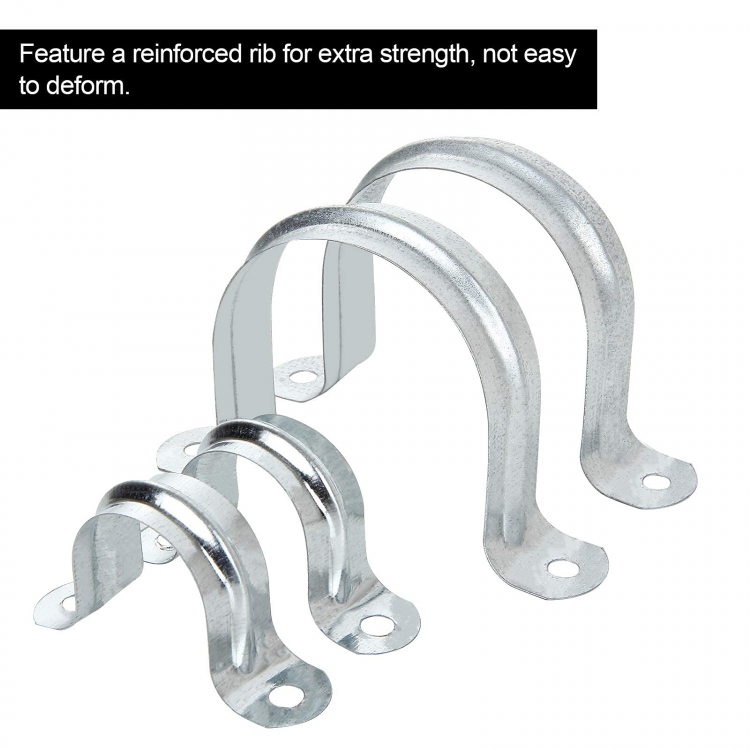
I'm in the UK but surely all you need is a couple of U-brackets, like this, isn't it? :-
-
I recall similar claims cropping up a number of times. I've always tended to dismiss them as psychological manifestations rather than physical effects, though no doubt they can be real for the sufferer, whatever the cause.
-
There was a thread on this back in 2005: A helium (or hydrogen) balloon can lift of the order of 1g per litre of balloon volume.
-
Is what true or false?
-
Not an alkali metal, as all of these react pretty violently with oxygen in the air.
-
0% is interesting. There may I suppose be special "stove glass" with an expansion coefficient even lower than Pyrex. Anyway yes, thermal expansion of a part in the middle of a plate, that is hotter than the periphery, will tend to make it bow up or down, or twist, to relieve the strain - i.e. warp. One other thing: glass is a good thermal insulator. So the glass top may also protect whatever is underneath from getting too hot. Anyway, glad you found the comments helpful and good luck with the repair.
-
Well I suppose you could get the MSDS for a start. There will generally be information about eye irritation and inhalation on those. But you may have already done that.
-
The relationship would still exist, I think, since both energy and mass are properties of matter that do not depend on light. By the way the equation does not relate energy with matter: it relates energy with mass. That distinction is important.