
sethoflagos
Senior Members
-
Joined
-
Last visited
Everything posted by sethoflagos
-
Say Alice observes a time interval of 1 year and space interval of 1 light year between two events. If Bob sees a time interval of 1 million years between between those events is the following not true: Bob's space interval = sqrt (Bob's time interval2 + Alice's space interval2 - Alice's time interval2) = 1 million light years Hence, presuming the technology was available to detect CMBR radiation as the age of the universe tended towards infinity would not the source of that radiation tend towards being infinitely distant? ie infinities in the time intervals spawn infinities in spatial intervals.
-
Substitute axis/axes with interval/intervals. Are we good now?
-
Yes - and each observer has their own world line which is typically rotated from the other's point of view according to their relative velocities such that the proper time interval of one is seen at least in part as part of the space interval of the other. Does that help? I'm sort of uncomfortable trying to explain the mechanics of coordinate transformation to a mathematician 🤨
-
You've framed this discussion so far in terms of the (understandable) difficulty in envisaging a spatially infinite universe. Do you have the same difficulty in envisaging temporal infinity? If the expansion of our universe has (as seems likely) no means of reversing then how can time (in the forward direction) be anything but infinte? And if so, that sounds like a good prima facie case for the infinity of space-time in at least one dimension. But if space-time is only infinite in OUR time dimension what impact would this have on far distant observers for whom our time axis is transformed into the spatial axes of their local coordinate system? We must all agree on the observed spacetime interval between two events (because causality) and while I'm admittedly no mathematical expert and speak with only some slim understanding of SR, it does appear that an infinity in any one dimension of spacetime implies infinities in all. Is the 'fade to grey' option on the table? The impression I get is that the boundaries of spacetime are either infinities or singularities. Taking the time dimension again, but this time in the reverse direction, when we run the film backwards we end up in a singularity and all hell seems to break loose. Same deal with black holes. I'm not saying that our squeamishness towards infinity is akin to a fear of sailing of the edge of the world into the bottomless abyss. But it might be. A bit. Personally I experience less angst over infinity than I do singularities. Not that counts as evidence for one or the other. I'd say the balance of the argument is a bit better than 50:50 subject to whether or not you can give my spacetime interval argument a good caning.
-
When an allele changes its frequency of occurrence in a population, is it because of adaptive pressure or just chance? The mechanism is the same either way: individuals with that particular allele just happened to have a greater or lesser mortality/reproductive success than the population mean for some period. So to me it seems that genetic drift is not some fundamentally different 'process' to evolution by natural selection. Rather they are two sides of the same coin. Given that the thrust of the OP is specifically related to the overall behaviour of complex systems; systems where we typically expect emergent properties of the whole to dominate over action at the level of the individual; systems where we typically expect the whole to be greater than the sum of the parts; I think we should be more wary than usual of the reductionist splitting of pertinent parts. None of the parts exist in isolation. The OP is concerned with some apparent similarities in the development or 'evolution' of increasing diversity with time in a wide variety of disparate complex systems such as nucleosynthesis, earth's mineral composition and life. While I think the article over-eggs the pudding to a certain extent: two unifying features struck me as I read it. 1) The Arrow of Time is a major factor in all cases therefore the 2nd Law of Thermodynamics is a dominant factor. Nothing else in physics has this feature. 2) Pound for pound, systems with more types of 'thing' have significantly higher entropy than those with less so what is driving the diversity of these systems? Given a temperature gradient and a few basic building blocks to get the ball rolling the 2nd Law of Thermodynamics will (eventually) build any new structures it is possible to build quite spontaneously, and use these as building blocks for constructing yet more. (Sorry, I've a bit of a thing about the 2nd Law) Anyway, that's the pattern that the authors are picking up on.
-
Isn't it pretty well established that 'evolvability' is itself under strong selective control? And that genetic drift, the ability of a population to lose non-vital alleles at some optimal rate as a kind of spring cleaning exercise is all part and parcel of that evolvability? Genetic drift is a particularly interesting case wrt the OP as it represents a steady source of decline in the diversity of a complex system running counter to the main thrust of the linked article. Perhaps the message of genetic drift is to remind us that non-transitory structures in complex systems require sufficient energy flow passing through the system to maintain their low entropy configuration. Of course, Dawkins has pointed out that these structures are not confined to living forms but also include the evolution of their extended phenotypes such as beaver lodges, weaver bird nests, termite mounds and AI technology.
-
Not sure what the issue is with 'bath' - other than my version will be a lot shorter than yours. It still follows the rule: unvoiced for endings of nouns and adjectives; voiced for verb endings. So bathe has the silent 'e' to lengthen the 'a' and voice the 'th'. Compare breath/breathe; tooth/teethe; cloth/clothe etc. A key one where I suspect we will differ is that I don't voice the ending of 'with' which is the older form that you Southerners forsook for some strange reason.
-
Just to correct some erroneous assumptions made above, the following quotation from Wikipedia entry https://en.wikipedia.org/wiki/Eth is worth reading The distinction between voiced and unvoiced 'th' has never been made in English by its representation as 'th', thorn or eth. They are simply alternates for the same pair of sounds. It's a common misunderstanding. In principle, you can go through a Beowulf manuscript swapping all the thorns for eths and vice versa, and still claim with some justification that you'd not introduced any spelling mistakes. Whether the sound is voiced or unvoiced is governed by a) common contemporary usage (always) and b) the adjacent vowel sounds (usually). Not by its orthography.
-
I've not looked at this for quite a few years, but for sure, in Britain the UKAEA and Defence industries were active in the field and that stuff rarely makes it into the public domain. You could try looking at what CERN have on this.
-
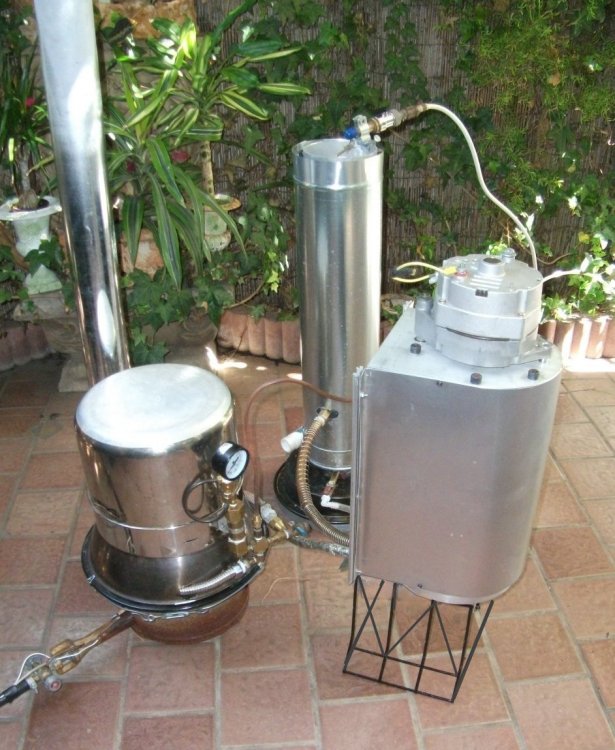
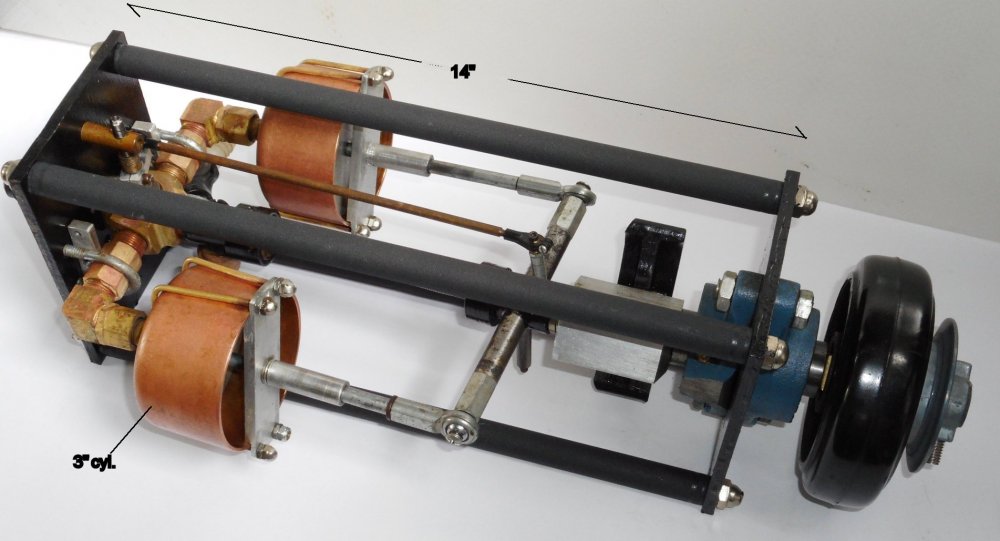
They're out there. See Green Steam Engine
-
In the late '80s I had a spell of losing a bunch of expensive processor cards in a paper mill control room I'd put together. I had my own 'clean' mains transformer, robust 5 kVA voltage conditioners, all the recommended kit. Then one night, first the underground 5 MW 33 kV supply incomer blew up the road followed shortly after by the 10 MW incomer. After they got fixed, no more fried processor units. With that voltage level involved, no surge arrestor on earth is going to be fast enough to catch any spikes that leak through into the low voltage distribution. There seems to be a trend these days to lump EMP protection in with general exposure to high intensity ionising radiation, with components design to resist these challenges going under the umbrella of 'radiation hardened'.
-
Yes. The machinery of state needs to keep running.
-
Only Parliament is dissolved, not the Government. Government Ministers etc remain in place though they are no longer MPs.
-
Apparently I could have added 'morningness' to the assistance given by Neanderthals to climate adaptation: Published last week: Archaic Introgression Shaped Human Circadian Traits ... with a fair amount of interest. Neanderthal DNA May Help Explain Why Some People Are Early Risers
-
That looks like an awful lot of Dakotas.
-
My usage of the term is clear enough. You don't get to redefine it. Asking loaded questions ('have you stopped beating your wife?' being an infamous example) is not a mark of wisdom. It is a mark of petty spitefulness. As is having a dig at my age.
-
Take viscosity as an example. We can picture two molecules within a streamline, one with slightly less momentum than the average for that streamline a little ahead of one with slightly more. Clearly at some point there will be a collision. If both molecules are identical and have spherically symmetric electrical fields, we can come up with some simple distribution of momentum scattering angle and quantify the transfer of momentum into adjacent streamlines. The mass interchange between flowlines generates some incremental changes in density, the momentum interchange generates some incremental changes in pressure. The streamlines will undergo nett local acceleration/deceleration accordingly generating further collisions. That's about as far as I ever took my perusal of the emergence of viscosity phenomena at the molecular level. I guess I could incrementally improve my model of molecular velocity distridution within the flowstream, integrating over all flowstreams and imposing whatever constraint (eg no-slip pipe wall boundary, steady state etc) seemed appropriate until the overall velocity and pressure profiles stabilised. Eventually, I'd come up with some number for pipe wall shear stress which is the usual parameter of interest to my colleagues in piping and mechanical sections. Or I could just make use of Newton's cunning postulate that shear stress seemed to be directly proportional to shear rate for many fluids of interest. It saves an awful amount of time.
-
A clue can be found be looking at where introgressive Neanderthal alleles are found in the modern human genome. They are strongly represented in areas associated with climate adaptation (skin and hair type) and immune response, areas that would be particularly useful for a newly migrating population to acquire from a sitting population that had adapted to that environment over a long period. They are to all intents and purposes absent from large areas (known as 'Neanderthal deserts') where our post split ancestors, underwent significant genetic change such as in FOXP2 (language development etc) and the X chromosome - the areas that make us most distinctly, who we are. The distribution therefore seems to be based not on how many times introgression occurred, but on whether that introgression was beneficial or not. The % DNA contribution doesn't therefore correlate with the number of Neanderthals in our family tree, but merely indicates that there was at least one.
-
Because those who put their personal integrity on a pedestal and refuse to just 'act the part' once in a while tend to run into issues both at home and at work. Are you 7?
-
Clarion call of the single and unemployed. Been there. Moved on.
-
You seem to be saying that spacetime and a complex 4-D spinor space are the same thing. To me, any object in a complex space does not have an energy content though its projection in real (non-complex) spacetime will. So they aren't the same thing,,, or are they?
-
Okay... so I've arbitrarily picked something. Could such a space be: ... or not.
-
If you're moving onto eigenstates of Hamiltonians again then you're losing me. How does this invalidate my point 1), in easy steps.
-
This is consistent with what I posted I think, though you have made it more general in application. In the sense that any arbitrary vector can be expressed as the sum of 3 vectors in your coordinate system of choice? Or are you making some deeper point that I'm missing?
-
Nothing is a strong word. @iNow's comment is not to be dismissed lightly: There is considerable evidence of the cerebrocerebellum playing an executive role in the planning of motor actions. It may be far from the whole picture, but it certainly appears to be apart of it.