swansont
Moderators
-
Joined
-
Last visited
Everything posted by swansont
-
The Webb isn’t in LEO You have no reference for “they don't want them to get cold”
-
And your reference for this is...? What's the point of discussing things if you're just going to make stuff up?
-
That's not accessible now, though. That's a lander that's not returning. I've seen a study where DNA was stored at temperatures below -20ºC and was stable for 24 months. The units that have only recently been available to the ISS don't get that cold. Once the temperature issue gets solved for LEO, the next issue is radiation.
-
And how accessible is the moon?
-
Yes. Perhaps you need to refresh your memory of it. You can’t stay in the shade, and even mirrors heat up. You have to get away from earth to leverage the cold of space. In LEO, where it’s relatively accessible, it’s difficult to maintain something cold. Out where you have the Webb telescope, you can. What’s the point of storing it where you can’t get it?
-
Circular reasoning. You’ve assumed a coverup in order to assert there’s a coverup.
-
It’s not actually a deep freeze in earth orbit, for one. On the moon, for example, the temperature can hit 100 degrees C.
-
I just read that US automakers are threatening a strike for a 40% increase in pay, which is the raise that the CEOs of some major automakers have gotten the last 4 years. Going to be interesting to hear how they can’t afford to pay the people who actually do the work
-
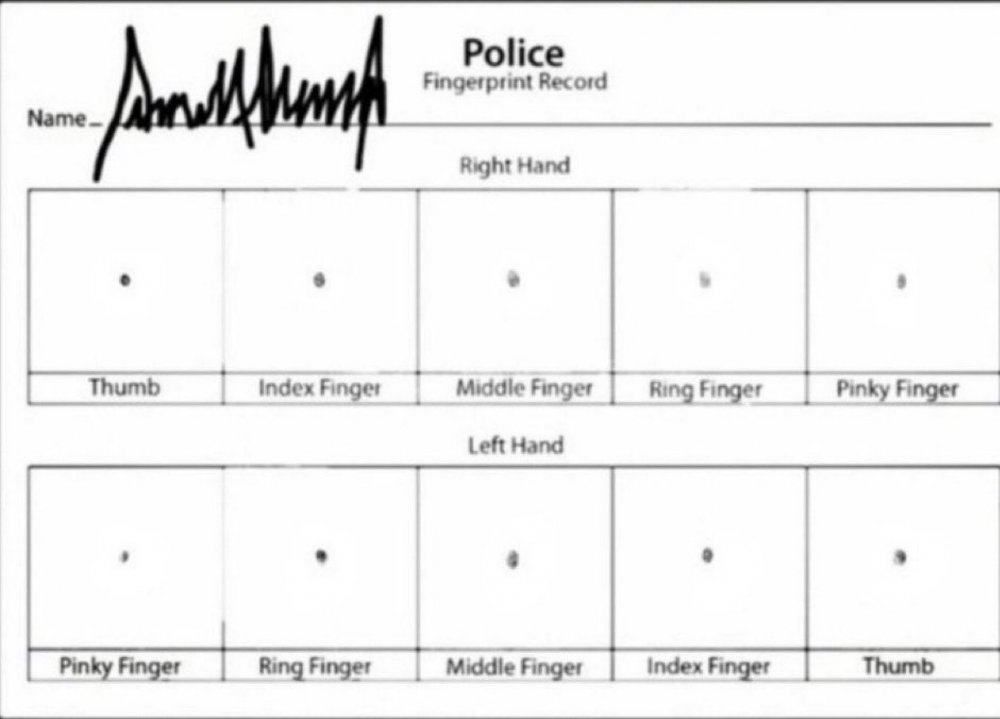
They released his fingerprints
-
Since the velocity addition formula can be derived from the Lorentz transforms, this would mean relativity is wrong. Do you have any experimental evidence of this?
-
! Moderator Note Posting to promote your youtube channel is a violation of our rule on advertising (2.7)
-
If you could do this, you would get larger nuclei that are stable vs alpha decay, and what are now fissionable materials would not be.
-
But you have not solved anything - particularly the immobilization of the deuteron - with quantum mechanics.
-
Details? BTW, volts isn’t a measure of how much energy you’ve collected.
-
ug/l is micrograms per liter
-
The number is at the end of the contract, i.e. 5 years from now, and it’s pay plus benefits https://finance.yahoo.com/news/170k-bit-exaggeration-ups-driver-111600072.html The union says the deal would improve the average top rate for delivery drivers to $49 per hour. At that rate, working 40 hours a week would pay just shy of $102,000 annually. (not including overtime) The rest is what is paid for medical and other benefits, and paid into the pension account. There’s a limit to how long you can work, and this mantra becomes less and less useful as you approach minimum wage.
-
Forecasting technology has a pretty poor track record if there’s any specifics included. Yes, technology will advance, but the devil’s in the details. If you go back to the 70s and 80s, the predictions of what life will be like in 50 years bears little resemblance to what we have and what’s on the horizon. Their idea of robots in the home was not roombas. We don’t have flying cars getting us everywhere - and it really doesn’t take much analysis to know why, but you need to apply some analysis to know where the tall tentpoles are and what problems need to be solved, and know if it’s a fundamentally problem (like flying cars; it’s the energy) or technology..
-
This is your proposal. Which uses classical equations to describe the electric field you are generating. One might think that it’s a classical problem.
-
! Moderator Note cyber discussion has been split https://www.scienceforums.net/topic/132269-cyber-warfare-split-from-war-games-russia-takes-ukraine-china-takes-taiwan-us-response/ Let’s try and keep to the topic
-
The abacus by itself was not a computer. But the original definition of computer was a person who did computations and one could use an abacus to do that. So using an abacus is a primitive form of computing.
-
What are you talking about? Electrons do not immobilize the nucleus. The whole atom is free to move. You were talking about creating the electrostatic field with a composite dielectric. How did we get from that to the electron in deuterium? (which has no electron when it’s ionized, as you said it was)
-
! Moderator Note You need to post the content you wish to discuss. No just a document (that’s for supporting information only), and certainly not a word document
-
What is inherently quantum-mechanical about holding a nucleus fixed with an electric field? But that’s what you can’t do with static fields. There is an unstable equilibrium point, but as soon as the charge moves, it’s no longer confined.
-
No, you don’t have charges in a fixed position when you have orbitals. You can’t apply the theorem. The field is a time-average, similar to what you would have classically for charges in motion, which does allow for confinement.
-
And yet there has been very little discussion about biological differences that goes beyond the chromosomes, as compared to references to XX vs XY.