
tar
Senior Members
-
Joined
-
Last visited
Everything posted by tar
-
SwansonT, In a way, the experiment has already been done, referencing your graphs. the magnetic field of the Earth is in one orientation when the clocks are headed east and in the other orientation when the clocks are heading west. In one direction magnetic north is to the beam's right. In the other direction it is to the beams left. beecee, You say there isn't when you use it all the time. If the Mars rover is doing something now, yet we see what it did later, there are two nows. One that is what is happening now, here, and one that is what is happening everywhere at the moment we are in here. relativity equations work, but that does not mean they are correct and common sense is not. there could be confirmation bias in the way the experiment is set up, and differences in results from expected results are often accounted for after the fact relativity is real, but I believe it has to do with light travel time more than with gravity and velocity I am not thinking it is correct to apply angular velocity equations to huge spinning objects because you cannot see the whole thing at once and the equation is immediate The observable universe is all we have, and all we will ever be affected by. If something not contained in the observable has an effect on the observable universe, and we detect that effect, than the thing we considered earlier not in the observable universe would be observable and hence within the observable universe, so talking as if there is something outside the observable universe is without purpose and value. then not than
-
I am making the Earthbound frame special because that is the one we all experience, give or take several seconds. If the universe began at the big bang, then there is a T=0. All objects and events happening now in the universe are the same age in reference to the big bang.
-
I am working on that. I need more information about the orientation of the clocks in the planes. Atomic clocks work on counting the decaying particles of Cesium. The detectors are in a certain direction from the emitting portions. In a moving plane the detector is maybe moving toward or away fromnor the emitter. Doppler shiftwise if you are moving toward a pulse you will count more pulses in a given time than if you are moving away. The data from the various clocks show small variations of readouts from the moving clocks and the stationary clocks. Some of the variations are explained in one direction by gravitation differences in terms of the altitude and distance from the center of the Earth and other differences are explained the motion. The differences are small and not way far off normal error tolerances and there are motions and accelerations not taken into consideration, in terms of time of year and time of day during various takeoffs and landings. One thing about electrons and photons and particles is they tend to move in a straight line but always in reference to the sum total of all the magnetic and gravitational fields it is moving through. When you conduct an experiment on the Earth the Earthbound clocks do not know they are supposed to be stationary. The Earth is rotating around its axis, The Earth is revolving around the Sun. The Sun is rapidly revolving around a huge source of gravity and magnetic fields that are strongest toward Sagittarius. All in all the differences in the clocks are small and the data is wedged into gravitati.onal equations from relativity and motion equations from relativity to account for the small differences. I submit that if I had two "stationary" cesium clocks, they would show differences to the same magnitude as the differences witnessed in the relativity experiment depending on how they were oriented.c One possible experiment to maybe see if my hypothesis is true is to take two identical Cesium clocks and mount one on a platform suspended within a structure that could rotate around four different axis through the center of a cube and its corners. the Axis could be oriented toward and away from the Great Attractor, the Center of the Milky Way. the Sun and the Center of the Earth. I would be possible to program the platform to position the Cesium clock in the same orientations as if it were traveling around the Earth in that direction or this. Maybe, but I don't think so, Consider this thought experiment. Have two twins count the pulses from a pulsar and then send one travelinhe g fast toward the pulsar. The traveling twin will be running into the waves and will see them blue shifted and will count more of them per minute than the twin on Earth. The pulsar is only sending out one set of waves and traveling twin is counting the wave crests that have not yet reached the Earth. On the way back the traveling twin will be traveling with the waves and will see the next wave coming to the ship as red shifted compared to how the Earth bound twin sees them and doubly red shifted in terms of how she saw them on he way out. Like if you were to count the waves on the way out to the oil platform and count the wave crests on the way back. When you return your count of wave crests is exactly the same as the count the guy on shore counted.
-
The world is completely connected. Everything fits. The planets cycle the sun the sun revolves around the center of the galaxy, the galaxy spins in relation to the great attractor. Every molecule, every atom has a history and a present state and a likely future condition. No part of the whole can be removed from its current state and inserted in a different time, because the past has already happened in total and the future has not yet happened. The whole universe fits together seamlessly. No way to exist in another time without taking the whole universe with you. If you take the whole universe with you you are effectively where you began. No time travel is possible.
-
So relativity says the twins will age differently and I say that is nonsense, Anything that is true about how the traveling twin experiences the clocks at home and on the ship will be reversed on the trip back. The flow of time is consistent everywhere, only appearances differ, and everything adds back correctly as neither twin ever leaves reality. Both twins will experience the other in slow motion bhecause of the doppler red shift. On the way back they will see each other's clocks blue shifted. Clocks will be in sync when they reunite. Actually if you want to add reality to the thought experiment, the traveling twin will be traveling so fast the the visible light waves coming from the direction she is going will be blue shifted so much that they will be experienced as high frequency high energy gamma waves and the ship will likely not survive.
-
MigL it absolutely does exist and it is not nonsense, Let me prove it to you. If you witness in your telescope a pulsar and it pulses at a rate of one cycle from highest amplitude to highest amplitude in one second and said pulsar is figured to be 150 light years from here, there HAS TO BE 28,840,000 sine waves in the space between the Pulsar and here, RIGHT NOW. If not, you wouldn't see the peak that is 196,000 miles out, in a second and you do see it. Md65536, the order of events isdifferent to three observers in the same frame of reference if for instance three observers in a triangle light a signal light when they see the lightning strike. However the lightning strike occurred only once at a particular time and the various signals occurred when the light from the strike reached each station. They were causally connected because the light reaching each station caused the signal to be lit. There used to be a ferry boat that served as the station at Port Imperial. It is gone now, But an observer with a powerful telescope on planet 25 ly from here would still see it sitting there on the shore of the Hudson across from Midtown Manhattan. I need no relativity equations to know this. Regards, TAR Mr. Hanke, But if two events occur distant to two observers, lets say a light second away in opposite directions and the observers say they happened now, the events really happened a sec ago. So there is the now they each witness the event at the same time and there is the now when the event actually happened. That is it happened now, in the universal sense, a second ago. An observer at the event would have witnessed it a sec ago. The Mars Rover is doing something now that we won't see for 20 minutes. So relativity says the twins will age differently and I say that is nonsense, Anything that is true about how the traveling twin experiences the clocks at home and on the ship will be reversed on the trip back. The flow of time is consistent everywhere, only appearances differ, and everything adds back correctly as neither twin ever leaves reality.
-
Einstein uses a lightning strike to establish the idea of simultaneity but fails to consider the distance of the two observers from the lightning strike. My contention is that in order to understand simultaneity and discuss it and refer to the order of events and the appearance of time slowing and quickening and distances foreshortening and such, one needs to float the existence of two nows. One where everything is happening in the entire universe right now at the same time, and one in reference to an observer in a location, moving at the speed of the frame of reference he or she inhabits. It is true that NO other observer is in the same time as you are, because all events happening distavnt from you are experienced by you after they occur. But there is a way to take a God's eye view and consider something happening in every location in the universe, right now. Things happening 196000 miles away will be apparent in your personal now in a sec. But they actual happened a second ago when the happened at the same time as everything else that happened in the Universe a sec ago. For instance, the Sun or a star is in your sky now if it is not cloudy. It is immediate. The photons left the object 8 mins ago or 3 years ago, but they are arriving at the back of your eye now. That star is shining now, in the God's eye view of things ,too.
-
Einstein uses a lightning strike to establish the idea of simultaneity but fails to consider the distance of the two observers from the lightning strike. My contention is that in order to understand simultaneity and discuss it and refer to the order of events and the appearance of time slowing and quickening and distances foreshortening and such, one needs to float the existence of two nows. One where everything is happening in the entire universe right now at the same time, and one in reference to an observer in a location, moving at the speed of the frame of reference he or she inhabits. It is true that NO other observer is in the same time as you are, because all events happening distavnt from you are experienced by you after they occur. But there is a way to take a God's eye view and consider something happening in every location in the universe, right now. Things happening 196000 miles away will be apparent in your personal now in a sec. But they actual happened a second ago when the happened at the same time as everything else that happened in the Universe a sec ago. For instance, the Sun or a star is in your sky now if it is not cloudy. It is immediate. The photons left the object 8 mins ago or 3 years ago, but they are arriving at the back of your eye now. That star is shining now, in the God's eye view of things ,too. My suggestion is to consider everything, every object, every event as happen now, existing now. 13.787±0.020 billion years after the big bang. Then considering everything you see or experience as being old news about what happened earlier. The unfortunately is not an actual way to experience other star's nows.We have to just imagine what they might be doing the many years after what they appear to be doing now. In that other now, the God's eye view now, where everything is currently happening. One additional suggestion is to consider everyone on Earth existing in the same now, give or take several seconds.
-
StringJunky, That is what I am looking to discuss. Einstein talks about a lightning strike as a device to establish simultaneity, but does not account for the distance of each observer from the strike there are a number of inconsistencies and impossibilities that arise using relativity equations. One such hard to square issue is that of the speed of light being constant and defined as a travel time over a certain distance. How can you use this as a standard when both time and distance are warped with high velocities and large gravitational fields? the difficulty is an imagination can place two observers at two different points at the same time, but since they are in actuality separated by a distance, NOTHING can happen at the same time in both places only an event that happened half way between would be noticed by both observers at the same time
-
except, Einstein assumes an observer that views both the stationary observer and the moving observer at the same time, in order to compare what they each observe at each moment. This makes the comparison mute as the third observer, that compares the two, has his or her own reference frame and can therefore NOT guarantee anything is happening at the same time.
-
I have read Einstein's train thing and the idea of Simultaneity needs to be agreed upon in order to make any sense of anything. I think you have to consider I have been suspended from Twitter, shadow banned on Gab and now a watcher or bot deleting my sentences as I write.
-
Thread, The OP had some interesting observations. One was of particular import to me. Any point in space contains everything. Not sensible at first glance, but if you think about it, information from the furthest galaxies in the observable universe is arriving as we speak to all points of Earth's surface facing in the direction of said shiny body. Interesting that if you look at a ballgame and I look at a ball game we both see the whole scene, and we are stationed at different points. Regards, TAR
-
Mit have gotten my lowers and uppers and lefts and rights fouled up. Like this, is the way the current number system goes. 10 7 4 1 11 8 5 2 12 9 6 3 Regards, TAR2
-
Actually I don't think the universe is weird at all. It fits together quite nicely. Works better than the model.
-
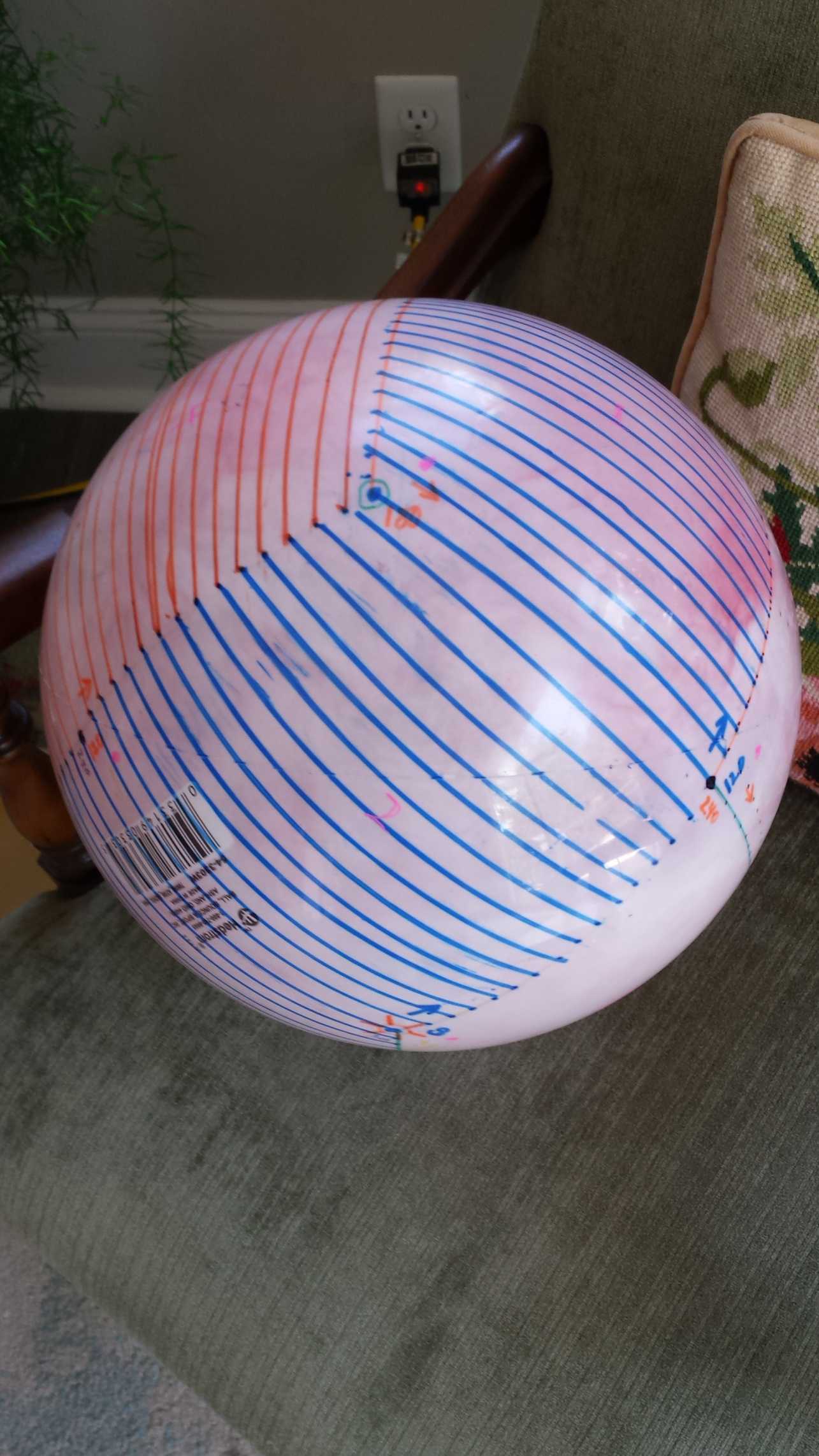
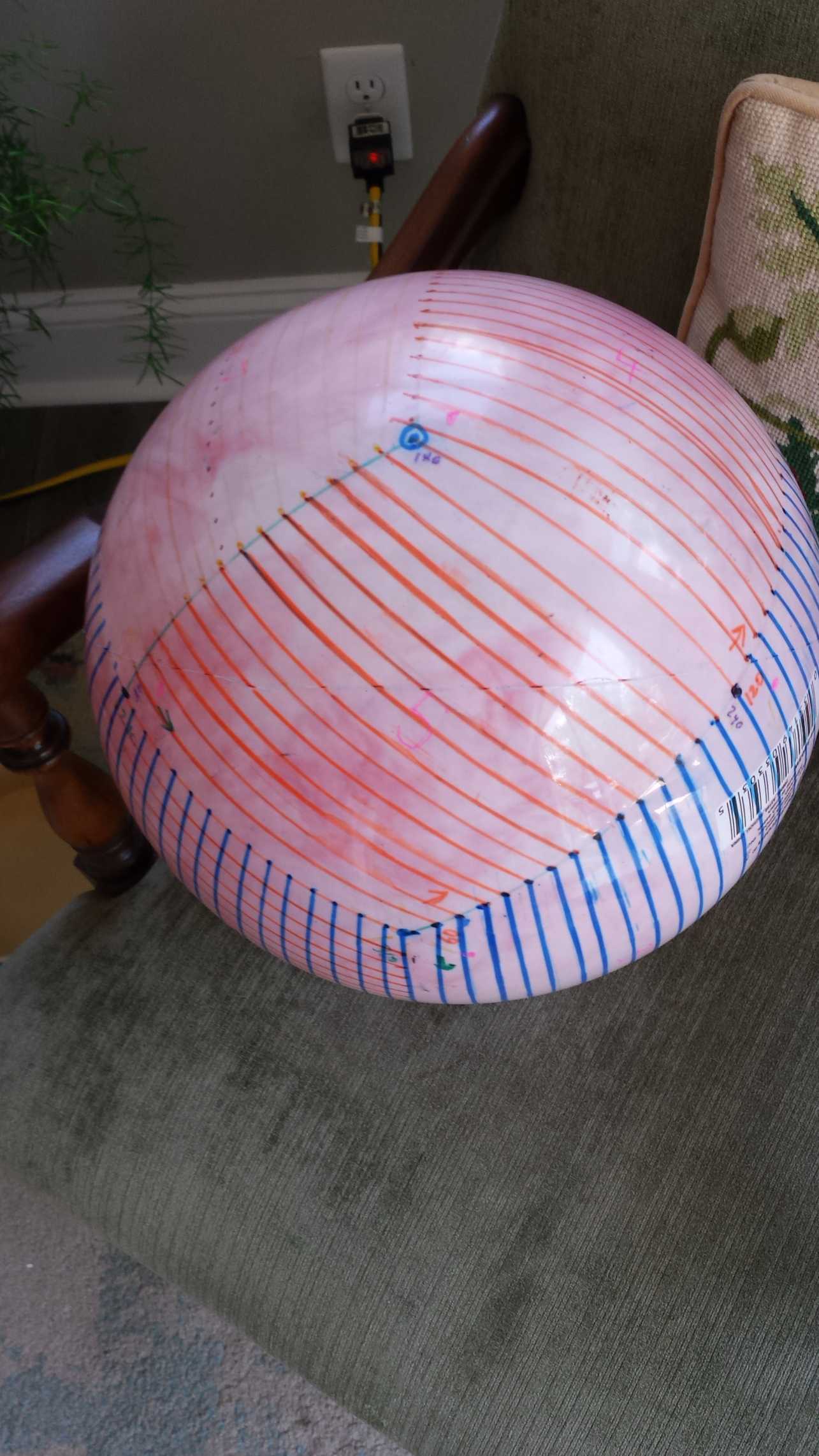
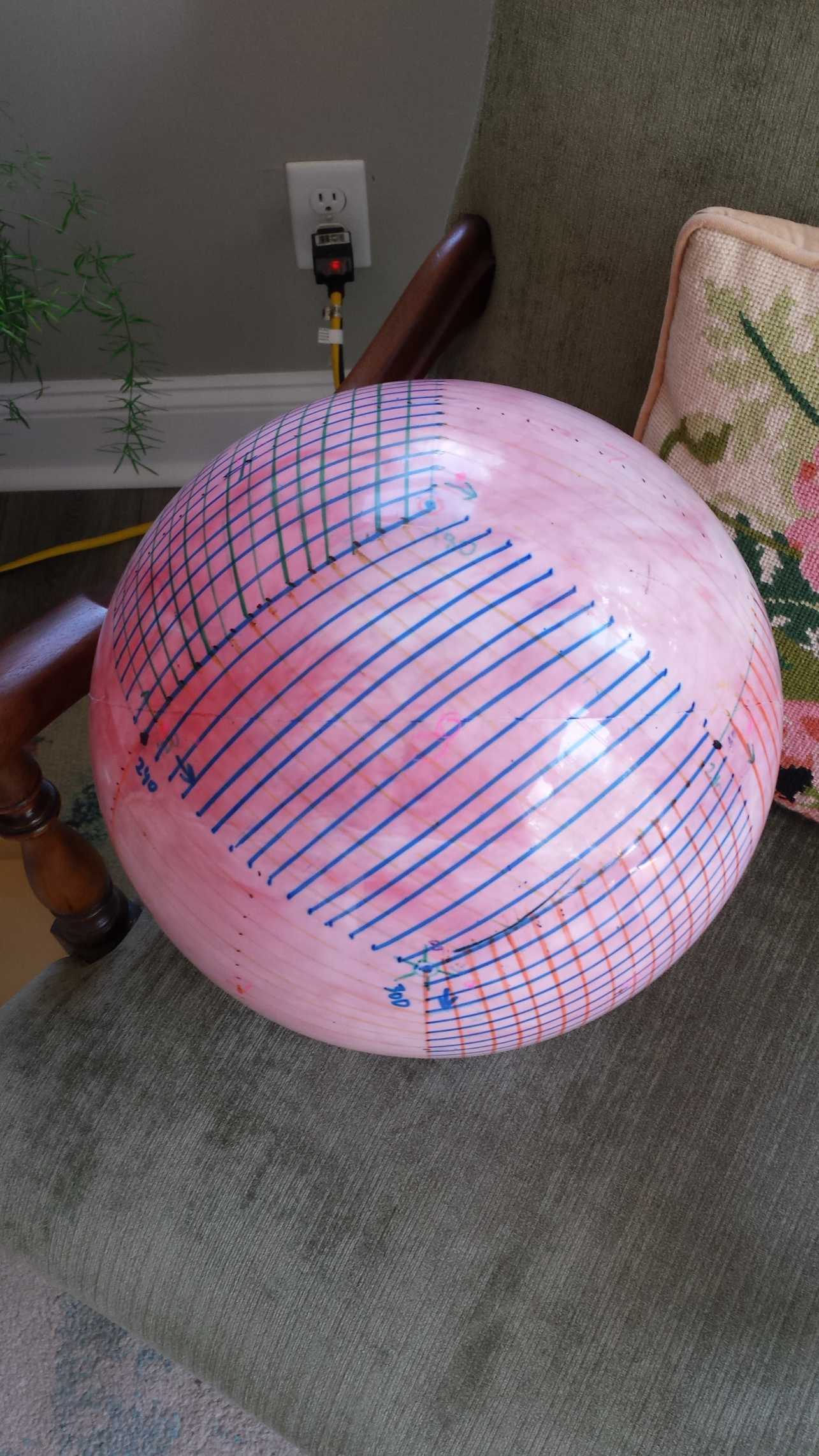
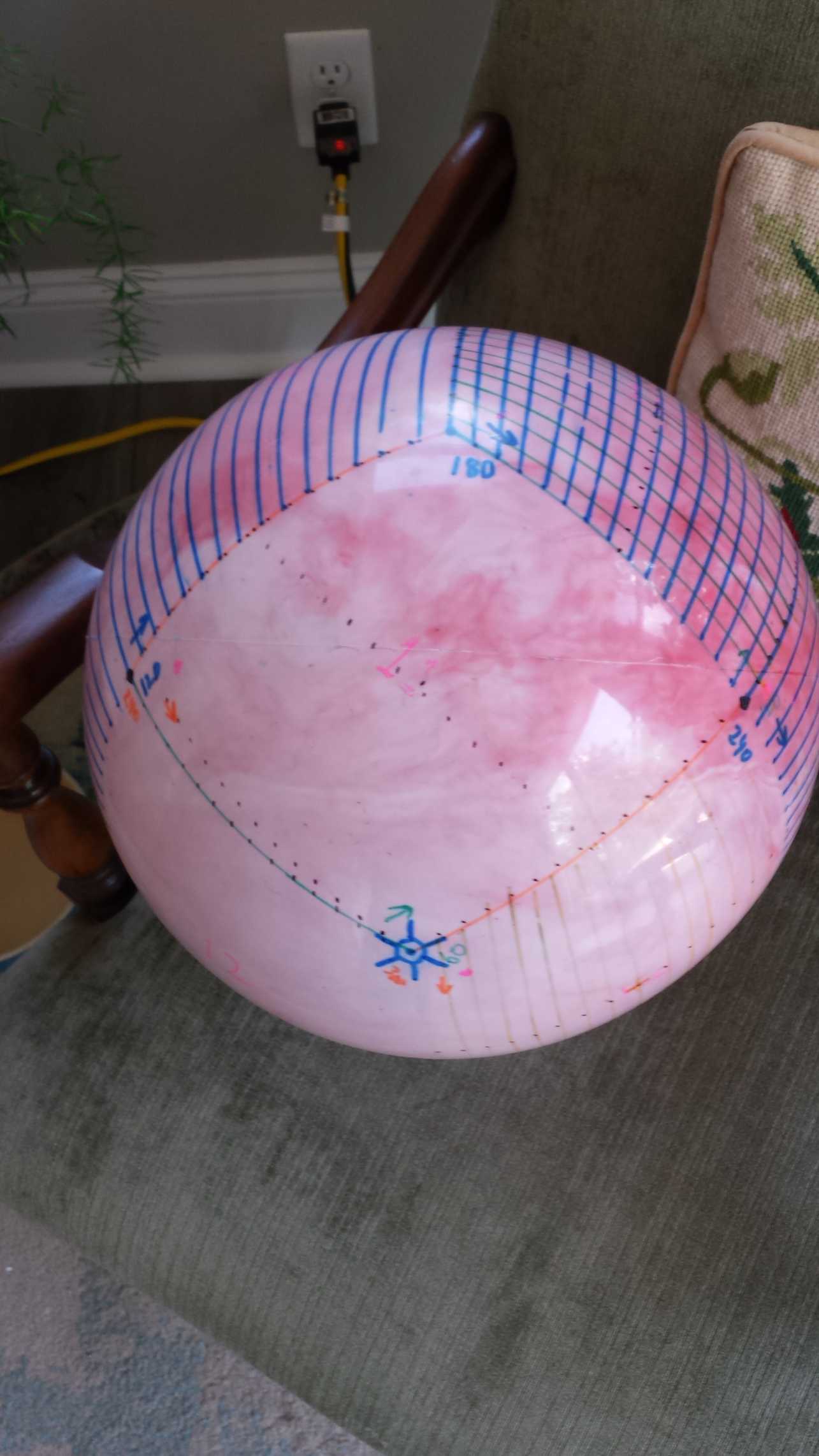
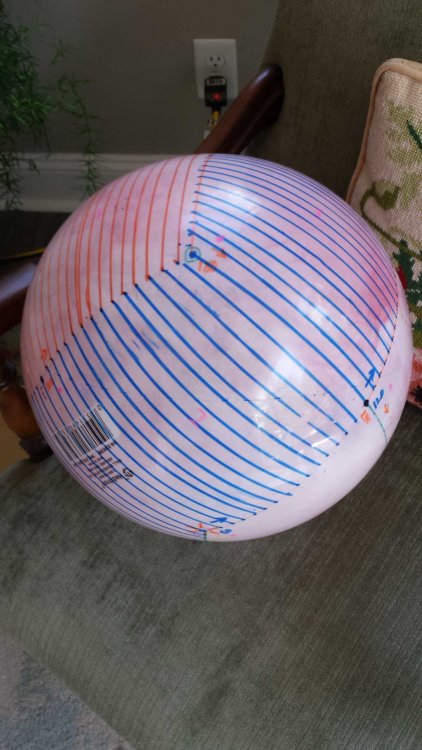
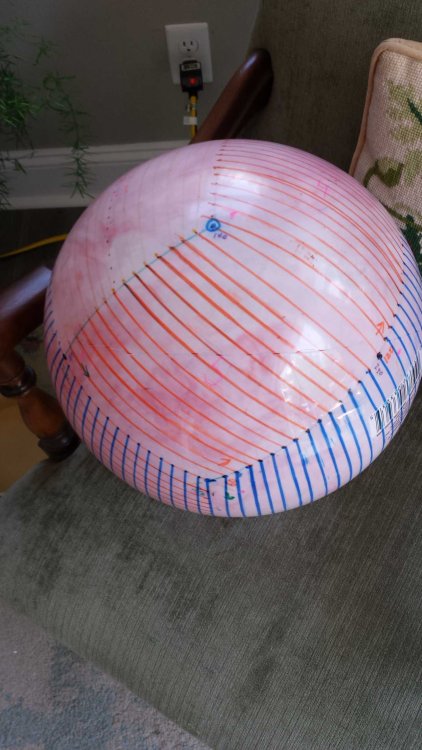
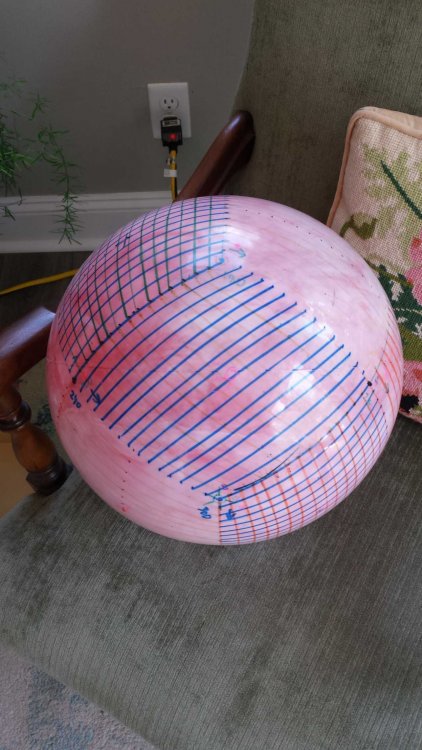
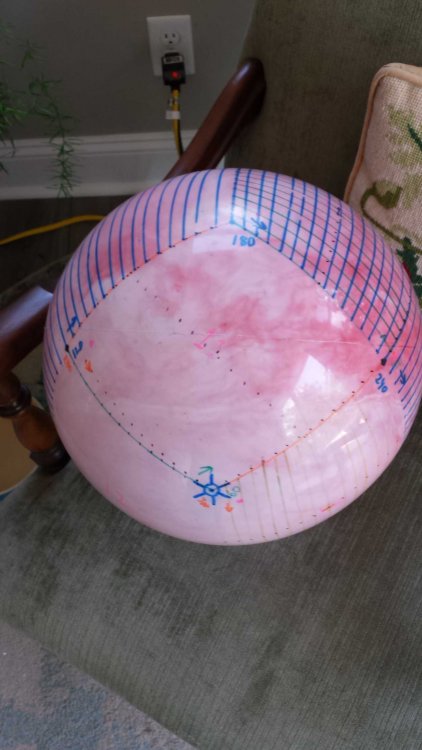
The four images posted are the 4 equatorial diamonds look for the small pink numbers in the middle of each diamond the number system is simple and elegant, unlike the arbitrary numbering I used earlier in the thread to imagine it , 1 is to the upper right of 2, 2 is the equatorial diamond where the date line on the Earth passes through the center, 3 is to the lower left of 2 then rotate as the Earth rotates to diamond 5, again an equatorial diamond. 4 is to the upper left, 6 is to the lower right. rotate to equatorial diamond 8. 7 is to the upper left 9 to the lower right rotate to number 11 10 is to the upper left 12 is to the lower righ Unlike my earlier numbering system this works out perfectly. The order is easy to follow AND you will notice a pick dot in the left corner of each diamond. This signifies the origin of an X Y type grid in each diamond where the degrees go up to the right in the one colors wheel and up toward the top in the other color's wheel. Each color thus spans six diamonds around the sphere and intersects with each of the other color wheels twice. This system is potentially useful because the square degrees are all named and of the same area. spheres have 41,253 square degrees Compare that with this system that shows 43,300 diamond degrees also notice the 3 point under each equatorial diamond Red, yellow, green and blue axis points respectively
-
Swansont, Well of course you are right about all those things we didn't notice, and science found them for us...but we are talking about dark matter and dark energy here which, for I can see exist ONLY in the equations. That is only in the model and the imagination. You can't say "well that explains illness" like you could when we found germs. Regards, TAR2
-
Well no dimreepr you can't, and I see your point. The crackpot has stuff working in his or her mind that any scientist knows can not work in reality. But the other side of the coin is that sometimes I know that what a scientist says is stuff the model says, or the math says or a probability equation says, and I know, from common sense, that it is nonsense. What I mean is my senses give me information that is NOT consistent with what the scientist says. The thing fits the model but makes no sense. For instance scientist say that the models and the math tell them the universe is 79% dark energy. That makes no sense. We have been in the universe since we started noticing stuff. How did me miss 79% of what there is to notice? It seems to me a thing is true if it is true in many ways, not just one. If dark energy is 79 percent of the universe and now we know that, we should be able to explain 79 percent of the the things we only understood 21 percent of before the discovery. I suppose that is the other reason I left the board. I think scientists are just people, same as religious folk. I give no special wonderfulness to people that believe more in their model than they believe in their neighbor.
-
I enjoyed this board a lot. Made some friends and had some great discussions and learned a lot. Got run off by Hillary Trolls. Came back to post my solution to the spherical coordinate challenge I had posed to myself. Saw this thread and had to respond.O It is important to me that crack pots and scientist recognize that they are both working from essentially the same viewpoint. A human viewpoint. And the world is a whole lot bigger than any one person's image of it. For that matter it is a whole lot bigger and more complex than all the images of all the scientists, since man started communicating with him or herself. The scientist and the crackpot have almost exactly the same brain, with all the same chemicals and sections with various functions. Bodies match pretty closely too and the same chemicals are in the brain with the same dopamine/serotonin/norepinephrine in both the scientist and the crackpot, working on in most cases the same problems, with the scientist having more information and the results of more investigations and a better understanding of the collective models. However it is important for the scientist to realize that math is happening in the mind, in the imagination. It is not affecting the outside world until it is used to build something or create something in the outside world or in some other mind. Models of the world are just that. Internal analogous representations of outside the brain reality. Knowing the math means you know the model. The model, by definition is incomplete. It is not reality itself. If reality fits the model it is because the model is consistent and well designed. But reality is under NO compunction to fit the model. Imagination can be wrong. Optical illusions can give the eyes and brain misinformation. Old age can dull the hearing. Taste buds can be dulled by spices, matching facilities in the brain can get old and once sharp minds can become a little dull and slow. Point being, I have great respect for the crackpot, because I am one. The difference between me and a scientist is slight. Has mostly to do with experience and knowledge of conventions. The actual world remains exactly the same regardless of our knowledge of it. On Earth we change stuff all the time. In space we just have moved a few rocks and sent out radio signals. Just because you imagine something does not make it possible. What is possible is what we build our imaginations from.
-
I do not believe the imagining of something makes it possible. I believe it works the other way 'round. When we imagine something it is an "image" of reality. The images we float though our minds and combine and synthesize in various manners are made up of sensory information we gleaned from reality. What we thought about before, what we saw, heard, felt, smelt, tasted or experience through any sense, existed, was possible, had to be, in order for us to sense it in the first place. Our brains "matched" what it imagined against what the eyes, ears, fingers, nose, tongue, inner ear, emotions, pleasure/reward system noticed about reality before. It is a must that reality fit itself. It is NOT a must that our image of reality fit reality. In fact just thinking it, does not manifest into reality that others can experience. You have to do something to bring it into reality. You have to communicate your thought, or build a model, or adjust reality in some way to contain your image. That is, the greater the number of things about reality that have to change in order for your idea about reality to be correct, or possible, the less likely it is that you are correct or that the thing is possible. If nothing about reality has to change in order for your image of reality to be correct, then you have it exactly right. Example. You cannot contain the universe within your skull. You brain is a tiny finite size and consist only of images of what actually is.
-
TAR spherical coordinate system consists of designating the four three points adjacent to the South pole four point as Red, Yellow, Green and Blue, looking at the South Pole, moving counter clockwise around the pole. Each of the four threepoints becomes the center of rotation of an axis going through the center of the sphere. These are analogous to the four axis of a tetrahedron. Looking at them from the south, each axis can be imagined as putting out an infinite number of great circles that intersect at the other end of the axis on opposite side of the sphere, The line going through the South pole is the 0/360 line and the other lines are designated in degrees in a clockwise direction around each of the four axis. Twelve diamonds are described by drawing the great circles at 0 degrees, 60 degrees, 120, 180,, 240, 300 and 360. The 0, 60, 120 are the same circle as the 180, 240, 300 but retain them all because the intersections of certain of the degrees on the six diamonds that are furthest from the axis ends, around the middle of the sphere, in reference to each axis, allow a description of every possible direction from the center of the sphere with two coordinates. Diamond 1 through 12 are numbered as follows. 1 Red 180-240 Blue 120-180 2 Yellow 240-300 Blue 60-120 3 Green 300-360 Blue 0-60 4 Yellow 180-240 Red 120 180 5 Green 240-300 Red 60-120 6 Blue 300-360 Red 0-60 7. Green 180-240 Yellow 120-180 8 Blue 240-300 Yellow 60=120 9 Red 300-360 Yellow 0-60 10 Blue 180-240 Green 120-180 11 Red 240-300 Green 60-120 12 Yellow 300-360 Green 0-60 Notice each color appears 6 times, the six 60 sections. So if you have a point in space at the center of a sphere, and designate a South pole surrounded by four tetrahedral axis you designate one as Red and the whole system is determined and every direction in space can be designated with color degree, color degree and every point in space describable by adding a distance to the direction. Copyright Thomas A. Roth Aug 8 2021
-
Mordred, In the one link though it showed an electron responding to zero point energy like a ball on the end of a spring, with a sine wave type recoil pattern shown. An electron can't become a little more or a little less matter. It has to have a little more or a little less energy to follow the sine wave pattern shown. That would indicate a potential in an energy field, carried by a photon like entity. And my question is, if energy is exchanged in quanta, by a single photon of a certain energy, wavelength and amplitude, does this mean, to get the sine wave pattern shown in the spring recoil model, does an electron need to receive a photon on every up and release a photon on every down? Regards, TAR
-
matter fields though exchange energy with other matter fields through energy fields quanta of energy are photons how does a lepton change energy levels without accepting or emitting a photon? to the thread topic, I ran into this guy, looking up the definitions of energy https://www.britannica.com/biography/Carl-Friedrich-Freiherr-von-Weizsacker
-
that is, the energy is not coming from nothing, it is coming from a neighboring electron, and electrons are all in the business of trying to reach the rest state, but they can't because of all the other electrons in the universe trying to get rid of their energy
-
beecee, Philosophy and its methodology also includes a formalized language. I do not know it, or use it, but there are various formalized symbols for logical argument components, and truth tables and variable levels of truth considered and such. The OP question as to which methodology is better in determining what is real, is still not settled here. I would expect that we can agree that truth is very close to real in this discussion. That is, if something is objectively true, that means it is real and can be experienced by other than one observer. Quick question on the zero energy point. If an electron acts like a spring recoiling accepting and releasing tiny bits of energy down to half plank amplitudes is there a photon released on a down move and one absorbed on an up move? regards, TAR
-
"What does it mean to state the energy of a system is zero?" If we are going by E=MCsquared I suppose it would mean the system is devoid of mass or velocity. "Secondly why is the observer aspect so important to consider in the first question?" because the position and momentum of the observer defines the rest mass of the system in question and it matters greatly whether the observer is an inertial observer or an other than inertial observer