Genady
Senior Members
-
Joined
Everything posted by Genady
-
I don't equate "novice" with "without knowledge". We all were novices once.
-
I don't recall any of the banned users that would be contributing to the forums if they stayed.
-
A teacher should be able to help with solving sample problems. However, several times I have checked, LLMs got stuck with wrong solutions in spite of my attempts to point to where these solutions go wrong. This happens even when correct solutions are available on the Internet and are easily findable with a simple straightforward search.
-
... and of the rate of posting not growing exponentially or faster.
-
Yes, this is how it is. Being a Jew didn't protect me from such personal experience either.
-
With pen, paper, and a calculator.
-
Certainly. With a caveat: this is a trivial statement. The State of Israel also agrees with it.
-
What is a significance of this nomenclature, 0 and 1? Could they be identified instead as, say, 2 and 5, or U and D, or L and R, etc.? Why do you need them at all?
-
I doubt there is "the whole". I rather think that everything is a piece or aspect of something and also has its pieces or aspects.
-
Well, mumtaz is a bit of exaggeration: too small, can't read farther than the first sign. Something with the word 'Israel'? They surely look like Neturei Karta or something similar.
-
I don't know how to do it in iPhone either. I always transfer pictures onto the laptop.
-
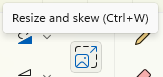
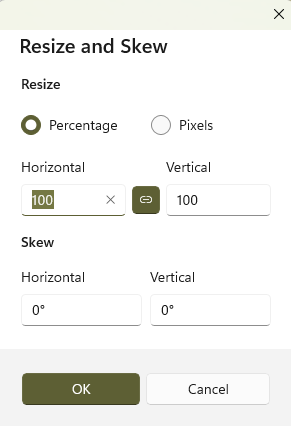
In the Windows, find the app Paint: Open your picture in it: Click on Resize and skew: In the floating window, change 100 to a smaller number: OK, Save.


-
Pro-Trump Arab American group changes its name after the president's Gaza 'Riviera' comments | AP News
-
Good, and good to know. Thank you. Last year it was in the news a lot, this year - none. Btw, an OT question. How did you know that those Jews were Ashkenazy? P.S. Ah, the shtreimels. Were they from Neturei Karta - Wikipedia?
-
Where are the pro-Palestinian protesters that were so loud a year ago?
-
I think it is.
-
I didn't try a polar though...
-
I don't drink bear because of an allergy.
-
I thought that the word "truth" is just a shortcut for "true proposition", like in "The truth is that he was not there."
-
One of such means is to get or to make a common enemy.
-
No, I should not. Nevertheless, I've posted my solution of the Problem A in the beginning of the thread, here:
-
Time to learn some LaTeX. E.g., \(d\sin(a)=\cos(a)~ da\)
-
When I've mentioned this metaphor to my neighbor, an experienced dentist, he replied that there is nothing wrong with the “north of the North Pole”: you just keep moving up.
-
Some will be interested to know that this book is FREE now on Kindle: Linear Algebra Done Right (Undergraduate Texts in Mathematics) 4, Axler, Sheldon - Amazon.com
-
But it is not. ...... What part of the following statement don't you understand? ..... Yes, but your second arc is wrong. ..... Did you read this statement: I don't need help in solving these problems!