Ghideon
Senior Members
-
Joined
-
Haven't thought this through but that policy makes them vulnerable to future attacks; an attacker picking off their customer's until there's no business* left? Anyway thanks for the swift action and Merry Christmas! *) Including both software and hosting
-
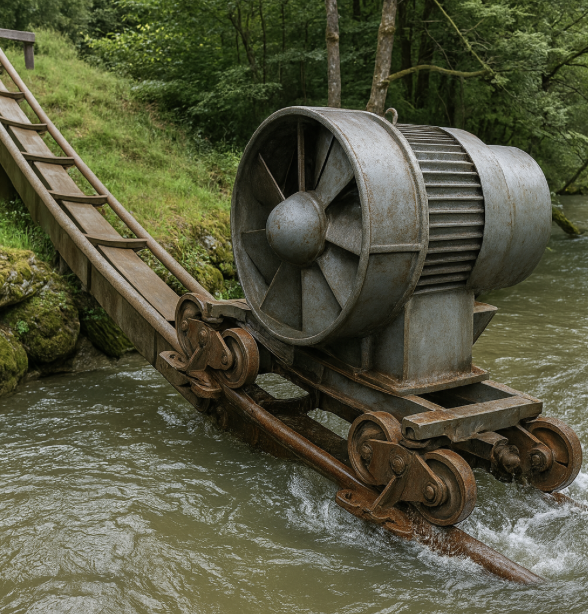
Resizing the turbine after rotating, before submitting it to AI? Example; not 10 meters but bigger that before:
-
I have provided you with an animation and reference images that, to the best of my ability, adhere to established scientific models.* Could you now supply an animation or a mathematical model of the theory or idea you are promoting here? *) I acknowledge that my version is a simplified representation and has not undergone any formal review.
-
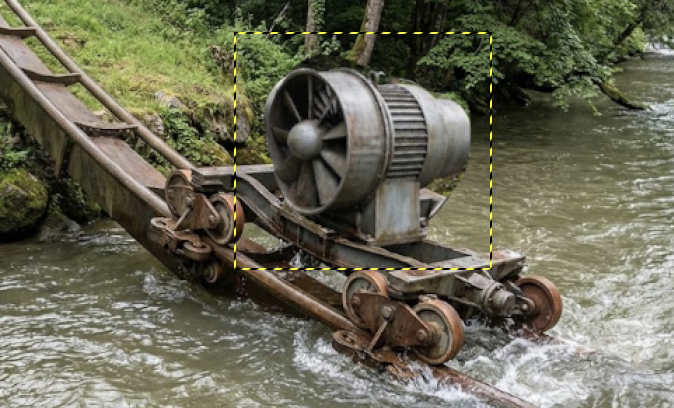
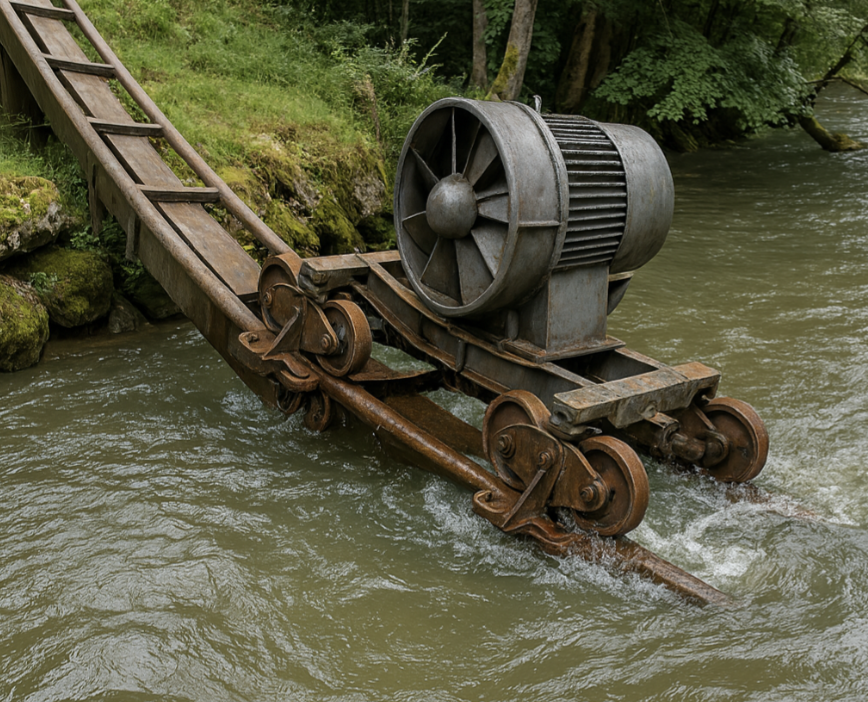
The photographer that took the photo that the model was trained on? More seriously; difficult to provide a generally applicable answer. It may differ between regions, product lines, license etc. Short answer, for a few services I am familiar with, you own the output the AI generates. Issues may involve if the AI outputs very similar images for several users or if output includes other copyrighted material. That is a good suggestion since the model may have limitations of analysing its own output. A prompt "rotate 90 degrees" may cause issues if the model does not manage to grasp what to use as a reference. @Externet this is a case where prompting have limited success; there may not be many similar constructions in the training data. If the AI tool allows you may experiment with uploading references or modifying the image in an image editor and then submit it to AI for "cleaning". Example: I rotated the turbine manually in an image editor. No need to be precise; there are artefacts. Submit the above image to AI, prompting something like "just clean up this picture a little bit" Result: (If more control is required there are the concepts of control nets and similar, but that may require local installations, configurations etc. I'll can provide some links if interesting.) Note @Externet from the title I got the impression you wanted to use ChatGPT; the cleaned up image above was created using ChatGPT, model GPT 5.1
-
You need to be more specific. Also: your description of light and of Ole Rømer’s observations deviates significantly from the established sources. Could you explain what personal idea or hypothesis you are pursuing that leads you to this different interpretation?
-
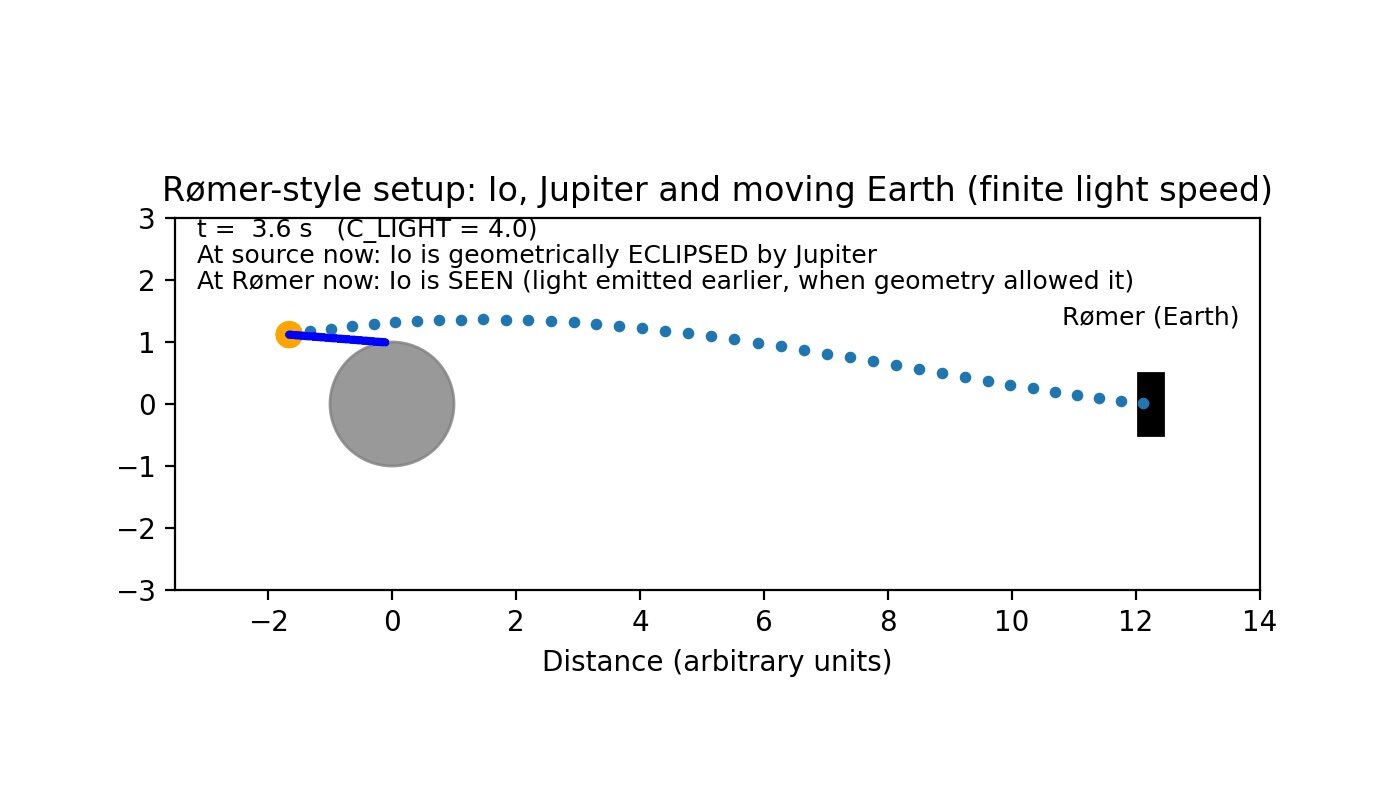
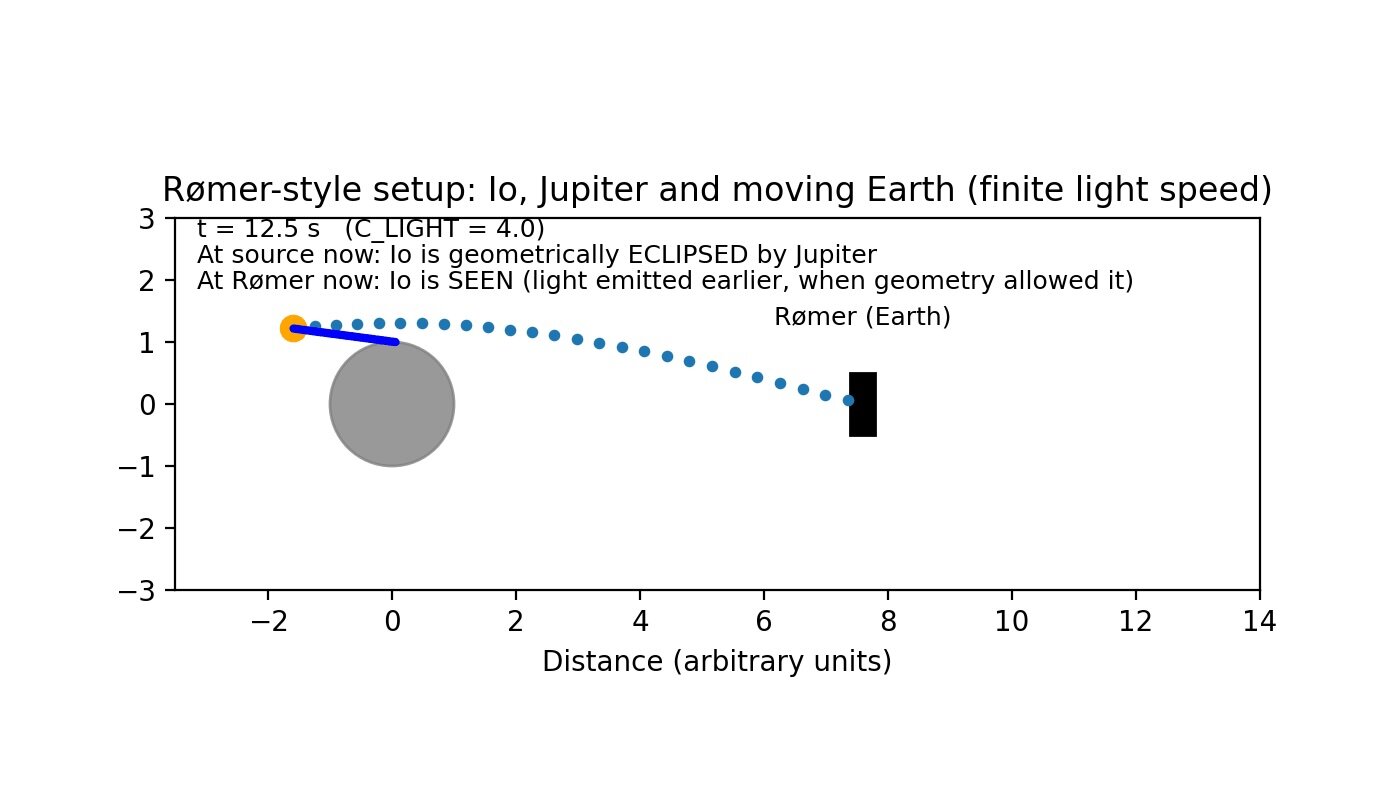
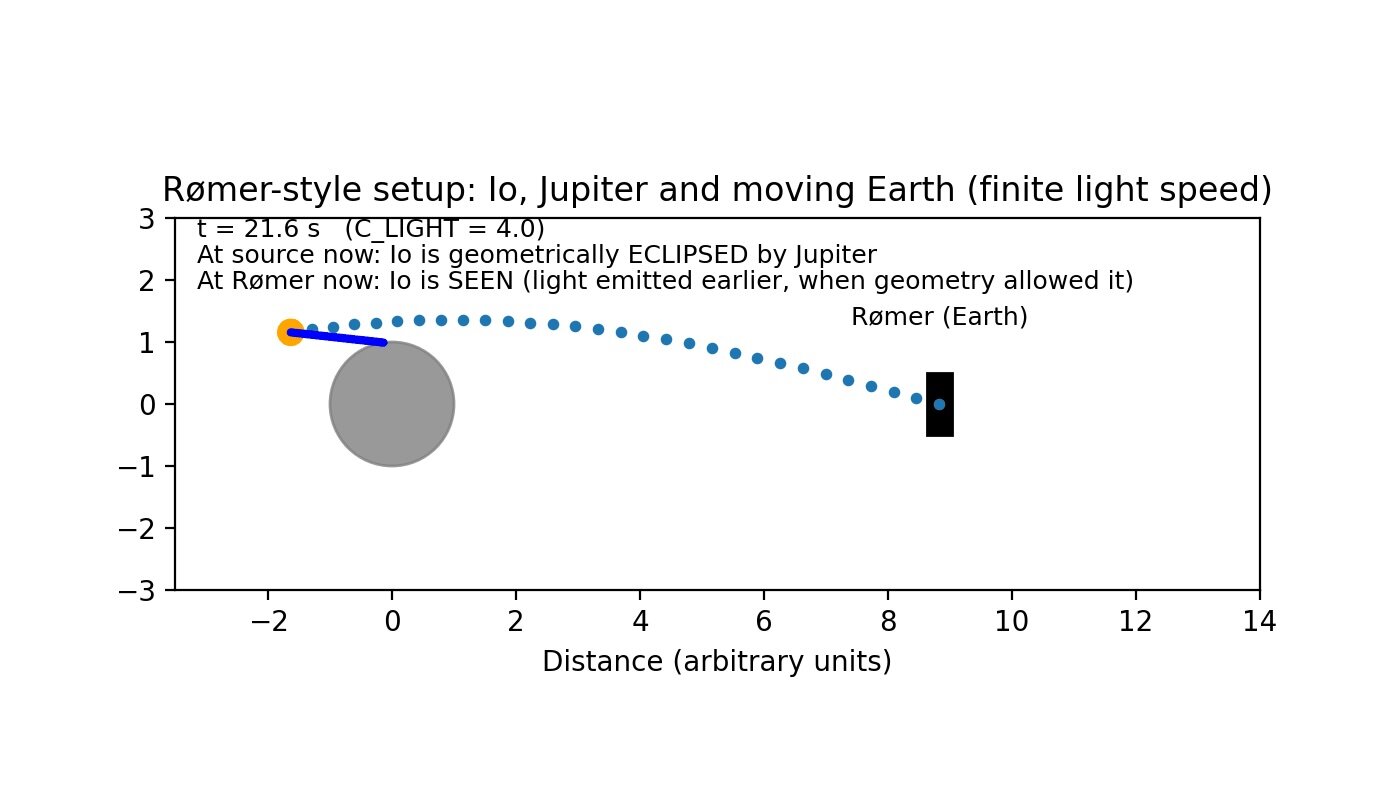
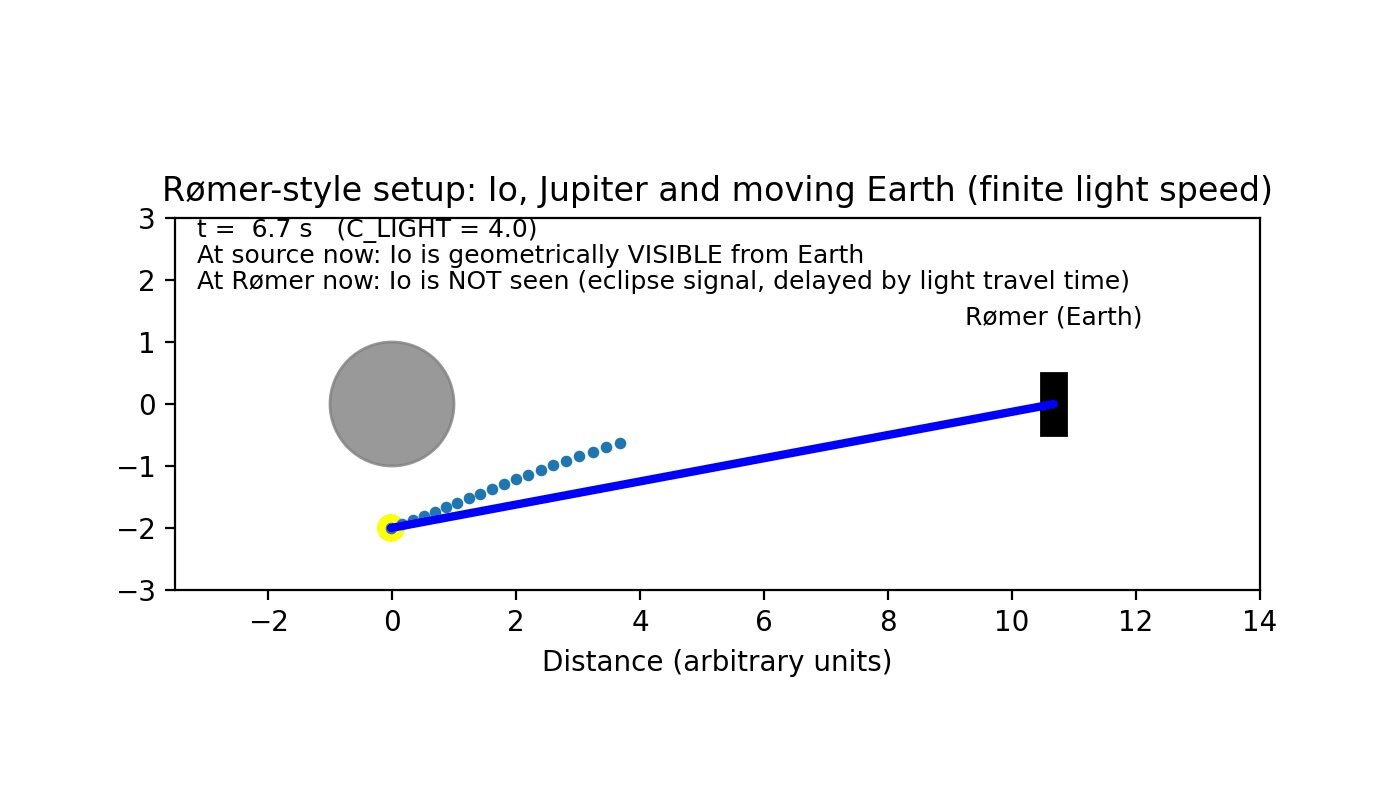
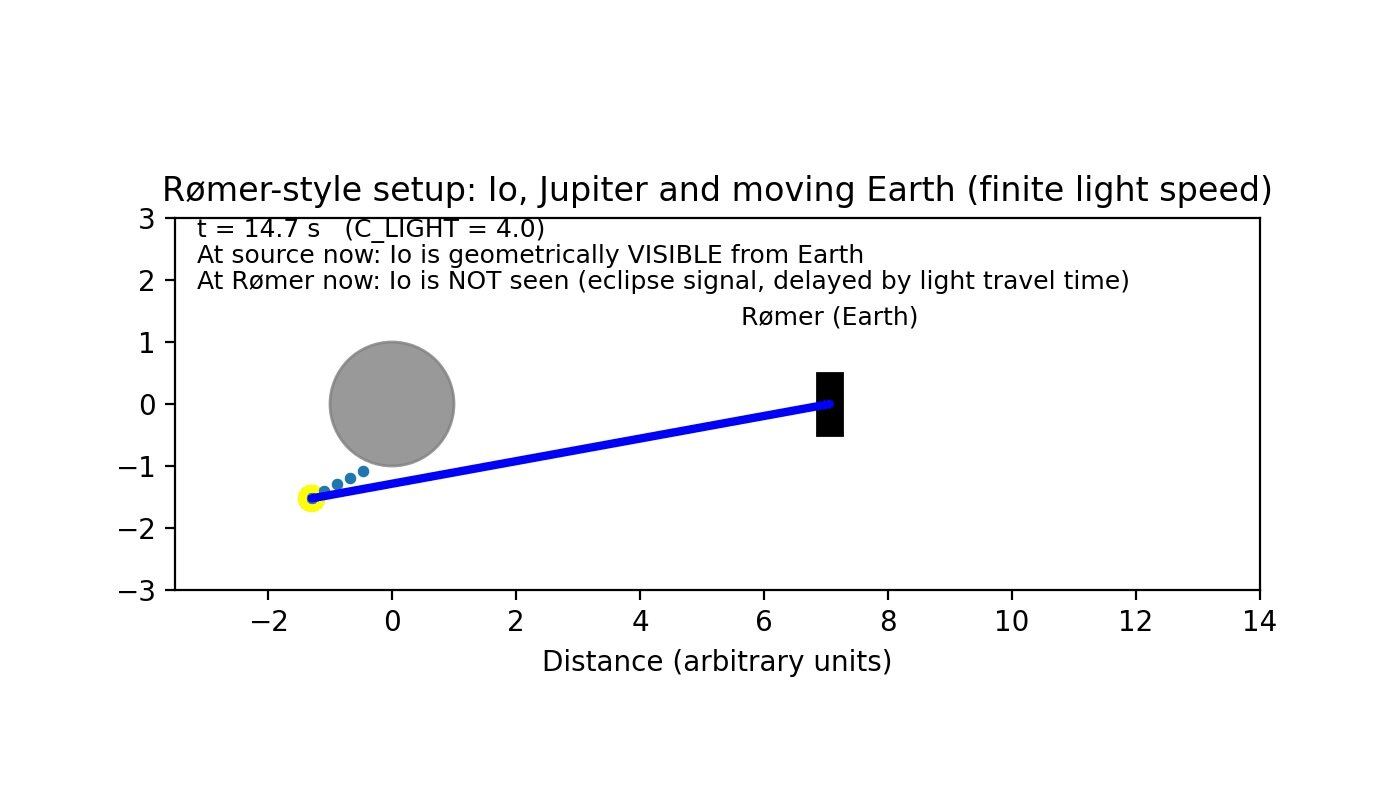
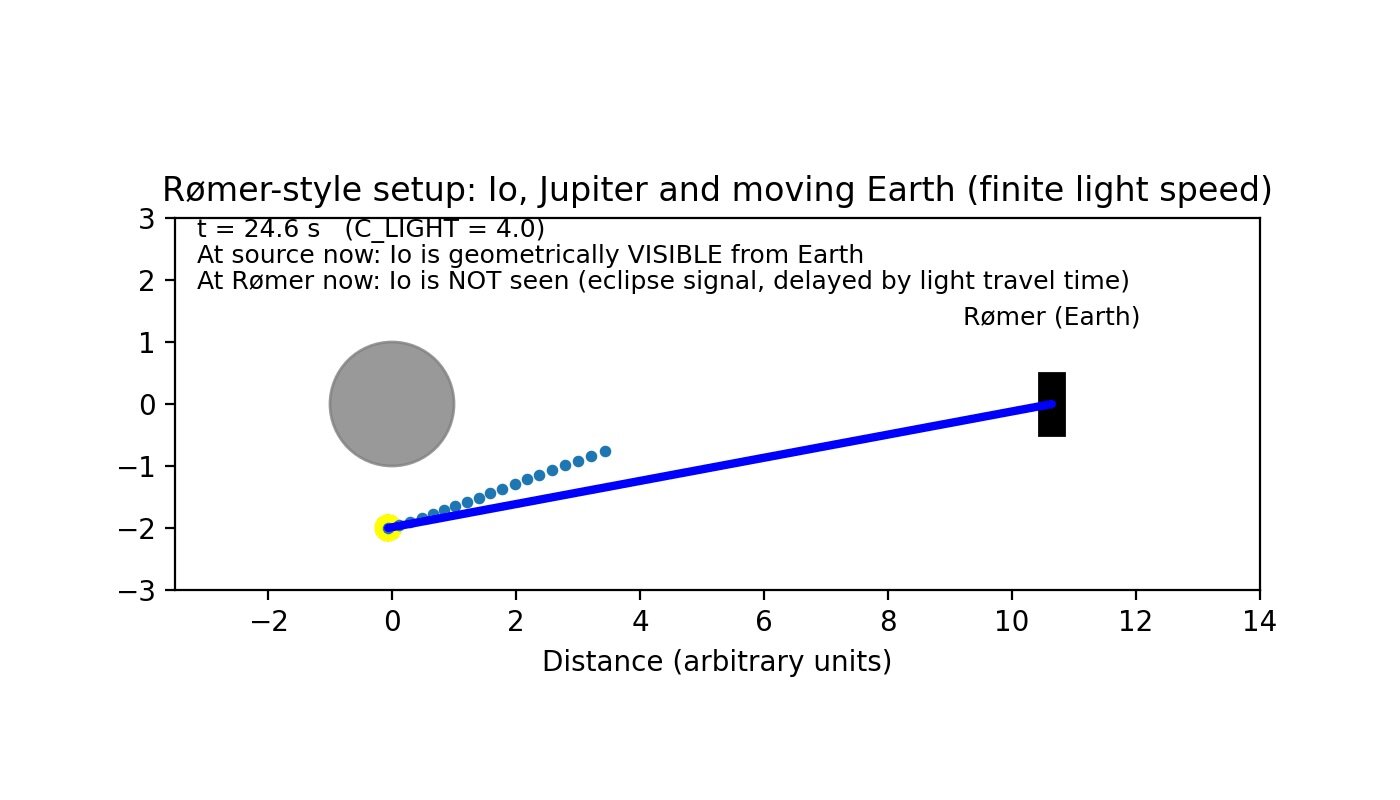
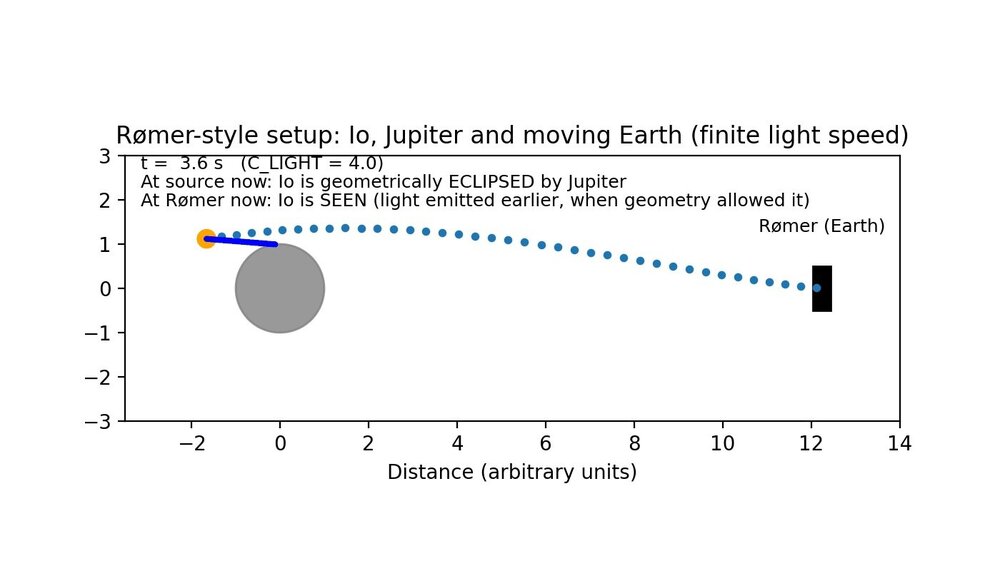
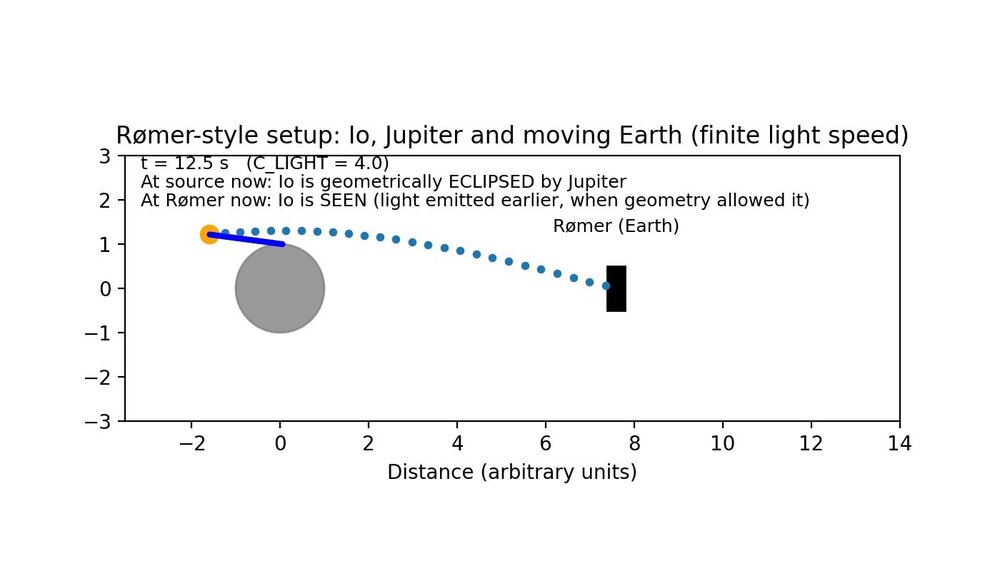
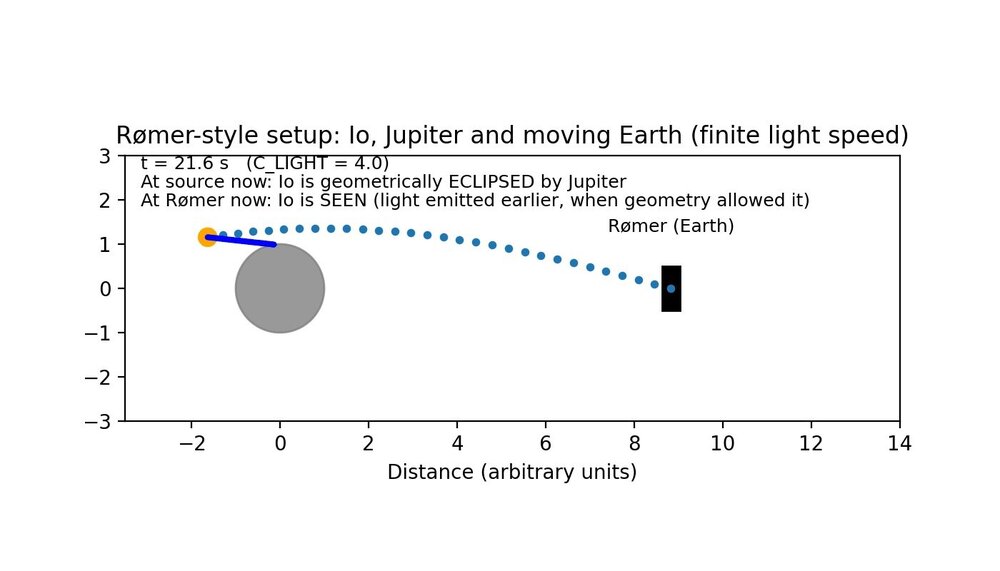
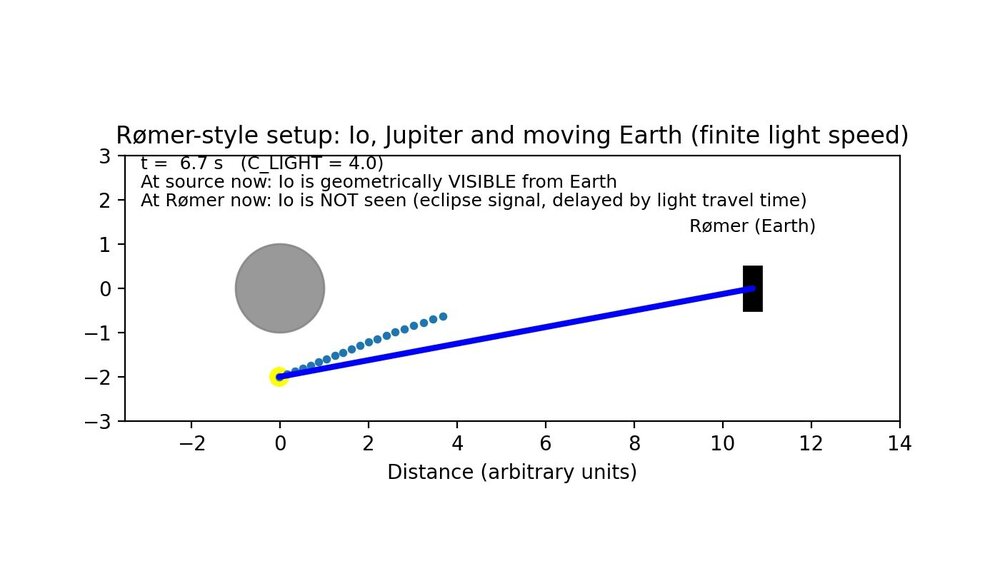
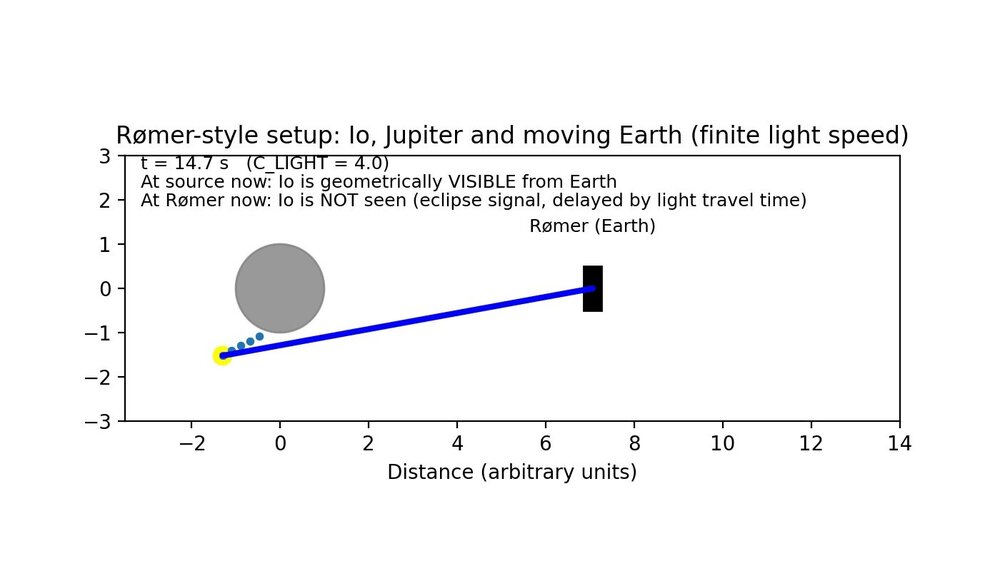
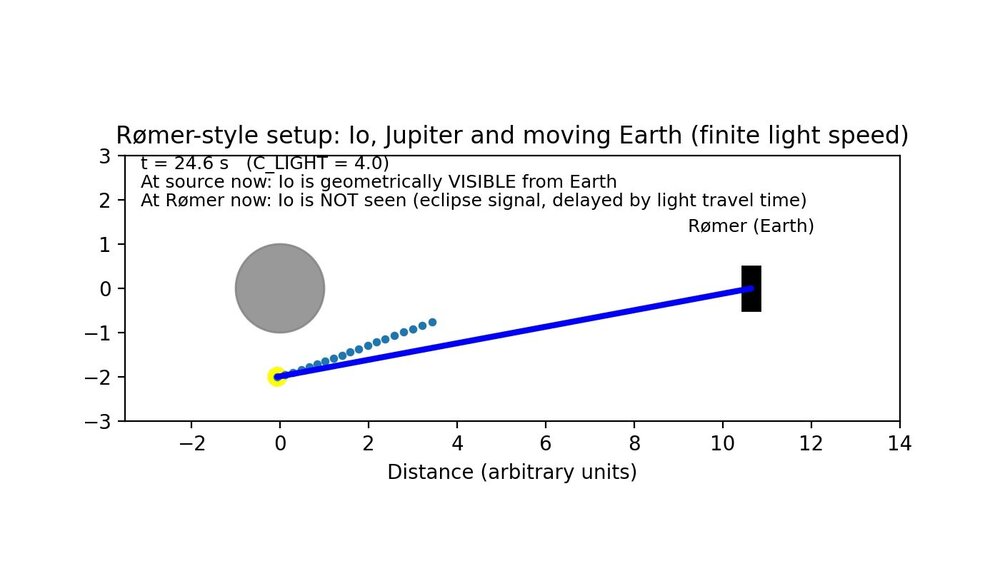
Using your words: "I have given you a map. That map is right in front of you." Look at the timestamps when IO moves behind Jupiter; the moment when there is no line of sight: The timestamps have a consistent interval, IO moves in behind Jupiter every 9nth second. Let's look at time stamps and interval from Rømer's position: These frames are from the point where he observes that IO disappears; no light reaches him from IO. The timestamps does not have a consistent interval, the interval between 1st and 2nd time is 8 seconds and between 2nd and 3rd time it is 9.9 seconds. This illustrates what @swansont and others already said:
-
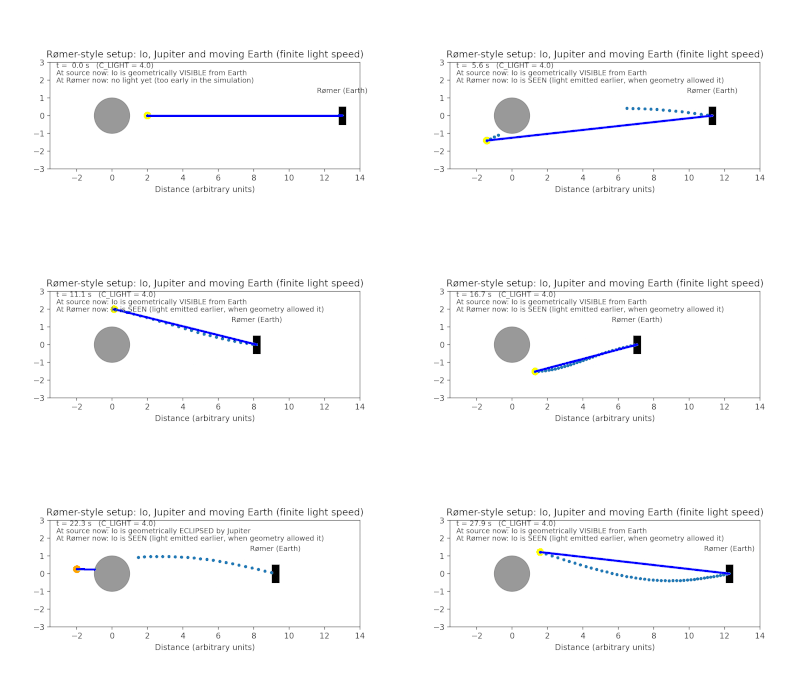
@jalaldn I have added the observer movement back and forth for you: Fair point; I kept it simple. New version posted.
-
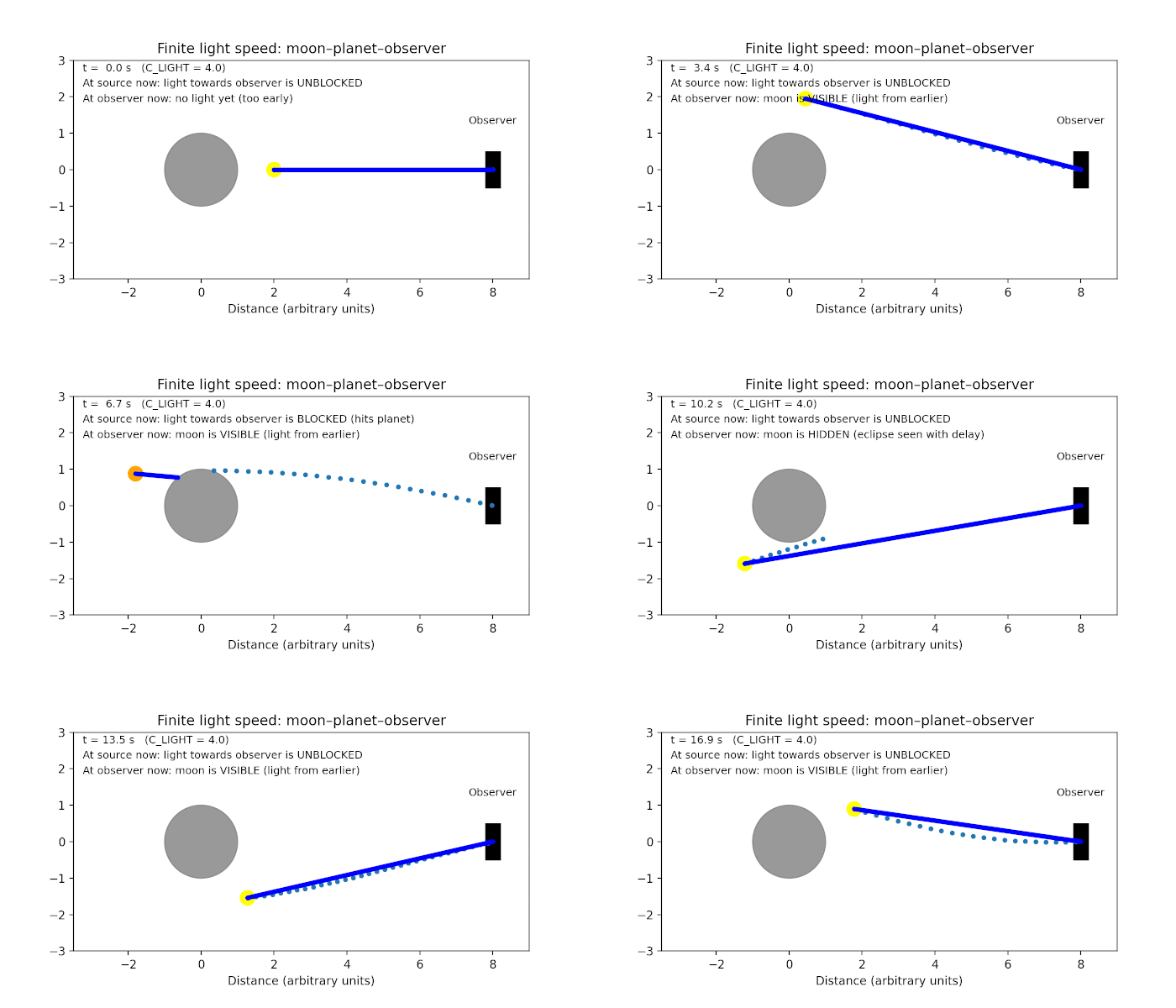
@jalaldn here is a crude animation, maybe this helps. The blue line illustrates line of sight between a moon and a remote observer. The moving dots illustrate photons in transit. Photons hitting the back side of the planet are not included. Note that the blue line is for illustration; there is of course no real time "connection" between observer and moon. In case you missed it:
-
Thanks! (I incorrectly assumed a connection to the fact that immersion and the emergence cannot be observed for the same eclipse of Io)
-
I think your description of light and of Ole Rømer’s observations deviates significantly from the established sources. Could you explain what personal idea or hypothesis you are pursuing that leads you to this different interpretation?
-
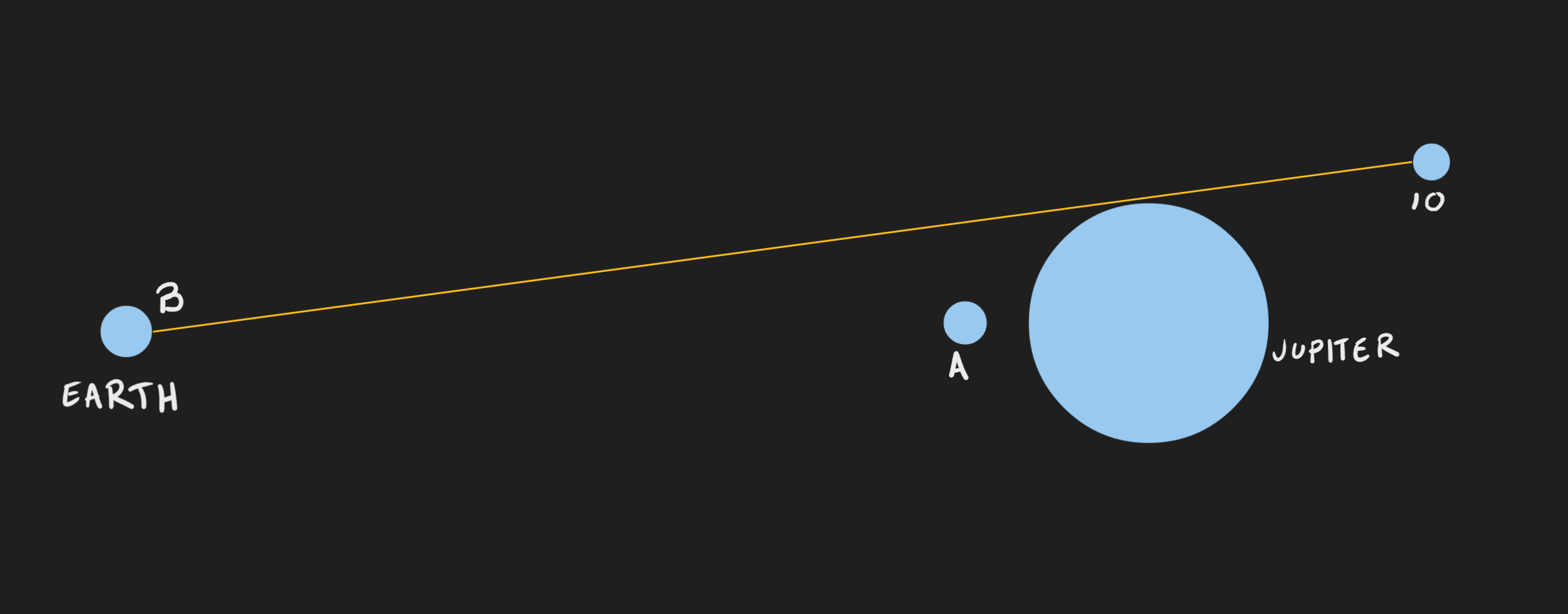
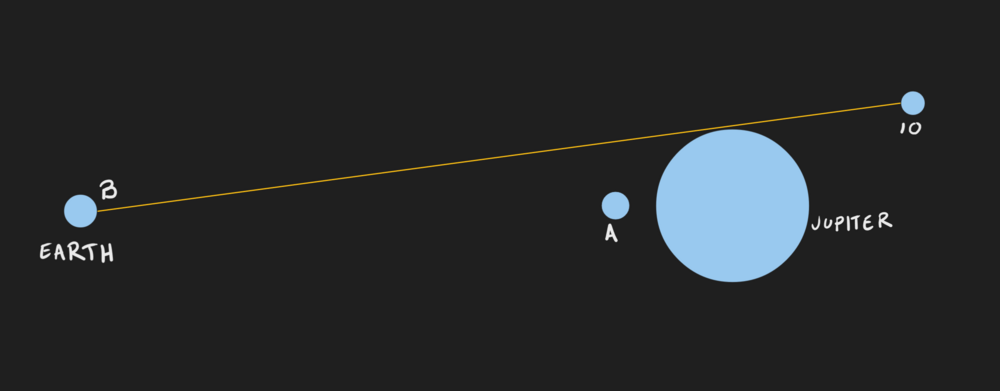
Not sure if this is a cause of your misunderstandings but different observers, at different distances would see a celestial object disappear and reappear at different times? Example: Observer A near Jupiter and observer B at earth would observe IO disappear at different times due to viewing angles. Here is a sketch:
-
Are they all of the same length? Long bits may be referred to as "aircraft" drill bits.
-
I reviewed your earlier thread on primes and this thread is a repetition; the proposals lack a coherent description and the few interpretable parts contradict established mathematics. These issues were already explained, in multiple ways, in the previous discussion but have not been incorporated into your reasoning. Your replies also continue indicate fundamental confusion regarding factors, integers, and prime numbers; as mentioned in the earlier thread, you may find this resource helpful: Khan Academy – Factors and multiples
-
Idea: somebody ≠ Somebody. @Somebody is a member, no longer active (upper case) "somebody" (lower case) is a tag used by the software to denote an anonymous member. A moderator would (likely) see the user name.

-
The ones cancel out.