exchemist
Senior Members
-
Joined
-
Last visited
-
Currently
Viewing Topic: "Chronic Disease Epidemic" in USA
Everything posted by exchemist
-
This raises a point that has only just struck me after reading the Wiki article on rotation curves: DM has to be uniformly distributed across the galaxy to produce the observed rotation curve. But surely, if DM responds to gravitation, surely one would expect its distribution to mirror that of the normal matter, viz. more concentrated in the centre and becoming progressively attenuated towards the periphery? How, then, would one account for its distribution being so different?
-
At the level of a power network, sure, as the extra wattless current and the associated resistive losses are real enough, even if it transmits no power. But at the level of an individual household, where the inductive loads are, say, a washing machine for an hour or two twice a week, and a fridge compressor from time to time? I doubt it.
-
But how can that work? If the power factor is less than one, it means there is a component of the current vector normal to the voltage vector. That component constitutes a "wattless currrent", which transmits no energy. So there is nothing to "harvest", surely? It's just out of phase. I confess my scam detector lights up a bit on this topic, as I have seen numerous fraudulent adverts over the years, claiming to gain energy from correcting power factors <1. To my understanding the only advantage of inserting a capacitance to counterbalance the inductance of a motor and bring the power factor closer to unity is that the wattless current does incur resistive losses in the circuit, which wastes some power, though typically not much.
-
It is explained here: https://en.wikipedia.org/wiki/Galaxy_rotation_curve There is an animation which helps. The left hand galaxy rotates as would be expected on the basis of the mass calculated from the visible stars, while the right is closer to what is actually found. The difference is that in the right hand case extra, invisible, mass is distributed throughout the galaxy from the centre out to the edge. So that's the problem, or one of them. What else could account for the anomalous rotation pattern? There is a hypothesis that perhaps the law of gravitation works somehow differently at very long range from what we see in our own solar system. That is what the article refers to as "Modified Newtonian Dynamics", or MOND. But not many people seem to like that idea very much, as it makes some predictions which are not borne out by observation. The particle physicists on the other hand, struggle to imagine what kind of hitherto undetected particle, or particles, could make up the extra matter with gravitational mass needed to account for the astronomical observations. So we are in a quandary. The hunt is on for mystery particles, while people also struggle to refine MOND in an attempt to overcome some of its shortcomings, i.e. things it predicts we should see but which we don't.
-
OK, I'm not an astronomer either, so the little I have learned about Dark Matter also comes from magazine articles and the internet. I can summarise what I have learned as follows: - Dark Matter is a just a placeholder label, for something we can't yet explain, - the evidence for it is that the observed rotation rates of galaxies do not fit with the estimates of mass one gets by adding up the visible stars they contain, - there is something going on that seems to cause them to have extra gravitation, presumably extra mass, but which is invisible and transparent to EM radiation. - so the simplest explanation would seem to be that there are forms of matter out there which do not interact with EM radiation, but do exert gravitational attraction. (There are some further cosmological arguments to do with General Relativity and the cosmos but I have not followed those.) Is your understanding the same or different?
-
Erm, I think his hovercraft may be full of eels.
-
Is altering the pH of a new, artificially created lake changing the environment, though? Or do you mean digging the lake? People have always built reservoirs.
-
Indeed, hence the advantage for ships of the crosshead engine, which runs at very low rpm and can have a far longer stroke than a trunk-piston engine. Plenty of time for poor fuel to burn out and able to convert as much expansion into work as possible. Having said that, medium speed engines (400-900 rpm) also run happily on RFO if designed for it, as Wärtsilä in particular has always been keen to point out. They were a medium speed manufacturer for decades, until they bought out Sulzer, the designers of the original RT series, in order to give themselves a stake in the crosshead engine business. (Their big rivals are MAN B&W. Between them these two groups designed 90% of crosshead engines worldwide, at the time I retired in 2011.)
-
Actually I may be getting out of date, having been out of the business for over a decade now. Take a look at this brochure for Wärtsilä's latest RT Flex: https://cdn.wartsila.com/docs/default-source/Service-catalogue-files/Engine-Services---2-stroke/intelligent-combustion-control.pdf?sfvrsn=6 The graph of Pmax starts at 90bar and goes up to 140! But these turbocharged 2-stroke crosshead engines are really optimised for burning residual fuel oil, with thermal efficiency >50% and, most importantly, where weight is not a constraint. So a bit different from the IC engines the OP has in mind. I remember walking along the upper gangway of a 12 cylinder in-line engine of this type at a power station in Macau, with 4 turbos screaming (ear defenders on), and noticing the individual cylinder heads actually move fractionally up and down with each power stroke. The metal was visibly stretching with each stroke. But these engines had a stroke of ~4 metres and a bore of 90cm, so a stretch of a couple of mm perhaps should not have been a surprise. Running speed was 100 rpm and the generator they drove was like a disc, with poles all around the periphery, to give 50Hz. Pmax has evidently gone up even further since those days.
-
Yup, a quick internet search reveals pressure graphs with peaks between 30 and 75bar. Latter probably highly turbocharged marine diesels.
-
Peak pressure of the order of 50bar. BMEP (brake mean effective pressure) of the order of 10bar . I think.
-
Hmm interesting it can get as high as 8.6. It will be, I imagine, the combination of being fed by water trickling through limestone with a not specially high rate of turnover of the water in the tarn. But indeed I was wondering the same thing: if the pH of the OP's lake is driven by the geology of the catchment area that feeds it, it may a Canutelike exercise trying to reduce it artificially.
-
Just out of curiosity, do you know what makes the pH in this lake so high? I had no idea natural water could have such a high pH as this.
-
Yes, but that's the thing with a personality cult. The Great Leader can talk shit and there will be dozens of acolytes on hand to try to divine what he (and it's never a she) really meant. Look at some of the garbage spouted by Mao, which was re-quoted with veneration as if it was pearls of wisdom. My personal favourite from that era was " Cadres, cadres". Nowadays we have "covfefe". * * In my household, covfefe has been adopted as a term for the decaffeinated coffee I drink these days, to manage my tendency to heart arrhythmia.
-
Arf arf.
-
Hmm, interesting. It figures, I suppose, in that intermolecular forces will have more effect at lower molecular speeds.
-
Why have you started arguing with yourself?
-
That's an interesting subtlety I was unaware of. But it is worth perhaps stressing that there is no difference, in terms of physical state, between vapour so defined and gas.
-
In this context, vapour steam and gas all mean the same thing. Vapour is probably the best term, and applies to the entire coloured area to the right of the curved line. "Steam" can mean different things to different people, as in popular parlance it can refer to the visible white clouds, which are actually droplets of condensed water, true steam being a colourless vapour. "Vapour" could as you suggest be replaced by "gas", but as water is liquid at STP, vapour seems appropriate. Water "vapour" just means water in the gas phase.
-
Why was it locked, though? Trying to resurrect a discussion the mods have deemed is finished with or worthless won't be looked on favourably.
-
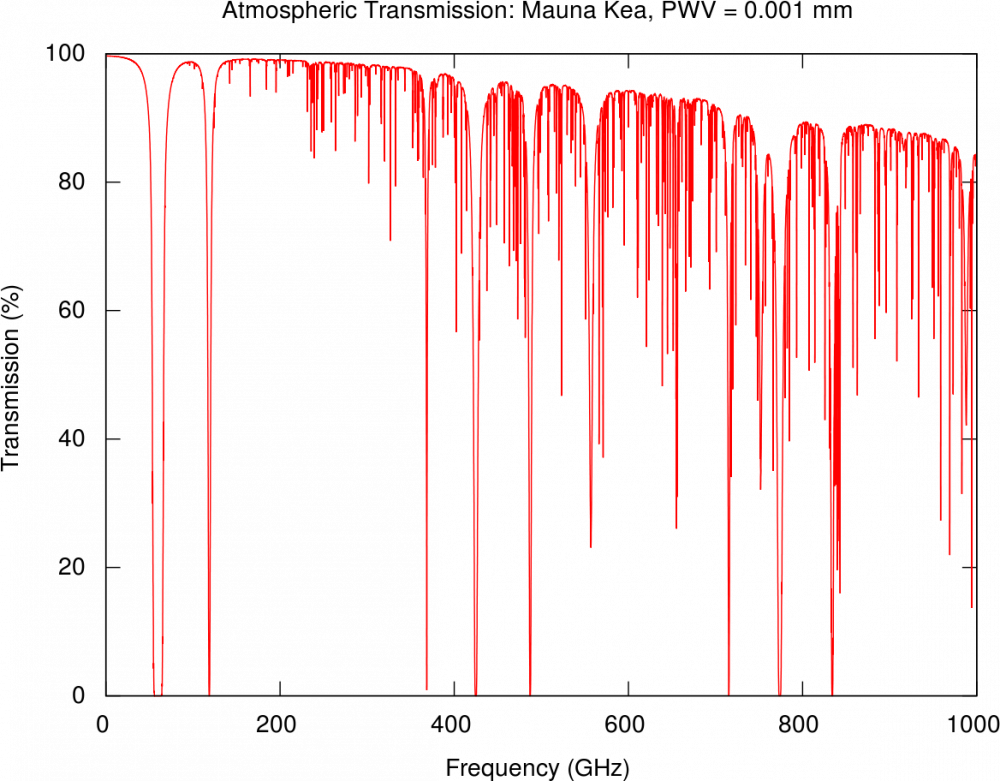
Same as with a saucepan on the hob: boiling the water, i.e. imparting Latent Heat of Vaporisation, to turn more and more of the liquid to steam, plus, as your original question asked, further heating of the steam. I'm not so sure. True, the rotational spectrum is pretty broad, so there will be some absorption across a wide spectrum:- However from what I read, microwave ovens are tuned to 2.45GHz, so right up the left hand end of the graph. So maybe they can't heat the vapour, only the liquid.
-
Not sure. If the microwaves are of the right frequency range, they should stimulate rotations of the molecule and cause further heating. But I remember learning that in normal use in a microwave oven it is liquid water they heat, where rotations are quenched by hydrogen bonding, so it may be that the frequency used needs to be different from the one corresponding to the absorption frequency of gas phase rotations. But perhaps someone else here will know.
-
I resort to going down backwards, for 100m or so, every so often. It makes me look a bit of a fool but at my age who cares? It seems to redistribute the synovial fluid, or in some other way destress the joint or allow the moving parts to shift a bit. I was amused to find, descending Ben Arthur (The Cobbler) in Argyll a few years ago, a 25yr old girl doing exactly the same thing, for the same reason. We compared notes on our dodgy knees, which is how I found out she was 25. Pyramid Peak doesn't ring a bell, but looking it up I see there is in fact a cable car to near the top of The Whistlers, which certainly does ring a bell. So I think that was the one.
-
I think I once visited Jasper - car trip from Banff, on a road that passed the foot of the Athabasca glacier, as I recall - and climbed a mountain there that has a cable car to the top, which I rode down, as I tend to suffer from what is known in the family as DKF (Downhill Knee F---), when descending mountains. Any idea what that mountain is called, if my memory of this makes sense? Seem to recall being told to make plenty of noise on the way up, to alert any bears to my presence, which was interesting, for a Brit like me, used mainly to Scottish mountains.
-
.....which she is not being slow to point out! My worry with her is she doesn't actually seem to be that good at inspirational speaking - perhaps like our own new PM, Starmer, also a former advocate, who is good at forensic analysis and cross-questioning to expose weaknesses in an opponent, but not possessed of high flights of oratory, like an Obama, say. I'm relieved she is starting to articulate a +ve vision of what she stands for, which seems to be loosely all around personal freedom. This can link things together like reproductive rights with the partisan control of the state envisioned in the deeply sinister Project 2025 and freedom from fear, as offered by better gun control (Exhibit B: Trump's ear?). So she does now seem to have more to say than just -ve attacks on Trump. Actually projecting something positive and a bit of happiness will be a real contrast with the permanently angry and abusive, self-centred negativity of Trump. So I'm crossing my finger she can make it. The whole of Europe is desperately hoping Trump loses, as our future as free countries at peace may be in the balance. (Have you seen that Russia has just sabotaged the French railway network, via 5 separate, simultaneous attacks on signalling and cabling at critical railway junctions, to try to turn the Olympics into chaos? The French arrested one Russian agent last week, but evidently there are more of them at large. More here: https://www.bbc.co.uk/news/articles/c28eyr3y18yo)