

CharonY
-
Joined
-
Last visited
Posts posted by CharonY
-
-
-
53 minutes ago, geordief said: Wrong (though interesting) link?
I can see nothing about beer or drinking water in that small Benjamin Franklin piece.
Huh, the URL should have been a hint to me, shouldn't it? Sorry I have been grading and I swear my own ability to read degrades with each student essay I am reading.

History Facts
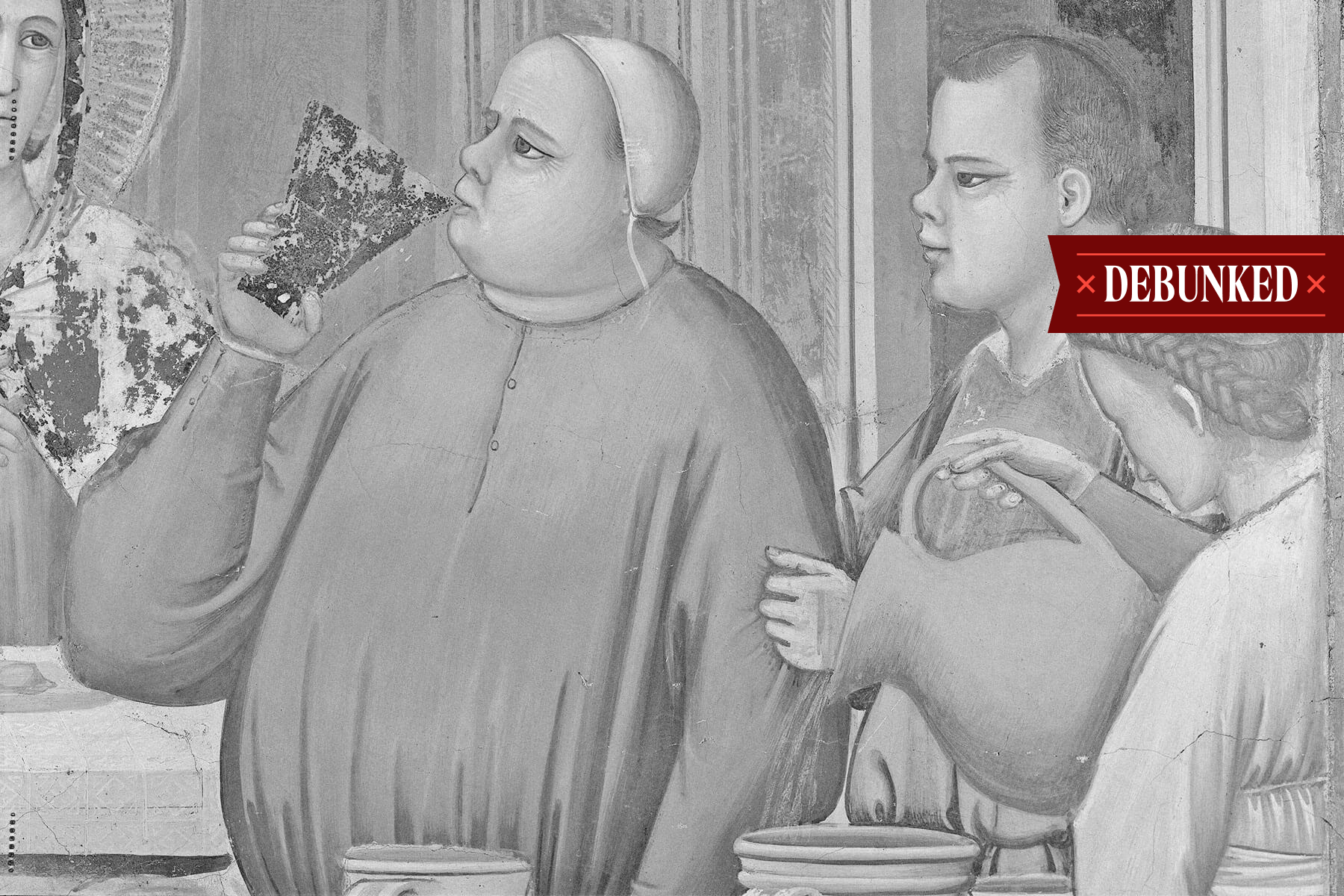
Were People in Medieval Times Always Drunk?
It’s often said that people during the Middle Ages, a period that lasted from roughly the end of the fifth century through the 15th century, drank beer instead of water because the drinking water at t -
8 hours ago, geordief said: I expect you don't have the same history in Canada where beer was (as I think I heard) a healthier option for drinking in the (pre-?)industrial age than the water which was apparently anything but.
This is a rather common myth (I have seen in decades back in Scientific American). Here is an article about it https://historyfacts.com/famous-figures/article/benjamin-franklin-facts/
-
5 hours ago, studiot said: I think it important to distinguish between instinct and intuition in this case.
While I think the distinction might be important, it is also a fair bit more complicated. Both concepts are heavily debated in lit. Instinct, for example, has become a catch-all term in animal behaviour for many aspects that are likely entirely distinct mechanisms. Much of how we understand instinct is based on works of folks like Konrad Lorenz, which were great at its time and immensely influential. However, modern behavioural sciences, especially in conjunction with advances in the area of neurobiology, but also a much more individualized approach to behavioural observation.
For example, for a time behaviour like head-scratching in bird was a prime example of instinctual behaviour (IIRC, it was about the crossing of a hindleg over the wing). In early papers parallels were drawn between how birds and other vertebrates do it, suggesting an evolutionary root how this "clumsy" behaviour is established and universal. However, in the 80s there were reports that this behaviour is much less universal, and especially younger birds will use a different method (leg under wing) and that depending on how they perch and where they center of gravity is, they will switch.
So starting in 80s there was already some rumbling that things that appeared to be universal behaviour, and thus instinctual might actually be more learned and adapted to situations than originally thought. I have not been doing much research in that particular area, except occasionally grabbing some papers to have a good time, but it seems to me that though has gained massive momentum around the 2010s where behavioral scientist started to work much more individualized with animals, instead of the traditional approach (which I also learned as student) to create broad categories over large populations to make statistical analyses easier.
The result was in many animals folks started to find evidence of higher reasoning (though there is bias regarding species being used, such as crows) and that the idea of an instinct has become much more nuanced. And because it is hard to nail down, it is something that (at least the papers I read) is not used anymore, at least in the formerly used way. Rather, it is being framed as a disposition towards certain behaviours, modified by learning (i.e. experience). Now, this is not to say that there are no hardwired-reflexive pathways, but where once animal behavior has been described as repetitive and instinctual, I think the research is changing its thinking about that. This is an analogous development to how we increasingly see the nature vs nurture debate or the role of genetics in complex physiological outcomes.Also as a side, it is a bit interesting to me that in the evolutionary psych area (which itself has issues) the older concepts of instinct seem to still be more prevalent than in behavioral sciences.
-
I think the title might be the wrong way around. What I mean is that first animals at some point developed the ability to:
6 hours ago, Otto Kretschmer said: It's a tendency to assume a certain conclusion
Which I interpret as the ability to intuitively make assumptions about the world around us. This is something we share with (I think) most animals to some degree. I think the ability for higher level reasoning came later, and the "motivated reasoning" is applying higher order reasoning skills to justify intuition.
Obviously for complicated situations this approach is faulty as everyone recognizes, but doing more thorough analyzes is harder and often requires additional skills that many may be lacking. So the reasoning then defaults to the intuitive approach.
-
7 hours ago, exchemist said: However the elephant in the room is industrialised agriculture, things like pulling up the hedgerows to make giant fields that are easier for ploughing and harvesting. Wildlife diversity collapses.
Not only that. When folks talk about honeybees, they often talk about domesticated species with a narrow genetic diversity. While there are efforts to protect them, often wild honeybee population decline. At least in part it seems that domestic honeybees exert competitive pressure on wild populations, and this could make things worse for them. Or at least not better.
Edit: made the comment pre-merge.
On 3/27/2026 at 7:37 PM, sethoflagos said: Adding 20% yeast biomass to existing artificial bee feed formulations is a complete diet apparently. A major benefit is that feeding domestcated bees on this not only greatly increases their brood raising performance, but also removes their reliance on natural pollen allowing native wild bee species to flourish also.
I am wondering about that. Wouldn't it only work if honeybee and wild bee foraging areas don't overlap? And considering that honeybees are also used widely as pollinators in Ag, wouldn't a strengthen honeybee population increase, rather than decrease pressure on remaining wild populations?
-
1 hour ago, swansont said: Blaming scientists in general is IMO a misplaced attack (and the irony of an accusation of failing to do due diligence is not lost)
Of course. The only caveat is when the studies are poor, fraudulent and/or unethical (Wakefield comes to mind) or if they are sponsored by groups with vested interest (e.g., Philip Morris, 3M etc.). However, over time (usually science's self-correction feature kicks in, though it can be a slow process.
-
I have been working on PFAS in the past, and the effects subtle (i.e. it is not one of the easier to discern acutely toxic chemicals). But an emerging theme is disruption of lipid metabolism, that especially in children could potentially lead to long-term effects.
And there has been a long history of many potential exposures that are ongoing and where industries are rather unwilling to react to. Some of the deadliest are air pollution, which in all likelihood are most associated with premature deaths of all exposures. The issues range from large-scale pollution (e.g. coal plants) to more subtle in-home pollution (e.g. cooking with poor ventilation, lead paint etc.).
The solution to that is not trying to heal folks somehow magically. The solution is to reduce exposure. Theoretically, agencies like the EPA would try to achieve that. But as we can see, even folks who go to the deep end of exposure related things (mostly because they are too lazy to read up on facts) are not really that much into regulating air and water and instead focus on stupid flashpoints without evidence (e.g. tylenol).
I.e. the issue is less a medical one, but one of industrial (and other) regulation.
-
On 3/26/2026 at 9:15 AM, studiot said: Here is an excerpt from the Times of India that contradicts your statement.

The Times of India
6 animals that live without a heart and still survive in...
We usually think of the heart as something every animal needs– pumping blood, carrying oxygen, and keeping the body alive. It’s seen as one of the most essential organs. But nature often breaks the ruThere are in fact many more than six species that don't have the equivalent of a heart. I do not quite understand the selection in the article, nor why the first image is of a cuttlefish, which, IIRC has actually three hearts (one for central circulation and two for each gill).
Phylogenetically, among the main lineages of animals (animalia) IIRC only the bilateria (and not all of them, flatworms are mentioned in the article, for example) have a heart. Though to be fair, bilateria is the phylum with the most known species. But considering that the first line in OP is already false I guess there is reason to continue down the road.
-
-
Well, at least someone is happy:
https://www.nytimes.com/2026/03/25/opinion/russia-putin-iran-war.html
President Vladimir Putin has heard such complaints throughout the war. Yet, according to those around him, he has chosen largely not to listen. Officials and business leaders, for their part, understood that the continuation of the war was his absolute priority and that the country’s economic situation was of little consequence. But in February something shifted. Mr. Putin began, suddenly, to pay attention to the flagging economy. There were even signs he might be changing his mind on negotiations with Ukraine, perhaps seeking an exit from the conflict.
Then came the war in Iran. In one swoop, the conditions for conciliation were overturned. Amid buoyant oil prices, Western division and American overreach, the pressure on Mr. Putin to come to terms ebbed away. By a strange twist of history, the start of the war in Iran halted the prospect of ending the war in Ukraine — at the very moment when Mr. Putin appeared ready to consider it.
In February, Mr. Putin seemed ready to change course and overhaul his negotiating team. Kirill Dmitriev, the Kremlin’s chief envoy who is widely seen as an insubstantial figure with no real mandate, was reportedly on the verge of dismissal. The leading candidate to replace him was Igor Sechin, the head of the state oil giant Rosneft. Regarded as Mr. Putin’s right-hand man, Mr. Sechin previously oversaw Russia’s relationships with Latin America, as well as the cultivation of close relationships with American oil executives. Here was an indication that Mr. Putin might begin to take talks seriously.
-
The issue with these arguments is that there can be a grain of truth somewhere, but folks just than wildly extrapolate from there without stopping to gather evidence or think a bit about it. The fundamental criticism that medicine often is not sufficiently holistic is actually somewhat valid. But the reason is not some silly conspiracy, but rather that it is immensely complicated and much, if not most of the underlying biological determinants of health are simply not well understood.
Just take a look at the vast literature regarding nutrition- while over decades some knowledge has crystallized, a lot is still uncertain, or does only apply to some folks or is hard to replicate. Add to that socio-economic determinants of health it is something that simply put no medical doctor or even groups of MDs can realistically cover. Even in a research context, if going sufficiently deep, each person could conceivably be a research project on their own, owing to individual genetic make-up as well (and perhaps more importantly) developmental history. Things encountered in childhood or even prenatal could have significant impact on health risks further down the line. But figuring those out is immensely complicated and it is unknown how much we can can realistically generalize.
When postgenomics techniques were introduced, many of us had the notion that personalized medicine was on the horizon. However, within a few years the concept mostly got rebranded towards precision medicine, that tries to move away from the personalized aspect. I suspect with AI it will survive a while longer. However, at the given state I personally believe that it will still crash headlong into the issue of limited biological understanding. With AI we will just get to the point a bit faster.
What most medical systems are is therefore the result of whatever best practices we can derive, at a given cost we are willing to pay, which is compatible with the system (e.g. single-payer, public funded, mixed or private) and also is likely to be used by the population.
For example, high sugar food is unhealthy. I don't think that the literature is very ambigous about that. However, addressing that goes beyond the office of an MD. But there are also studies that have shown that in low-income communities, providing money is surprisingly effective in addressing health issues. Again, a practice that is not usually associated with medical treatment, yet rather effectively improved health measures.
Again, this is all to say that health (and associated biology) is vastly more complicated than those youtubers and other folks make it out to be and folks should rather spend time learning the basics than wildly speculate about things they know little about. I understand that this is far less attractive and in today's attention economy won't get you clicks. But it is the only way to actually learn something.
-
31 minutes ago, Linkey said: I will write my ideas.
"A cured patient is a lost client" (c). The second point is that modern medicine lacks a holistic approach to health: when a patient comes with a problem, it's solved, but then another problem arises (for a doctor of a different specialization), then another, and so on—so doctors unconsciously help each other make money.
This is part of a general conspiracy theory that assumes that there are financial imperatives to keep folks unhealthy. As in this case, there is never any evidence provided, which makes discussions rather meaningless. However, I will add one piece information that hopefully will get you thinking more broadly. In countries with single-payer systems, doctors don't make money by attracting more patients. I.e. a sicker population just means a higher workload for higher pay. But in those systems, the generally practice is often not that different to for-profit systems like the US. What do you make of that?
-
1 hour ago, TheVat said: Not my field, but is one challenge with longitudinal studies that people don't necessarily select just one healthy habit and make just one change?
Yes, or more precisely, not necessarily an issue with longitudinal studies, but with almost all association studies. It is virtually impossible to control for all variables and many factors are not independent.
Generally speaking, creating the "right" cohort is incredibly difficult and it is rare that you can find for example two identical groups of people where the only difference is the variable under investigation. Typically, you need a controlled study in order to really figure it out. But that is typically not feasible for longitudinal study, as folks won't e.g. stay on a specific diet for decades.
Sometimes, you have "natural" experiments, in which something happens that creates good control and test groups. For example, there might be daycare centers having similar composition of kids but offering different diets. Or you can look at before and after of food labeling or banning of certain foods or rapid changes in dietary habits. For that reason, quite a few of the newer papers are looking at China, where there has been a massive change in diet.
But going back to obesity, both factors, physical activity and diet. I think activity was slightly more controversial as it is sometimes difficult to establish the cost of additional expenditure over the basal metabolism, but I think the lit has coalesced around somewhat consistent finding that sedentary lifestyles would indeed require shaving off a few hundred calories to counteract weight gain in children. But the very basics are pretty straightforward, and ultimately it is the excess consumption of calories. Though to reverse obesity, diet is the main part that can lead to weight loss (though exercise is helpful in doing it in a healthy way).
-
Also from the article:
Paul Newacheck, a professor emeritus who studied children’s health policy at the University of California, San Francisco for multiple decades, said it was “unrealistic” to claim that 60% of U.S. children have chronic health conditions. “The big growth areas are obesity and mental/behavioral conditions,” Newacheck told us via email. “But they don’t add up to 60% of kids.”
However, I would agree that wild assumptions without even having the basics right are by definition speculative and as a method not scientific. For a proper scientific inquiry you have to start and end with accurate data and provide evidence for any assertions made. This takes time and effort, something that only few are willing to invest (including RFK Jr. and his foundation).
But one of the big issues associated with a range of chronic diseases is obesity. And the reason for that is not precisely a mystery (though somewhat complex).
-
19 hours ago, exchemist said: Yes, my understanding is that under normal conditions a significant proportion of the population (~10%?) carries meningococcus bacteria in their throats without suffering any problem.
Also, some folks (as I think this statistic refers to) are mostly immune to symptomatic outbreaks, and are passive carriers but can transmit to vulnerable persons (think Mary Mallon, or Typhoid Mary). Aside from factors mentioned earlier which could promote colonization and invasion, an important factor in terms of symptoms and severity is how the immune system reacts to them. Sepsis can be facilitated by triggering pro-inflammatory cascades via lipopolysaccharides of the bacterium (Neisseria mengitidis) for example. I.e. much of the damages are in fact caused by the immune response (including subsequent endothelial damages, necrosis etc. once it reaches the bloodstream).
I haven't followed the recent UK outbreak, but I don't really see clear information whether there is something special about this one, or just a confluence of factors that are causing this spike. Some have mentioned that potentially infected folks were sharing vapes, which not only exchanges infectious saliva, but also damages mucosal surfaces and might promote spread. Or there could be co-infections, with respiratory diseases which are still around. Some have speculated regarding a difference in virulence, but there is no evidence for that yet, either.
-
They can be, especially in cases were bacteria are growing slowly (so can be undetected for a longer time) or are highly dangerous. I.e. folks may be free of symptoms, but already carry the bacterium, and/or are at high risk of being infected. Early treatment can then prevent the bacteria from further proliferation and then cause symptoms. It is generally only done in high risk situations, as overuse of antibiotics is a big issue.
In this case, I believe the reason is that there is a high risk that folks are already unknowingly exposed.
-
-
On 3/17/2026 at 4:33 PM, MigL said: I wonder if all the people ( farmers, jobless auto workers, immigrants, soldiers, middle class sick people, etc ) who are now saying "I didn't vote for this" will take time to get the facts and study the issues before the next election.
Judging by various discussions as well as overall media consumption trends, I would not hold my breath. There is a reason why politicians are emboldened now and have no problem contradicting themselves within the same sentence. The ability to properly lie to your audience used to be a prerequisite for a politician. Now you can bank on short attention span to get away with murder, if you can SQUIRREL!
-
Note the absence of the word "intelligence" there. The import bit to understand for studies that look measure these things is that they use the baseline of the person. So they take for example two groups, give them tests, then have one of them do an exercise regimen whereas the control group does nothing. Those doing exercise may improve their baseline a bit from wherever they are, but they do not necessarily perform absolutely better than the control group.
And intelligence is also a complicated term and it depends again what you measure. Many tests are aimed at finding invariate elements, which is quite a bit controversial as we do not know what is being measured. Another form of intelligence includes actually tests knowledge, where workout won't help you if you don't hit the books afterwards (or before).
-
Well, and bodybuilders often have a high protein diet, which is not precisely super-balanced. But really the text is more of a hodge-podge of general health advice. Also brain power is not a thing and certainly not the same as intelligence, as MigL indicated.
1 hour ago, TheVat said: about "looksmaxxing," that shallow, narcissistic and often self harming web fad led by "Clavicular."
I had to look that up. And now I regret it. Deeply. Maybe it is a good thing if AI ends humanity as clearly, there is not bottom to stupidity.
-
40 minutes ago, MigL said: I always thought the Seljuk Turk empire, of which Persia was part of, was Sunni Muslim.
The last remaining part of that empire was Rum ( derived from Rome ), present day Turkiye, and the origin of the Ottoman empire.How then did Persia ( present day Iran ) become Shiite Muslim ?
I think it started with the Safavid conquests during the 16th century during which Sunnis were also forcefully converted to Shia.
-
17 hours ago, joigus said: There is a reason why modern Persians haven't forgotten they were once Zoroastrian, even after Alexander the Great burned their sacred book. They still hold a fire, they swear it was never put out, in honour of Ahura Mazda.
My apologies, I think I misread your argument. I think you meant that as example that despite being conquered by Macedonian empire, the Persians did not give up on Zoroastrianisms despite persecutions. And hence the end of the Sasanian empire was no different.
However, there a few issues. The first is historical accuracy. While there are later text claiming the deed you mentioned, at least those texts I read a long time ago stressed that there were no contemporary sources to substantiate that. And at least one text have referred to how Persians (like everyone else) often embellished stories to make a point. Also, in the successor state (Seleucid Empire) there was I believe no evidence of persecution or other oppression of Zorostrianism. In contrast to Abrahamic traditions, conversion was not much of a thing, rather Hellinization was the process through which Greek culture spread. And then of course by 247 BC the Parthian Empire established itself and they and especially their successor (the Sasanian Empire) made Zoroastrianism a central religion. So effectively one cold see the Greek period (486 BC-247 BC) as an intermission in Persian Empires. However, the fall of the Sasanian Empire was the end of the chapter.
As a side note, the islamization of the fallen empire had also the interesting effect of a "reverse Hellenization". I.e. Persian culture started to spread through the Muslim world during that time period.
-
You have to think about different levels of organization. On the smallest scale, muscles are made out of specific proteins. They form the fibers allowing to do contractions. One step up, we have muscle cells (or myocytes) that is a contractile cell type that has a lot of these proteins organized in a fashion, that allows the cells to contract as a whole. Then, another step up, we have muscle tissue, which contains a large number of cells, forming what we often talk about when we talk about a msucle (there are many forms which different functions, such as in the lining of our intestines and blood vessels, which are very different from e.g., the biceps).
Fat also have multiple levels of organization, from the molecule (lipid) in each of our cells, to organized fat deposits, which are formed by specialized fat storage cells.
So it is correct that a protein molecule can be converted to sugar and lipids (and vice versa) via our central metabolism, but that is not what bodybuilders mean. Rather they an increase in the mass of muscle tissue and a reduction of fat tissue. There is no direct conversion, as the increase in muscle mass is not directly linked to an equal reduction in fat.
With that as basis, it is also clear why organs generally cannot turn into something else: most cells in our bodies are specialized (differentiated) and cannot suddenly become something else. There are minor and very interesting exception, where a cell can be become less differentiated and switch a role, and it is most frequently observed when e.g. there is a need for tissue repair. This is an interesting area of research (and funnily, has been observed in adipocytes) but again, this is not what folks mean in exercise-related contexts.
Why is oxiadation is bad?
in Other Sciences
It is not fundamentally bad. Oxidation is merely a chemical process and it also has many important biological functions. For example, we oxidize nutrients to create reducing equivalents so that we can generate energy (via oxidative phosphorylation).
Rust requires iron (it is an iron (hydr)oxide.
So that is not the issue. What can happen is that during respiration reactive oxygen species are generated. This is mostly due to leakage from the ubiquinon pool as part of the aforementioned oxidative phosphorylation. These species are kind of aggressive and can indeed lead to damages, unless they are dealt with the many mechanisms in cells to neutralize them (e.g. superoxide dismutases, catalases, peroxidases etc.).
Nothing. If we stop oxidation, we stop critical biochemical processes and we just die. Not due to oxidation, but because our cells run out of energy (well and other critical processes). Redox reactions are kind of the essentials for metabolism.
I mean, yes. Anything that is not made of iron will, by definition, not rust.