
studiot
Senior Members
-
Joined
-
Last visited
Everything posted by studiot
-
I very much doubt that Mordred said exactly that since energy is not a substance or a thing. If you want to offer it please find the quote. My comment about fields is much more general than that. I did not mention photons, in my view they are a complete red herring. However I would agree with you headline title. Possibly the best we can do is to make specific definitions for a specific purpose, knowing that this definition is incomplete but does the joj in hand.
-
Is this homework ?
-
No as time also applies to non material things like fields. You can't just postulate something and leave it at that. You haven't even shown that your two postulates are compatible with each other. You haven't done anything with those postulates, you seem to be leaving others to do all the work. Note for relativity Einstein made two postulates and demonstratd that theya re compatible. Then he did lots with them.
-
Since you haven't fully addressed my first reply, that is come up with a reasoned prediction of the interval of non primes, your only method of proof is the method of exhaustion. This method is of course impossible for an infinite sequence, unlike the proof of the four colour theorem which was only difficult.
-
Yes you are right, I got a bit mixed up. I have a spanish neighbour who makes them. In England we call them spanish omlettes, to distinguish from the french original name.
-
I did say I am not up to date about this, but only 105 ? The largest known prime has over 40,000 decimal digits. 2136,279,841 − 1 https://en.wikipedia.org/wiki/Mersenne_prime
-
As noted this is not my area of Mathematics. I seem to remember such questions were studied in Hardy's book in the subjec, which used to be called 'Higher Arithmetic' (ie university arithmetic). But as far as I remember finding new primes no longer happens very often since the length of sequence is now so enormous that computers are definitely needed.
-
Thank you for the video. Definitely interesting. I will perhaps say more when my polish friends have translated for me. Meanwhile for the benefit of all you may have noticed that I used 10% flour replacement in my recipe. It is generally allowed to replace around about 10% of the flour with ground nuts, pulses potato I suppose, ground dried peas, or other starchy foods. This % limit retains the bread like structure. Greater replacement can make the cake crumbly and / or soggy. I have the English, French and German cookery books, identical except for the language from when I was trying to keep up my foreigh languages. I recco,mend having the same book with the same pictures and text about something you alredy know stuff about, but in different languages.
-
I have no idea what you mean by smaller. The clock here is unreliable but it says that you joined 18 hours ago. New members are allowed 5 posts in their first 24 hours as a secuity measure. Afte rthat posts are unlimited.
-
I understand what you are trying to do, but I see a difficulty. I am not a number theory specialist, but as I understand prime number theory. Yes all prime numbers greater than 3 can be expressed in the form 6n±1, where n is a positive integer. However not all numbers of the form 6n±1 are prime. So I see why you are looking for two loops. But the problem, as I see it, is that the pattern of occurence of prime numbers is not regular. This implies that the pattern of occurence of non primes is also non regular. This also implies that you cannot therefore weed out non primes on a regular occurrence basis. Your second loop would have to test each number as generated, and there is no known test for a prime. Note there are some very long regular sequences in the smaller prime numbers.
-
But I don't think your statement is entirely accurate either. There a many different aspects of that subject you have left out of consideration. Nor have you properly addressed @exchemist statement about time to digest the gluten, although that is also not entirely accurate. For instance for literally thousands of years before europeans colonised the americas they indegenous population had no wheat.. For an even longer time large parts of the population of Africa had no wheat either and similarly the ancient far eastern peoples had rice instead of wheat. Your comment about potatoes is interesting, I have never tried tha. The difference between tortilla of spanish origin v italian origin is also relevant since the spanish version includes potatoes, (not potato flour).
-
Well it is very useful to know a little something of the religion concerned. And as exchemist so eloquently pointed out (+1), debate is not always necessary as opposed to discussion. For instance materialists don't pray, but whom do non theistic religions pray to, what do they pray for and how do they pray ? This short statement is interestingly informative and quite in line with @exchemist comments. https://studybuddhism.com/en/essentials/what-is/what-is-prayer-in-buddhism That was from article 20 on the website referred, about prayer. Several of the other articles eg 21 Buddhisim and Darwinism would also lead to an interesting discussion.
-
Interesting if true +1
-
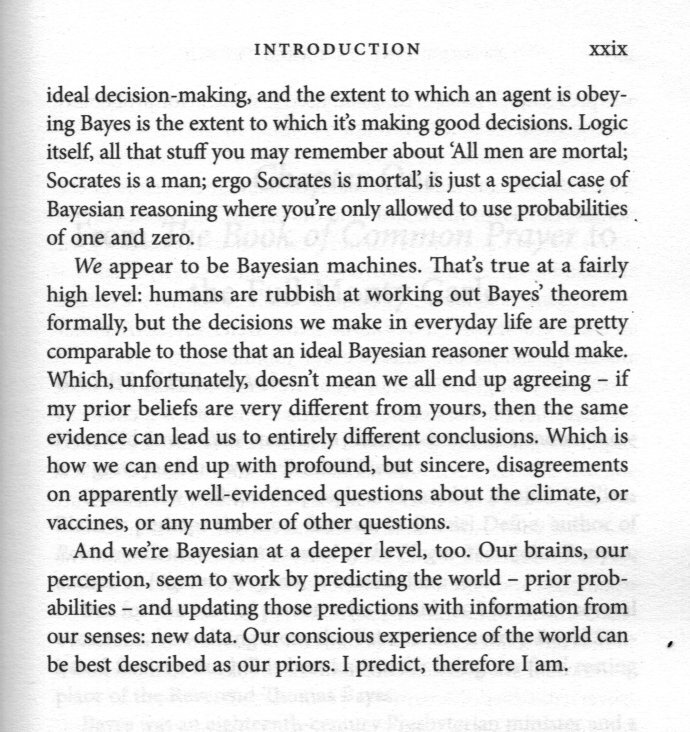
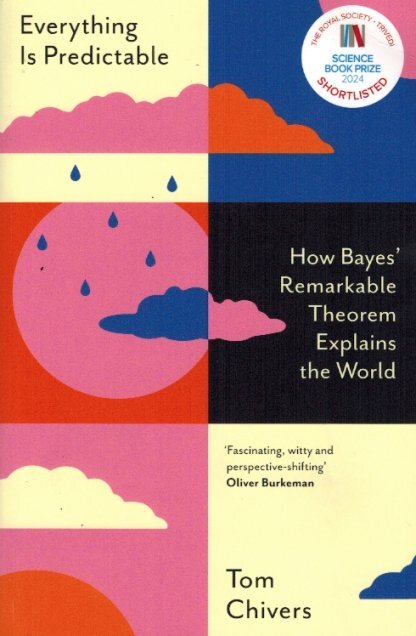
No I don't see anything in QM that might lead to 'intuition'. QM is deterministic in that QM process follow regular equations (although we don't yet know them all). However you might like to consider this proposal from the opening chapter of the 2024 science prize book because 'intuition' may be Bayesian. I admit that the book is somewhat biased towards Bayesian statistics and prediction.
-
I don't see the relevance of this. Pancakes are not bread, nor are they pizza base. By the way the Romans invented pizza. Throughout the world there are many sorts of what are called flatbreads, which generally do have yeast in them. But some of these are 'unleaven bread' and made without yeast. Bread of this type is mentioned in the bible. For pancakes I don't see that the diameter of them is relevant. You should also be aware that the americans use the word biscuit quite differently from Europeans, including the British. There are other forms of flat cake, some with raising agent, some without. Indians make japatis from sesame flour. The Scots make 'dropscones' on a griddle. The Welsh make welshcakes on a griddle they call a bakestone. The lightest possible sponge cake has no raising agent. Air is beaten into the mix until the mix is stiff.
-
Hello Nexus and welcome. Hopefully you will stay long enough to read all the responses on your next vist. internet forums do not always provide instant replies like social media. How well do you understand graphs ? If you look back over history you will find the pace of scientific (and other) change varies. In some periods of time it goes fast and there is a lot of innovation. But in others there does not appear to be much change at all. In reality this is a distorted picture because these quieter periods are often periods of consolidation because new ideas rarely have an immediate effect. They take time to replace older ones that people already have significant investment in.
-
It's normally slowm on a Monday so thanks to those who have already responded. I seems we are all agreed that wav/particle duality is no biggie yet I still see most textbooks and articles making a big song and dance about it. Contrast with a chemistry text that says Aluminium ican act as either an acid or an alkali, depending upon the chemical environment. We call this behaviour amphoteric. Followed by some example reactions
-
How much of this is your own work and how much was prepared by AI ? Why is a good half of your article devoted to dismissing the Higgs ? In particular how does your proposal integrate with dark matter and dark energy ?
-
One underlying aspect that I notice here and elsewhere is a fundamental misappreciation of duality so I have posted a new thread to discuss this. Since the phenomenon applies to Science more generally I have posted in Other Sciences.
-
When an entity under consideration possesses multiple, perhaps many, characteristics we need to consider the situation that arises for entities that only possess some of those characteristics. Just to be clear, I am using the word characteristic in its common or garden meaning of quality or property or similar, not in the specialised mathematical meaning to to with the wave equation. Equally I am using duality in a broader sense than just in the wave/particle apparent dichotomy, as it applies to all sciences, not just light. I am of the opinion that the so called wave/particle duality issue has been 'blown up (inflated) out of all proportion', being seized upon by the media as some sort of inscrutable mystic woo. In other science we comfortably accept duality and say 'it depends upon the circumstances' and move on to consider those circumstance. Here are a few examples. Chemistry : Is aluminium acid or alkali ? Biology : Is a vurus dead or alive ? Materials Science : Is concrete a stron or weak material ? Electrical Science : Is a hole a particle or a wave ? Biological Science : Is a fungus a plant or an animal ? Visual Science : Optical Illusions : Is the picture the external corner of a cube or the internal corner of a box ? Chemistry : Is compound X covalent or ionic ? My question for discussion is; "Are we making too much fuss about light duality so that the it has achieved mystic status that brings so many to misunderstanding ?"
-
Absolutely not. You did not mention action, until well after exchemist did. The product joule.hertz-1 is not a 'unit of action', any more that the inverse of hertz is seconds. Action refers to a particular process not an object and unless that process is cyclic the product joule.hertz-1 is meaningless. What a good idea. I respectfully suggest and request that this thread be stopped here and now as it is not achieving anything
-
I am going to have one last try here. I am going to tell you a true story that I have personal experience of. Personal attacks on others are counterproductive. Not only because they antagonise these others but also because they leave the attacker without having reached their objective of gaining further knowledge and understanding. Before AI, before Google and nearly before the internet itself, part of my wife's professional training was undertaken at the world famous Great Ormond Street Hospital for Sick Children, in London. Whilst she was there there was a real panic on because serious cracks had appeared in the reinforced concrete structure of a brand new building they had just moved into, The cracks were serious enough that everyone, staff and patients, had to be moved out and the building knocked down and rebuilt. The inquiry found that the designers had cut corners, not properly understanding reinforced concrete, and designated the design to junior technicians who looked up inappropriate formulae for the design. Even in those days it was easy to look up formulae that the seeker did not properly understand and so would misapply it. Today with AI, Google and the whole nine yards of the world wide web it is all too easy to think you can just look something up and use it without properly understanding it. Don't do it. History is littered with spectacular blunders by people who did this. OK so back to this thread. You posted a perfectly good correct physics statement to which I responded. Now energy is a tricky thing because it is an abstract concept it is non material. Here is a simple example. What is the difference between a bag of 5 apples and a bag of 3 apples Answer 2 apples. But the 'difference between' is an abstract concept. It is not a property of either bag. and you can introduce complications to this by offering that the apples in the first bag are smaller than the apples in the second so the weight of apples is the same, and many more complications besides. Energy is something like this. One of these complications for energy is that energy is frame dependent. And you did not specify measurement frame. You need to do this because you also referenced a stream of such particles which must, by definition be moving. But motion, and that all important property velocity is relative to something. So when I said that you need to supply more information, so that we could work through the necessary calculations together, all I got back was. given a particle of energy What's it's mass?....what childish game is there? What other information do you require to convert that to mass?.....I told you to use speed of light. Where you not only tried to order me about, like a petulant dictator, you changed the wording of your original statemnt to incorrect physics. There is no such thing as a particle of energy. Energy is not a substance, it does not have particles. Particles have mass and that allows particles to have energy. That not so subtle difference had led you to try to force the application of the wrong formulae like the hospital building designers I mentioned. You must have quite a bit more information about your scenario to be able to make sensible predictive calculations.
-
I'm glad I decided to let Phi speak for me. +1
-
The definition of Democracy has changed over time. At the time of the Punic wars, Rome was a democratic republic by their definition. When the US started its war of independance it was one democracy against another, yet both had slaves.
-
Yes I agree that some stats are reliable, but I think Trurl may have been referring to Vance Packard (The Hidden Persuaders, The Status Seekers and The Pyramid Climbers). So yes consumer behaviour is significantly more predictable than wars. Nevertheless some wars are more predictable or perhaps as MigL put it inevitable such as the 'War of Jenkin's Ear', the Punic Wars are examples.