
studiot
Senior Members
-
Joined
-
Last visited
Everything posted by studiot
-
Good night all I had enough time wasting.
-
But they haven't gone unanswered. For example You asked how can space time curve and I told you. But you have yet to reply. I find the phrase 'configuration is fine with me' rather slap happy when one considers that science is a precise subject (as far as it can be). What would you think of a doctor who gave you parabenzedrine instead of paracetamol and casually said well they both begin with para ?
-
Bluntly because only one of us is taking any notice of the other. for example Not quite. It means that that it may exist in more than one configuration. Configuration is a better word in this case than state. For example diamond and graphite are polymorphic forms of carbon that can exist in the same state (solid) but have different crystal structures (configuration) Edited 24 minutes ago24 min by studiot
-
How is it ridiculous ? You last answered one of my queries 19 posts ago, several of them yours, and I have subsequently offered you some advice on scientific terminology. Further you still haven't answered my question from my first short post on the previous page, despite being reminded of it recently.
-
I have offered you solid facts. You seem so afraid of considering them that you don't bother to answer my comments.
-
Do you understand non riemannian geometry ? You have quoted 'the rules' and I agree in this case the 'how' is because the observed (I know you don't like that word) phenomena (transformations) are Lorenzian not Riemannian. If you want MigL 's symmetries they SO (1,3) not SO (4) That's the trouble with pure philosophers. They are lost to the real world of everybody else. Actually the OP has scored a near miss with is definition. Not quite. It means that that it may exist in more than one configuration. Configuration is a better word in this case than state. For example diamond and graphite are polymorphic forms of carbon that can exist in the same state (solid) but have different crystal structures (configuration)
-
Do you know what these rules are ? If so, how do you know that your unspecified 'which' conform ?
-
Rather than use big words perhaps you should consider what they mean. Presenting stuff like this is likely to get the backs up of pragmatists, which in turn leads to you responding defensively. The holographic plate image only works down to a certain size of subdivision. If you go smaller it no longer works. And what do you mean by polymorphic ? and what do you mean by 'embed the laws abstractly' ? Having asked that and talking of abstract, you have mentioned abstract in a rather disparaging way before. The english language is particularly blessed because it distinguishes between abstract and concrete nouns and allows that either or both can be every bit as real or not as appropriate. Since you disparage the abstract, conside this When I go to the supermarket, I carry an abstract map in my head, in order to arrive at my destination. I don't carry the whole map at all times, I just deploy the appropriate parts as I go along. Finally you did not respond to my previous comment in this thread
-
How come you haven't weighed the benfits against the disbenefits ? Was this page generated by AI or is it your own work ?
-
I agree the ramifications run very wide. +1
-
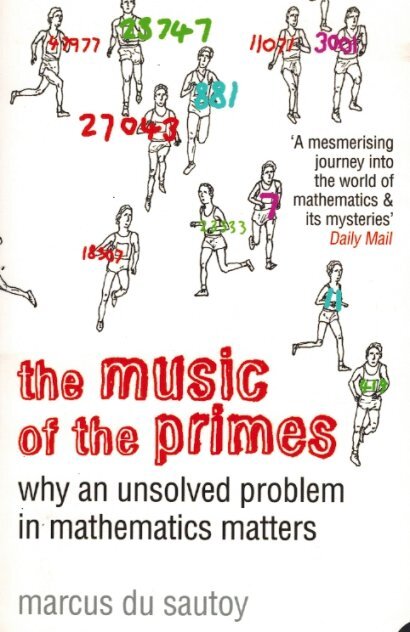
If you want something more up to date than Gauss try this little book. Professor De Sautoy even delves into the connection with Physics.
-
I think that it is not very entertaining but is certainly a distraction. I also think you need to learn some real physics so you don't make elementary mistakes like saying They don't. If you what like to know what they actually do we can explain here far better than some journalist who doesn't understand Science.
-
I think the main part of the message is that a shell is not an orbital. A shell contains orbitals. And a 2s orbital can hold exactly 2 electrons (not 8), just like any other s orbital. But I am not sure if the op understands the word orbital or the s, p, d etc notation evryone is bandying about here. The question in this thread is at quite a different level from his one about oxides of nitrogen. Like you I am trying to help, but it is difficult to know where to start, without further information.
-
I'm sure you know this is not quite accurate, perhaps you were trying to simplify too much. It was recognized early on that the electrons are arranged in shells. An individual shell is a collective name for electrons thought to be at a similar distance from the nucleus. They were called shells because it was thought that were indeed shells in space like the layers of an onion. Later is became understood that these shell groupings are actually arranged in terms of energy not spatial separation and actually partially overlap each other. It was also realised that there are also sub groupings within the shells ie the energies of electrons in a given shell are similar but not necessarily the same. Originally these shells were also called K, L, M N and so on. (capital letters) When subsehells were intorduced the letters were replaced by a new system, using numbers instead K, L, M, N etc being replaced by 1, 2, 3, 4 etc. The subshells were then labelled with lower case letters, s, p, d, f and so on It is the shells that are being considered for the octet rule. Ammonia is a neutral molecule. Pure substances (matter) can comprise molecules, which can be further divided into pure elements. And elements which cannot be divided. An atom is the smallest particle of an 'element' of matter. A molecule is the smallest particle of a pure substance. But it can be divided into atoms of consitiuents elements.
-
It would be more true to say that only H sap has developed atomic weapons.
-
The USA was behind the UK in requiring the wearing of seatbelts, and subsequently the UK introduced requirements for placing animals either behind an impenetrable screen or in a suitable restraint harness. I'm not agreeing or disagreeing as the subject is the legal implications of AI use. Also authorities with some legal powers are increasingly using private sub contractors, who do not share these powers but sometimes act as if they do. There have been several cases recently in the news where these contractors demanded £!0,000 for overstaying parking and after loosing cases in the high court, put out statements claiming they are 'in the right.'
-
I don't agree, though it does depend upon your definition of morality. If you take @joigus definition certainly other higher animals display some measure of taking cause and effect into account.
-
The traffic authorities have announced that a by pass near me is to get a package of AI cameras to try ti improve the safety record of this stretch of road. Apparantly the AI will monitor for such things as not wearing seat belts, talking on the phone whilst sriving, eating whilst driving, children and animals incorrectly secured in the cabin and so on. Considering all the recent discussions about AI lying to us to satisfy its programming, how should we consider evidence of wrongdoing provided by AI ?
-
Sadly from what I know of history religions have starved more people than they have fed, killed more people than they have saved or cured. Some have been worse than others it is true - there is a range of net harm done by religions.
-
Clearly the OP was having a problem or he would not have started this thread. So I don't see how saying that you don't see a problem is helpful. There is no one right approach. Once we know where he is coming from we can help him chart his own path through a complicated subject.
-
This approach present difficulties, even at introductory level. One of the examples in the OP is the carbonate ion, and I have already mentions the ammonium ion. These are chemical species, not atoms and the OP actually heads the table 'molecule/ion' to acknowledge this. Molecules, like atoms are electrically neutral, unlike the ion species and the OP avoids allocating formal charge to any atom in the carbonate. In contrast, atomic charge allocation works in the neutral HNO3 molecule. But what about when it dissociates ?
-
I think @HbWhi5F is just starting to study bonding in a pretty conventional way. This is to distinguish and identify two types of bonds viz ionic and covalent bonds and understand the difference between them and also understand the equation Number of bonds + Number of unbonded outer electrons = total number of outer electrons in each atom. More advanced schemes like sigma Pi delta bonds, metallic bonding, hydrogen bonbding and so on come later as do molecular orbitals, resonance and other stuff. Here I don't think our OP is yet clear about ionic and covalent bonding. Often the questions Why do atoms bond at all ? are never asked Similarly for why do chemical reactions happen ? So HbWhi5F, have you done any quantum theory at all ? Have you heard of 'orbitals' ?
-
Be careful to distinguish between a catalyst, which is not present in the products of the reaction, and an accelerant such as lighter fuel which accelerates fires (oxidation) and is used up in the reaction.
-
And I wasn't since the resultant species are all electrrically neutral (unlike say the ammonium ion). Charge bookkeeping leads to seriously difficulties with later more advanced stuff. Agreed except that an in-depth tutorial would be more beneficial. This is partly why I asked what is being studied as there are many other subjects that consider chemical bonding besides Chemistry itself.
-
A donated electron = an ionic bond Which is polar (has a negative end and a positve end) A shared electron = a covalent bond A shared electron = a covalent bond where the atom looses (donates) a part only share in one of its electrons but also gains a part shart in an electron from another atom. Thus remains electrically neutral.