

Sohan Lalwani
Senior Members
-
Joined
-
Last visited
Everything posted by Sohan Lalwani
-
Until what your saying is objectively provable, it’s better to not say anything at all
-
A person who referred to a health professional as someone who “grabs tits!” Precisely! Everyone is aware this is a joke right?
-
We got 50 now 🥳🥳🥳🥳🥳
-
Come with me to a celebration of 48 downvotes! The party is at somewhere between 220-250 million years from now a galactic time You can eat whatever my arse can imagine. See you there!
-
What about Elmo?
-
So funny it’s stupid At least I tried
-
-
I gotta agree here Criticizing a religion is one thing, disrespect is rude and will not be tolerated What is this “RF?”
-
That reference was an attempt to preempt a common misunderstanding in discussions about anti-coagulants vs anti-platelets—not to misrepresent your position. I’ll own that the inclusion was unnecessary in this context and I appreciate you pointing it out. However, the central point I was addressing still stands: the mechanism by which hirudin inhibits platelet activation is not simply a downstream effect of it being an anti-coagulant. The confusion seems to lie in labeling thrombin-PAR signaling as an "indirect" or “secondary” target of hirudin, when in fact it is a primary physiological function of thrombin. Thrombin binding to PAR-1 and PAR-4 on platelets is not contingent on thrombin’s role in the broader coagulation cascade, nor does it depend on fibrin generation. It is a direct receptor-ligand interaction, and it's this interaction that hirudin blocks. So the nuance is this: inhibiting thrombin is not “indirect” just because the effect on platelets happens through thrombin. If thrombin is a direct agonist of platelets, and hirudin directly inhibits thrombin, then hirudin is directly blocking a platelet activation pathway. That’s not the same as calling hirudin an anti-platelet drug in the pharmacological sense (like aspirin), but it is factually incorrect to dismiss its effect on platelets as merely indirect or secondary. Ultimately, I’m not here to "win" a disagreement—I’m genuinely trying to understand this with scientific clarity. If there are studies you feel contradict that interpretation, I’d be glad to read and discuss them. Otherwise, I still believe the distinction I’ve outlined reflects the current understanding of thrombin biology and hirudin pharmacodynamics. Thanks again for engaging—this is how science moves forward, even in disagreement I’m not even going to engage with this anymore, all I can say is that it’s annoying as shit
-
🛌 I am off to bed so here’s a sort of recap regarding my points I appreciate the thoughtful distinction you've drawn between anti-coagulant and anti-platelet mechanisms—this is indeed a critical conceptual divide in hemostasis research. However, there is a factual inaccuracy in your assertion that “all such activities [of hirudin] are the result of thrombin inhibition as primary function,” with the implication that any observed anti-platelet effects are necessarily indirect or secondary to its anti-coagulant role. This mischaracterizes the specific mechanistic role thrombin plays in platelet activation and, consequently, how hirudin modulates that process. Thrombin is not merely a terminal effector of fibrin formation; it is also one of the most potent physiological activators of platelets. It exerts this effect through direct interaction with protease-activated receptors (PAR-1 and PAR-4) on the platelet surface, initiating intracellular signaling cascades that result in platelet shape change, degranulation, and integrin activation—central steps in thrombus formation. This is not a downstream effect of clot formation, but a primary, receptor-mediated cellular activation process. Hirudin, as a highly specific direct thrombin inhibitor, binds both the active site and exosite I of thrombin with high affinity. By neutralizing thrombin’s proteolytic activity, hirudin directly prevents thrombin from engaging its platelet receptors. Therefore, hirudin’s interference with thrombin-mediated platelet activation is not merely a side effect of reduced fibrin formation; it is a primary, mechanistically direct interruption of a major platelet activation pathway. Multiple experimental studies support this: platelet aggregation assays in vitro consistently show that hirudin prevents thrombin-induced aggregation, even in the absence of fibrinogen or other coagulation factors. Thus, while hirudin is accurately classified as an anti-coagulant, its effect on platelets—specifically those mediated through thrombin-PAR interactions—represents a direct and biologically significant anti-platelet mechanism. The development of fusion constructs with RGD motifs is not meant to introduce the first anti-platelet effect to hirudin, but rather to expand its scope by targeting additional pathways, such as integrin-mediated adhesion, which hirudin does not affect on its own. In short, your assertion overlooks the well-documented fact that thrombin is itself a direct platelet agonist, and therefore, any compound that specifically neutralizes thrombin—such as hirudin—does in fact exert direct anti-platelet effects through a well-defined molecular mechanism. While your caution against conflating engineered fusion proteins with native bioactivity is absolutely justified and appreciated, the underlying biology of thrombin and its dual role in coagulation and platelet activation necessitates a more nuanced interpretation of hirudin’s pharmacodynamics. I hope this clarification adds constructively to the discussion. Good night @CharonY 🛌 I was wrong about the classification, they are not primarily classified in such a way.
-
Hey I’m Sohan I never introduced myself here when I was new so here I am. I want to debate for either to reach a conclusion or for the sake of discussion.
-
If you don’t mind me asking, what tea brand do you use? Just out of curiosity
-
Intriguing, you still didn't answer my statement nor my question. Leech saliva contains hirudin, an anticoagulant that also indirectly inhibits platelet activation by blocking thrombin. Perhaps this may be better, cite your sources as well At first glance, this seems reasonable: hirudin is classified as an anti-coagulant, and its mechanism is thrombin inhibition. However, your factual inaccuracy lies in the implied claim that any anti-platelet activity is only a secondary, indirect result of coagulation inhibition, and that hirudin has no direct influence on platelet-related processes. That’s not entirely correct. Thrombin is not only a central player in the coagulation cascade; it also acts as one of the most potent activators of platelets. It activates platelets by binding to protease-activated receptors (PAR-1 and PAR-4) on the platelet surface. This is a direct receptor-ligand interaction, not a downstream consequence of fibrin generation. So when hirudin binds to thrombin and neutralizes it, it is directly preventing thrombin from binding to those receptors and activating platelets. In other words, hirudin is interfering with a specific and direct pathway of platelet activation. Therefore, hirudin is not just "indirectly" affecting platelets by suppressing fibrin formation, it is mechanistically blocking thrombin-mediated platelet activation at the receptor level. This is still considered an anti-platelet effect, even if the drug is not classed as an anti-platelet agent per se. I DO CONCEDE, I COULD HAVE BEEN MORE NUANCED Please counterclaim or correct if possible, also please stop with the “if you ask AI” or “I could tell you’re using ai” because 1, there is no way to verify I used it, and 2, it’s just irrelevant and annoying. With all due respect since you seem like a fairly pleasant user and I think you would understand, it’s pissing me off with the ai stuff.
-
Have you read all of the provided papers? I am guessing not. Also your original point is wrong, it does serve as an anti platelet agent. "Trust me bros" don't work
-
https://pmc.ncbi.nlm.nih.gov/articles/PMC2713024/ https://www.frontiersin.org/journals/pharmacology/articles/10.3389/fphar.2021.660757/full https://www.sciencedirect.com/science/article/pii/S0006497120857875 I want to have good digital footprint and not be targeted for any reason startinggggg NOW Hehe Haha Hoho Theoretically if they don't want to receive facts of any kind or reject any true information, I could just shitpost them until they stop posting any form of misinformation on the media. I shall do that.

-
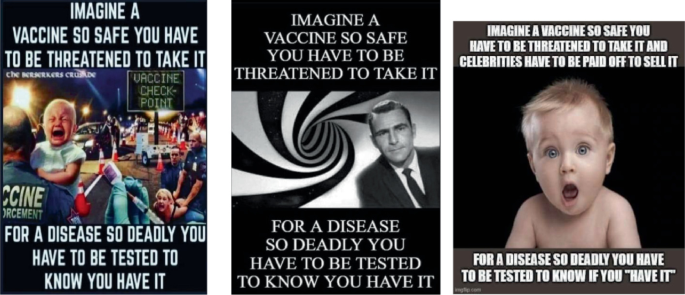
Why is it that nearly every time on an anti vaxx site or something related to "why vaccines are not effective" there is always some low quality shitpost meme of a "virus relocation camp?" At least make the shitpost decent quality WTH is a "virus relocation camp?!" I'm not going to get political but I think we need A SIGNFICANTLY MORE QUALIFIED PERSON for something as important as Public Health and Sanitation

-
OUT OF ALL THE QUALIFIED PEOPLE WHY RFK JR 😐 . It also serves as a anti-platelet agent I'd love to remind them what life expectancy was like when preventable pathogens spread before vaccines were available."
-
XD
-
No problem! Ill stop using the memes Isn't he the head of the Secretary of Health and Human Services in the US? Dear god.
-
She often argues with Mrs. Tilly over who should get Banana Bart or Kiwi Kelly.
-
Other than nanoparticulate matter or microplastics, I say you are good to go :D
-
A lot of sites he has say "we will end medical tyranny" along with the regular shitpost meme cover of a baby being injected while is mom is getting arrested for god knows what. See here: Either I have become more of an idiot than I currently have, which is impossible, or he's fundamentally wrong. From what I know IT CAN be caused by that, but how does it invalidate germ theory? What is his train of thought 😭


-
I am very confused regarding a certain situation. RFK Jr. supports that children should be healthy, he also has a very strong anti vaccine stance. HOW DOES THAT MAKE SENSE
-
I cured cancer with your answer. Utter genius you are
-
This is so astronomically helpful