Genady
Senior Members
-
Joined
Everything posted by Genady
-
In order not to waste septic freshwater, many households here use it, appropriately filtered, for irrigation.
-
sqrt() is not needed because it is multiplied twice.
-
Desalinated water, by reverse osmosis, is the fresh water this entire island lives on.
-
and close to the ocean as well. And all that just for flashing toilet?
-
It will not. No, it is not.
-
Looks like all you need to do is to find a better word than 'happiness.' Guidelines to satisfaction?
-
No. Infinite. Depends on the proportion of the colors in the mixture. But if you are asking, how many different pairs can one make out of n different items, then the answer is n(n-1)/2.
-
This is known as conspiracy theory.
-
You get the book answer if you use 100 mph instead of 100 km/hour.
-
I'm getting about 2000.
-
For the lack of data, this is the working hypothesis for now. You are in an "alternative reality":
-
What does make you think so?
-
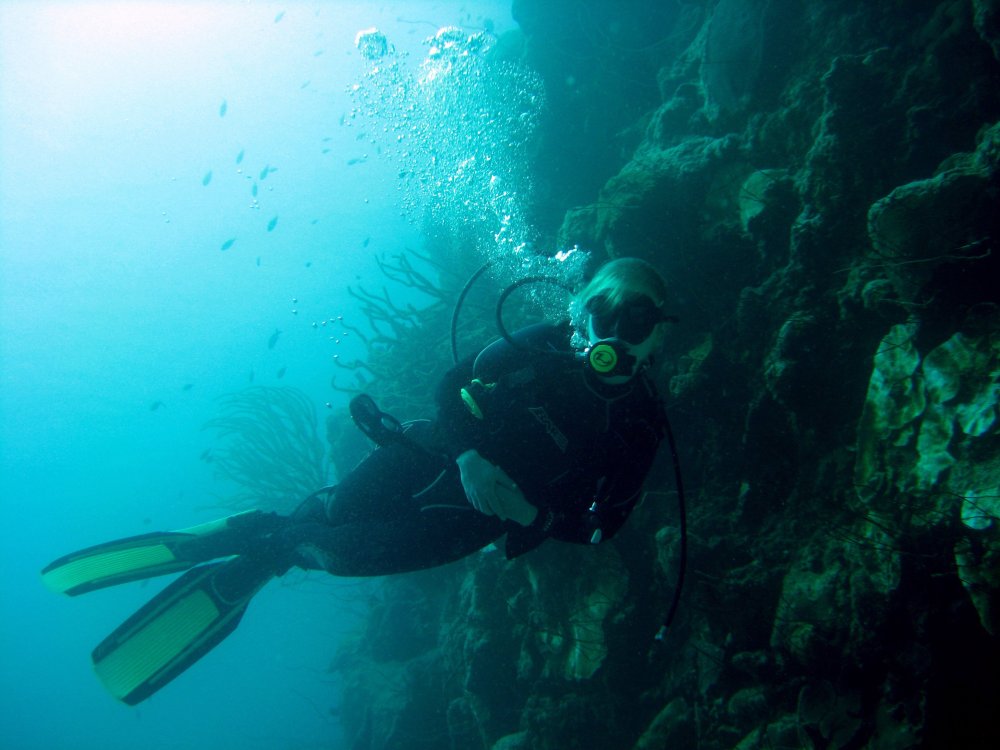
In addition to the abovementioned factors, there is a change in breathing pattern. In normal breathing, our inhalations and exhalations are of about equal duration. Underwater, if we do it right, our inhalations are normal or faster than normal, while our exhalations are long and slow. This breathing pattern might have physiological and psychological effects, akin yoga perhaps. Maybe the effect is caused not by any one factor, but by the fact that the entire experience is so different from "our terrestrial days" (?)
-
I am flattered.
-
Thank you, @TheVat. Good memories, you know. When diving, one does not feel pressure, except if one cannot, for whatever reason, equalize the pressure in air-filled cavities such as middle ear and sinuses. If this happens, one feels pain rather than pressure.
-
Family friendly? This is just gay!
-
I rather thought of A=±O*C
-
I'd put it in the other order. You know, similar to x=±√y
-
We don't need a new equation. Just extend your equation by inserting ± in it: + for the atoms that want to stay, and - for the atoms that want to change.
-
I knew it! Thank you!
-
Yes. It is an extension of your theory. I've shared it with you here:
-
To defend my theory against this:
-
@grayson, help me out here!
-
I have a better theory: atoms do whatever they want to do, and not all atoms want the same thing. Some atoms do anything they can to stay the same - they are stable isotopes. Some other atoms do anything they can to change - they are unstable isotopes. I think my theory explains everything.
-
In what sense? Actually, you hear your breathing underwater, but you quickly stop noticing it.