
Genady
Senior Members
-
Joined
Everything posted by Genady
-
However, if x is a complex number, there are many solutions. Not exact, though. One seems to be ~ (-0.28+0.46i), if my algebra is not mistaken.
-
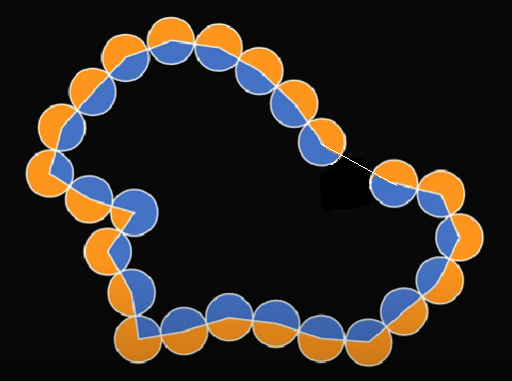
Too easy. Belongs in this forum: Brain Teasers and Puzzles - Science Forums.We will not need to do any of that. We'll be just floating in space in individual capsules living each in their own virtual reality.I've read 2001 in Russian translation, but they never published 2010. They said it had some "wrong" societal or political themes in it.Well then, I don't have the priority, but believe me, I did not plagiarize the idea. Nice.PS. A thought just crossed my mind, that the question and the answer work perfectly well even for a "string" with only two circles on it.Jupiter is a failed star. We should fix that.Like in the related thread, thanks a lot for all the suggestions and thoughts.Thank you very much for all the suggestions and thoughts.When you guys solve the OP, consider this modification. The circles do not necessarily fill the string, but may have gaps, like this, for example:
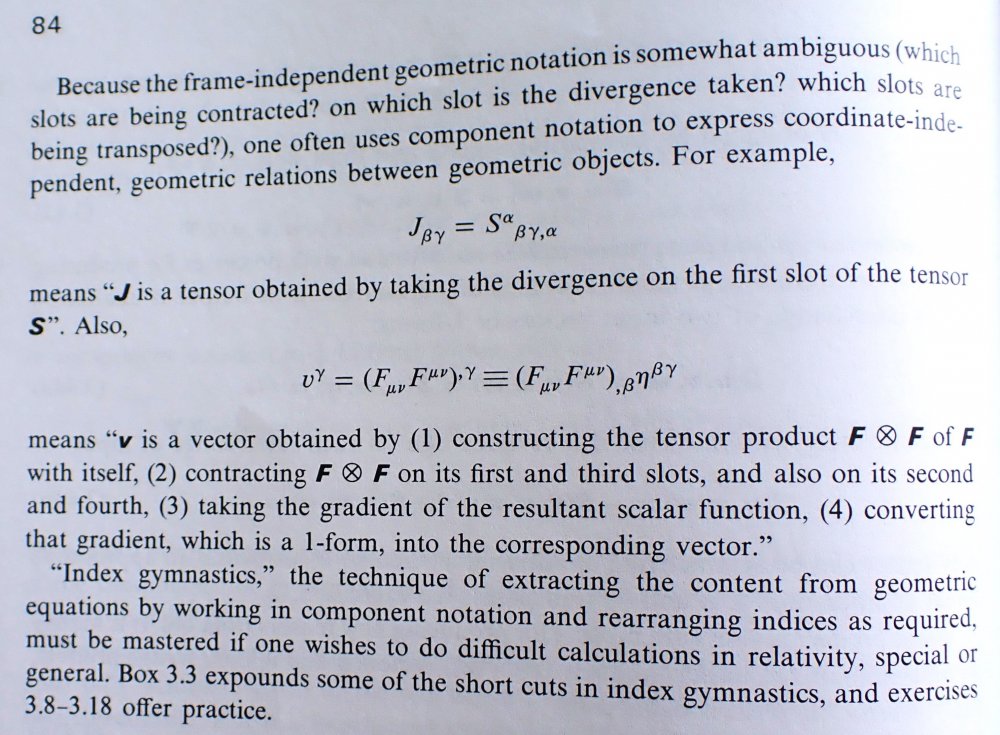
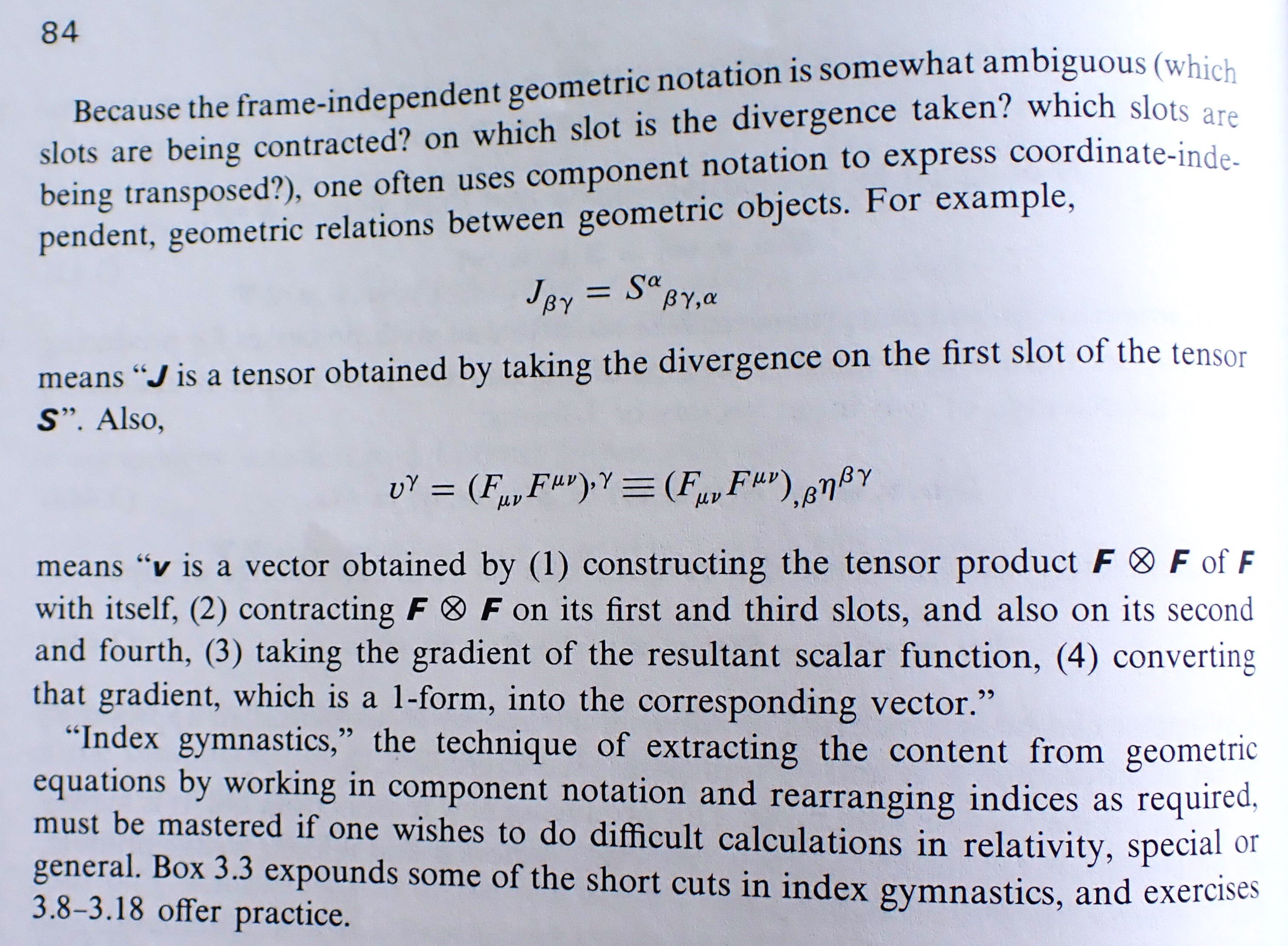
 Perhaps it'd be easier to keep making new ones as needed.Defining tensors as maps is fine, but there is an asymmetry in this view that I don't like much. One starts with something "static", say, vectors. Then, one defines forms and tensors as maps of maps etc. of the vectors into numbers. The numbers are "static", too. I like that in the "static" view, all of them, numbers (scalars), vectors, forms, tensors are entities on equal footing which "interact" through operations. Moreover, some operations, e.g., contraction, are defined using basis, i.e., components, albeit being basis independent. Frame independent component notation has other advantages, as MTW admits here: So, why not to start with this view? The mapping then is just another contraction. And it does not matter if a tensor maps a vector or a vector maps a tensor, they just together contract to make a number or something else.
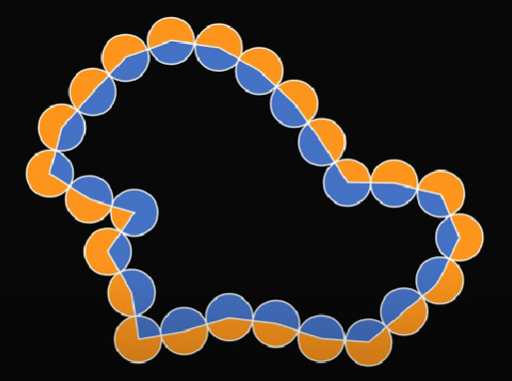
 Well, that too.Here are n circles of radius r arranged in a closed string. The centers of the adjacent circles are connected with straight lines. What is the difference between the orange and the blue areas?
 Good. I did not mean "visualizing" each individual tensor, but rather relating to a tensor concept. To you, it as an algebraically motivated concept. I understand that it means, sets of indexed components that transform in certain ways. IOW, the "Zee's definition."There are two ways to visualize tensors as coordinate independent, "geometric" objects (that I know of). One way is what I'd call, "dynamic": tensor is a linear function that takes in vectors and 1-forms and puts out numbers. "A tensor is a machine", Gravitation by Misner, Thorne, Wheeler. Another way is what I'd call, "static": tensor is an equivalence class of sets of components that transform into each other with a coordinate transformation. "A tensor is something that transforms like a tensor", Einstein Gravity in a Nutshell by Zee. To me, the "static" definition is easier to visualize and to use. What is your preference, if any?As you guys expected, they have fixed it. All the missing transactions have been posted in a batch.Yes, I realize now that instead of unknown geometry I should've said, arbitrary geometry. Also, instead of smooth space I should've said, topological space. Well, this discussion has clarified not only the answers but also the question. At least, to me. Thanks to everyone.They clearly say that the sum of infinite series is defined to mean the limit. Everywhere when you see something + ..., it means the limit.It was less than a minute, but yes, nothing new. They see the same data. The only suggestion they have was to wait for the monthly statement.It's not the browser. I get the same data on the phone.Especially strange as we're talking about a major US bank here... I'll call them later.I think so. Some kind of a "key".

Important Information
We have placed cookies on your device to help make this website better. You can adjust your cookie settings, otherwise we'll assume you're okay to continue.