Alex_Krycek
Senior Members
-
Joined
-
Last visited
Everything posted by Alex_Krycek
-
You seem to be under the impression that the police commit more violence than actual criminals. This is an exaggeration that isn't supported by the facts. Straw man. I never suggested the police shouldn't assume innocence first. You still haven't addressed the issue of violent crime that occurs on a daily basis. You're operating under the somewhat naive assumption that if police just "leave well enough alone" then violent criminals will just play nice. It doesn't work that way. Police have to be proactive in shutting crime down before it happens. More robust social policies would be a great long term solution, but for now local communities where violence regularly occurs want the police there to mitigate it.
-
Nor does it stop criminals from terrorizing the innocent. If you were Chief of Police, how many innocent people would you be comfortable victimizing in the name of this pacifistic approach? Ultimately I agree that much more investment is needed to lift the downtrodden out of poverty, so that crime is not their best option. Until that happens there still needs to be a competent police force.
-
Anarchy has been tried. It doesn't work.
-
Agreed. And this needs to be thoroughly understood and addressed with a robust system of checks and balances. Greater accountability must coincide with enhanced training. Gang members, drug dealers, drug addicts, rapists / sex offenders, violent thugs of various kinds. There's no shortage of very bad people out there who commit crime on a daily basis, and who are only encouraged by a weaker police force.
-
Thank you.
-
Of course the situation would be different.. There are so many ways to protect yourself from a knife that you can't protect yourself from a gun. It's a totally different ballgame.
-
I don't think such a policy would work in the US as there are too many guns. Encountering a firearm in the UK is a rarity, in the US its commonplace. By the time the AFRU arrived it would be too late.
-
I think there are some officers who have this initial mindset going in, but I think they are the small minority. In my view most have aspirations to protect their community and do what good they can. What is more problematic is the cultural and behavioral conditioning that takes place over the years within police departments due to sustained exposure to extreme stress, and the resulting conformity and group identification that occurs. If there is not a genuine recognition by society of the dangers police face and an attempt to train, equip, and support them accordingly, then a "survival at all costs" mentality driven by fear will continue, and officers will be further alienated from society. In short. I see the affect on officers as being mainly environment driven. As to the lack of accountability and decay of culture within the department, there is a great book called: Delta Theory and Psychosocial Systems by Roland G. Sharp which is relevant to this discussion. Sharp's theories would be very helpful in understanding why good officers end up behaving as they do. (link: https://www.amazon.com/Delta-Theory-Psychosocial-Systems-Roland/dp/110753173X/ref=sr_1_9?dchild=1&keywords=delta+theory+social+change&qid=1594563089&sr=8-9) Also, for any Netflix people out there, there's a docu-series on this very topic called "FLINT TOWN". It follows the Flint police department, one of the most underfunded in the nation, as its officers attempt to manage the crime and chaos of poverty stricken Flint Michigan. The series exposes exactly the dilemma that many police departments in the US are facing: no resources, no funds, and an out of control, hostile environment. It also shows a change to extremely aggressive policing of "high crime" areas in response to public pressure. As I said before, I think aggressive policing is the wrong approach, especially if impoverished communities are not given increased funding for jobs, education, housing, and other necessary services.
-
Yes. Setting higher standards for accountability and increasing external oversight would root out those who aren't fit to be cops.
-
Your point seems to be that because there has been little to no money spent on police training, it's futile to actually devote resources to adequate training because the "wrong" approach (inadequate training) hasn't produced the right results. Your point is a non sequitur. If any organization was afraid to adopt a new direction because of unsuccessful policies in the past, absolutely nothing would be accomplished ever.
-
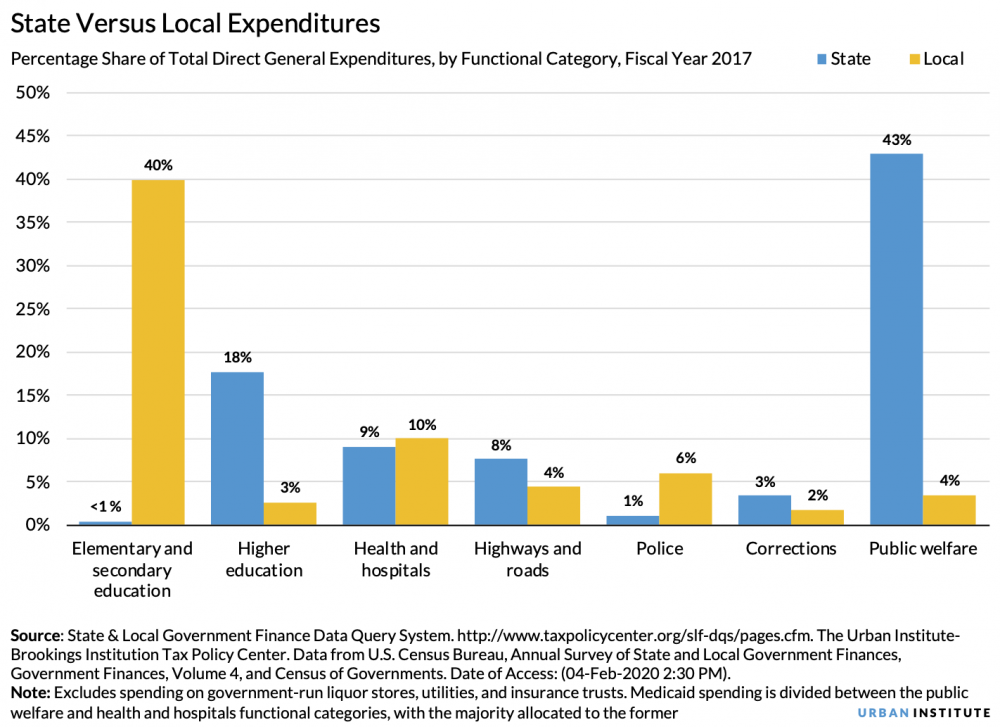
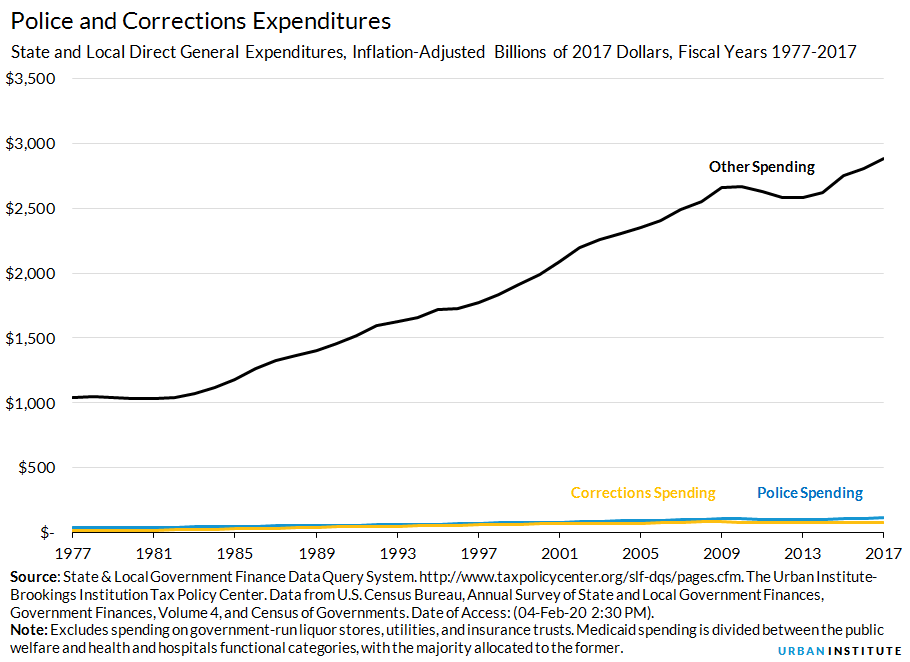
I already provided data at the outset that shows how little money is being spent on police training in the US. That's already been established.
-
Right, but the whole crux of what I have been arguing is that the police's predisposition towards violence results from a lack of training, defaulting instead to a fear based response to violence which is a misplaced attempt to control chaotic situations. Martial arts training would significantly offset / negate this fear based response, thus greatly reducing the unnecessary violence carried out by officers. My experience and understanding of martial arts culture. You will be hard pressed to find a martial arts school that actively encourages its students to go out and commit acts of violence. In fact, the opposite it true. As iNow can probably attest, the core principles of martial arts are having a high respect for everyone around you, avoiding violence whenever possible; instead opting for a peaceful solution, and reaching your highest physical and mental potential. Martial arts isn't about glorifying violence. On the contrary, it's about understanding the true consequences of violent actions and working to effectively manage the sometimes inevitable chaos that confronts us with an intelligent and disciplined response.
-
Circular logic. Most people would agree that if someone is already predisposed to violence, then having more tools to inflict it would amplify their instincts. However, the premise that those who know martial arts are already more likely to use violence is completely unsubstantiated. I would say the opposite is true. A person would be less likely to use violence if he or she knows martial arts.
-
A case from several days ago in north London . It's a perfect example of an arrest that officers never should have attempted. They claim they smelled cannabis from the driver's car (something that shouldn't be a crime anyway). The officers then aggressively harassed Ryan Colaco in his vehicle until they smashed in the windows and drug him out of his car. Colaco was then physically assaulted, strip searched at the police station, and then released with no charges. His damaged vehicle was not repaired and officers did not apologize. This kind of policing is overt thuggery, and has no benefit to society other than to justify a paycheck for officers.
-
It depends what crime we're talking about. The police are required to enforce the law, not walk away from fights. What offenses should be decriminalized is up for debate (and I believe there are many), but if a suspect is being violent or aggressive towards other people, then the police have a responsibility to subdue and detain him / her. Example. Let's say I call the police on my neighbor who is being drunk and disorderly. My neighbor is smashing trash cans in the street and has broken several car windows with a baseball bat. When the police arrive my neighbor attempts to hit the officer with the bat. In that situation I certainly wouldn't want the officers to walk away from the fight. My neighbor, emboldened by the retreating police, might smash my car windows next, enter my home or otherwise damage my property. The police have a responsibility to protect me and my family's safety even if they have to use force against my drunken neighbor. There is no evidence of this being the case.
-
Many things should be decriminalized. It's hard to know where to begin. Thankfully there has been progress with the legalization of cannabis and certain naturally occurring psychadelics. I agree that society is over policed. It's part of the rigged game of our plutocracy - systemic white collar crime / fraud that does substantial damage to society is ignored while the lower classes are over policed (i.e. oppressed) to fuel a for profit incarceration system. The system couldn't be more broken.
-
Yes, I do. But being better at martial arts doesn't equate to "using more violence". It would mean the officer knows how to control and mitigate violence when it is used against them. Tazers get used by untrained officers all the time because they're "non lethal". They are over-used IMO and present too great a risk of causing sudden cardiac arrest. It might make sense in this case unless the suspect wielding the sword is also wearing a suit of medieval armor. I'm all for it, however, many times people cannot be reasoned with. It's unrealistic to think officer can always talk people out of being irrational.
-
Straw man. Never did I state that violence is the solution to America's policing problem. Is that not clear after 3 pages? If the sword wielding civilian tries to attack the police then he / she would represent a lethal threat and so deadly force would be justified. If he / she is mindlessly swinging the sword around in a park then the cops should use a Time, Distance, Cover tactic to approach him. That is, they should assess the situation from afar from behind cover and only if he attacks respond with commensurate force to stop him. And yes, if they can talk the person into putting the sword down, that would be the best option. A taser might work in this situation but you have to be relatively close to use a taser, so that would put the officers in quite a lot of danger.
-
Ha. Just following protocol.
-
Excuse? For what? Be specific about what point you disagree with.
-
More directly accountable. Right now what does the officer do if someone has a heart attack after being tased for too long? Blame it on the taser. "Oops sorry, but not my fault." If the officer is trained to apply a blood choke, and knows full well the correct application of it and the consequences of using it improperly, there is no plausible defense. The officer kills someone by failing at their training, indict for manslaughter. The end. It would offer more control and accountability, overall.
-
Makes no difference. If a taser leads to accidental cardiac arrest, it shouldn't be used. It's also speculation. You have no way of knowing which deaths by taser at the hands of police were intentional or not. It all depends on the officer's motivation, how long they tased the suspect for, etc. If anything it provides a more convenient excuse. "Oops, I was trying to use non-lethal force and tase the suspect but it seems he had a heart attack."
-
So you think tasers are a good idea then? I couldn't disagree more. There have been so many issues with tasers causing sudden cardiac arrest. They've basically been classified as torture devices under the United Nations.
-
That's definitely a huge part of it. There's a huge focus on "survival at all costs". "Better to be judged by 12 than carried out by 6." To me this primal fight or flight position reflects a mindset of extreme scarcity and fear, again as a result of not feeling competent in their operating environment. Here's the full quote from that wikipedia entry you linked to: "In an analysis of training requirements in several states by Gawker "found Louisiana law enforcement recruits typically attend 360 hours of training, while the national average is slightly more than 600 hours. Louisiana requires less hours of training for law enforcement than the 1,500 hours needed to become a certified barber, the website said. Washington, D.C., requires the most police academy training hours in the nation, at 1,120." Less training than a barber. There you go. Pretty much says it all. Further, there are two aspects of training. How long cadets train to become an officer, and how often they train per year to maintain a high level of proficiency with numerous skillsets (such as martial arts, negotiation / persuasion skills, overall physical fitness, etc). In the wikipedia page you linked to I saw no references to the amount of hours required to MAINTAIN such skillsets, which is crucially important. The 600 hour average is only to become a police officer, if I understood correctly.
-
Well, now we're getting into a semantics argument about what "trained", "untrained", and "under-trained" actually mean. Let's compare two groups who are expected to manage violent confrontations on a daily basis: US Special Forces and Police Officers If US special forces train three times as long for a deployment (example: 18 months training time for a 6 months tour) then that training ratio is 3:1, or 300% training time for the required job role. Conversely, lets assume the average American police officer works 250 days a year at 8 hours a day (a conservative estimate of a basic 40 hours work week with holidays). That would be 2000 hours of work time per year. If the police are only training 5 hours a year on average (lets assume), then that ratio (in hours) would be 5:2000, or 0.3% training for the required job role. Given this, it's more or less irrelevant whether you call the officer "untrained" or "undertrained". In any case, such an amount of training is woefully inadequate to the expectations of their job. Now, the obvious objection you'll raise is that the US Police aren't special forces, and they are preparing for different environments. Nevertheless, the police are being expected to deal with extremely dangerous situations on a daily basis, and while their training regiment should be significantly different than those preparing for war, nobody can argue that only a few hours a year is acceptable for what police are tasked with dealing with.