sethoflagos
Senior Members
-
Joined
-
Last visited
Everything posted by sethoflagos
-
On further research, it turns out that they're a kind of berry. So no probs.
-
Hasn't the text simply swapped around lhs and rhs to put the quadratic in its standard form?
-
Two points on a straight line at +1 and -1. Can you post a scan of the source of your equation?
-
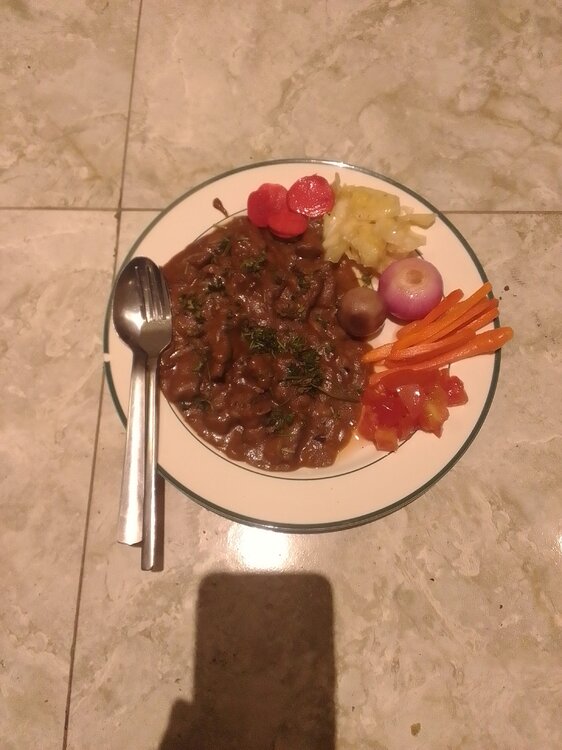
I hear you loud and clear, especially your focus on making and promoting TASTY options. I'm vegetarianish most days, and on today's menu is one of my favourites - watermelon rind shaak. Cheap, really easy to make, and gorgeous taste. Other days, it can be tarka dal or spicy bean stew and noodles or similar. A couple of days a week, I'll be lazy and make omelette and/or sardines with mixed pickles (5 minutes tops). I've really got into the latter in the last 6 months and now I'm totally hooked. How can I be nearly 67 before I discover the out-of-this-world taste sensation of fermented tomatoes and basil? I really think that for the US and UK at least, a lot of the pushback against a more vegetarian diet is its association with bland boiled veg and limp, insubstantial salads. Perhaps schools should be encouraged to change their ways and teach our children that it does have to be like that. Meals can easily be prepared that are a taste explosion in every bite. For example, last Monday's effort: Tangy fermented radish, saurkraut, carrots and tomatoes with a couple of spiced pickled onions. Though I must admit to hiding 6oz of goat liver under the devilled sauce. It's probably the only mammal I'll eat this month.
-
Largely because the misleading term 'random' keeps being used. It's about how significant a change of state a given Q causes at different temperatures. The initial state of a parking lot may be summarized as: n vehicles, all stationary. That of a given length of freeway may be: n vehicles travelling with an average velocity of 60 mph with a standard deviation of 10 mph. (a bit longer because it has more entropy/diversity). Add an extra vehicle travelling at 65 mph to each. How much do the descriptions of state need to be changed? 'More of the same' has little impact on entropy/diversity. Extending the tail end of a distribution has a lot more.
-
The single step compression process described in the section leading up to Fig. 5.5b ignores the pressure of the gas inside the piston acting in opposition to Pex. It therefore greatly overestimates the work done. Also, bear in mind that for an isothermal compression process, there's a significant amount of heat of compression being removed from the system. You're being very generous to the author here. I found the quoted text to be utterly appalling. If anything was ever designed to bewilder young minds...
-
Then, with all due respect, perhaps you don't understand why the OP phrased the question the way he did.
-
Think 'diversity' rather than 'randomness'. A fast moving car entering a parking lot creates a greater overall diversity than a fast moving car entering a freeway.
-
How strong are these higher order bonds? Can they beat the triple bond in carbon monoxide?
-
Looks very much like a flint nodule: a form of chert associated with chalk and limestones. You're right, it's chiefly cryptocrystalline quartz (the crystals are too small to make out even with a hand lens), and your's looks to have a coating rich in haematite which produces the reddish browns. The dark green speckles may well be chlorite with the rest of the coating various other clay minerals and probably a bit of calcite. Pure chert shows white, so the central mass in pic B appears particularly quartzy to me. Why do you think it isn't?
-
A close schoolfriend graduated to become a junior doctor at St Georges, Tooting at the same time as the resident epidemiologist Professor David Strachan was popularising this idea, and I must admit that I was much influenced by her enthusiasm for his work. However, in my current abode, there are health threats (typhoid, the haemorrhagics etc.) that are not seen too often in Tooting. You really can't play fast and loose with them.. In the long term, you won't win that one. This intrigues me (even if I don't quite follow some of the wording) as the strategy I've settled into is a diet based on 'dodgy' veg from the local markets, that almost without exception is either pickling or fermenting in a Kilner jar by the following morning. Probably the most processed food I eat these days is my daily dose of sauerkraut, and I honestly haven't felt so well in years. If, as I think you're suggesting, this is due to selectively allowing certain organisms to chronically 'infect' me, then I see no reasonable grounds, based on personal experience, to dispute this newer interpretation. Though I still might take my annual dose of worming pills just to be on the safe side. Some of them are definitely a bit nasty.
-
Not to mention having an immune system admirably equipped to defend against infestations of intestinal worms that gets 'bored' when there are no worms to deal with.
-
My guess is that if there is another universe external to ours, and it harbours intelligent life of a similar level, then some of them at least will be sat scratching their heads over the Riemann hypothesis. Or whatever pass for heads out there.
-
Who are you calling an idiot? Like others on this thread, I'm simply pointing out that the OP is framed in an inethical, right-wing-dog-whistly manner. This pretty well sums up the situation for me (quoted from https://keepournhspublic.com/privatisation/how-is-the-nhs-being-privatised/): Meaning that the NHS is: Obliged to fulfil all health needs Available to all Free at the point of use Not an insurance-based system Paid for by tax-payers. Methods of privatisationWhile attacks on the basic tenets of the NHS have been made since its inception, attempts to privatise the NHS have occurred in recent years in the following ways: Removing duties of government to provide NHS services through the Health and Social Care Act 2012 The tendering of contracts for services, and making them available to private companies Private financing, such as PFIs, with no guarantee hospitals paid for in this way will be in public ownership when they are paid off with tax payer money. Inclusion of health and patient data in trade deals Sending patients to private hospitals Migrant charging. Is privatisation of the NHS expanding?Attempts have been made to introduce charging in the NHS since it was founded, and attempts to further privatise services have been ongoing since the 80s and 90s. This era saw hospital car parks, cleaning, portering and catering. PFI was introduced in the 90s, but it was the 2012 Health and Social Care Act that has opened up the NHS to privatisation like never before. It was this Parliamentary Act that demanded all NHS contracts were put on the ‘open market’ for the first time. The changes since then have been dramatic, and often unseen. While most hospital clinical care is still in public NHS hands many are unaware of the inroads privatisation has made in winning smaller community contracts since the 2012 Act came into force. In 2018/19 and 2017/18 7.3% of CCG commissioned clinical contracts were in private hands (down from 7.7% 2016/17). In the five years to 2015 the private sector was awarded the following: 86% pharmacy contracts 83% patient transport contracts 76% diagnostics contracts 69% GP out of hours 45% community health contracts including children and AWLD 25% mental health contracts
-
= minions busying themselves with misrepresentation.
-
No. It is being systematically undermined by a wealthy global cabal and their political minions whom you seem to be assisting with your jingoistic misrepresentation.
-
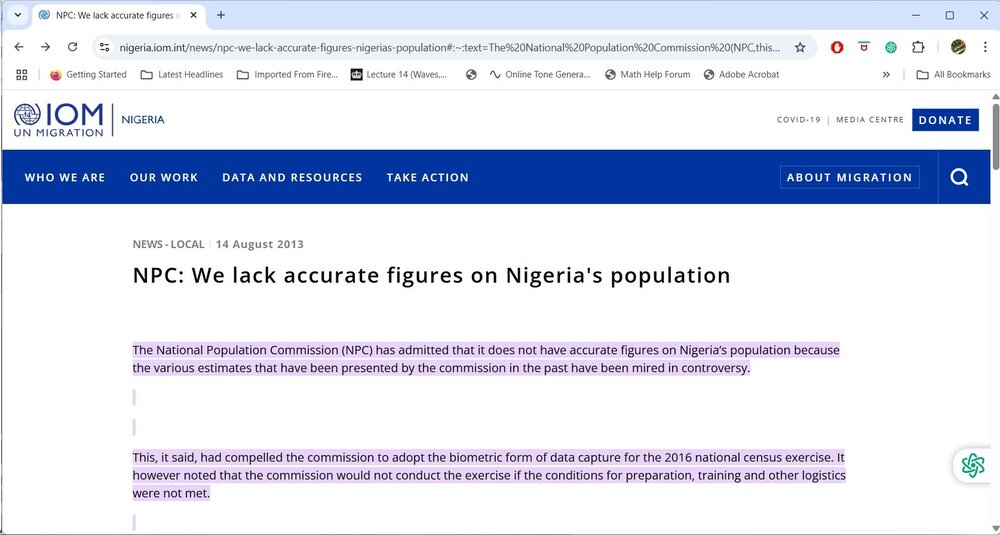
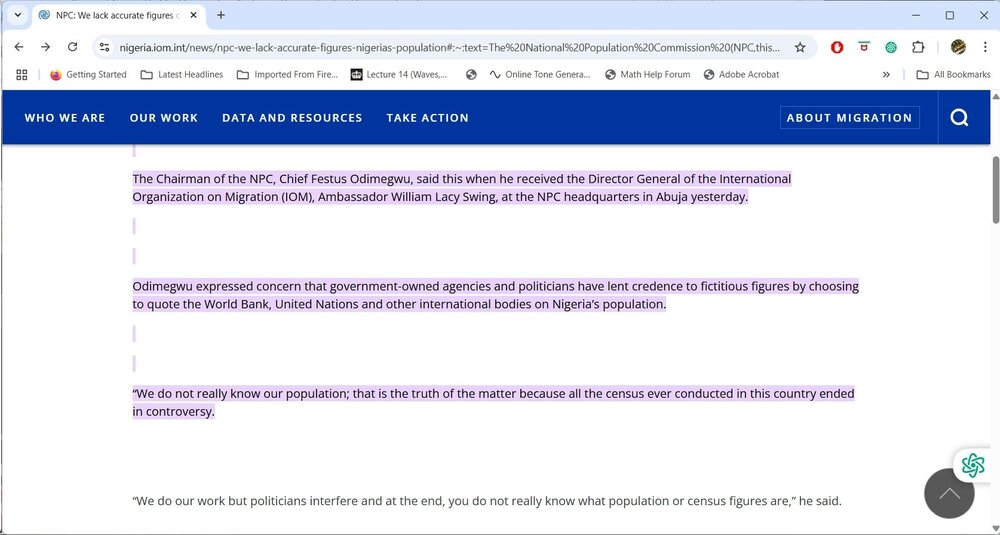
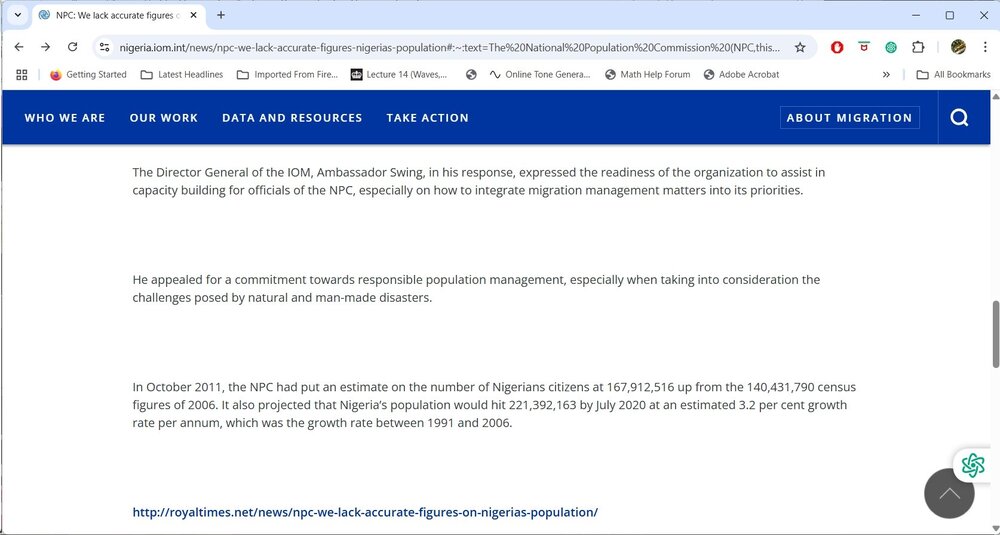
St. dev. of same OoM as the estimated value. ie. Not 100% sure whether it's gone up or down National data for population, births, and deaths in sub-saharan Africa, specifically Nigeria. It's just an example I have some working knowledge of.
-
It depends a lot on how that data is used. Eg two censuses ten years apart may provide an accurate enough population value to give reasonable estimates of say incidence of haemorrhagic fevers per 100,000 per annum. But subtraction retains the same absolute numerical error in a far smaller quantity, so the uncertainty in population growth per annum is enormous. Hence if population is determined not by recent census but by an old one extrapolated by some historic growth rate, it's likely to be so far out as to render derived statistics no better than OoM.
-
+/- 20 million?
-
You could cut the 'millions' down to a mere 10,000 described species by just restricting your project initially to Ammonoidea. They have a continuous distribution spanning around 250 million years and because of their status as important index fossils for dating of sedimentary strata, they are well documented and dated. Sarcopterygii (lobe-finned fish and descendants) is another interesting clade which spans even longer ~416 million years to present. You might want to limit that one to marine forms only as the numbers start growing exponentially from the Carboniferous on when some of them ventured onto land.
-
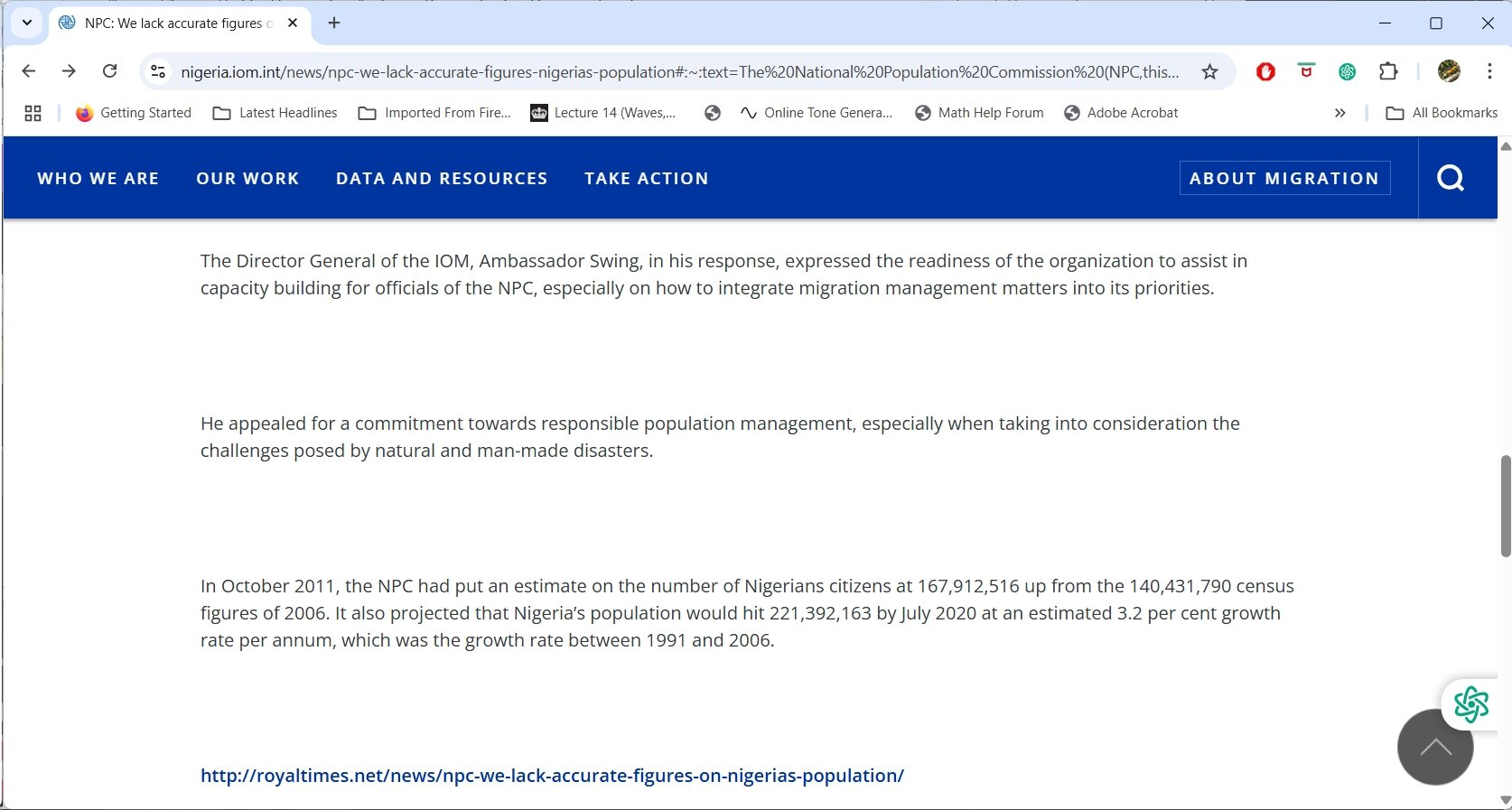
How reliable do you think those statistics are? I can't speak for Chad, but this is the online birth registration portal for Nigeria. Because reasons, I can't comment too much, but feel free to ask yourselves whether it is voluntary, free of charge, free of bureaucratic hurdles etc., likely to be taken up by the entire population? Similarly:


-
In the last two years. I used hard contact lenses from 1977 to maybe 2007 when my optician said I had some eye anoxia issues and should switch to gas permeable soft lenses. Since I stocked up during infrequent visits to the UK, there was a distinct tendency wear lenses somewhat beyond their serviceable lives, and eventually I began to get quite severe inflammatory reactions.
-
Hopefully someone who's lived for over 25 years in sub-saharan Africa, and has the odd bout of malaria now and then will chime in.
-
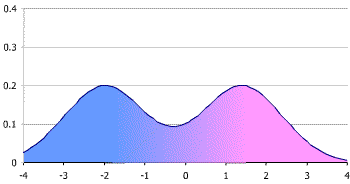
Multimodal probability distributions. The mean value may not be a particularly likely one.
-
That's sort of how statiscal averages work. What's your point?