Duda Jarek
Senior Members
-
Joined
-
Last visited
Everything posted by Duda Jarek
-
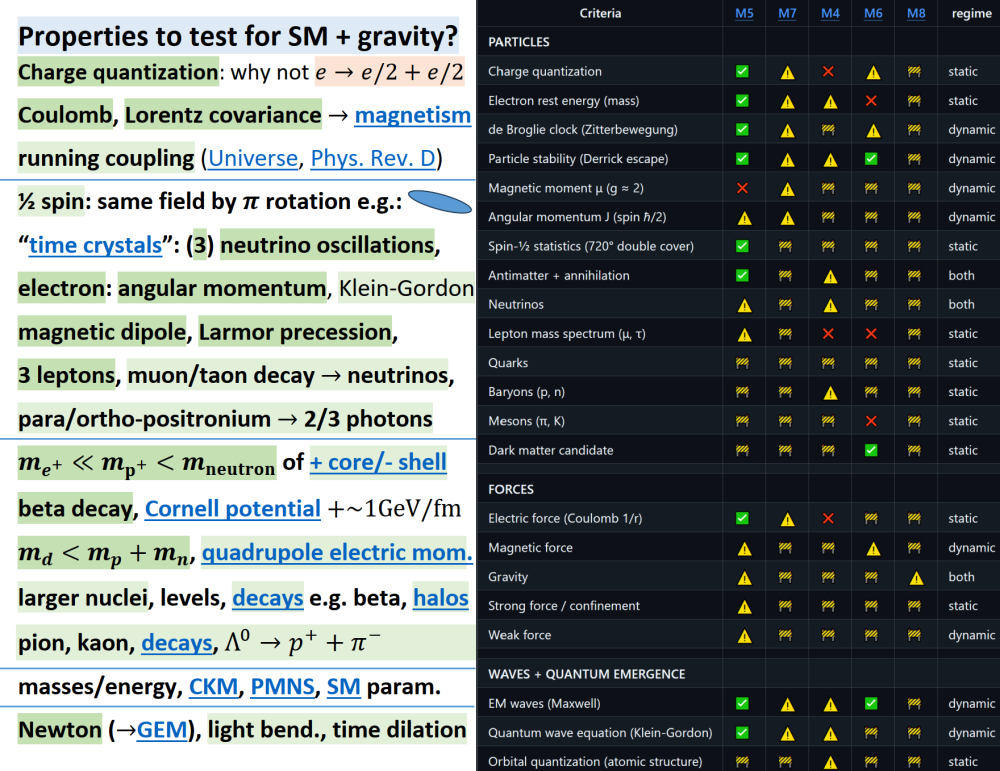
Tests from OpenWave by Fable - which ones should be checked for candidates of deeper model?
-
Just wanted to stimulate discussion on the topic in title, e.g. by gathering my thoughts on it in this talk. Here is a mainstream lecture "Physics-Informed Machine Learning – Lecture 1 | Why Physics + AI? ": https://www.youtube.com/watch?v=BVkGy4oz3Lg
-
(How and why) could AI (help to) find deeper physics? - talk: https://www.youtube.com/watch?v=RSqIUWnnvqA Current physics works on particles as abstract perfect points - what is only effective perturbative approximation. Deeper there are complex field configurations, mainstream doesn't understand - e.g. angular momentum of electron. Many candidates for deeper Lagrangians were proposed, but understanding their consequences need extremely difficult simulations - now top LLM models can automatically write, run, analyze - what is already leading to rigorous tests, improvements, maybe search by AI - to finally get one level deeper in our physics understanding, what will have huge consequences.
-
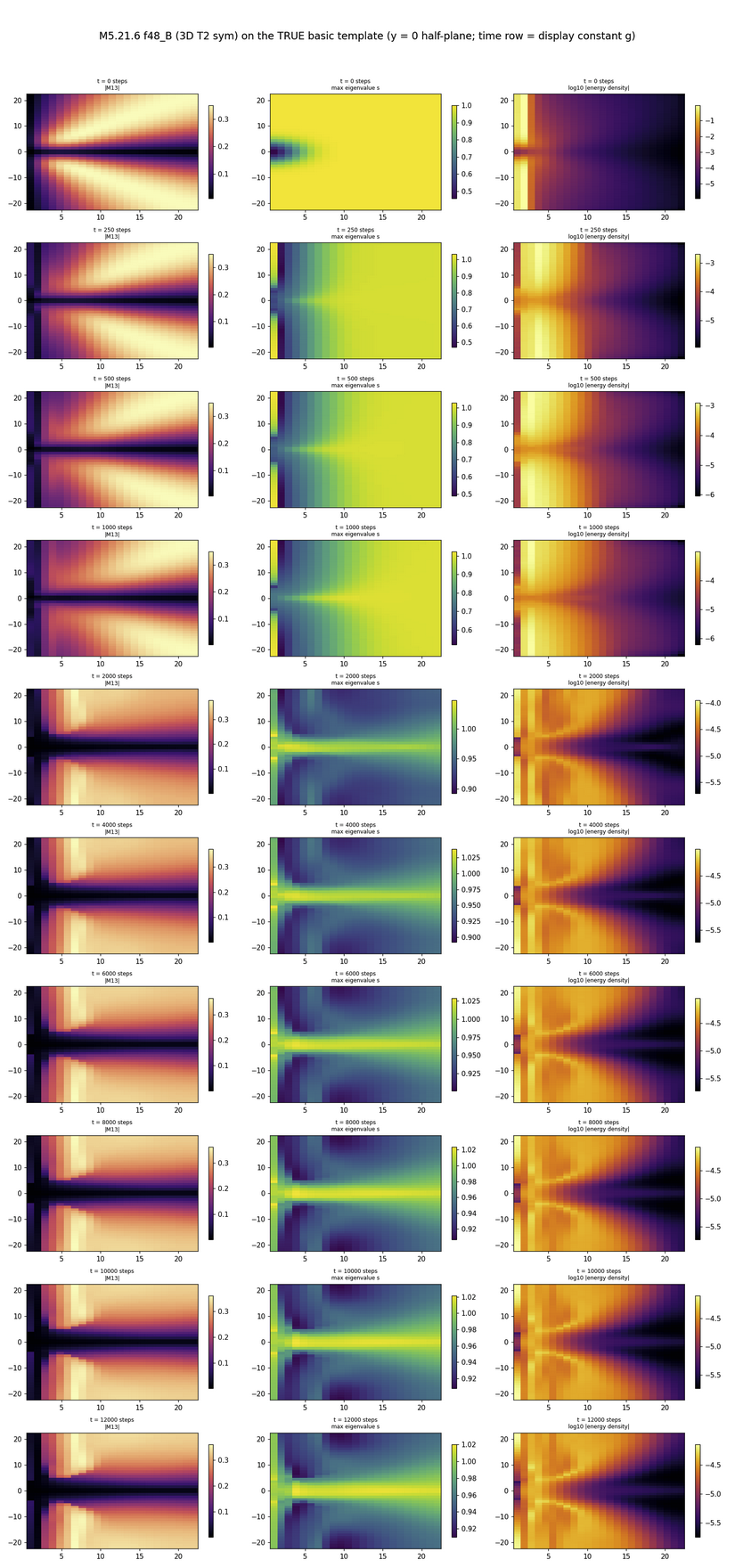
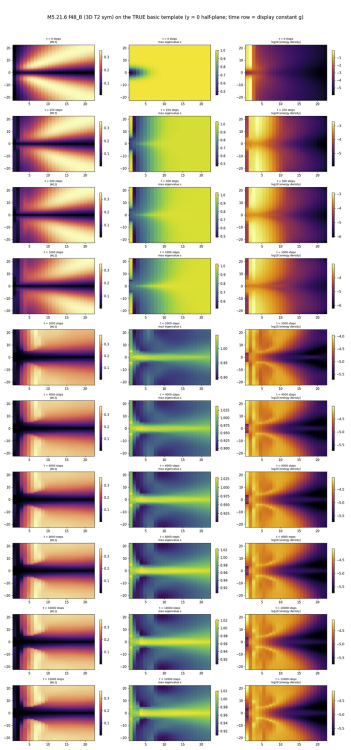
ps. or fresh Fable simulations of muon/taon decay into electron (hedgehog of one of 3 axes in 3D), releasing energy difference into neutrinos as topological vortex loops: https://github.com/openwave-labs/openwave/blob/main/openwave/xperiments/m5_liquid_crystal/research/findings/m5_21_6_note.md
-
I was also skeptical, but recently work with Fable: multiple agents writing&performing simulations, asking questions, planning new tasks, discussing ... only sometimes asking human for suggestions, but it is becoming less and less frequent :/ What more can human do? E.g. yesterday report: https://github.com/openwave-labs/openwave/blob/main/openwave/xperiments/m5_liquid_crystal/research/findings/m5_20_3_method_note.md
-
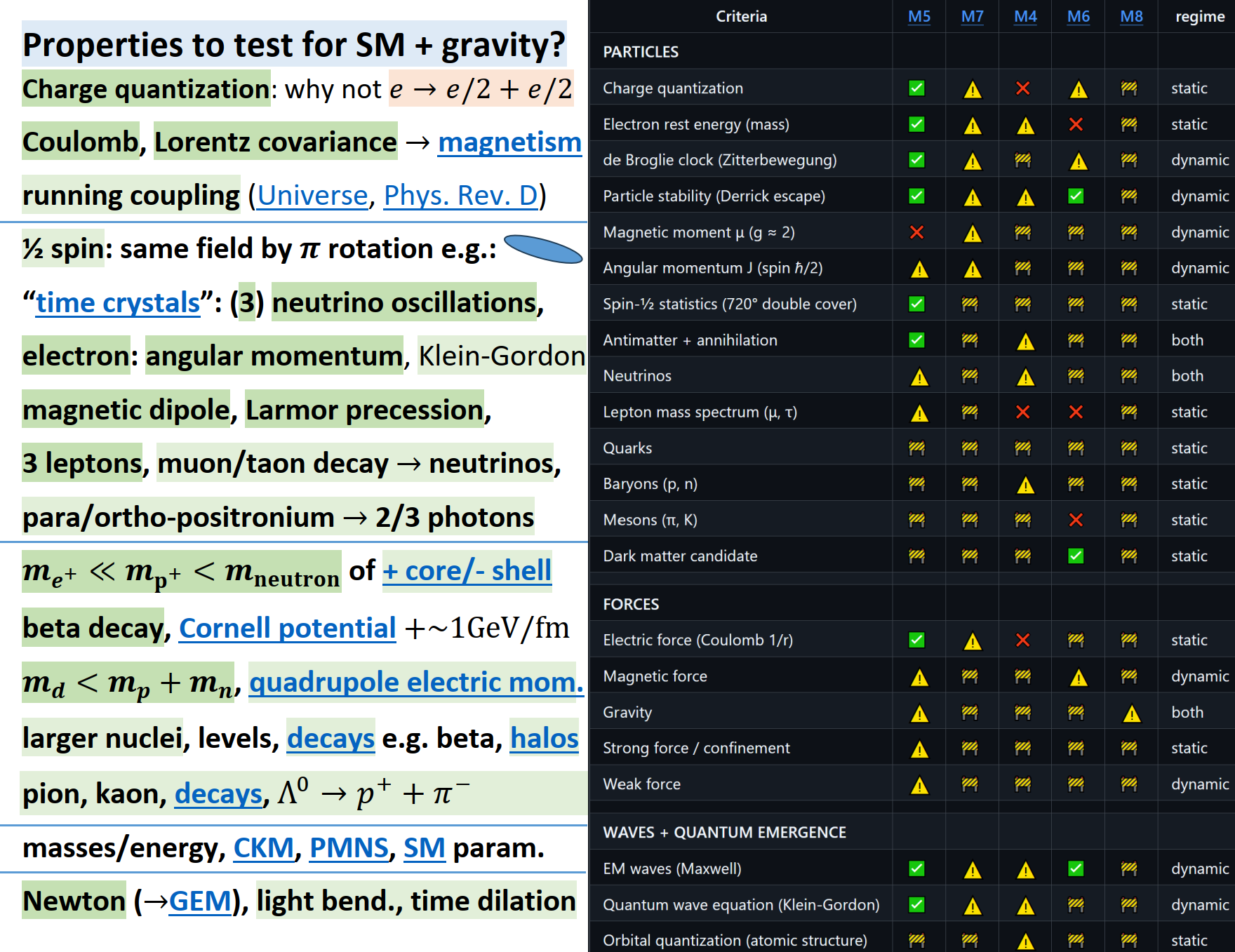
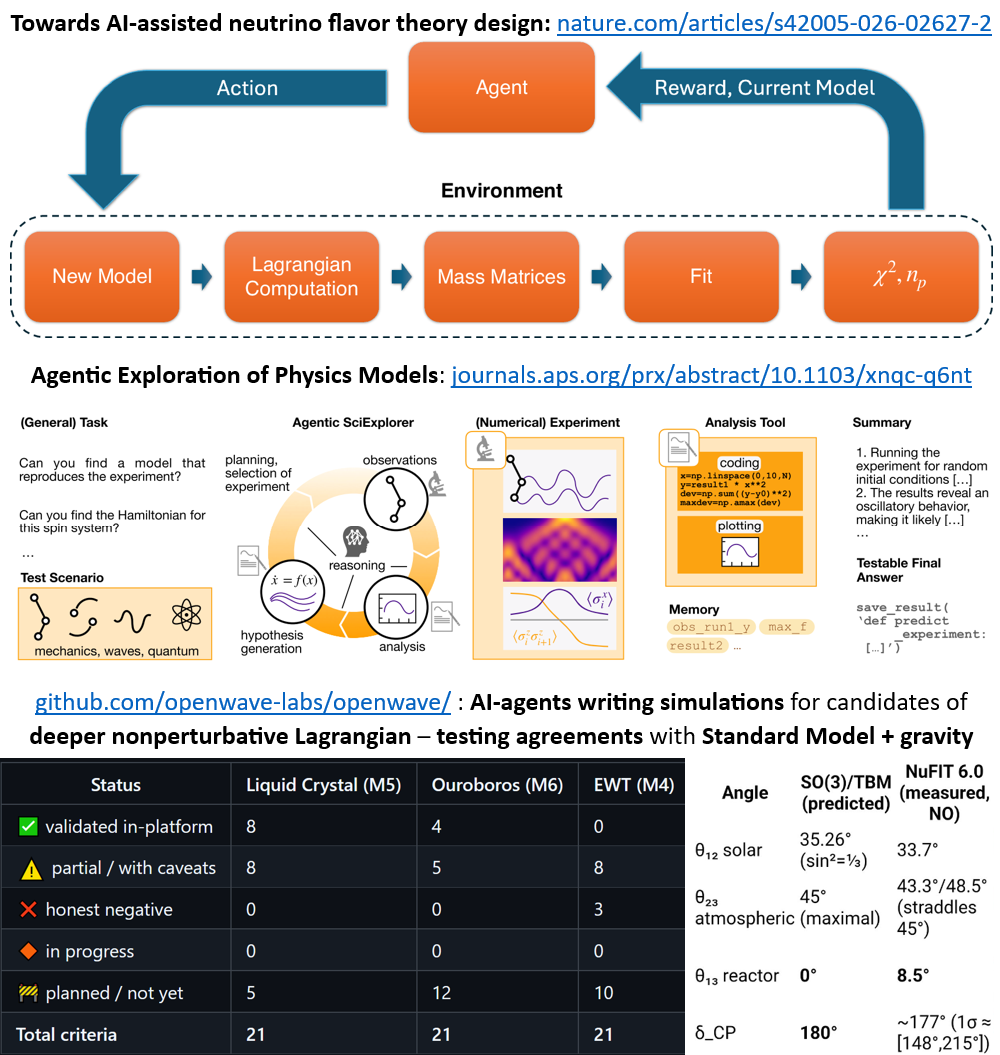
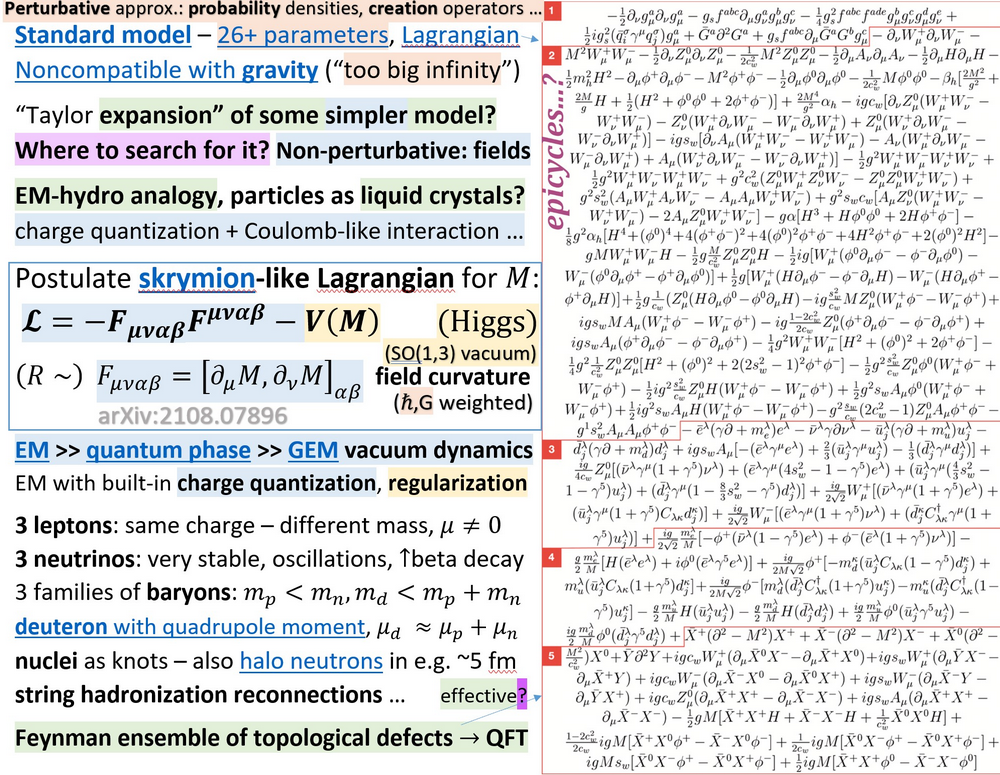
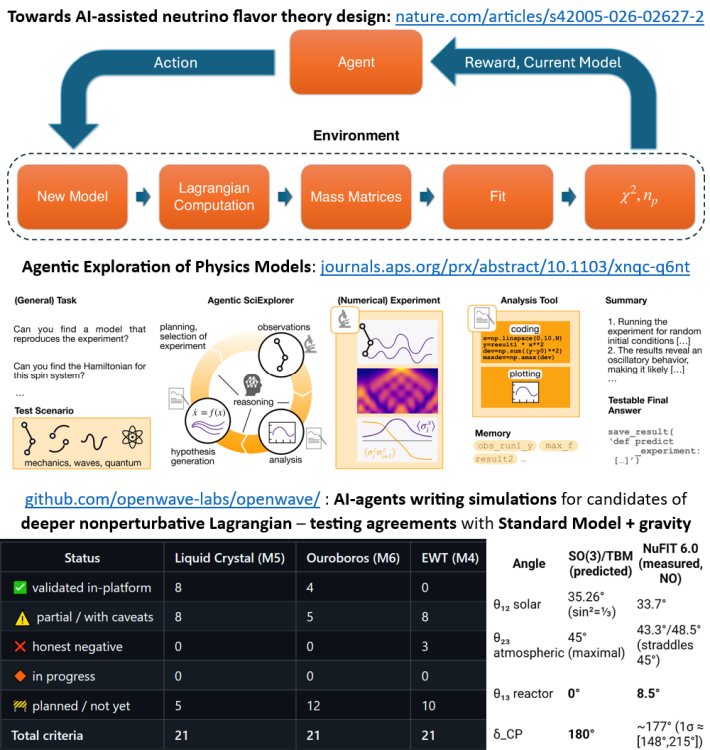
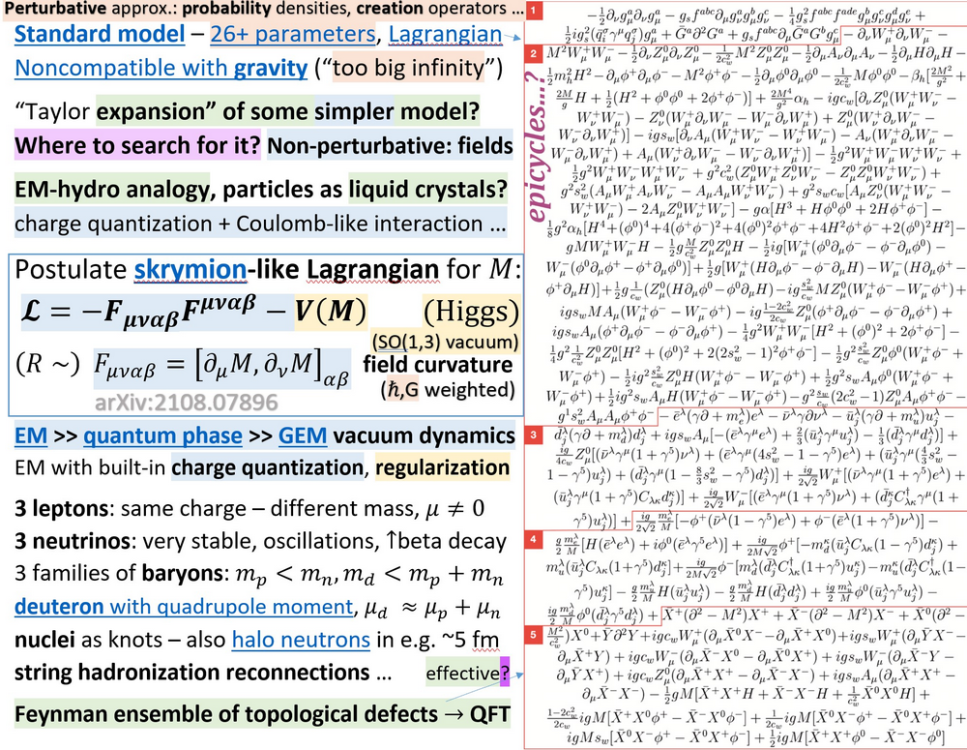
Standard Model is extremely well tested, but e.g. is incompatible with general relativity, is rather for effective perturbative approximations, also uses this gigantic Lagrangian found in epicycle-style: by guess&fit terms. So maybe like in Copernican Revolution, we should search for compact deeper nonperturbative Lagrangian (e.g. Skyrme-like), effectively described close to Standard Model + gravity? Nonperturbative Lagrangians look simple, but have extremely complex consequences - maybe AI could search through them, automatically performing simulations testing various agreements? This kind of approaches have already started, e.g.: Towards AI-assisted neutrino flavor theory design": https://www.nature.com/articles/s42005-026-02627-2 "Agentic Exploration of Physics Models" https://journals.aps.org/prx/abstract/10.1103/xnqc-q6nt https://github.com/openwave-labs/openwave/blob/main/MODELS.md actually testing such deeper Lagrangian candidates - currently winning is liquid-crystal-like: just assumption that field has preferred anisotropy. What do you think about such approaches? Where to search for such deeper Lagrangian?
-
Standard Model Lagrangian is for perturbative approximations (particles as perfect points from creation operators, with probability distributions), incompatible with gravity, and gigantic found epicycle-style: by guess&fit new terms when previous disagreed. Previous Copernican Revolution was compressing epicycles into compact form - we need a new one: deeper nonperturbative Lagrangian (e.g. Skyrme-like), effectively described close to Standard Model + gravity.
-
My basic approach is to represent entire shape as Gaussian times polynomial, then find rotation invariants of this polynomial - as features for chemoinformatics, or vector to compare for shape similarity metric. Interesting mathematics to speedup MRI: https://en.wikipedia.org/wiki/Compressed_sensing
-
Update: working on proof of such similarity test for general matrices, it is convening to use Schur decomposition rotating A and B to upper-diagonal (can be complex), can be chosen with same diagonals thanks to tested Tr(A^k)=Tr(B^k). Then seems we should use induction d\to d+1 from d x d matrix A, vector v, scalar a: From their equality for A and B, and right hand side using powers lower by 1, we should conclude Tr(A^k (A^T)^l) = Tr(B^k (B^T)^l)$ and equality of vectors ...

-
This one is quite far future work, but maybe will move forward with interns from https://www.qaif.org/events/aintern/aintern-2026
-
Yes, one direction here is considering more sophisticated primitives than in gaussian splitting, e.g. multiplied by polynomial. But direct question is about better rotation invariants than e.g. spherical harmonics - offering only rough description modulo rotation, while here should be complete.
-
There is this basic similarity test Tr(A^k) = Tr(B^k) for k=1..d for symmetric matrices allowing to conclude existence of orthogonal O such that AO = OB. Practical question is how (if possible?) to generalize it (finally to tensors, but at least) to non-symmetric matrices e.g. including transpositions. Checking Jacobian criterion for Tr(A^k (A^T)^l) = Tr(B^k (B^T)^l) for k=1..d, l=0..k-1 at least for up to d=5 has sufficient number of independent invariants (d(d+1)/2) - is it sufficient condition in general dimension? If not, how to extend it? Used Mathematica code using Jacobian criterion to find the number of independent invariants, assuming upper-diagonal as in Schur decomposition, getting d(d+1)/2 as required up to d=5: d = 5; M = Table[If[i > j, 0, Subscript[a, Row[{i, j}]]], {i, d}, {j, d}]; inv = Table[Tr[MatrixPower[M, k].MatrixPower[Transpose[M], l] , {k, d}, {l, 0, k - 1}]; MatrixRank[jac = Table[D[Catenate[inv], v], {v, Variables[inv]}]]Motivations ( https://arxiv.org/pdf/2601.03326 ), especially if reaching also for tensors, is complete shape description up to rotation e.g. for chemoinformatics, medical imaging:
-
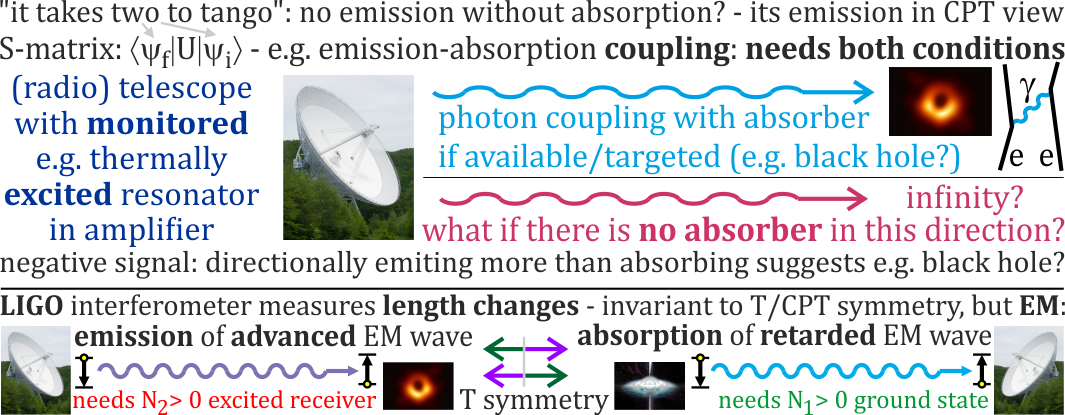
So how do you interpret these huge negative regions in radio flux maps from https://iopscience.iop.org/article/10.3847/1538-4357/ac0e93/pdf ? Don't radiotelescopes measure energy balance: positive if absorbed, negative if emitted? Doesn't S-matrix <psi_f |U| psi_i> say photon exchange depend on both emitter in psi_f, but also absorber in psi_i?
-
Positive signal means telescope absorbs energy from source, so seems negative means telescope emits energy? Like for wave behind marine propeller: carrying energy, momentum, and angular momentum - could excite resonator, but reversing rotation it could cause its deexcitation: There is also mechanical analog - coupled oscillators periodically exchange energy like Rabi cycles, what would be stopped without one acting as absorber. In astronomy such absorber might be e.g. black hole, emitter in telescope. Anyway, they clearly see negative signals e.g. in this Fig. 1 from https://iopscience.iop.org/article/10.3847/1538-4357/ac0e93/pdf , usually saying this is just noise ... but these are huge regions of similar luminosity but reversed sign - maybe hypothesis of actually being positive could be verified? Or if negativity would remain, we should try to finally understand it ...

-
Radiation pressure is p=<ExB>/c vector: there is focus on positive, but can be also negative: https://scholar.google.pl/scholar?q=negative+radiation+pressure , https://scholar.google.pl/scholar?q=optical+pulling If positive radiation pressure gives positive signal in radiotelescopes, shouldn't negative give negative? They clearly see also large regions of negative signal in radio flux maps, e.g. below from https://arxiv.org/pdf/2107.02695 What objects could generate negative radiation pressure? E.g. if white hole would generate positive, shouldn't black holes generate negative?
-
Sorry should be https://journals.aps.org/prl/abstract/10.1103/PhysRevLett.19.1049 2015 slides: https://indico.cern.ch/event/361413/contributions/1776296/attachments/1137816/1628821/WAG2015.pdf In summary, for electron we only assume - would be great to finally test it.
-
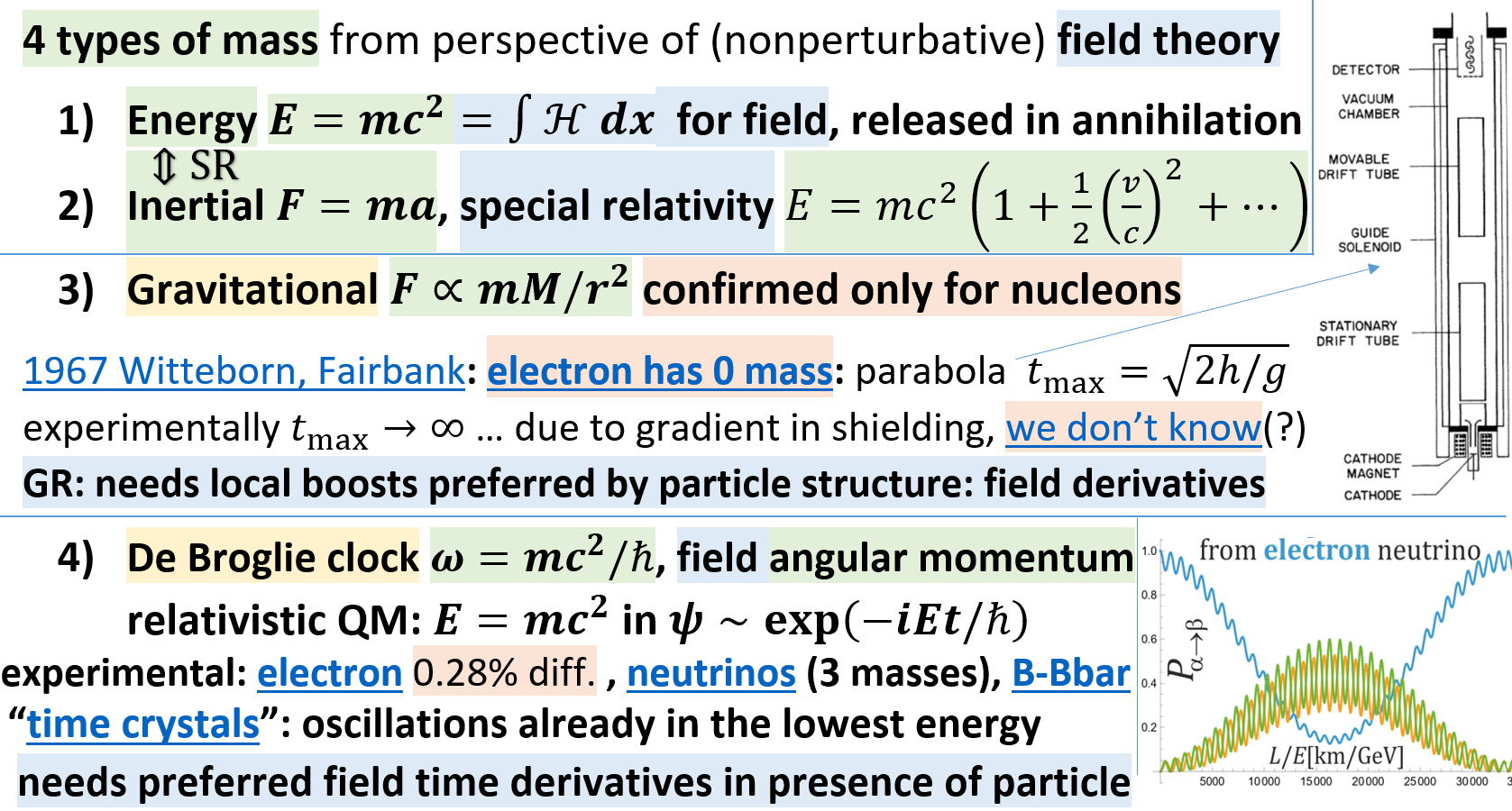
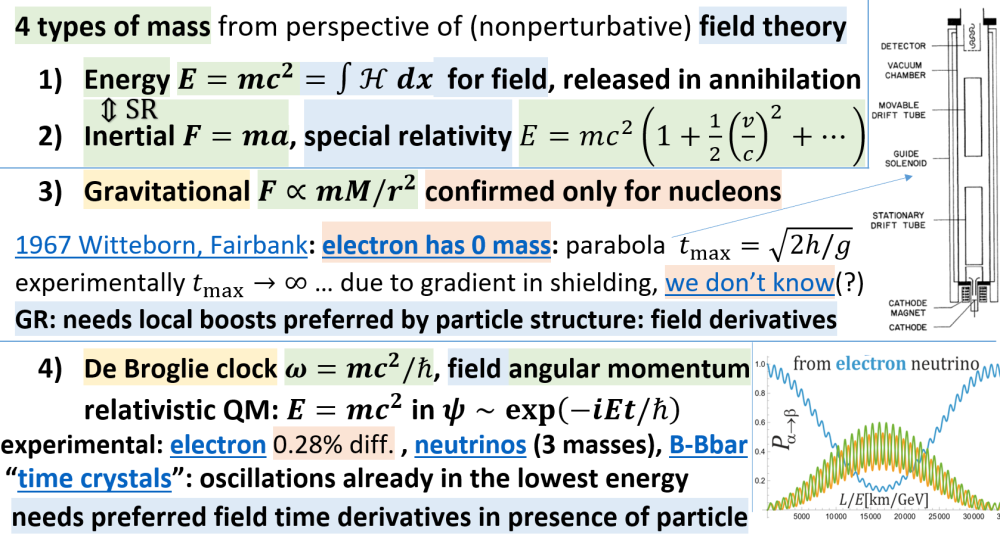
We don't even know gravitational mass of electron - experiment returned zero ( https://journals.aps.org/pr/abstract/10.1103/PhysRev.151.1067 ), but it was due to charge gradient in shielding, and seems it was not repeated right. Spin is mostly related with angular momentum - of actually rotating field (not point), what also can be viewed as clock - directly confirmed for electron ( https://link.springer.com/article/10.1007/s10701-008-9225-1 ), also neutrinos oscillate. Here is a field theoretic mechanism to propel it: https://arxiv.org/pdf/2501.04036
-
Maxwell equations have both retarded and advanced solutions, also their convex combinations are allowed: Wheeler-Feynman assumes symmetric 1/2-1/2 contributions, but e.g. energy loss shows asymmetry instead - which should depend on the boundary conditions, e.g. Huw Price says it is because of more absorbers than emitters ( https://link.springer.com/article/10.1007/BF00733218 ). Seems nearly everybody assume 1-0 only retarded instead, but maybe it is worth to verify experimentally, especially that emitter/absorber imbalance might not be perfect? ( https://arxiv.org/pdf/2512.20692 ) Where do you think this Asymmetry of Radiation comes from? Should it be really perfect 1-0? How to test it experimentally, distinguish from e.g. 0.999999-0.000001?
-
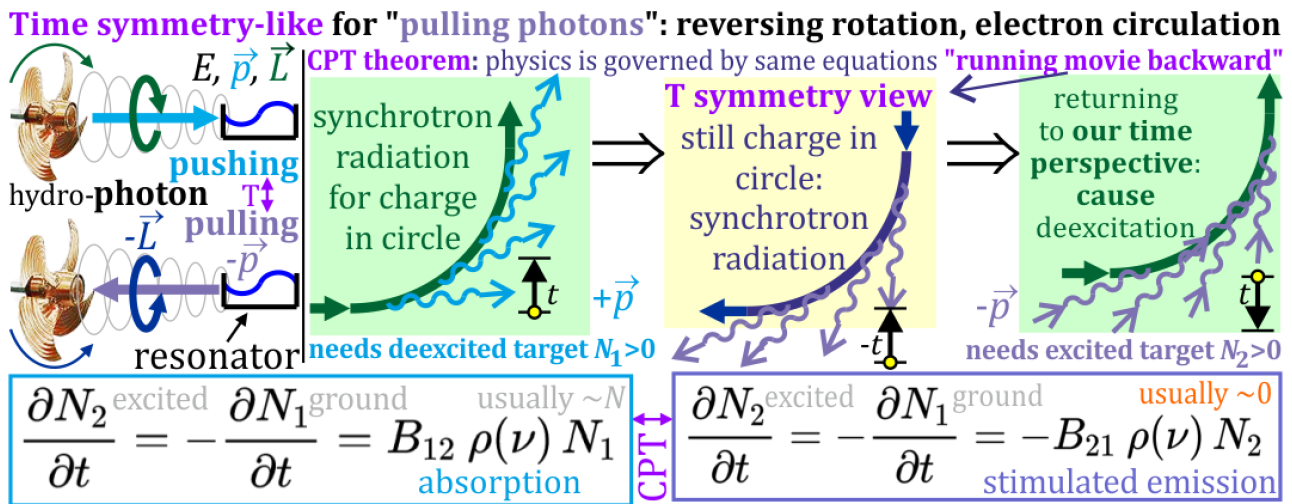
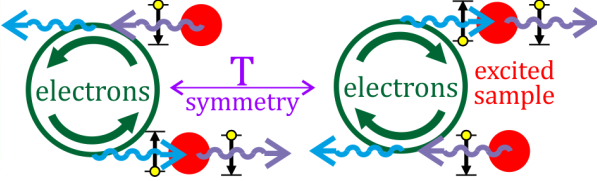
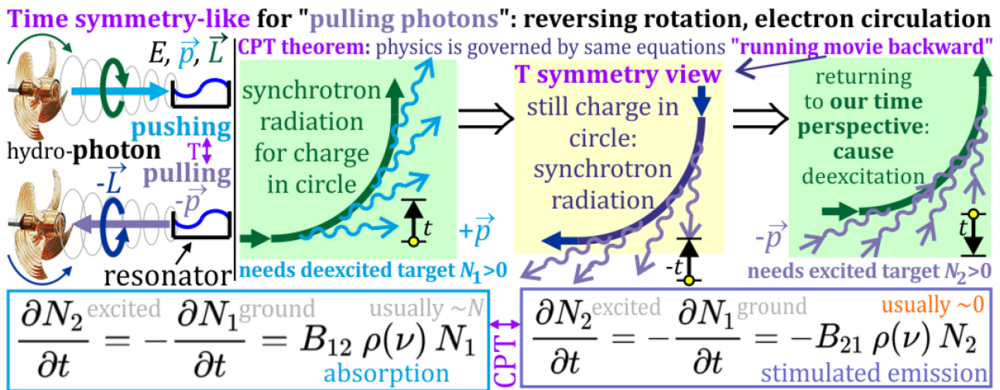
For both marine propeller and shooting e.g. free electron laser, indeed we don't control the details of individual particles, only their statistical behavior ... but still allowing to cause excitation of the target - by retarded EM wave. Applying T/CPT symmetry: reversing rotation of marine propeller, or reversing electron trajectory of free electron laser/synchrotron, the causation should reverse to causing deexcitation of target - by advanced EM wave ... with requirement that this target was initially excited, what is not true e.g. for most radio telescopes - preventing them from observation of advanced waves. Applying time symmetry to synchrotron:
-
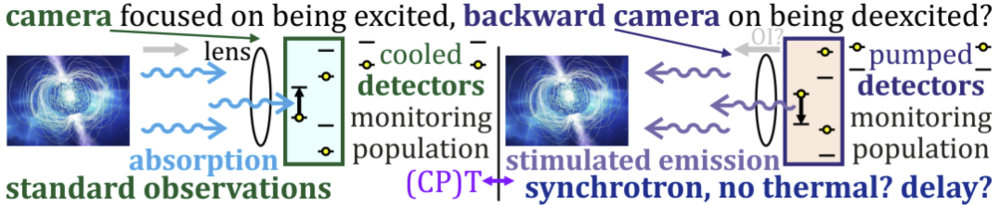
Sure it seems highly suspicious that, among ~300 GM events, there was observed only single EM counterpart - including advanced waves into considerations could help explain. The current EM counterparts are retarded - being certain their non-existence when required, should indicate it was advanced GW (?) To have a chance to observe advanced EM counterparts, we would need telescopes with excited sensor - currently avoided by cooling.
-
Sure there is also statistics there, but stimulated - especially in superradiance, also in laser ... or wave behind marine propeller pushing or pulling energy from resonator is quite deterministic. For example white hole would emit, causing excitation in sensor of telescope. Applying T/CPT symmetry to this scenario, shouldn't black hole cause deexcitation of telescope sensor if prepared as excited? GR is solved by the least action principle - treating spacetime as 4D membrane minimizing tension as action - based on boundary conditions in both time directions. If there are e.g. orbiting supermassive black holes there, shouldn't distortions they create propagate in both directions of this 4D membrane? (for https://theconversation.com/to-map-the-vibration-of-the-universe-astronomers-built-a-detector-the-size-of-the-galaxy-244157 ) Solving GR by least action, QFT by Feynman ensembles is CPT symmetric, requires Einstein's block universe philosophy of time - that we travel through already found 4D solution ... e.g. in S-matrix: <psi_f | U | psi_i> with one amplitude coming from the past, second from the future, we multiply them e.g. in Born rule - allowing for very nonintuitive Bell violation.

-
Thermodynamics is for spontaneous emission, while here we are talking about stimulated. It is valuable to think about hydrodynamical analog: wave behind marine propeller carries energy, momentum and angular momentum - like photon. We can practically apply time symmetry - just reversing its rotation: getting pulling photon, causing deexcitation of target. Going to similar EM, we can analogously apply time symmetry to synchrotron radiation - just reversing electron trajectory, this way switching absorption and stimulated emission acting on target:
-
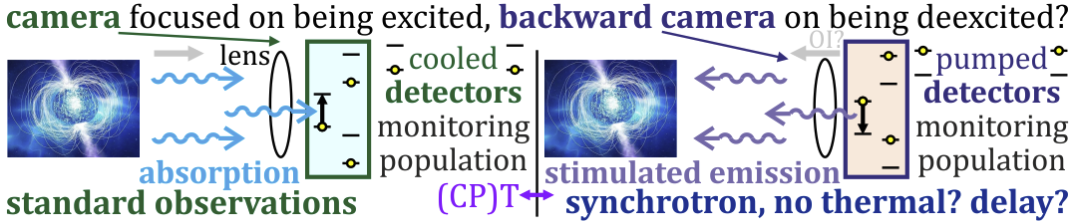
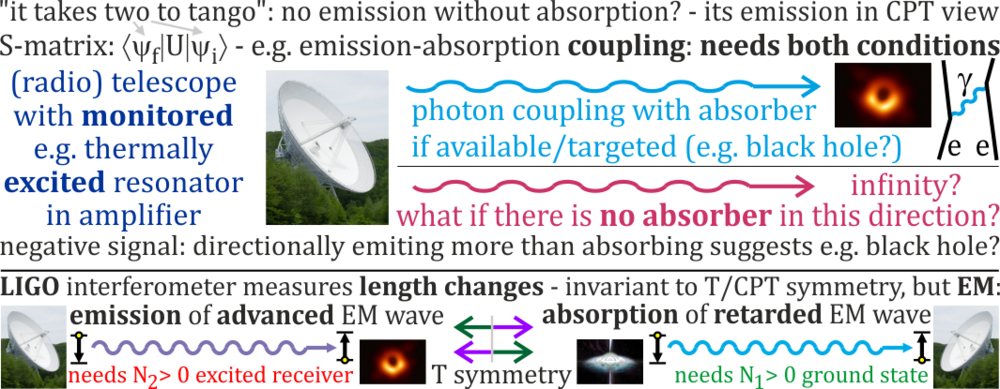
There is Feynman diagram photon exchange between coupled e.g. two electrons - current cooled EM receivers are focused on retarded: such that photon was emitted by target, absorbed by sensor ... for advanced you need CPT version of this diagram - reversed coupling: photon emitted by receiver, absorbed by target.
-
EM receivers are focused on absorption - of retarded wave. For advanced you need its time symmetric analog - receiver focused on emission, what requires its initial excitation ... usually avoided e.g. by cooling of radio telescope amplifier.
-
Sure, while being older than the age of the Universe would be a nice argument for advanced, luminosity distance is only one of 3 types of distances they are using, being only suggestion ... it is the last argument I have used, the remaining 3 are much stronger. The clearest would be certain lack of (retarded) EM counterpart when required - if excluding retarded, wouldn't we have to consider it was advanced? Such cases might be a matter of months now. What other ways could we use to distinguish retarded from advanced? Observing "too early to happen events" like with black hole mass gap seems such a way - could e.g. this 66 + 85 -> 142 merger be advanced wave? Then there are Timing Pulsar Arrays seeing vibrations of the Universe - claiming they require orbiting SMBH ... if retarded seem insufficient, couldn't they be also advanced? Any other arguments for/against advanced GW?