Luc Turpin
Senior Members
-
Joined
-
Last visited
Everything posted by Luc Turpin
-
How about the rest of the references? Yes, it loses the gained features, but even a temporary trajectory runs counter to the no direction of evolution.
-
Pick one! Convergent Evolution https://www.science.org/doi/10.1126/science.ado1663 Extreme overall mushroom genome expansion in Mycena s.s. irrespective of plant hosts or substrate specializations https://www.cell.com/cell-genomics/fulltext/S2666-979X(24)00170-8 Meet the Microscopic Thieves Fighting Infections With Stolen Genes https://scitechdaily.com/meet-the-microscopic-thieves-fighting-infections-with-stolen-genes/ Bizarre bacteria defy textbooks by writing new genes, https://www.nature.com/articles/d41586-024-01477-8 Cooperative genes in smart systems: Toward an inclusive new synthesis in evolution, https://www.sciencedirect.com/science/article/abs/pii/S007961072400035X Ancient retroviruses played a key role in the evolution of vertebrate brains, suggest researchers https://phys.org/news/2024-02-ancient-retroviruses-played-key-role.html The New Biology: A Battle between Mechanism and Organicism https://www.hup.harvard.edu/books/9780674972247 Neutral Models of De Novo Gene Emergence Suggest that Gene Evolution has a Preferred Trajectory, https://academic.oup.com/mbe/article/40/4/msad079/7100680?login=false De novo genes with an lncRNA origin encode unique human brain developmental functionality, https://www.nature.com/articles/s41559-022-01925-6 Sedimentary DNA can influence evolution: Establishing mineral facilitated horizontal gene transfer as a route to bacterial fitness," https://www.biorxiv.org/content/10.1101/2023.01.24.525235v1 DNA replication in early embryos differs from previous assumptions, study shows https://phys.org/news/2024-08-dna-replication-early-embryos-differs.html#google_vignette Bacteria encode hidden genes outside their genome; do we? https://phys.org/news/2024-08-bacteria-encode-hidden-genes-genome.html “Alien Biology” Uncovered: Bacteria’s Floating Genes Leave Scientists Baffled https://scitechdaily.com/alien-biology-uncovered-bacterias-floating-genes-leave-scientists-baffled/ Why is There No Cure For Huntington’s https://jonlieffmd.com/blog/why-is-there-no-cure-for-huntingtons I am not utterly convinced that I am correct, just less certain that the prevailing theory is utterly correct.
-
Agree to share a paper with you. The expectations are oftentimes those of the researcher.
-
I maintain my point that what we have discovered about evolution in the last twenty years or so is far beyond what was expected and it has shifted the ground while maintaining almost the same assumptions as before these findings were made. Respectfully happy to hear you say this. I will continue looking at evolutionary research and try and get a pulse of where it is going. I may very well be making rather bold statements, but it never ceases to amaze me that when I look at research on the topic, that results don't match with expectations. I was direct, but not trying to be offensive. I was making a statement of fact, not accusations. I am many things; not knowledgeable as you, but ignorant I am not. It's your right to have an unfavourable opinion of me. Since when being in disagrement automatically equates to creationism? I have no talking points, nor agenda, except maybe convince some to have a hard look at their assumptions. Could be my lack of understanding or "Galileanists" such as "I" not realizing that a page has turned.
-
Noted that you answered my questions.
-
1- The ground has shifted, yes, but there is no recognition-acknoweldgement that major cracks have appeared in the theory of evolution. 2- Objection noted; It is taken for granted by myself and the scientific community that theories would be refined, but how about being less defensive over the current theory and more open to other possible avenues. Not just because I say so, but because evidence seems to be pushing us there; my "whims" have nothing to do about it; only evidence should rule and change science. I don't need for you to do my homework. I am well aware of the field's progress. So much so that I and others in some corners of the scientific community think that it is time to begin considering other avenues of evolution. And don't tell me that I am being creationists as it would be totally off the mark. Finaly, I still don't know the answers to my questions. How variation, natural selection, heritability and adaptation occur are under a constant barrage of evidence showing that it does not work the way it should. This is worisome for a theory. The theory is unrecognizable from its early inception. So why is it still standing on the same foundation?
-
We are on apposite sides of this one. You say part of the normal scientific process and I say that accumulating evidence makes for a strong case for a significant shift in how science percieves evolution. No bad faith; trying to tell it as I see it.
-
None of you have answered my questions! Some of you have avoided answering by saying it isn’t so; others took to character assassination for sustenance; others still made broad presentations of their knowledge; but none answered my questions Here is a simplified version of my questions that need answering with evidence and no interpretation of facts or biasness: Without input from new genes, is there any evidence that natural selection will produce new characteristics? Can mutation and recombination compose new genes beyond a dozen essential nucleotides? Was gradual evolution a surprise or not to Darwin's theory? How can we explain that coordinating genes that control the development of embryos and major features are often very similar across totally different species? Is convergent evolution well-explained or not by neo-Darwinisms, or even by the synthesis or the newer synthesis? Does micro-evolution lead to macro-evolution? Furthermore, cladogenesis and punctuated equilibrium, epigenetic effects, plasmid sharing in bacteria, non-reductive aspects of macroevolution, population genetics, adaptive dynamics are all surprises not anticipated and removed far away from the original concepts of evolution. I correct myself, they are not far away, but polar opposite of what was expected. It is not a constant reshaping of EB that occurred, but a counter revolution that has not even the slightest thing to do with the original or neo version of the theory. That also is not acknowledged. It should have been vertical gene transfer and it was horizontal. It was to be the pre-determination of genes and its epigenetics as well. It was to be constant , but not punctuated equilibrium. So science was unbiased and just kidding when stating that Darwinism was right? And science was unbiased and just kidding when stating that neo-darwinism was right on the money? Your house is a mess! You need synthesis upon synthesis to account for all of the surprises coming out of research. Having a crackpot amongst us, might as well use him. Explain to me this and tell me that HGT was expected to play such a predominant role in evolution. We are light years away from a selfish gene concept How did eukaryotic cells evolve? Six Dutch microbiologists and theoretical biologists have reviewed this subject to summarize the latest research. As traditional neo-darwinists they want to rescue the tree-of-life, but most eukaryotic genes are seen to be acquired non-vertically — by various forms of HGT, or by endosymbiosis (red vertical line in graph) and afterward, when mitichondria lost genes to the eukaryotic nucleus. Among eukaryotic genes, only duplicated ones (blue) conform to neo-darwinian philosophy, and they are only "sometines associated with genetic novelty." Fourth among the illustrated mechanisms (yellow), "Truly novel eukaryotic genes that originated de novo through gene genesis from non-coding DNA are arguably the most enigmatic." The review has helpful illustrations, a Glossary and 169 references. Here is the mentioned graph and caption: The relative contribution and timing of different mechanisms that expanded the genome between FECA and LECA are illustrated, loosely based on the branch length-based estimates from single gene trees. They comprise the contributions to both the nuclear and mitochondrial genomes. The red bar indicates the gain of proto-mitochondrial genes upon endosymbiosis. The timing estimates of de novo gene inventions correspond to a minimal estimate of their age based on the earliest duplications they underwent. The black line illustrates the total number of genes in the composite genome, including only those genes that were still present in LECA. The loss of proto-mitochondrial and FECA genes before LECA cannot be timed. EGT, endosymbiotic gene transfer; HGT, horizontal gene transfer. To comment: the evidence shows that eukaryogenesis relies heavily on transferred genes. The de novo ones also likely came by transfer (what else?) How genes transferred from prokaryotes or viruses acquired their eukaryotic programming is a huge, unanswered question. The puzzle is at least equal for evolution strictly among prokaryotes, where the reliance on transfer is seen to be complete. None of it makes neo-darwinian sense. A radical rethink is needed. "The emerging view on the origin and early evolution of eukaryotic cells," by Vosseberg, J., van Hooff, J.J.E., Köstlbacher, S. et al, doi:10.1038/s41586-024-07677-6, Nature, 11 Sep 2024. Truly novel eukaryotic genes that originated de novo through gene genesis from non-coding DNA are arguably the most enigmatic. Previous work indicated that a substantial fraction... do not exhibit discernible homology to prokaryotic sequences. I will finish off this post with a reference that I cannot pin down, but made by one eminent scientist in molecular biology and/or evolutionary biology. I could not find the actual reference, but being a crackpot myself, I can dispense of this formality. "Technical advances have brought an accelerating flood of data, most recently, giving us complete genome sequences and expression patterns from any species. Yet, arguably, no fundamentally new principles have been established in molecular biology, and, in evolutionary biology, despite sophisticated theoretical advances and abundant data, we still grapple with the same questions as a century or more ago." The ultimate point being made here is to look for un-recognized falacies before talking about recognized ones.
-
Can these statements be demonstrated incorrect? 1- "... a considerable part of Darwinism is not of the nature of an empirical theory, but is a logical truism" - Karl R. Popper 2- "Neo-Darwinism is an attempt to reconcile Mendelian genetics, which says that organisms do not change with time, with Darwinism, which claims they do- Lynn Margulis." 3- a)"Artificial selection never produces wholly new characteristics. Without the input of new genes, there is no evidence that natural selection does either." b)"The notion that mutation and recombination can compose new genes is implausible. There is scant evidence that mutation and recombination can compose functional new genes that differ from any known predecessor by more than, say, a dozen essential nucleotides." c)"Evolution does not appear to be gradual, contrary to Darwin's firm prediction." d)"The standard theory cannot explain why the coordinating genes that control the development of embryos and major features are often very similar across totally different species." e)"Convergent evolution is a surprise not well-explained by neo-Darwinism." f)"Macroevolutionary progress is not accounted for by neo-Darwinian microevolution- Brig Klyce
-
Life changes the environment and the environment affects life Its an intricate choreography with multiple dancers, not a monologue. "Circadian disruption, gut microbiome changes linked to colorectal cancer progression" https://medicalxpress.com/news/2024-09-circadian-disruption-gut-microbiome-linked.html#google_vignette
-
No police required. Science's social status and repetition suffices. Your view of science as it is is better than mine. My view of what science should be might be better than yours.
-
Who is participant in global environmental processes operating on geologic timescales according to the New York Times article? The rest of the post is avoidance of my own main contention or characterization.
-
The creation of hard steps thrust upon society as if they were hard facts when they are actually interpretation of facts, that is my characterization. This is my main message here and shared by the author of the study.
-
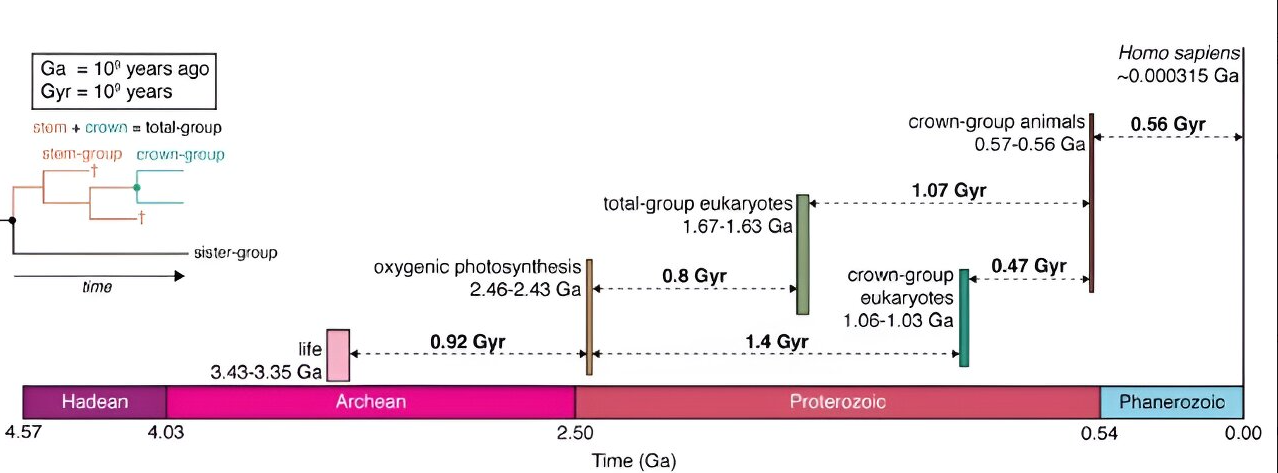
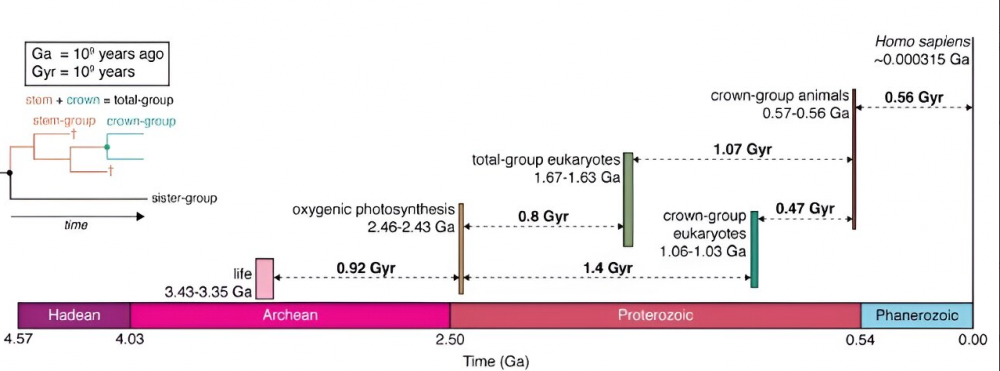
We raise the possibility that there are no hard steps (despite the appearance of major evolutionary singularities in the universal tree of life), and that the broad pace of evolution on Earth is set by global environmental processes operating on geologic timescales (i.e., billions of years). Put differently, humans originated so 'late' in Earth's history because the 'window of human habitability' has only opened relatively recently in Earth history." Mills et all Sure sounds like Gaia! Mills said the notion of hard steps has left an imprint on humanity that is not justified. "Many people have taken these conclusions for granted, as if science has actually proven that our existence on Earth depended on chance events with small likelihoods in the available time," he said."Not only are these conclusions unjustified, they are damaging to our collective self-image, contributing to the notion that humans are an accident of Earth's biosphere rather than a natural expression of it."He believes this idea has handicapped human life and is steering us in the wrong direction" Sure sounds as if science overstepped its boundaries once again https://phys.org/news/2024-09-hard-evolutionary-history-human-intelligence.html https://arxiv.org/abs/2408.10293
-
A few excerpts "In recent decades, however, the scientific understanding of life’s relationship to the planet has been undergoing a major reformation. Contrary to longstanding maxims, life has been a formidable geological force throughout Earth’s history, often matching or surpassing the power of glaciers, earthquakes and volcanoes. Over the past several billion years, all manner of life forms, from microbes to mammoths, have transformed the continents, ocean and atmosphere, turning a lump of orbiting rock into the world as we’ve known it. Living creatures are not simply products of inexorable evolutionary processes in their particular habitats; they are orchestrators of their environments and participants in their own evolution. We and other living creatures are more than inhabitants of Earth. We are Earth: an outgrowth of its physical structure and an engine of its global cycles. The evidence for this new paradigm is all around us, although much of it has been discovered only recently and has yet to permeate public consciousness to the same degree as, say, selfish genes or the microbiome." "Yet there has never been an objective measure or a universally accepted definition of life. There are numerous examples of things we consider inanimate that have traits of the living and vice versa. Life is more spectral than categorical, more verb than noun. Life is not a distinct class of matter but rather a process — a performance. Life is something matter does." "Although science has not yet arrived at a fundamental explanation of the phenomenon we call life, many experts in the past century have favored a variation of the following: Life is a system that sustains itself. This defining capacity for active self-preservation and self-regulation emerges at many different scales: at the scale of the cell, the organism, the ecosystem and, I would argue, the planet." "Gaia still retains something of a stigma in mainstream science, but in recent decades opposition has waned significantly. Although the claim that Earth itself is a living entity remains controversial, some scientists embrace it, and others are increasingly open to it. The idea that life transforms the planet and is intertwined with its self-regulatory processes has become a central tenet of mainstream Earth-system science, a relatively young field that explicitly studies the living and nonliving components of the planet as an integrated whole. As the Earth-system scientist Tim Lenton has written, he and his colleagues “now think in terms of the coupled evolution of life and the planet, recognizing that the evolution of life has shaped the planet, changes in the planetary environment have shaped life, and together they can be viewed as one process.” "One early metaphor Lovelock deployed to explain Gaia was a redwood tree. Only a few parts of a tree contain living cells, namely the leaves and thin layers of tissue within the trunk, branches and roots. The rest is dead wood. Similarly, the bulk of our planet is inanimate rock, wrapped in a flowering skin of life. Just as strips of living tissue are essential to keep a whole tree alive, Earth’s living skin helps sustain a kind of global being. What Lovelock did not realize at the time, however, was that even Earth’s seemingly inert skeleton of rock was far more porous and alive than most people believed." "To recognize that deep subsurface life not only exists but also is engaged in a continuous alchemy of earth — that it may have helped create the very land on which all terrestrial life depends — is to redefine the modern understanding of life’s influence on the planet. Yet even today, some scientists, especially in geology and related fields, continue to describe life as a relatively inconsequential layer of goo coating a vastly greater mass of inanimate rock." "There’s simply no comparison between an Earth without life and Earth as we know it. Life’s ubiquity endows our planet with an anatomy and physiology. Together, Earth and life form a single, self-regulating system, one that has endured and evolved for more than four billion years. We have as much reason to regard our planet as a living entity as we do ourselves: a truth no longer substantiated by intuition alone, or by one man’s vision, but by a preponderance of scientific evidence." "For more than two centuries, Western science has regarded the origin of life as something that happened on or in Earth, as if the planet were simply the setting for a singular phenomenon, the manger that housed a miracle. But the two cannot be separated in this way. Life does not merely reside on the planet; it is an extension of the planet. Life emerged from, is made of and returns to Earth. Earth is not simply a terrestrial planet with a bit of life on its surface; it’s a planet that came to life. Earth is a rock that broiled, gushed and bloomed: the flowering callus of a half-sealed Vesuvius suspended in a bubble of breath. Earth is a stone that eats starlight and radiates song, whirling through the inscrutable emptiness of space — pulsing, breathing, evolving — and just as vulnerable to death as we are."
-
An interesting read; especially for those who find the notion romantic, but without scientific sustenance. https://www.nytimes.com/2024/06/24/magazine/earth-geomicrobiology-microbes.html
-
I have nothing new, but here is a good review of the situation pertaining to aluminium, AD and general health as well. https://nutritionfacts.org/video/does-aluminum-cause-alzheimers-disease/ Does not appear to be a concern for AD, but other health issues abound, especially if you use Maalox Forte.
-
1- Transistor bias has nothing to do with human bias in science. So "knowledge of objectivity" negates subject perception? The subject is still there to perceive what he believes to be objectivity, which, again is not 100% infalible. 2- And what happens if she-he believes she-he is objective when for no fault of her-his own, she-he is not objective or as objective as she-he believes to be? 3- Please define "subject"??? 4- I agree that for many processes, designs, calculations, constructions the exact values is unknown, but the probability of being wrong is a known acceptably low level" 5- I took for granted that data, facts were correct, relevant and complete. Data - facts and statistics collected together for reference or analysis. Fact - a thing that is known or proved to be true 6- no
-
1-Let's then agree then to the use of the first definition 2- I am not getting this; how is "allowing for some form of constructive subjectivity in the beginning of the scientific provides opportunities for seing things differently" with provided defintions; Objective - objectivity means something that presumably exists independent of the subject's perception of it; Subjective - which is the claim that perception emerges form the subject's point of view; 3- Pointless to use, so let's not use it; agree with the rest of your statement. 1- Please elaborate on transitors not working without bias 2- I provided a definition of objectivity for the thread; means something that presumably exists independent of the subject's perception of it. Here is another one from wiki: In science, objectivity refers to attempts to do higher quality research by eliminating personal biases, emotions, and false beliefs, while focusing mainly on proven facts and evidence. Please provide yours as I was unable to find it in the thread. 3- Please elaborate on Limit State Theory. 4- Data and facts turn the subjective into the objective. 5- Now I am asking for elaboration.
-
I would also add that I don't always understand your writing, which makes it harder for me to see your point.
-
1- I am all ears to learn about "bias" 2- You keep telling me that the subjective is acknowledged and accepted by Science, but when I bring the topic up, I can sense the unease and tension about the subject matter. I am not sure that all scientists would agree with your statement. There is also the matter of what kind of subjectivity is at play. If I say bias in worldview, then I get a much stonger response than say parallax 3- I would modify your phrase to "subjectivity contained and controlled through data and facts". 4- Letting subjectivity rule without containment and control would be a disaster of titanic proportion.
-
1- So, do you agree that there is and should be some amount of required subjectivity at the onset of the scientific process and this has to be "objectivised" through data at the outset of the process? 2- I will be revisiting the text and I agree that it should not exclude 'a good match with data is what makes a good explanation. This is an unconditional statement 3- This is not a definition, but a statement on my part. Allowing for some form of constructive subjectivity in the beginning of the scientific provides opportunities for seing things differently. I did not ignore the parallax example, but made reference to it by stating that different result interpretations were less an issue of optics, but more of bias.
-
My response to Studiot's post was not fully posted; for which I corrected in a following post. I am on the outside looking inside, which is a different view from those on the inside no longer looking outside.
-
I was able to recover the missing text. 1- Is the article that bad or just presenting another perspective of things that runs counter to one's worldview? They criticise, but do not abandon science. 2- Assimilated the difference between accuracy and precision; thanks! 3- My contention as those from referenced authors is that subjectivity has a constructive role to play in the scientific process and should not always be frowned upon. For example subjectivity in efference with conclusion resistant to variation in subjective input. 4- There are ways of correcting tilting heads, but what about when the difference in lecture comes from the inside of the head as in bias towards a certain outcome? 1- Swansont; Will Robinson is not in danger if subjectivity comes into play in the early stages of the scientific process, when hypothesis is formed. And agree that the map is not the territory and correlation does not imply causation. 2- I did not do anything special for that post, but you can see it being rolled under the quote box. 3- I agree that there are risks involved in putting into play subjectivity in the scientific process. Again, at the start of the process and then confirmed or denied by data.
-
1- I guess that we have unanimity that the paper is of poor quality. It was not for the content though that I posted it, but because it was expressing a view of including subjectivity in the scientific process. 2- It says that science 'needs to lose its fear of subjectivity in efference" and says that “Science is superior to superstition not because it does not allow for subjective elements, but because its conclusions are rather resistant to variation in subjective input, and because it allows for rational criticism of the assumptions it makes.” I am all for this 1- The fact that individuals formulate hypotheses does make it subjective. Definition: a- Subjectity which is the claim that perception emerges form the subject's point of view. b- Something is subjective if it is dependent on a mind 2- Subjectivity in the scientific process does not exclude "a good match with data is what makes a good explanation. 3- There is a good side to subjectivity in science; it allows for different ideas to come into play. For an unknown reason, most of my response was not posted. I will try and recover it.