Eiot
Members
-
Joined
-
Last visited
Everything posted by Eiot
-
I suspect kelvin generator is a cheap trick. I suspect they charge water in a lower jar a lot with the Wimshurst machine, this water then charges a ring . upper tank could be grounded or has nacl. or they simply have 2 tanks hidden in 1 tank and they charge water in those tanks. videos about kelving generator are pompous, poorly explained. They allege the cans (or rings)"induce electric charge on the (dripping?) water". This is suspicious as we know there is need to be grounded and the charge on a ring will decrease and nothing will happen.
-
canadians also vote for the Monarchy just like the other saxons (the 3 out of 4 english speaking countries are monarchic), canadians vote for the oligarchs, canadians depend entirely on the import. Canadians are spoiled workaholics , they dont care about political or social activism. They are greedy and glad to inflate the rental prices for their shitty box-shaped canadian houses. A nation of useless, greedy managers.
-
justice is when a geezer gets shot for causing a problem such as the fukushima !
-
I have more comments about this toy. -You cannot set a rod (or a string) into vibration by striking it in the cross sectional area. As a matter of fact waves on a string are transverse. -soft, porous materials, fibre ropes are acoustic insulators. About the resonator box. In the tuning fork resonance videos, the walls of the resonator boxes are suspiciously thick. Lets hear what the narrators say: "When the one box is placed such that its opening is a few centimetres from the others opening striking one tuning fork sets up a sympathetic vibration in the other" or "the vibrations of the first tuning fork travel through the air and pushed on the second tuning fork" It seems they underestimate the properties of the resonating boxes. As a matter of fact , the sound beam enters in the second resonator box and sets its walls to vibrate, and the walls set the tuning fork to vibrate. by the way Such the resonator box must surely improve the carbon rod microphone cuz if you look at yt videos they all show their carbon rod microphones without proper wooden resonators. About the radiator. I don't know why the radiators plates resonate so easily, has it to do with the nodes,nodal lines and thickness? It is up for you to investigate. In my last test I made this toy of wooden box and it works but it's far from good...there are losses cuz i could not sand the steel can receiver, and the string did not touch wooden surface tightly enough.
-
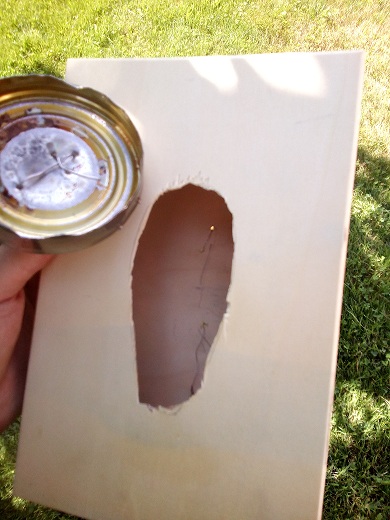
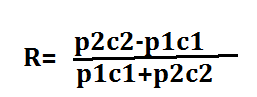
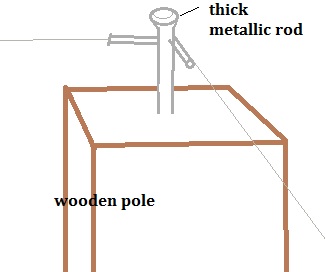
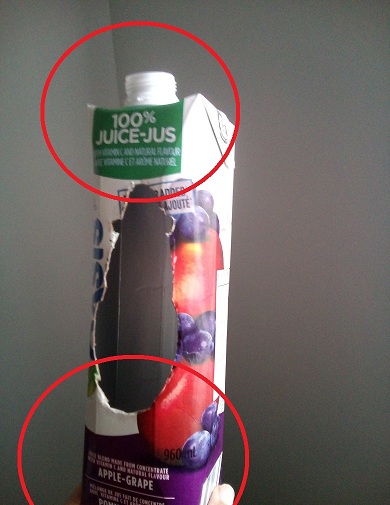
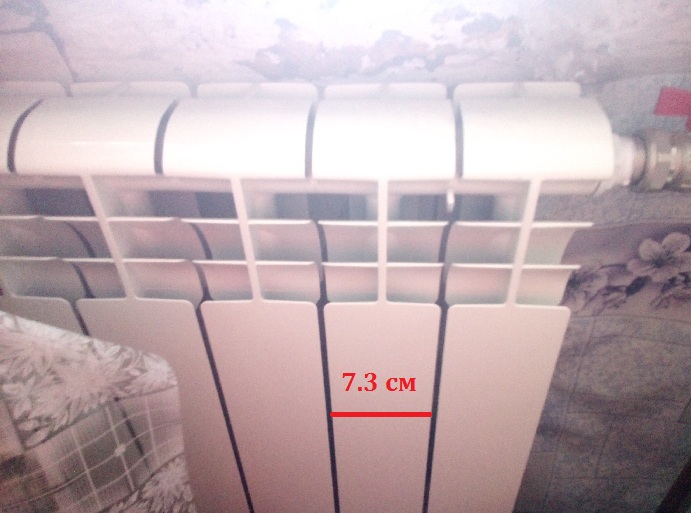
I examined the articles and videos about 'the tin can phone'. I concluded that all the articles and youtube videos about it are fake. But now let's understand why the tin can phone articles are bullshit. Let's examine wikipedias article en.wikipedia.org/wiki/Tin_can_telephone Basically they begin their article saying it works, without providing any technical prove. The whole article is anti-scientific bullshit. They say: "When the string is pulled taut and someone speaks into one of the cans, its bottom acts as a diaphragm, converting the sound waves into longitudinal mechanical vibrations which vary the tension of the string. " . In this quote, they deliberately and criminally omit what the material the string is made of, nor they point out the shape of the "cans". The waves on the string are not longitudinal. They insolently lie that the sound from those cans can travel by a ... textile rope. They lie that it can travel if that textile rope is twisted. Absolutely idiotic. Horrifying! Also, the sound waves reflect off the solid surfaces! To confirm this, i read some articles and found the formula. It is called Reflection coefficient. (there is also the transmission coefficient formula but I think it is not needed here). You cannot simply transmit sound from air to metal because of impedance mismatch. R=reflection coefficient and it is supposed to show how much sound reflects. [formula image] where p=density c=speed of sound z=impedance since z=p*c, then R=(z2-z1)/(z1+z2) where z is impedance for longitudinal. z=density * speed Zair=1.29 kg/m3 * 343 m/s = 442 Zsteel(the tin cans are made of steel)=7800 kg/m3 * 5790 m/s=45162000 Zwater=1000 kg/m3 * 1493 m/s=1493000 [airwater] Reflection coefficient , water and air = 99.9% of sound is reflected. [steelair] Reflection coefficient, steel and air= 99.9% of sound is reflected. There are 2 problems with this formula. When water flows in my copper pipes, the metal pipes make noise, we hear it, which means that the sound from the metal is transmitted into the air. Maybe the sound simply travels on the surface of solid objects? I did many tests. and conclusions are. The string should not be coated in varnish nor in paint, should not be stranded and it should be made of metal. It should be clean and stretched very tight. The string should not touch anything even a light touch stops the transverse wave on it. An observation is that when the sound wave travels on (or in?) a very thick metallic object such as a big thick industrial nail, a pipe, etc. the sound does not stop when something touches the object. This means that if we want the string to turn , let's say a 90 degrees turn, we must connect it to a ticker piece of metal , lets say a thick metallic rod, nailed to a wooden beam. And even in this case there might be losses. The resonator box. Of course my first tests were with the tin can and did not work. What worked was this shape. Only this shape [resonatorboximage] of the resonator box, made of juice box, converts longitudinal waves in the air to transverse waves in the string , transmits them from air in the solid string. I think, the walls of this resonator tremble probably because of the property of elasticity. The shape is similar to to the shape of the guitar. The sound on the other end of the string , mine was 10 meters long, was of bad quality, with an echo. The shape of the resonator chambers of the phonographs is horn, and men who own them should try this shape. Actually the text above barely matters, because this radiator can transmit sound into metal! This is probably because of resonance property. although it contradicts to the formula. Those 7.3 cm wide metal plates vibrate when I clap my hands. The sound travels in the pipes. [radiator] Either way the article on the wikipedia should be corrected, and the one who wrote it should be banned, fired and disenfranchised. A few comments about media. Video titled The WORLD's LONGEST TIN CAN PHONE! they kinda admitted their phone is non functional.


-
In your title, do you use the verb "to exist" as an adjective?
-
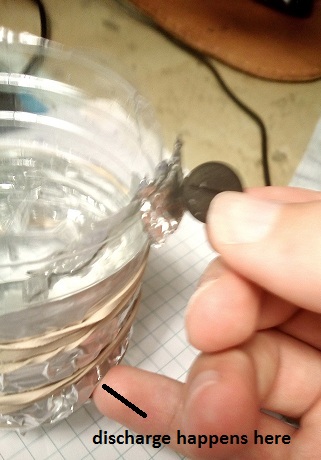
whenever i discharge my leyden jar with thumb (external plate) and index (internal plate), the discharge happens in index (internal plate). Whenever i discharge with pinkie (external plate) and tablet of activated carbon held between index and thumb (internal plate) it discharges in pinkie (external plate). well how to make it discharge in internal plate while i hold the tablet.