Mordred
Resident Experts
-
Joined
-
Last visited
Everything posted by Mordred
-
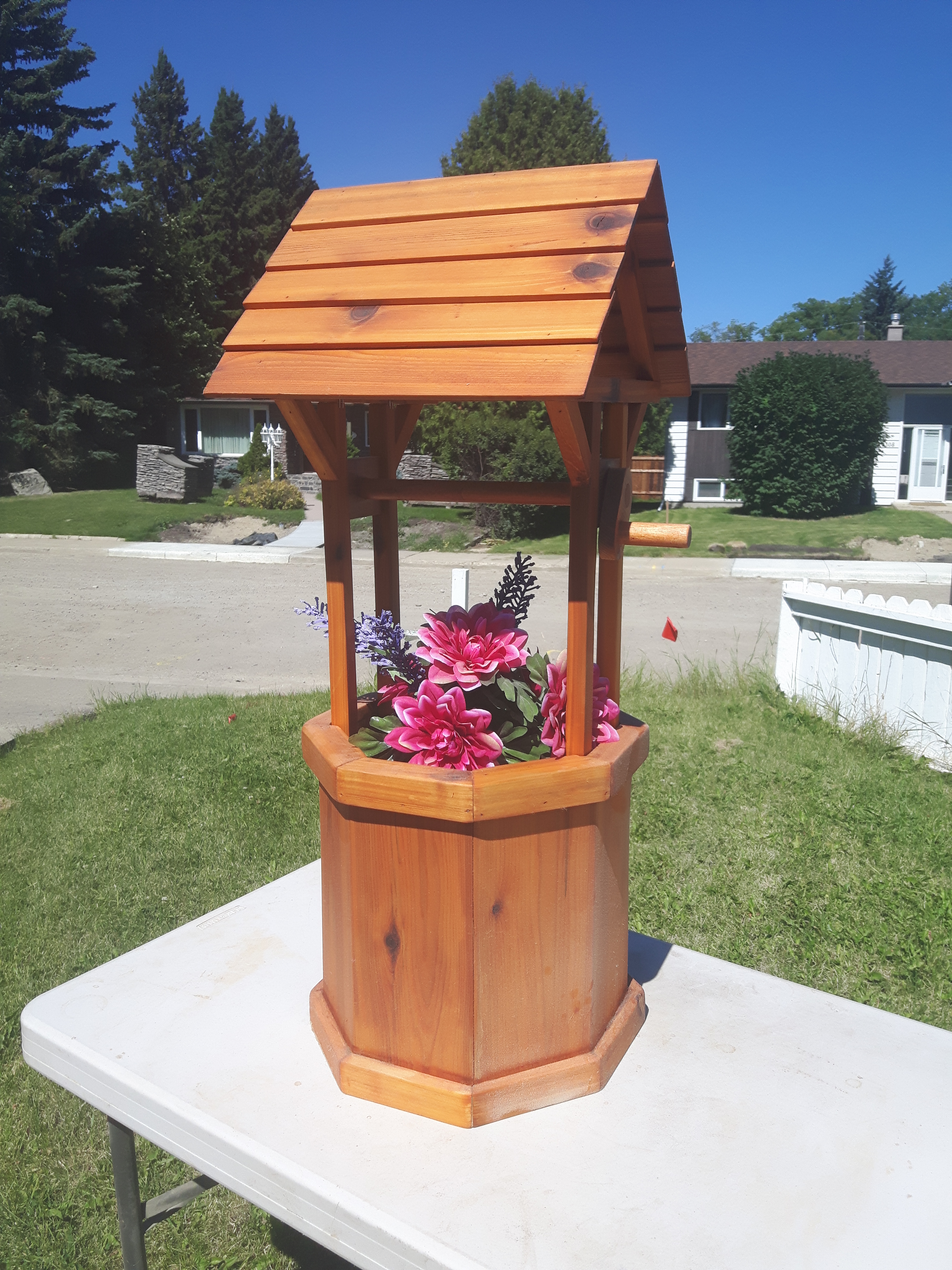
My earliest wishing well posted earlier uses it and it's still in good shape. If that's any indication on it UV and water protection. You can get it in spray can form for projects with tons of nooks and crannies. (First wishing well post ) though my outdoor stuff gets the timber oil though different stains.
-
I'm a member on a few forums and I've noticed over the years that every forum I visit (though this is my main forum as I prefer this one over the others) are all experiencing significant drop in activity in the last few years. It's not science forums either example Plctalk.net/qanda which is an excellent site for those with electrical engineering interests has also been affected.
-
Thanks it worked out rather well, used premium cedar as it's typically less warped I've had to build a few of them the mats cost 150.00 Canadian so I've sold 2 for 300.00 each. People seem to love them for outdoor storage boxes. The ones I see I usually recommend outdoor timber oil https://www.rona.ca/en/product/cabot-australian-timber-oil-378-l-neutral-translucent-wood-stain-87005064?viewStore=66190&cq_src=google_ads&cq_cmp=19597975671&cq_con=&cq_term=&cq_med=pla&cq_plac=&cq_net=x&cq_pos=&cq_plt=gp&&cm_mmc=paid_search-_-google-_-aw_pmax_generic_Paint-_-&gad_source=1&gclid=CjwKCAjw3624BhBAEiwAkxgTOs2auPSZxKCSuMkYb0MVlVlfdF-bGlxnNFlFRBe9F_XEPshPG80-vRoCQTgQAvD_BwE&gclsrc=aw.ds Apologies for advert. Couldn't find a link with just the product.
-
Yes I have a couple of Brad nail guns that cedar box is also rabbit and groove jointed with glue along with the nails.
-
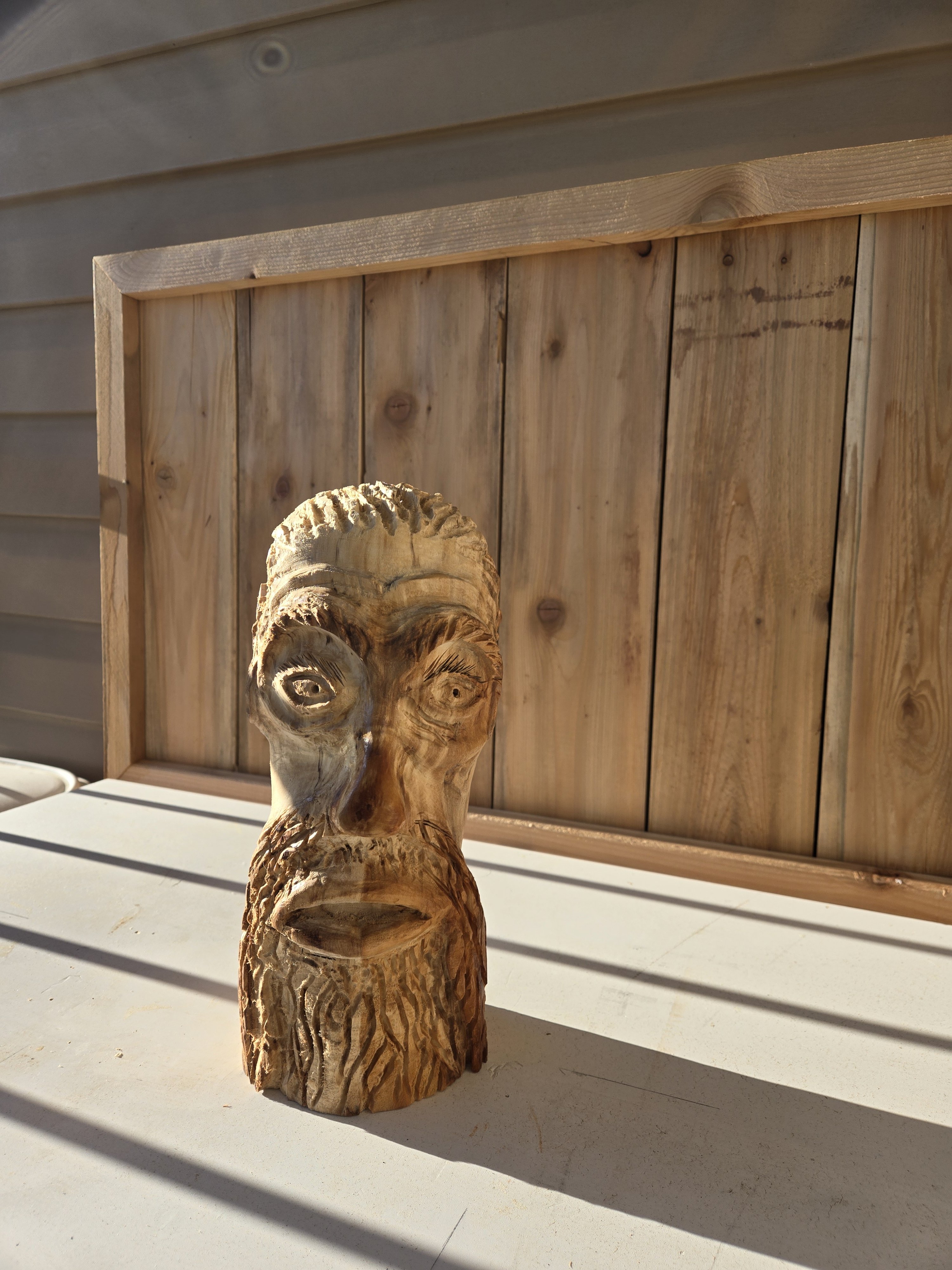
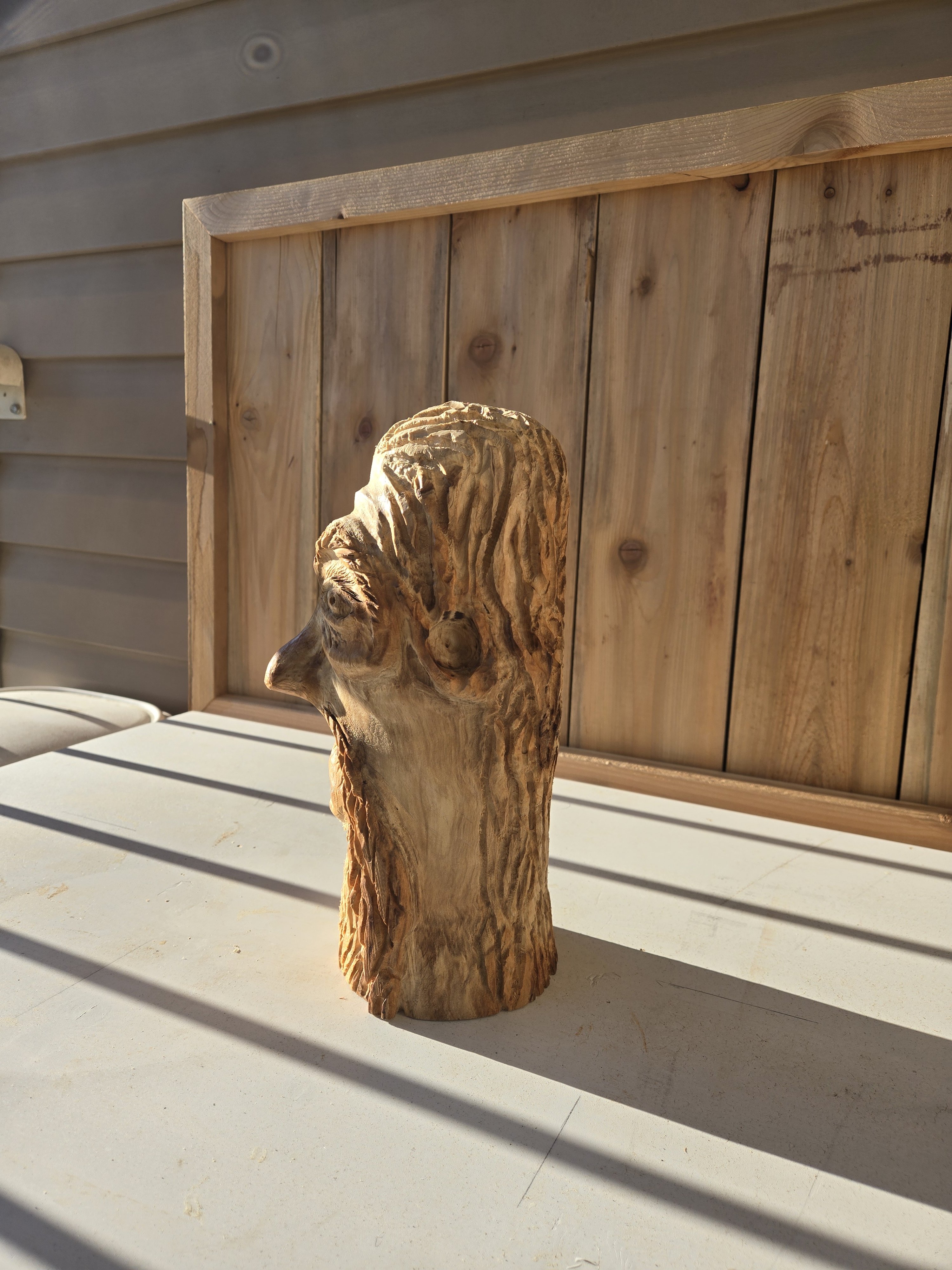
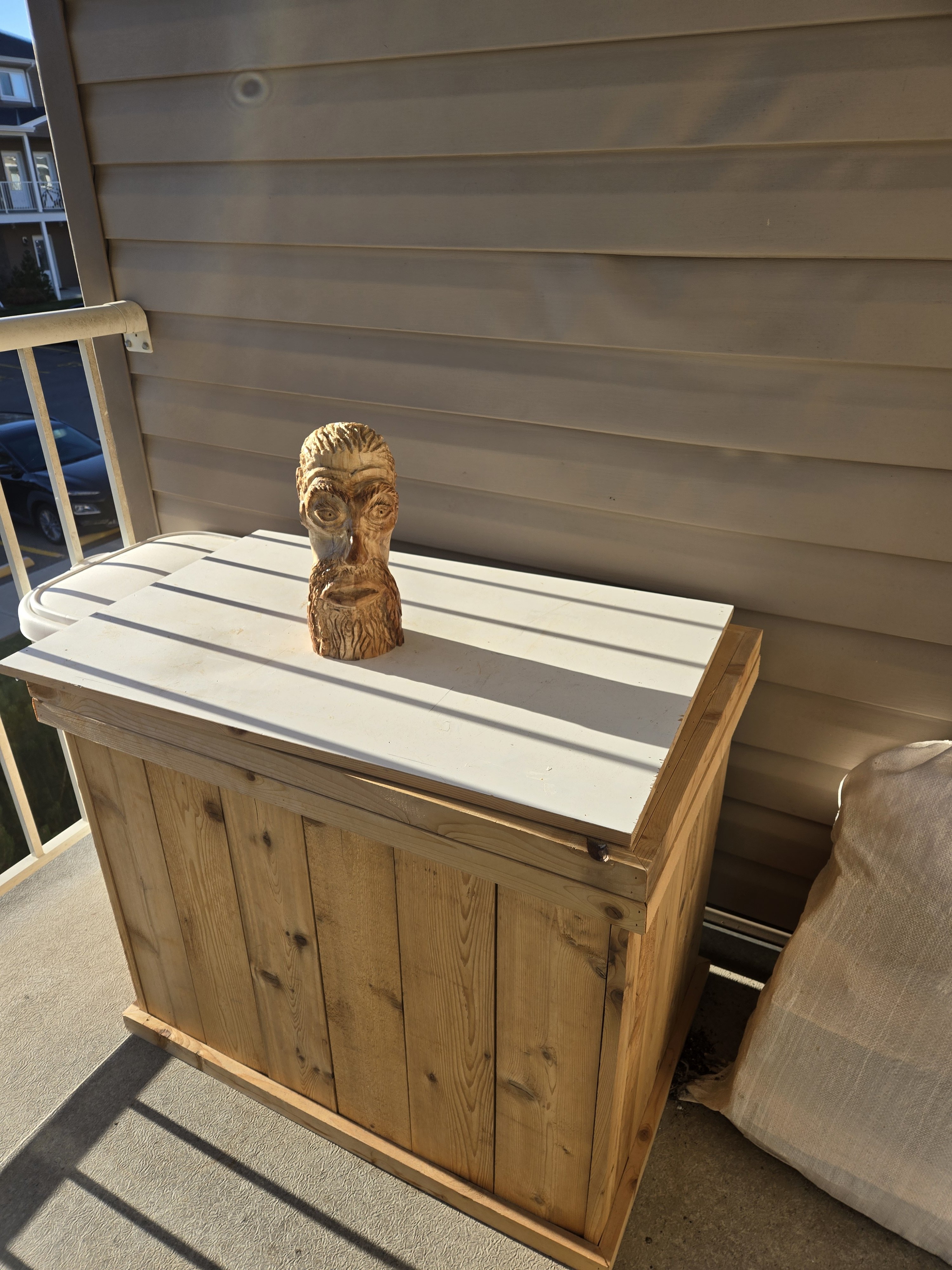
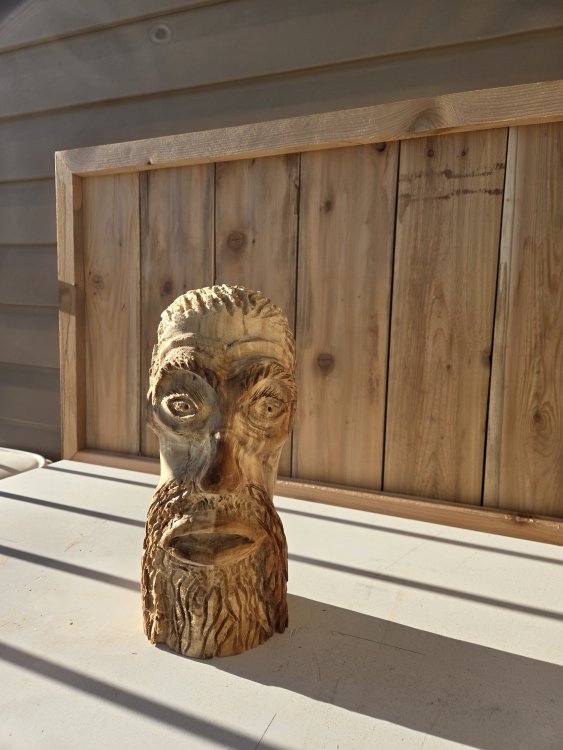
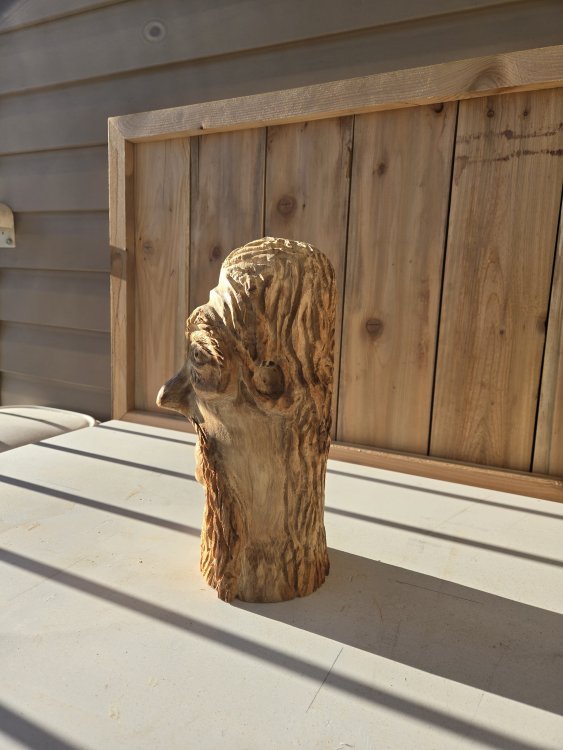
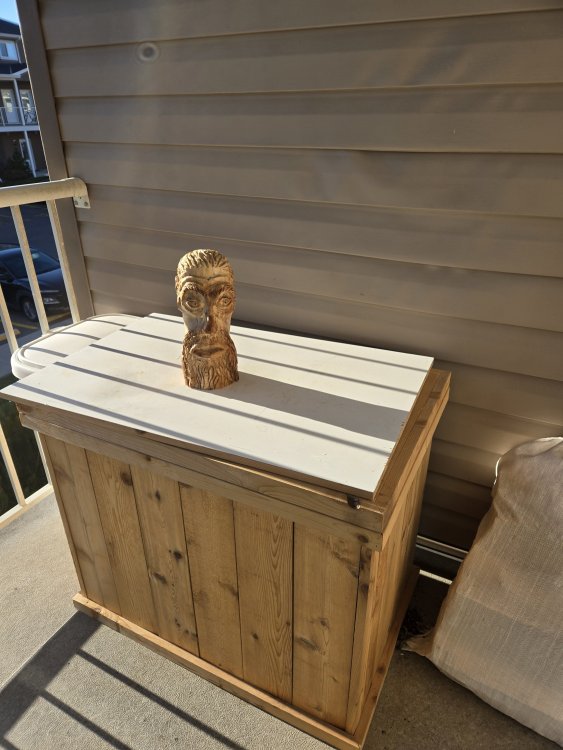
Freshly carved from a log I found might be elm. Used air di-grinder , (as you can also use router bits with one, has sufficient RMP and correct size shaft. A dremel for fine detail. For fast removal used an oscillator tool. Chisels of course where needed Last image is on a cedar box I built earlier this year. This is my second carving attempt last one already sold.
-
as a further assist I will latex over the other two equations best viewed in latex form. Your example on page 5 can be viewed well without needing latex. \[fx=\sum^{+\infty}_{k=-\infty}\hat{f}_ke^{ik\frac{2\pi}{t}x}\] \[\phi(l)=A\phi(0)\] hopefully that helps... Please step us through the equations I ported over from your article
-
Ok perhaps you can better explain the following. in scenario 1 where neither observer or event has any velocity you state use equation 1. \[\psi(t=dt)=A\psi(t)\] You use L and prime L for each IFR fine no issue there as its just an identifier. You then state. It can be noted that equation 1 alone is not enough for the causality principle. Let's say we know the state of the system in some inertial frame of reference (IFR). Let's denote this IFR 𝐿. Is it possible on the basis of this to find the state of the system in another IFR, 𝐿 ′ , moving at a non-zero speed relative to 𝐿? If this is not possible, then events in different IFR cannot be linked to each other. However, the practice of applying the principle of causality in modern theories of physics implies that, knowing the state of a system in one IFR, it is possible to obtain the state of a system in another IFR. Thus, in order to fulfill the principle of causality, the following equation must also be fulfilled, for each 𝜑𝑖 ′ and 𝑡𝑖 ′ , for an arbitrary 𝐿 ′ : and then give equation 2. \[\begin{cases}\acute{\psi}_i(\acute{L})=B_{\psi i}\psi(L)\\\acute{t}_i(\acute{L})=B_t t_i(L)\end{cases}\] where \(\psi_i\) is one set of states in its IFR. I will let you fill in the other details as quite frankly it is unclear to me what you are doing there prior to equation 3. \[\psi(t+dt,L)=A_\psi(t,L)\] is your equation 3. I simply do not get what you are describing as different time point in the same IFR ????????? "The operator 𝐴, accordingly, translates the state of the system between different time points in the same IFR " huh come again???? this is your equation 4 which you state is required to fulfill the principle of causality and you state you must simultaneously apply equation 2 and 3. \[\begin{cases}\psi(t+dt,L)=A_\psi(t,L)\\\acute{\psi_i}(\acute{L}=B_{\psi i}\psi(L)\\\acute{t}_i(\acute{L})=B_tt_i(L)\end{cases}\] "Equation 1 allows us to describe the principle of causality when we do not consider in detail the properties of transformations between IFR. Equation 4 is needed for a more detailed analysis of how the causality principle and transformations between IFR are related." Now I did the work for you on porting your key equations here for everyone's interest without requiring them to use your article. Simply due to noticing your attempt to understand the latex format for this site. I will let you describe how those equations work with regards to your IFR's as I certainly do not understand what you are doing above. It almost sounds like your treating each state as being somehow quantum entangled.
-
Yes I understand that, that isn't the point of my question I am well aware how causality applies under SR. My question directly pertains to your hypothesis itself. How do you have an inertial frame of reference without having any velocity term in your transforms ? There is a significant difference between coordinate references, inertial and non inertial reference frames. Obviously we have a difference in understanding what the Principle of Causality entails if you don't understand why I am asking these questions of your hypothesis. https://en.m.wikipedia.org/wiki/Causality_(physics)#:~:text=Consequently%2C the relativistic principle of,the future of its cause. Are you applying causality as per the inertial frame treatment, See link as you already stated your paper doesn't involve determinism ( see link) Or are you specifying causal structure (see link)
-
Repeating the same thing isn't addressing the answer is it. The question directly relates to can you verify your theory conforms to causality despite not having any limitation to signal delay as taught in the distinction between Galilean and SR. I do not see any vectors being applied with regards to a speed limit of information exchange. Your transformations only apply to the coordinates they do not include any vectors. Without vectors describing constant velocity an inertial frame of reference serves absolutely zero purpose. You may as well just refer to your IFRs as nothing more than different coordinates.
-
There we go a decent argument +1. Let's work with that. So I ask "is sentient a requirement for evolution or development of emotion and biological systems" ? Why would sentience be a requirement for the above ? For the record physics wouldn't help in this case wrong field of science in regards to how biological systems develop or the origin of life and emotion. However the question remains is sentience a requirement to cause life to come into being ? Why couldn't random chance given enough time do the same with the universe only role to supply the ingredients? I would hate to see the universe having a temper tantrum (sorry couldn't get that visual out of my head )
-
Anyways I haven't seen any valid science being applied nor any decent logic argument so I'm done with this thread. Mayhap if a more substantial debate is added I may change my mind but I don't have any hope of seeing that happening. Good luck
-
Yeah I have several sizes I regularly build. The small ones sell faster and help restock supplies. I also don't charge much I typically just double the material price rather than base it on labour hours as it's simply a hobby.
-
Well truthfully nothing you have added has any practical application. There is no Spirtuality in physics. The universe is not a sentient being with awareness and physics and mathematics is all that is required to describe how the universe evolves from a hot dense state regardless of your opinion. How that is possible involves taking the time to learn the physics before judging it. Physics does not involve religion or spirituality for very practical reasons. That reason being lack of any method of testability. You don't require religion or spirituality to build an airplane as one example.
-
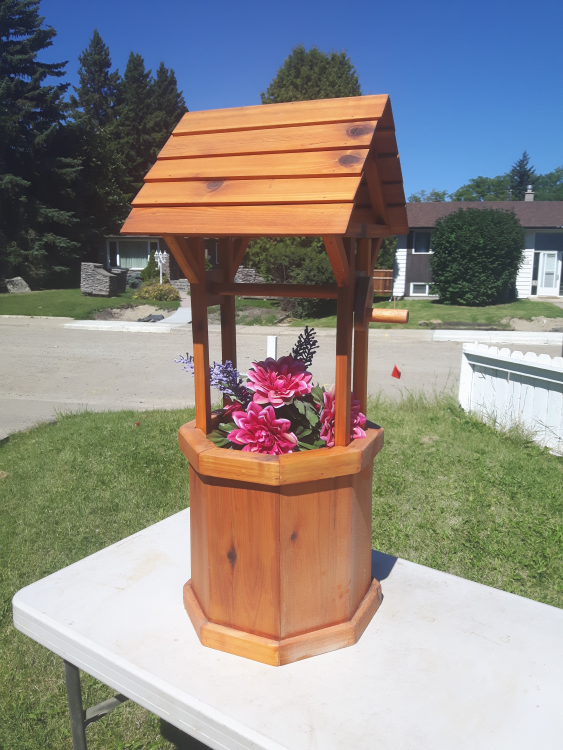
I regularly make these for sale out of cedar. They sell fairly well.
-
Let's put it bluntly show how your transformations can be incorporated into the transformation rules of SR. What mathematics would be required to start from your transforms to arrive at the SR transformations. Can you do that? If you cannot then there is no way to confirm your hypothesis does in fact have compatibility compliance with SR. I never believe anything described verbally when it comes to physics. If it's not in the mathematics then it's not proven mathematically. It's that simple I don't take anyone's word regardless if it's from another PH.D in a professional peer review article of any declaration not shown in the math. For example what limit is in your article for speed of information exchange between two states ? You have never answered that question when I asked it on page 1. If you don't think that's important to your article then you must undoubtedly have a different definition of the causality principle from mainstream physics. An inertial frame of reference includes vectors in regards constant velocity that is also missing in your article. So declaring your applying IFRs without applying vectors for velocity is rather pointless
-
Sounds like according to you only your logic applies regardless of any evidence otherwise. Good luck with that. That isn't what logic or science is about. Myself and others prefer a more rigid approach to a good discussion involving science. So does our forum rules. That last post has literally zero practicality in either philosophy or physics in its argument but amounts to strictly a personal belief. Aristotle on the other hand his philosophy looked at the evidence he had available in his arguments.
-
Why c is invariant is one of those questions that has no answer. We know that c is invariant. That has been confirmed to extremely high precision but the closest answer afiak is that All massless (uncoupled) particles travel at c and this is reflected in the permittivity and permeability relation of the vacuum. \[c^2=\frac{1}{\mu_0\epsilon_0}\] So one could argue it is due to the permittivity and permeability of the vacuum along with the nature of an observers lightcone. Edit just noticed the person I was replying to is now banned.
-
A good forum where their members are willing to help those who truly wish to learn can often be underrated. This forum has numerous members with excellent skill levels that when someone wants to learn there is plenty of members willing to help out.
-
Now there is a pop media coverage I wouldn't dare trust. The article refers to Instability of the Kaluza-Klien vacuum unfortunately it's behind a pay wall.
-
There is universe from nothing models that are considered valid so it's already a recognized possibility. I understand you wish to keep this as a philosophical argument but a simple philosophy argument is that everything must have a beginning. Even in cyclic universe models the first universe would have arisen from a nothing state which under QM nothing doesn't particularly exist. The closest being zero point energy.
-
No you need to show how anyone else can employ what you have to incorporate an SR/GR treatment to confirm what you have complies with SR/GR. Not merely state that it does. This whole article mentions examples where different IFR's will disagree on what is being measured. To the point where they cannot even agree on what particle is being measured. How can that possibly comply with Lorentz invariance ? This is a point mentioned numerous times on this thread by others Example here. So that should answer the clarity question on your article. In essence lack of clarity.
-
Well as there isn't any equations that use either Galilean or SR transformations in your article. All transforms are specific to your article including those where you separated spacetime into two 2d planes we can only take your word of complying with Lorentz invariance. None of your equations has proper time from what I see but only the coordinate time. The mathematical proofs are not included for Lorentz invariance not from what I see in the article. Verbal declarations are insufficient by themselves. For example I don't see a single covector when you require a minimum of a covector and vector to maintain lorentz invariance once you have any curvature term. That includes the curvature terms that arise from inertial observers. Your more than welcome to show your transformations here to show how I'm incorrect with the above in point of detail I invite you to show how I would be incorrect in my assessment using those transformations that you have in your article. I would also argue that spacetime is simply the metric where time is given dimensionality of length via the ct interval and not fundamental as it's only a volume where the time components involve the SM fields. For example it's not some fabric or eather as many try to make it out to be. So if your trying to find some fundamental aspect to spacetime all I can say is good luck on that.
-
It gets worse than that as ds^2=0 for null geodesics which is another reason for a photon frame being invalid as a reference frame. Its nonsensical answers such as time stopping or the photon existing everywhere at once that makes it obvious on the photon frames invalidity.
-
Sounds good I will wait on your next installment and work with the math you post to limit added confusion
-
I can work with this and tie it into system states. I will have time to work out a format to include Correspondance Principle.