Luc Turpin
Senior Members
-
Joined
-
Last visited
Everything posted by Luc Turpin
-
Will do further search You forgot the ‘ce’ in n’est ce pas
-
Both
-
Very well explained; I understand better invariance of scale, self similarity, the need to specify what property is being scaled, from similarity to affinity. And the main point for me is that peninsulas are not exact shape copies of larger ones and that this is the difference between a material world fractal and a mathematical world like the koch snowflake. For me, this is a "revelation" (Joigus - we are losing the patient) moment 😉
-
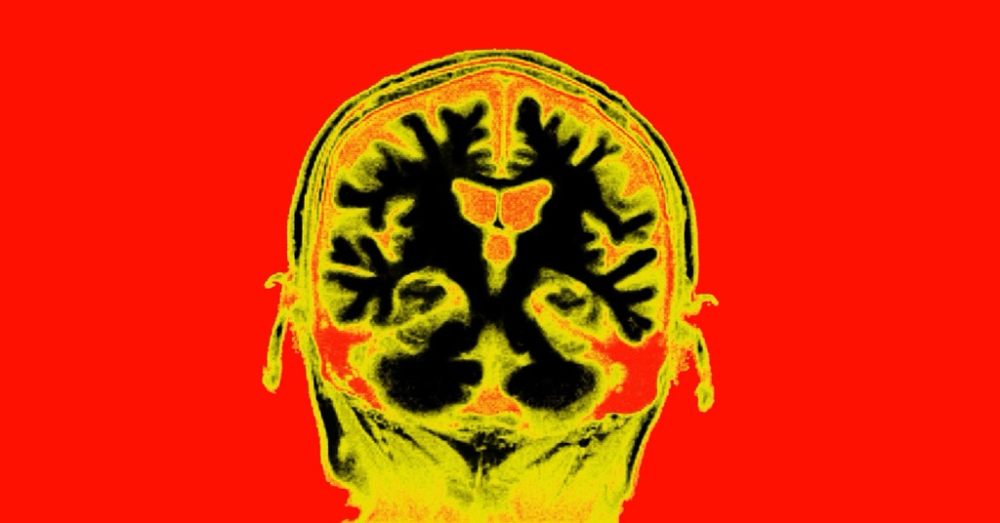
I appreciate greatly our discussion. This article says that (AD) is a major subtype of neurodegenerative dementia caused by long-term interactions and accumulation of multiple adverse factors, accompanied by dysregulation of numerous intracellular signaling and molecular pathways in the brain. At the cellular and molecular levels, the neuronal cellular milieu of the AD brain exhibits metabolic abnormalities, compromised bioenergetics, impaired lipid metabolism, and reduced overall metabolic capacity, which lead to abnormal neural network activity and impaired neuroplasticity, thus accelerating the formation of extracellular senile plaques and intracellular neurofibrillary tangles. https://translationalneurodegeneration.biomedcentral.com/articles/10.1186/s40035-023-00364-y#:~:text=AD patients have defects in,impairment and dementia [25]. As for the article in question, it does say that AD is a metabolic disease and that we should focus on metabolites that are affected by metabolic alterations to find effective therapeutics. It also says the considering AD as a kind of metabolic disease, we suggest insulin, adiponectin and antioxidants as having mechanistic links. Furthermore, glucose is the main fuel of the brain and ketones used only in the absence of glucose. Intranasal injections were performed on mild cases with no mention of size effect. As for plasticity, it is impaired in AD patients (see first reference) and I am not aware that it could function fast enough and completely enough to bring a patient from almost a vegetative state to partial or full lucidity. Respectfully! . Doing this work when I have time to do it; so not much time at hand. First four search links strongly suggesting that it is the whole brain. As for being biased, we all are!
-
I will have a second look at the reference. Also, point well taken on the definition of terms. And, interesting comment on brain plasticity. I will also look into it. Will try and find others.
-
There is still debate as to how general anesthesia works, but it seems to affect multiple regions of the brain down to individual neurons and the sedative floods the entire brain, including the brain stem: 1- "Anesthetic drugs cause brain circuits to change their oscillation patterns in particular ways, thereby preventing neurons in differnt brain regions from communicating with each other". https://www.google.com/search?q=surgery+anesthesia+effect+on+brain&rlz=1C1CHBF_enCA997CA997&oq=surgery+anesthesia+effect+on+brain&gs_lcrp=EgZjaHJvbWUyBggAEEUYOTIICAEQABgWGB4yDQgCEAAYhgMYgAQYigUyDQgDEAAYhgMYgAQYigUyDQgEEAAYhgMYgAQYigUyDQgFEAAYhgMYgAQYigXSAQkxNDExMWoxajeoAgCwAgA&sourceid=chrome&ie=UTF-8 Brain areas that influence general anesthesia - PubMed nlm.nih.gov 2- 'In a study published in April in the online journal eLife, Brown’s team used electrodes to study the neurons deep inside the brains of monkeys undergoing anesthesia. The work shows, for the first time, how individual neurons in multiple regions of the brain respond as they become flooded with the sedative, and that their impulses slow by 90 to 95 percent'. This Is Your Brain Under Anesthesia wired.com 3- 'We suggest that hypnosis during general anesthesia may result from disrupting the wake-active neuronal activities in multiple areas'.... https://pubmed.ncbi.nlm.nih.gov/25172271/ 4- This document reviews the literature on local brain manipulation of general anesthesia in animals, focusing on behavioral and electrographic effects related to hypnosis or loss of consciousness. Local inactivation or lesion of wake-active areas, such as locus coeruleus, dorsal raphe, pedunculopontine tegmental nucleus, perifornical area, tuberomammillary nucleus, ventral tegmental area and basal forebrain, enhanced general anesthesia. Anesthesia enhancement was shown as a delayed emergence (recovery of righting reflex) from anesthesia or a decrease in the minimal alveolar concentration that induced loss of righting. Local activation of various wake-active areas, including pontis oralis and centromedial thalamus, promoted behavioral or electrographic arousal during maintained anesthesia and facilitated emergence. Lesion of the sleep-active ventrolateral preoptic area resulted in increased wakefulness and decreased isoflurane sensitivity, but only for 6 days after lesion. Inactivation of any structure within limbic circuits involving the medial septum, hippocampus, nucleus accumbens, ventral pallidum, and ventral tegmental area, amygdala, entorhinal and piriform cortex delayed emergence from anesthesia, and often reduced anesthetic-induced behavioral excitation. In summary, the concept that anesthesia works on the sleep-wake system has received strong support from studies that inactivated/lesioned or activated wake-active areas, and weak support from studies that lesioned sleep-active areas. In addition to the conventional wake-sleep areas, limbic structures such as the medial septum, hippocampus and prefrontal cortex are also involved in the behavioral response to general anesthesia. We suggest that hypnosis during general anesthesia may result from disrupting the wake-active neuronal activities in multiple areas and suppressing an atropine-resistant cortical activation associated with movements. https://pubmed.ncbi.nlm.nih.gov/25172271/ Some even stay awake during anesthesia https://www.cnn.com/2010/HEALTH/05/17/general.anesthesia/index.html

-
Universal was indirectly ascertained in my line of questioning without necessarily mentioning it 'self-similarity (synonym of scale invariance)' 'It's a mathematical pattern rather than a process.' from Joigus and probably misinterpreted his words. Will gladly go back to school and will be reviewing our discussion about linear mathematics. Got the point about pretending for a short while that curved is linear. And yes, I defer to Exchemist on the science of mineralogy.
-
On invariance of scale, I am not saying that it is universal, but trying to determine if it is. Noted that it is a mathematical pattern rather than a process. As for exchemist excellent question, he knows much more than I. In trying to understand, I probably referenced the wrong articles or did not understand them well enough. In my defence, I did say "seem" as in not entirely sure.
-
Thank for responding! I believe that there is more than practically no evidence suggesting immateriality of mind; however, neither substantial enough nor convincing enough for a paradigm shift. I tend to concur with you that mind is an immaterial property of the brain. Evidence so far portrays it as mind being produced by brain; how it does so is unresolved. Immaterial mind on its own is not a bad idea; just unsubstantiated. Finally, I am an "epiphenomenalist", but doubt is creeping in a bit because of some evidence (e.g. 55 references provided in initial post of this thread and summary provided in recent post of an article titled "An evidence-based critical review of the mind-brain identity theory'). As stated before, there is no discovered center for mind in brain, some form of mind appears to be everywhere in nature and we still do not know how brain creates mind. This situation opens up possibilities that would not be there otherwise. Lastly, as I said before, I will go where the evidence goes, and agree with you that the jury is still out on this matter.
-
So, self-similarity being synonym of scale invariance, both together forming a universal process in nature! correct? Spatial pattern in objects and embedded behaviour in natural evolution! correct? What about living organisms? spatial pattern, embedded behaviour or both?
-
So, you are saying that an organism in a final bid to save itself, fires off a last burst of energy to maintain metabolic stability. This is a valid hypothesis that I cannot validate or invalidate at this time. However, intuitively it I am leaning towards it being possibly invalid. First, most but not all cases of terminal lucidity are reported in Alzheimer’s patients. Alzheimer's disease is characterized by a breakdown of metabolism. It is a metabolic disease https://www.ncbi.nlm.nih.gov/pmc/articles/PMC5368131/). So, how would the organism mount a last metabolic surge in a deficient metabolic system. Second, even if it could mount such a surge, how would that result in lucidity in a brain that is physically ravaged by the disease. Some patients experiencing terminal lucidity recover all of their functions for a while. Also, terminal lucidity occurs in two types: one week before death or hours before death (lost the reference on this one). This makes it a bit more difficult to think that it is mounting a last-ditch effort a week before death. Contrarily, maybe its a burst of coordinated electrical activity that is at the basis of terminal lucidity, for which its implications would be that these bursts of electrical energy can occur without a functional physical brain and nonetheless create lucidity. It might also be worth mentioning that the brain is a complex system and that maximally disturbed systems suddenly change state! Is it that that we are seeing in terminal lucidity? More questions than answers here, but a great discussion that may end up with partial answers as we move along.
-
As stated, I have very limited knowledge of crystals, so I will let you and exchemist lead the way on this one
-
Tell me more about 'evidence and lack of evidence pointing to'! Are you talking about the points that I raised, or you have others? 'This subjective conscousness is a property in of itself', but it needs the physical to express itself! Right? So its not onto itself! Right? Or are you saying that its does not need the physical to express itself?
-
Let me see if I get it right: the microscopic and macroscopic are similar because both are of the physical and share features such as patterning, diversity, complexity, etc., and this similarity of features present at difference size scale is called invariance of scale. For evolution, its a feedback loop feature that makes it similar for natural evolution versus evolution of planets, stars, atoms, etc. Patterning, diversity, complexity and to that effect, invariance of scale does not apply because natural evolution is a theory-idea-concept, and not a thing! Right? This is not an area of interest for me, so I know very little. Searched the net and got these references https://www.sciencedirect.com/science/article/abs/pii/001282529090027S and https://www.degruyter.com/document/doi/10.2138/am-2021-7698/pdf I think, maybe wrongly, that they somehow link mineral crystals to fractals.
-
Understood
-
I could have asked a better question: second attemps - What is the factor that makes evolution appear in non-living as well as in living form? What is the common denominator? Does invariance of scale have anything to do with it? As for the quote above, are you asking how fractals are applicable to systems as different as a mineral crystal and a living organism? Respectfully, its the fractal shape found in living things (human brains https://fractalfoundation.org/OFC/OFC-1-6.html#:~:text=Our brains are full of,connections%2C among these brain cells.) and non-living (coastline: https://fractalfoundation.org/OFC/OFC-10-4.html). As for mineral crystal, they seem also to be fractal in nature.
-
Yes
-
Will do that In documentation that I read on complexity, there is talk of invariance of scale. For example, shapes are invariant on a small and large scale; as in fractals when you zoom in and out, but still get basically the same shape. taking the fractal example again, there is a pattern of shape, not all shapes look exactly the same, the complexity-richness of pattern. Find a fractal site on the net to visualize the meanings of these terms
-
Note - naturalist has a different connotation in French. i use materialist as exchangeable with naturalist
-
If I understood correctly the article and your post, the stripes of Equus grevyi are not different but the same as the stripes of Equis burchelli! And I guess that you are telling me that they are different Similar but still different.
-
We all agree on supernaturalism. I also partially agree with your untestable comment. However, I venture that it is at the limit of materiality that, if supernaturalism existed, one might find or not clues about it. For example, and if credible, terminal lucidity at death's door evoked in one of my earlier post is troubling for a materialist like me. How can someone have lucid thinking with a brain that is essentially broken? What is the mechanism explaining how this temporary reversal of fate occurs without a functional brain? Also, for a materialist like me, it would be more comforting that we could find a place in the brain for consciousness, that we could see that it is not in varying degrees in all living things, and that we understood how brain creates mind. Then, there would not be any lingering doubts. Without these three unconfirmed statements of facts, we are left with possibilities of having to look elsewhere for answers. And I will follow evidence wherever it lead's me, even if I have to do so grudgingly
-
Correct! Need to be more specific. Invariance of scale is not mentioned in the article. I am asking if it has anything to do with the fact that we can supposedly find (evolutionary process) in inorganic systems as well as organic. Not necessarily the degree of complexity, but invariance of scale as one found more broadly from the microscopic to the macroscopic . I am using the complexity definition of invariance of scale as I think that the mathematical-physics version might be different. e.g. Patterning, diversity and complexity supposedly found in inorganic and organic have a relationship (are due to, caused by) the invariance scale concept. Is this statement valid?
-
I wish to talk about invariance of scale. The complexity theory version of invariance of scale. This phenomenon is intriguing, and I believe that this might be an example of it. Am-i right in my assessment? I also would like to know if there are similarities between the physics and complexity sense of invariance of scale? Hope that I am doing it correctly this time!
-
Well noted! Science is about being objective, open minded, but critical. I do not believe in supernaturalism, but I will go where the evidence brings me! Personally, I would have avoided using of the word "horseshit"!
-
The author used cognitive behavior; as it was a summary, I reduced it to cognition; my mistake 'Research in plant biology demonstrates how vegetal and cellular life shows elements of cognitive behavior that were not suspected or were simply considered impossible without a brain.'