Luc Turpin
Senior Members
-
Joined
-
Last visited
Everything posted by Luc Turpin
-
 I think that I chose poorly with the posted reference as I just wanted to pursue the line that subjectivity is already in the science process and/or a requirement for good science. The article that I posted made the debate diverge towards consciousness and its interplay with living organisms. In fact, the authors do promote that not only humans are conscious, but all biological entities, which is an idea that I have been pursuing, quite unssucessfully in a few threads, Not sure though that it would be the kiss of death for science if a certain amout of subjectivy was in the scientific process.. "While the evidence-based approach of science is lauded for introducing objectivity to processes of investigation, the role of subjectivity in science is less often highlighted in scientific literature. Nevertheless, the scientific method comprises at least two components: forming hypotheses, and collecting data to substantiate or refute each hypothesis (Descartes’ 1637 discourse [Olscamp, 1965]). A hypothesis is a conjecture of a new theory that derives from, but by definition is unproven by, known laws, rules, or existing observations. Hypotheses are always made by one individual or by a limited group of scientists, and are therefore subjective—based on the prior experience and processes of reason employed by those individuals, rather than solely on objective external process. Such subjectivity and concomitant uncertainty lead to competing theories that are subsequently pared down as some are proved to be incompatible with new observations." https://pubs.geoscienceworld.org/gsa/geology/article/40/1/95/130748/The-science-of-subjectivity or this one: "Subjective choice and objective knowledge are no opposites in science: rather, subjective elements are inevitable in scientific inference and need to be explicitly addressed to improve transparency and achieve more reliable outcomes, says a team of EU-funded researchers." "Explanatory inference is the process of choosing the hypothesis that best explains the data at hand. This concept has been notoriously vague, notes Sprenger: “What is a ‘good’ explanation? The gut feeling of a scientist? In our work, we have provided a rigorous foundation of this mode of inference via the construction and comparison of various measures of explanatory power.” The team identified a close relationship between prior beliefs and explanatory power. The quality of an explanation, and the inference of the ‘best explanation’, is hence not a purely objective matter, but entangled with subjective beliefs." https://cordis.europa.eu/article/id/430474-reconciling-subjectivity-and-objectivity-in-science
 -
Will need it as so far I feel nothing
-
1- to feel that I have some sense of purpose 2-din’t get that one 😊
-
So, the arrow of time of this historical perspective is from subjectivity to a more precise interpretation of objectivity? I sensed while reading this, maybe wrongfully, that science wanted to "rinse away" subjectivity from the process. However, some believe that subjectivity has a key role to play in science In this paper, we argue on the ability of science to capture the true subjective experience of life, blinded within the limits of its reductionist approaches. With this approach, even though science can explain well the physics behind the objective phenomenon, it fails fundamentally in understanding the various aspects associated with the biological entities. In this sense, we are skeptical to the present approach of science and calls out for a more fundamental theory of life that considers not only the objectivity aspect of a biological entity but also the subjective experience as well. It raises questions as to what does it takes to develop a new science from a subjective standpoint. https://jcer.com/index.php/jcj/article/view/552 Another thing that caught my attention was that science does not evaluate objects, but evaluates properties of objects. This will become vital in furthering my understanding of science.
-
I need to correct and even contradict my statement; as there is not perfect objectivity, all steps in the process of doing science are vulnerable, to a certain degree, to subjectivity seeping into the process, including individual experiments.
-
Understrood
-
1- I was trying to demonstrate imperfect objectivity through imperfect sampling, but, admittedly, not going very far with the argumentation. Never was my intention to disbar Mohs from objectivity; but disbar it from perfect objectivity, maybe. 2 - Because of 4- below, I hesitate to say that the subject is still in the picture, even for the greater than two and less than three argumentation. But, if you ask me if a measurement between two and three inches is objective enough to make science work, then my response is a resounding yes. Also, does your two examples demonstrate some sort of a link between more objectivity with less precision and less objectivity with more precision? This seem to be contra-indicative. 3- I understand better you position. 4- I would appreciate knowing more about the theory of errors as a way of differentiating between science and philosophy. I admit that may very well be missing many parts of the puzzle in my comprehension of objectivity is science. Note: I will not be very available on the weekend for responses to posts. Thanks.
-
Told you I aint that smart!
-
Yep!
-
I admit that this is a very good case for perfect objectivity. Nonetheless, objectivity is still reliant upon subject perception to make the determination that it is objective, which is the main point of the definition. You need a subject to perceive the scratch on the quartz and subject perception is not 100% infallible, although very-very unlikely in your example. How can you lack precision and still be objective? I am not quite sure I understand how this could come about. The mohs scale has quantative values and agree that my example does not make it subjective 1- I am just trying to discuss here, not pass for a genius, which I am not. I have shown that I am not on numerous occasions in my posts. 2- Just saying that imperfections abound also in the minerals stated in the mohs scale 3- I am so smart that I don't even understand your point of continuous rather than not in the mohs scale. 4- Read my Swansont reply above; if you can seperate the object from the subject, then you can claim absolute objectivity. But, the example given by Swansont, which is very-very close to absolute objectivity, does not remove the object from the subject. "Someone" has to make the determination about the "something", and this "someone" is not 100% infallible. 5- Quite frankly, no, but does that make a difference. 6- Here to learn!
-
Who made the determination that it was slightly harder and using what instrument or test or method? Why are there other tests (Rockwell, Brinel, Vickers) if Mohs has achieved perfect objectivity? "The problem is that the Mohs hardness scale is purely comparative and not objectively set out. Steel pins also don’t take into account the huge variations in steel due to the grade and chemical composition, meaning that it’s of no use for objectively quantifying how hard any one particular steel is." https://www.westyorkssteel.com/blog/testing-steel-how-hard-can-it-be/ The variability of hardness discussed in this quote on steel also applies to all of the minerals used in the Mohs scale Maybe objectivity in scale, but subjectivity in application of scale to realities of the world.
-
1- That the physical is measured indirectly by its properties and that the result of this measurement is considered objective. 2- the point that I was trying to make is what's stopping science from exploring the physical and non-physical world if indirect measurement can be used in both circumstances. Granted the former would lead to more objectivity while the latter to more subjectivity, I suspect, but the "process" of using measurment as a way of proding reality for answers would be the same. 3- I did ask to "Please expand on "other properties can also be physical but must be deduced from those which are observable'. Very objective indeed! However, do diamonds differ in hardness? Yes! So, who determined the upper and lower limits of their hardness? When does a diamond stop being a diamond due to impurity? Who chose the common object examples? Could something else have been chosen?
-
1- Agree 2- According to the definition of objectivity that I have given and support, there is no such thing as perfect objectivity, in science and even in the "objectively quantified"; there is always a sliver left of subject perception. 3- Agree that one area with less objectivity does not invalidate areas where there is much more, but again no area of science is impervious to at least a minimum of subject perception. 4- Got that; Still figuring out how to proceed. Interesting link. Went through it quickly, but promised myself that I will read it more attentively a second time. One sentence caught my attention thought "Currently a number of theoretical prediction have been experimentally confirmed, even so they are unexpected and go against accepted views". Ran out of time for today; will post a response tomorrow morning.
-
Not wanting to equate mind to the physical, but using indirect evidence and measurement as a way of exploring and discovering the true nature of mind. Again, off topic. If indirect measurement is used to uncover the physical and we know that the subjective (e.g qualia, etc.) is amenable to measurement, then what is stopping us from pursuing this line of investigation? We seem to have some sort of agreement that pure objectivity appears to not exist, so pure science then might not exist as well. So, on what grounds do we negate the role of science in pearing into the subjective unknown? Certainly not measurement if we can use indirect measurement. And certainly not because of the subjective nature of "something" as most if not all elements of reality might be composed of varying degrees of both objectivity and subjectivity or even as indicated, sometimes that the classification objective / subjective is not even relevant to certain situations. It was a genuine question. See just above for why I asked the question. Please expand on "other properties can also be physical but must be deduced from those which are observable'. "Relative" objectivity as in relative to the degree of subject perception e.g.there is less subject perception in taking a measurement then observing the behavior of cephalopods, even if we find ways of categorizing or quantifying behavior. Not moving the goal post, but refining my frame of thought. A matter of degree, not difference in capability.
-
I will find another venue and identify those findings that I am talking about Very interesting as my contention is that we currently have indirect evidence of mind being all over nature and not necessarily working the way that we thought it would; but, veering off topic again.
-
And I believe in a messy world; so much so that "truths" may be lying in full view without us even noticing them. Following a well worn path is not conducive to finding unexpected things. 1- Yes, numerous scientific findings that I have posted in other forum threads. 2- A physicalist interpretation is adequate, but insufficient in explaining all of nature. Mind from brain or mind through brain? And is mind all over nature? That is all that I will add here as we are off topic. 1- Agree; off course, but I was challenged to provide evidence which I believe I did! 2- Qualia is individual, subjective and can be indirectly measured - yes. Then does qualia not become a non-physical property of nature for which science has no answer and must explore? 3- "Stimulation of the senses by phenomena" can be measured by science. 1- The point that I was trying to make is that ownership is not mine, but fully endorse the definition's interpretation of objectivity. 2- Definition - Objectivity means something that presumably exists independent of the subject's perception of it. There is no perfect objectivity as nothing is totally independent of subject perception. But, relative objectivity (less to more) does exist. Therefore, your thoughts are dependent of you to a high degree as you cannot separate them from subject (you) perception. 3- No contradiction; see 2- 4- According to the definition given, Mohs scales benefit from a high degree of objectivity, but not perfect objectivity as some form of subject perception is required to make the determination of scale. 5- Not anymore! 6- My interpretation is that in a less objective situation, there is more subjectivity and in a more objective situation, there is less subjectivity. 7- True, I am on the defensive as a result of the reception that I have had with past posts of mine. Does something that can only be indirectly measured count as being physical?
-
The physical property of color is meaurable through wavelenghts, but the qualia of color cannot be measured. Then does qualia not become a non-physical property of color?
-
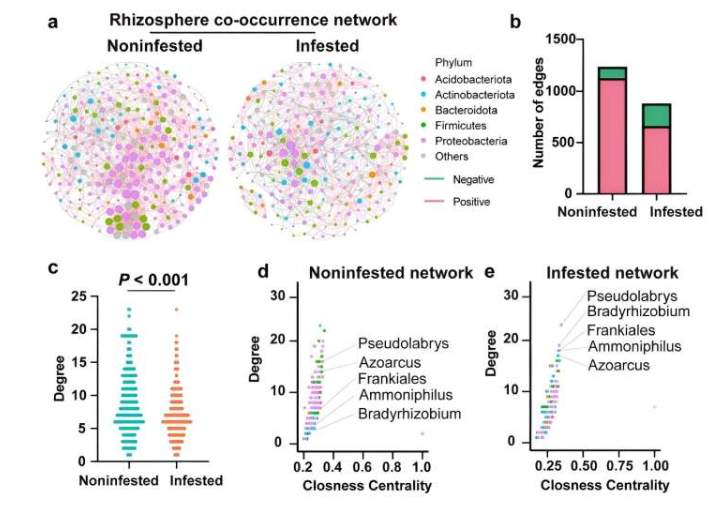
Many such studies as the one indicated below A sign of possible plant intelligence could be that plants can communicate Plants appear to communicate with microbiota in soil https://phys.org/news/2024-07-hidden-allies-root-microbiota-leaf.html Measurable possible evidence of this The relationship between the plant and microbiota is autonomic or symbiotic? A very small, tentative and possible step towards establishing plant communication. Observational evidence abounds that plant may be capable of communicating. More empirical evidence to come when science starts taking the subject matter more seriously. Respectfully, this is above my level of comprehension. Disagree; thoughts modifying brain structure.
-
Thank you for being patient with me! 1-I disagree that something beyond physicalism is beyond science. Any lack of objectivity is not a "flaw", but a "factor" to contend with in science. Science is doing a good job at alleviating this "flaw". I am not dismissing science on the grounds that it cannot attain perfect objectivity. 2- Yes, I understand what constitutes scientific evidence and my "opinions" as you call them are what I consider interpretation of evidence. 3- Not several people, but several scientists looking at the same data as myself and seeing something else going on. And I reiterate a minority view, but nonetheless a view. 4- Agree 5- Evidence: information, facts or data supporting (or contradicting) a claim, assumption or hypothesis. Like this one which appears to show that goldenrod plants demonstrate a form of intelligence by adapting their responses to herbivors based on the presence of neighboring plants and environmental cues, challenging traditional definitions of intelligence. https://www.tandfonline.com/doi/full/10.1080/15592324.2024.2345985 There are many such studies that appear to "challenge" our current understanding of nature. 1- The definition is not mine, but one often provided by those in the business of defining the term. 2- A lot of ourthoughts, specially those based on evidence, are very-very objective though; they are just not perfectly objective 3- In what sense am-I contradicting myself? 4- Out of all of the scientific philosophers that I consulted, none claimed that perfect objectivity existed. However, some scientists do believe in perfect objectivity. 5- I agree that there is possibly some kind of a scale of objectivity; and for scientists, mostly dependent upon evidence. 6- And I agree that it is not as simple as that; but perfect objectivity is challenged by philosophers, apparently objects cannot be detached from subjects, and as you state, subjective and objective experiences cannot be unentangled from one another.
-
1- My point is "what if" nature has more than space, time, energy and matter to offer? Do we not investigate it, because it is beyond "set" parameters? And I raise the "what if" not just to do so, but because of recent findings that, I contend, do not square well with a physicalist interpretation of the world. I know too little of the mathematical model of nature to determine whether or not it is amendable to more than properties of matter and radiation and functions of space and time. 2- With some of the more recent research findings, I respectfully beg to differ on your views about mind. 1- I disagree with your statement 2- Have you ever heard that science is based on objectivity?.....that the pure sciences are "objective" while applied ones, much less "objective"?. 3- Precision - "If the world was a purely objective object, then there would be nothing else left to explore beyond the objective realm. So, cro-magnon person would not have understood quantum mechanics and would have to find that out. 4- As stated in a previous post on this thread - "To me, the best borrowed definition is that objectivity means something that presumably exists independent of the subject's perception of it." 5- I present evidence and you say it is not! 6- My vague dissatisfaction is based on evidence and my dissatisfaction is shared by many that I have referenced, have looked at the same evidence and concluded as I did, that maybe something unconventionnal is going on. 7- What is your definition of evidence and what disqualifies my "evidence" as not being evidence? Got it all this time.
-
While applying the principle of methodological naturalism and without supernatural intervention, "what if" science brings us beyond space, time, energy and matter? And what is that "what if" if there is a "what if" can be dealt separately in another venue than science. I am being very careful here, because I am supposed to bring this up only in the Speculation section of the forum, but this is my contention with mind. That there is something more than a piece of brain involved in the mental transaction. Or the thing with individual ants having a mind of their own. Or plants having it too. I will go no further, because of what I just stated. I will only add that physicalism is maybe what is holding back some from contemplating other avenues for mind, ants and plants.
-
1- I do not request nor require "complete objectivity nor "demand an ideal system". It is what it is, but science seems at times to give the impression that perfect objectivity is attainable and that science is the one and only "ideal" system at contemplating reality, 2- If the world was a purely objective object, then there would be nothing else left to explore.
-
Good question; need to think about that one.
-
Not only does perfect objectivity not exist, but that "some situations are not amenable to the objective/subjective classification". The boiling point example makes this very clear and your definition is in line with this. As for my own definition, I believe that it goes in the same direction as it stipulates that there is no independence between object and subject. Am-I correct in my statement that this makes our world less predicable, thereby less "clockwork-mechanical"? I disagreed that "I" was demanding an ideal system. "I" am not demanding an ideal system as there is no such thing as an ideal system in the real world. We "agree that perfect objectivity in science is not possible in practice." We agree that, "imperfect though objectivity in science may well be, it has worked fairly well up to now" Agree "that there is bad science out there." And very happy to hear you say that science can be done without the claim that "we live in a materialist-mechanistic world" I have been arguing this from the very beginning. "Some (many)" take what they conceive as science's apparent objective and overall perfectibility as a sign that we live in such a world. I am not even denying that space, time, energy and matter exist, which would be foolish onto itself, but that there may be more to the story than that; and that limiting our scope of the world to a contextual materialist-mechanical worldview is unnecessary and even harmful in keeping an open mind about things. As for methodological naturalism, I agree that religious commitments have no relevance within science, but religion has had an impact, both positively and negatively, in the world, and this cannot be denied. As for physicalism, I should have used it instead of materialism. So you are equating precision to objectivity and stating that some sense of objectivity "can be achieved by avoiding trying to do too much in the same equation"? My neophyte-generalist nature of mine would also would push things further and state that science is indeed not as an exact science as some might make it to be. And that this has implications on the nature of science as a whole and/or the nature of the world as a whole. 1. The "2+2=4" comment came from another thread before my statement. 2. In this context then I agree that "there's no conflict between these positions". The most important point that I am getting here is the fact that multiple competing theories are used to study the reality of this world. I was not aware of that. 1- How is my statement a religious and spiritual one? the rest I agree. 2- I do not know if I have a bibble, but my quest is trying to answer if there is more to this world than what science tells us. 3- Indeed, there is no such thing as a stand alone star; I gave it as an example of something that is getting close to being stand alone 4- A bigger segement of it "PERCHANCE he for whom this bell tolls may be so ill, as that he knows not it tolls for him; and perchance I may think myself so much better than I am, as that they who are about me, and see my state, may have caused it to toll for me, and I know not that. The church is Catholic, universal, so are all her actions; all that she does belongs to all. When she baptizes a child, that action concerns me; for that child is thereby connected to that head which is my head too, and ingrafted into that body whereof I am a member. And when she buries a man, that action concerns me: all mankind is of one author, and is one volume; when one man dies, one chapter is not torn out of the book, but translated into a better language; and every chapter must be so translated; God employs several translators; some pieces are translated by age, some by sickness, some by war, some by justice; but God's hand is in every translation, and his hand shall bind up all our scattered leaves again, for that library where every book shall lie open to one another. As therefore the bell that rings to a sermon, calls not upon the preacher only, but upon the congregation to come, so this bell calls us all; but how much more me, who am brought so near the door by this sickness."
-
I am not good at riddles, so I will keep it simple in the hope that I do not look too foolish in my answer: 15 high Street provides some objective information while Anytown provides less. Science wants to transform Anytowns into 15 High Streets. To me, the best borrowed definition is that objectivity means something that presumably exists independent of the subject's perception of it. A stand alone star is an objective entity until someone starts measuring it and determining what the measurement results mean. Object dependence of subject opens the door to bias and the main bias for me is the interpretation of science that the world is a meterialistic one; that I guess is where I lose everyone except me. Thanks for the +1, but I am not doing very well in conveying my frame of thought. Perfect objectivity is an ideal system, but both perfect objectivity and ideal systems are unattainable in this world. You are transforming Anytows into 15 high Streets (see above) and checking for high precision through observation. Then, what is the perceived meaning of all of this? When you go down this path, you create a dependent link between object and observer. Note: I may very be well out to lunch with what I am saying, but I can assure you that all of this thinking is giving me a big headache.