
grayson
Senior Members
-
Joined
-
Last visited
Everything posted by grayson
-
I heard of Hagoromo chalk, and how good it is. I wanted to make something like that. My idea was charcoal and chalk mixed together to create a smoot, doesn't get on your hands, material. The marketing campaign is for another time. But what else can I put in there? the idea is to make a batch for 10 bucks (I can get charcoal at home, and seashells are cheep, and contain calcium carbonate in them)
-
Honest mistake. Kept seeing the e^pi*i +1 = 0 and mixed it up
-
Is i - i 0? how do we know that epi*i=0? what would a sigma notation with an upper limit of i look like? Is my "take this with a grain of salt" topic dead?
-
I need to know more about complex numbers. @joigus I am assuming the equation had something to do with Euler's formula, but Idk
-
I am not the best at trigonometry. And I need help solving inverse trig functions. Can someone help me? You can also head over to take this with a grain of salt. I need help over there
-
wow! I had no idea there was a relation between complex numbers and this problem! I am not the most profound person at math. I am not an actual mathematician. I just do it for a hobby. I need to learn more about complex numbers. But I am trying to improve my idea. I just recommend that you go over to my other topic "take this with a gain of salt" and help me with that. Thank you
-
here is my algebraic equation that not even symbolab solver could solve. The equation says that the x root of x equals 100. So what does x equal? Just a brain stumper for ya'll
-
Wow, very funny okay, I have way more tricks up my sleeve. @studiot After "Analysis" of the math section, you reign supreme. So, read this topic. Then please help me with this. Okay, number one, what happens when you raise something to the power of an irrational integer? what does addition look like? what about division? (I would think it is just the opposite of multiplication but without the negative thing. (still positive)). I am also talking to you @Genady Oh, my giant spaghetti monster. Can anyone help me?
-
-
@Genady @TheVat Literally anyone! I need help with this!
-
Also, @pzkpfw Idk if when you mess around (as in change) the r-number if it should convert to a normal number or stay rational
-
Here, I will show you: any number between -1 and 1, instead of converting to positive, you convert to negative, and instead of converting to decimal form, you convert to integer form (make sure you pay attention how many zero's are after the one. It might not matter in regular math, but it does here) so if you have 0.102 that is 0.10 * -10. Get it?
-
Okay, I will answer your question @pzkpfw. The R-integers (short for rational integers) don't always have to be integers. They just have to be anything 1 or greater (nothing between -1 and 1) I came to this realization after trying to find sqrt(-2) But sqrt(-1) is equal to -10 because, how I explained -102 Is equal to -10 *0.10. sqrt(-2) is equal to an irrational number I think (I am not the most profound mathematician). So back on topic, if you want to convert it to a semi-real number, you can just say it is (n+i - 10). Which means 1 is equal to i + 12. So now that I have figured out how to convert it into a number at the store, with some proof that it is a complex number; I hope that is good enough explanation Another thing is if we take a fraction in-between -1 and 1. We might get undefined. BUT I think to fix this, we can make it inverse. Let me explain. 0.12 is equal to 0.1 times -1. Now, by averting all of the laws, we can make sense that if we have a number between -1 and 1, we can turn it back to an actual rational INTEGER (which in this case means any number but that) so a rational-ratio is Just averting the laws of rational-integers
-
Thank you for the feedback. The reason I created this is because I am trying to figure out the Riemann hypothesis. So I created this system to help "solidify" complex numbers. Thank you I need a couple things. I know what happens when you multiply them, but what happens when you add them? what happens when youtake something to the power of a r-number? what happens when you add them. I wan't to see if you can do anything with them. But I need help first I upvoted your comment too. I don't want to argue.
-
Okay, I know that the definite integral is used in finding the "AREA UNDER A CURVE" And there is also maxwell's electromagnetism equation I think. I know that there is a lot of examples, but how did they all find out how and why to use them? Sorry, I meant indefinite
-
I have this personal counting system to help understand complex numbers and I want you to help me improve it. remember, this is not actual math, And I just made it to make sense of complex numbers. Here is what it is. they are called rational integers (don't get mad) So, for short, R-Integers, are just like actual numbers, but they are also complex numbers. They just work a bit differently from real numbers. So first, the way to write them is with a line under the number. So, r-1 would be 1. They are the same as normal numbers but multiplication is different. What you do is when you multiply them, you keep the first number the same, but the numbers after that, they are converted to decimal (so 31 would be .31). So 10^2 is equal to 1. Second rule! no matter if they are negative or not, the other numbers you are multiplying by convert to positive. So sqrt(-1) i equal to -10. I don't want to start an argument, I wan't peace so just remember, this is my personal project. Tell me how to improve it. Don't spark fire also, i made a mistake. i is not -10, is is -102
-
Yes, but we can find an average
-
Yes, but in calculus, you are graphing a function. You can't just put in numbers and expect it to come out as a graph
-
Calculus is the study of change, not similarity Sometimes you get too CRAINIUS MAXIMUS Oops, didn't study that part Wait, I did. Hold on, I am asking for some continuous rate of change Beetween each of the numbers. It need to come out as one number some how Maybe average it? Sorry Thank you
-
11 12 54 69 72. those numbers have nothing to do with each other. But why did I put them on screen? I came up with an idea in my mind. What if we could take a random set of numbers, rearange them from lowest to highest. And find a sort of "Rate" at which they are changing. I am not speaking "Rate" In a literal sense. I just wonder if there could be a connection between those numbers. Idk why I though of this. I am going insane. But please help me with this
-
That is exactly what I did. You could call it a proof to einsteins proof. Instead of drawing an isosceles triangle, draw einsteins half-triangles of those triangles. Cut them out, and see how they match up to the triangle. You can also just use einstein proof and see that they are the same size.
-
Please, I have seen that a million times. Let me explain: Einstein's proof said that if you split a right triangle, both of the pieces (A^2 and b^2) would make c^2. Now if you do my proof, and einsteins proof, you will find that the triangles are the same size
-
Okay, to see the proof, draw a line through the triangle. (Einsteins proof) Than they will be about the same size
-
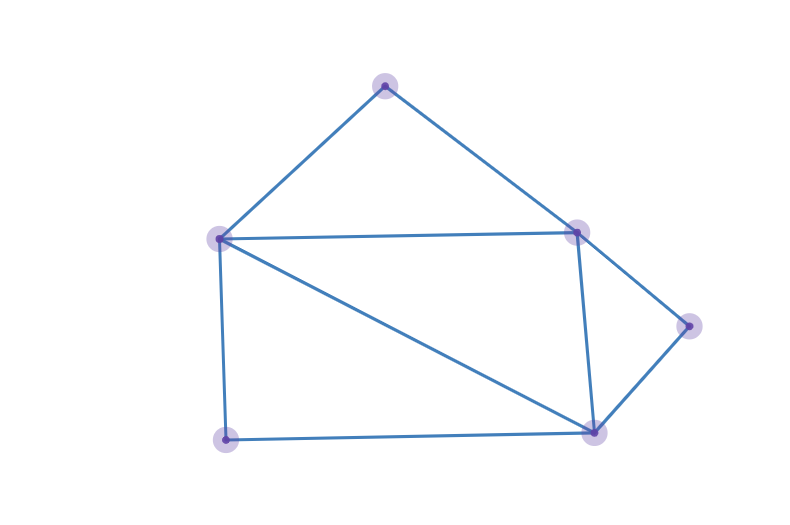
I can't tell if this is false or already exists, but I have come up with a proof for the Pythagorean theorem. Let me show you: If you can't figure out what this means. I will tell you. First, you draw a right triangle, and then another so it makes a square. Than you draw two triangles, which direct in the same position as the hypotenuse. Than the two triangles are equal to A and B. If you can't figure out what I said, Idk what to say. Take a harder look at the triangle. You can also prove this proof with einsteins proof.
-
Everyone knows how to find the area under a curve (I am joking) but I don't know how to find the area UNDER a curve. Chatgpt (After hours of arguing) told me that you have to define an upper limit, do the integral of that. with the same bounds, you find the area under a curve and you subtract them. I can't tell if this is true or not. Can you help me? And the reason I am doing this is to turn a curve into a ratio (under to over)