MasterOgon
Senior Members
-
Joined
-
Last visited
-
I made significant corrections and additions regarding the orbital mechanics in the hypothesis, so here is a very brief summary of it in case you don't have time to read 15 pages of this scribble: Hypothesis: captured rogue Planet Nine (P9) entered asteroid belt, then perihelion perihelion migrated towards the Earth's orbit, which increased the eccentricity of Mars and caused Mid-Pleistocene Transition 1–1.2 Myr ago Historically, comets have been interpreted as celestial signs of disaster. Myths from various cultures describe the same archetype of a destructive celestial object with a cyclical return. Marduk in Mesopotamia (Enuma Elish) – a shining body, a vortex-like tail, the destruction of the former order, causing storms and floods. Typhon/Seth in Greece/Egypt – a celestial aggressor who changes the course of the heavens, a "red fiery whirlwind" bringing droughts and famines. “Menacing” comet of 60 CE (C/60 D1t) , described dy Chinese and Romans as the cause of floods, storms, and earthquakes, observed for 135–180 days, north-south motion, from Cassiopeia to Virgo retrograde trajectory. All this match highly eccentric body 5 Earth masses, crossing the Earth's orbit every 3600 yr period. Mass 5 M⊕ from: The need for gravitational impact, volcanism for the tail formation, consistent with P9. 3600 yr period from: Younger Dryas (10 850 BCE) →??? → Piora Oscillation (3700 BCE) → Roman Optimum peak (comet 60 CE) →(10 850 + 60 CE) / 3 ≈ 3636yr. Confirmed: Heinrich chronology: matches within ∼50–450 years for H2–H6 Resonance hierarchy: 3600 yr fundamental (Heinrich-like), 1800 yr subharmonic, 1500 yr Bond/D-O climatic, 1200 yr weak, 2300 yr Hallstatt solar. Milankovitchycles: Precession harmonic: 18 000 / 3600 = 5 → 5:1 (precise direct harmonic resonance) Short sub-Milankovitch: 6 000 / 3600 = 5/3 ≈ 1.6667 → 5:3 (precise parametric quasi-resonance) Sub-Milankovitch: 12 000 / 3600 = 10/3 ≈ 3.333 → 10:3 Other parameters from: Comet 60 CE Monte Carlo orbital reconstruction: q : 0.8 − 2.2 AU e : 0.991 − 0.996 i : 50◦ − 130◦ Ω : 20◦ − 340◦ ω : 40◦ − 320◦ P9 constraints for anti-alignment with ETNO (Batygin & Brown, 2016, 2018): i: 54° maximum inclination of the main cluster, Ω: 94°-102° average longitude of the ascending node of the main cluster, ω: 318° average argument of perihelion of the main cluster. Retrograde inversion for stability (i ~ 50° → 130°, Ω = ~100° → 280°, ω = ~320° → 140°) yields the solution: P: ~3600, a: ~ 237 AU, q: ~1.5 AU, e: ~0.993, i: ~130◦, Ω: ~280◦, ω: ~140◦, which is within the constraints. The Middle Pleistocene transition (1–1.2 Myr ago) limits the lifetime of such an orbital configuration. N-body (REBOUND + IAS15, 3 Myr sim): Stability >1 Myr (meta-stable) Amplifies Milankovitch eccentricity (sawtooth e ≈ 0.05–0.06) Imitates abrupt Younger Dryas cooling, Mid-Pleistocene Transition (41→100 kyr shift ~1–0.7 Myr ago) : Candidate: aphelion projection near Wow! signal (λ ≈ 290°, β ≈ −5°) with orbital variability Full paper: https://doi.org/10.5281/zenodo.18823866
-01.thumb.jpeg.de443ac23b9e2b8ab73f8cc9770589e7.jpeg)
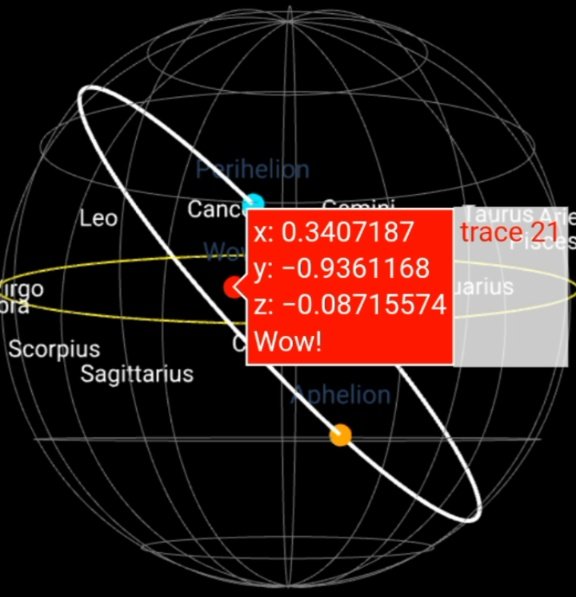
-01-02.thumb.jpeg.727c5f0b103c571c0e16449ff5b86255.jpeg)
-
I have previously tried to find out whether there is evidence or observations that the Planet Nine discussed here, in a very elongated orbit, can periodically approach the Earth. It's not like I found any convincing evidence, but here's what I came up. I added the paper, it's very long. Abstract: A model of Planet Nine as a massive body (3–4 M⊕) in a highly eccentric retrograde orbit (e ≈ 0.994–0.996, q ≈ 1 AU, Q ≈ 400–500 AU, T ≈ 3600 yr), presumably captured from interstellar space. The model relies on the clustering of ETNO orbits by dynamic traps and chaotic diffusion, the instability of their configurations, and the millennial scale. It also shows quasi- periodicity in climatic and cultural-historical markers (the Younger Dryas event, the Piora oscillation) consistent with a period of T ≈ 3600 yr. A historically confirmed possible observation of Planet Nine’s perihelion passage of 1 AU has been established, supported by the exploratory LLM reconstruction of the comet’s orbit observed in CE 60 for 180 days and documented in Chinese chronicles. Planet9-1AU.pdf
-
In a some way it reflects the essence
-
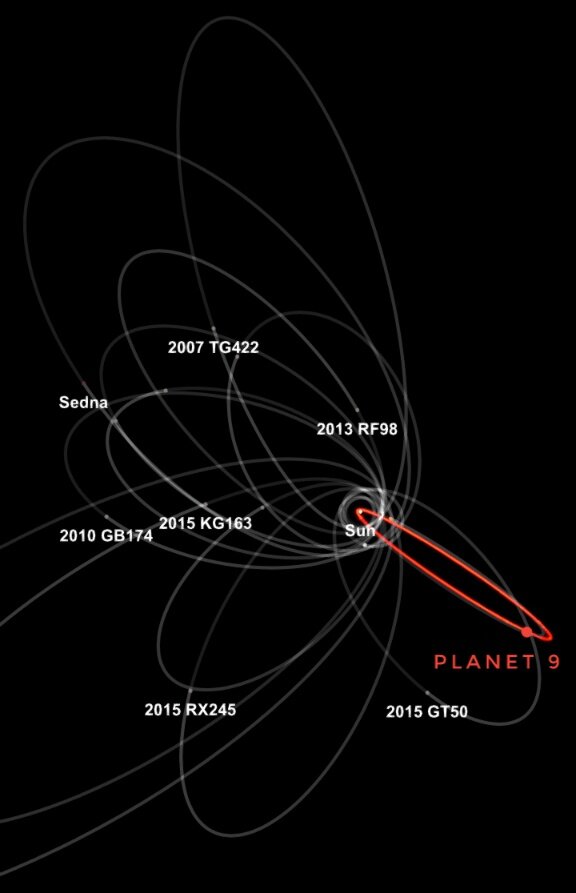
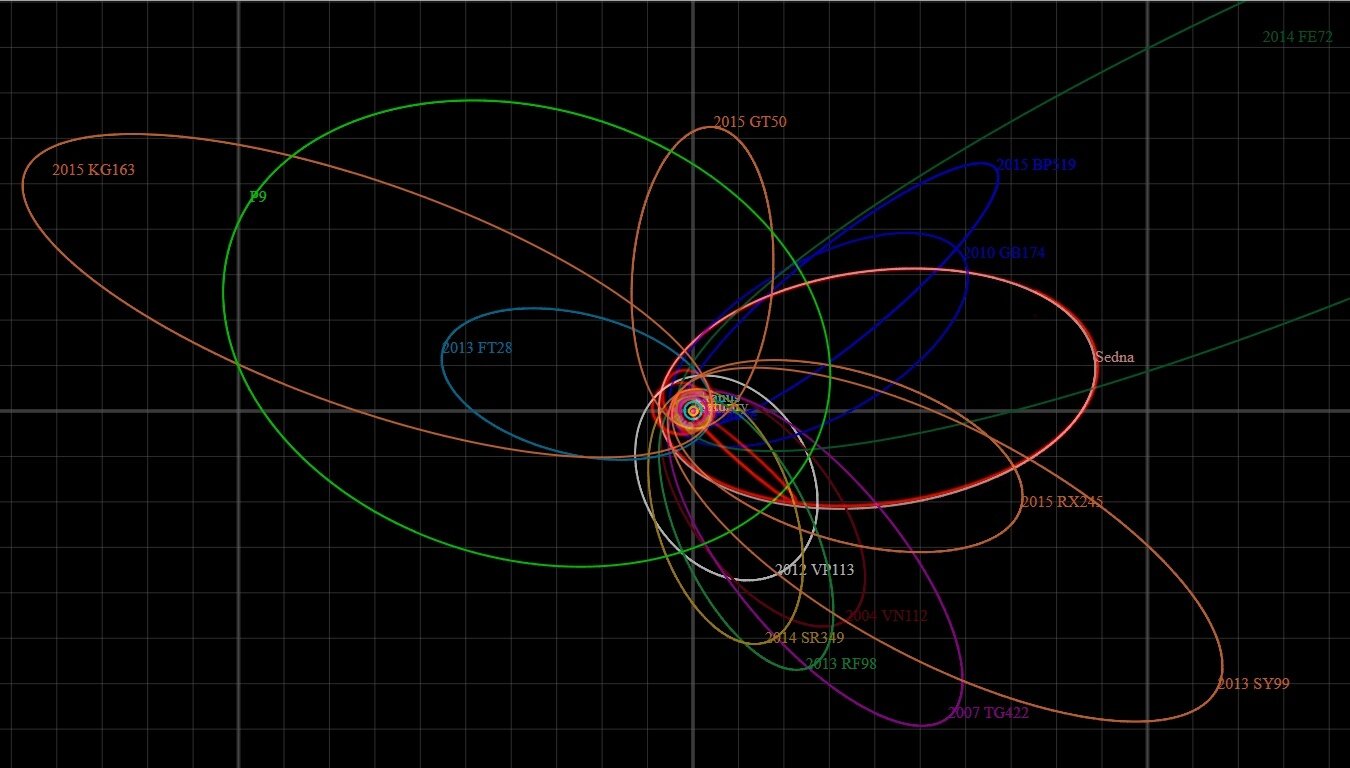
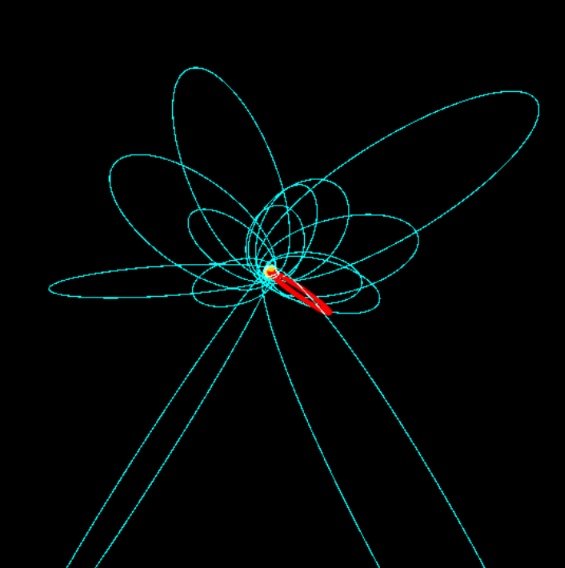
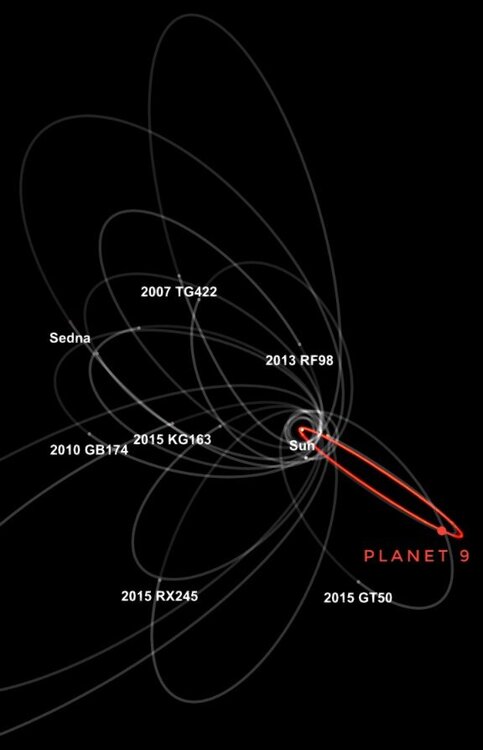
A hypothesis is proposed to explain the anomalous clustering of the orbits of trans-Neptunian objects (TNOs) by the comet-like orbit of Planet 9 with an aphelion of ~500 AU and a semi-major axis of ~250 AU. Passing through the Kuiper Belt, Planet 9 chaotically interacts with TNOs, leading to alignment, anti-alignment, and scattering and a decrease in the period of their orbits. But at the same time, alignment creates a closer interaction, which ultimately accelerates scattering. Thus, TNOs whose arguments of perihelion as a result of scattering are grouped in an area at ~180° opposite to Planet 9 have more stable orbits due to a shorter interaction time. And the most stable orbits of TNOs are those located closer to its perihelion, reaching the region of the planets of the Solar System. This is confirmed by improvised computer modeling in Sace Flight Simulator. Unfortunately, you can't see all the orbits at once, but some stages of evolution are screened separately. TNOs are initially given arbitrary circular orbits, then they become elliptical and disperse. Due to the limitations of the model, the dispersed objects exceed the escape velocity, but under certain conditions this would lead to the appearance of very elongated orbits. Based on observations, it was assumed that the period of Planet 9 does not exceed the minimum for extreme TNOs of 4274 (2012 VP113), which can be formed as a result of alignment or anti-alignment. In the image, the orbits of the UTOs are aligned in the plane of the ecliptic coordinate system. For Planet 9, the perihelion longitude is set at 146°, in accordance with the maximum value of 138+-8° (anti-alignment with the common argument of perihelion for clusters of 318+-8°) in the hypothesis of M. Brown and K. Batygin. This ensures the overlap of all orbits. Such a comet-like orbit is explained by the fact that Planet 9 may be a rogue planet, attracted by the Solar System in the distant past and influencing its evolution.
-
You Well, scientists also tried to explain this darkness with different hypotheses. But you are right, I am getting ahead of myself and it requires too many assumptions.I hope you don't mind if I create another topic to discuss the alternative orbit of planet 9 without reference to dates and religious texts.It can exist completely independently.
-
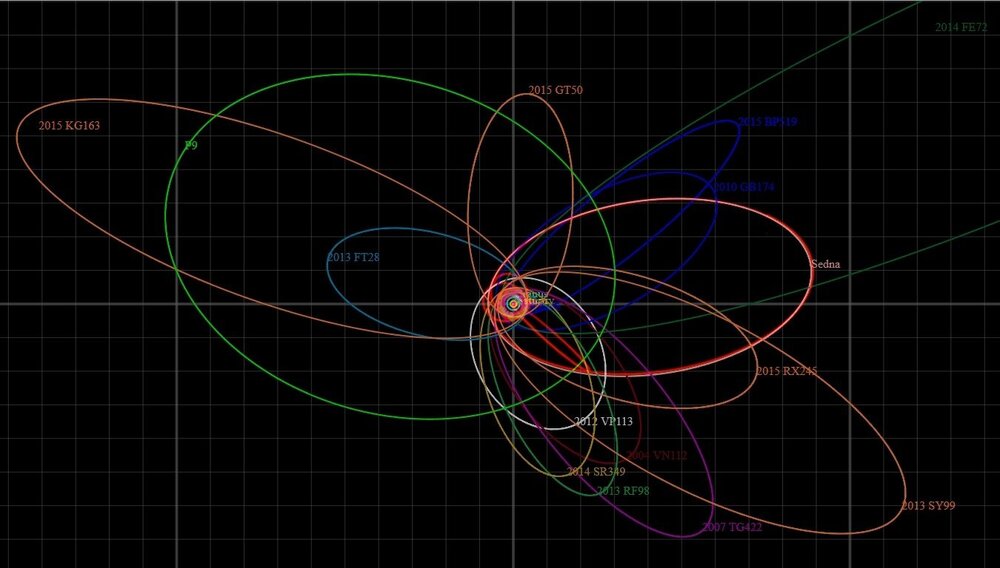
The comet tail contains a lot of gas, and it is possible only near the sun. But I am talking specifically about dust. Dust is less transparent. Could it be a hot body that throws out a lot of volcanic ash? Another option is artificial dimming of the sun to provide a temperature regime during the perihelion passage. Yes, I worked on the disk and I started with practical experiments. This concerned aerodynamics. And I succeeded in the sense that I found similar experimental studies in peer-reviewed sources that confirm my result. But I went further and gave an explanation of the effect. Many consider this impossible without knowing the intricacies of this area, but in advanced aerodynamics it is recognized. The effectiveness remains questionable. I admit that a three-hour eclipse is unrealistic. This is a new topic for me and I have underestimated the possibility of this. The speed of 41 km/s is calculated based on the orbital parameters. "Merse" is a typo, I meant Mars. The only exception so far is the dust trail. But since this has no scientific basis, let's not start from this and also from the dates and descriptions of the events, but only taking them into account, let's focus on the proposed orbit. Isn't this in itself a good explanation for the anomalies of the TNO as the center of their disturbances compared to planet nine? What is the basis for the less elliptical orbit of planet nine? If it formed naturally in the solar system, then what deflected it so much? My extreme orbit suggests the capture of an interstellar body, which is quite realistic and does not require additional explanations. An interstellar object at high speed pierced the outer layers of the solar system and carried away part of the UTO, which now rotate in an orbit similar to it. At the same time, the object itself is the center of their disturbances. What is wrong with this explanation?
-
@TheVat You are right, initially I couldn't get more than a few minutes of eclipse and I should have mentioned that. Two and a half hours is equivalent to two Jupiters, that's crazy. . Provided that the movement is in the direction of the earth's rotation. But I had an idea. The ancient texts talk about comets.The tail of a comet is larger than its body and it also has length.Perhaps the sun was obscured by a plume of gas. This creates a new crazy problem as the tail forms too close to the sun. But what if it's a volcanic planet that's throwing dust into space and leaving a dust tail behind it? It might not completely block out the sun, but it could create a darkening at a reasonable distance.
-
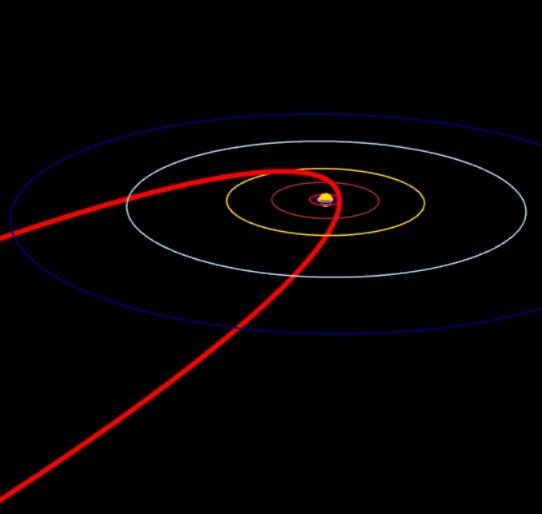
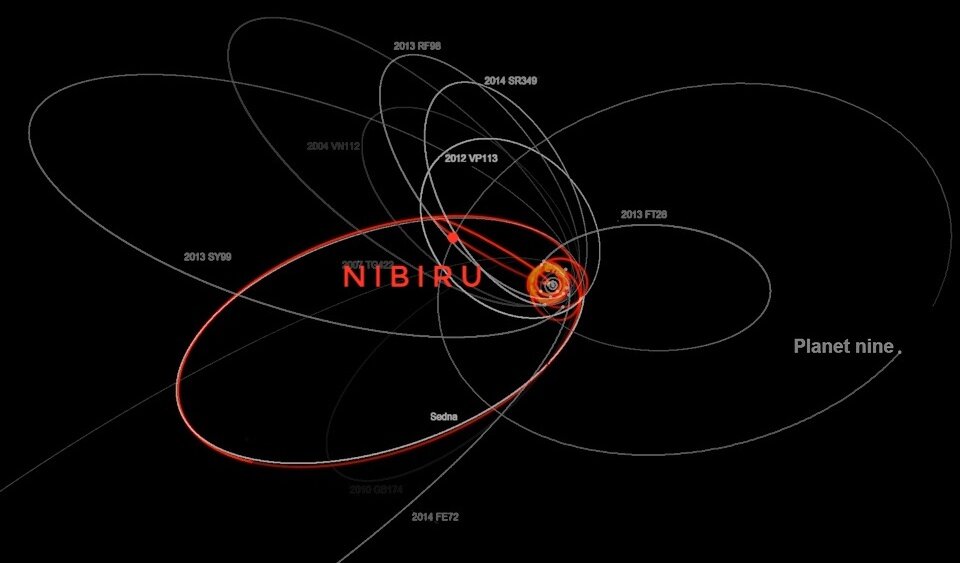
I made a gross mistake. At the vernal equinox point the longitude is 0, and I put 180 because I could not match my orbit with TNO because it is a view from the opposite mirror angle. And then the zodiac systems confused me completely and it tired me out. Here are the correct parameters and picture Period 3761 years Semi-axis 241.6 AU Eccentricity 0.9959 Perihelion ~0.99 AU Aphelion ≈ 482.1 AU Perihelion longitude 0° Orbital inclination 23.4°
-
True. But I'm afraid they won't listen to me. By the way, in Chinese astronomical records, there is a comet observed for a long time from December 55 AD to March 56 AD (about 113 days), and a comet observed in 60 BC.
-
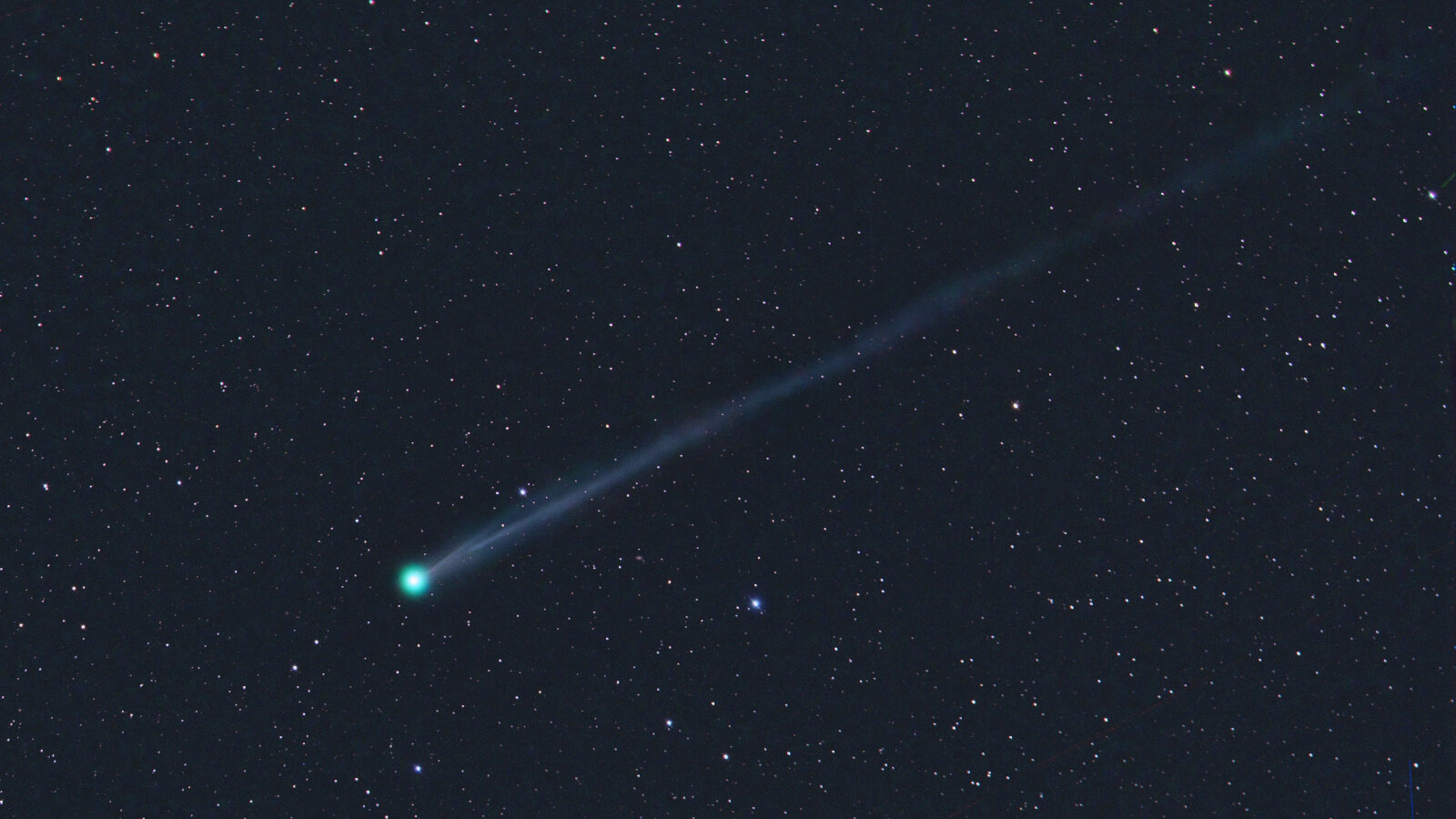
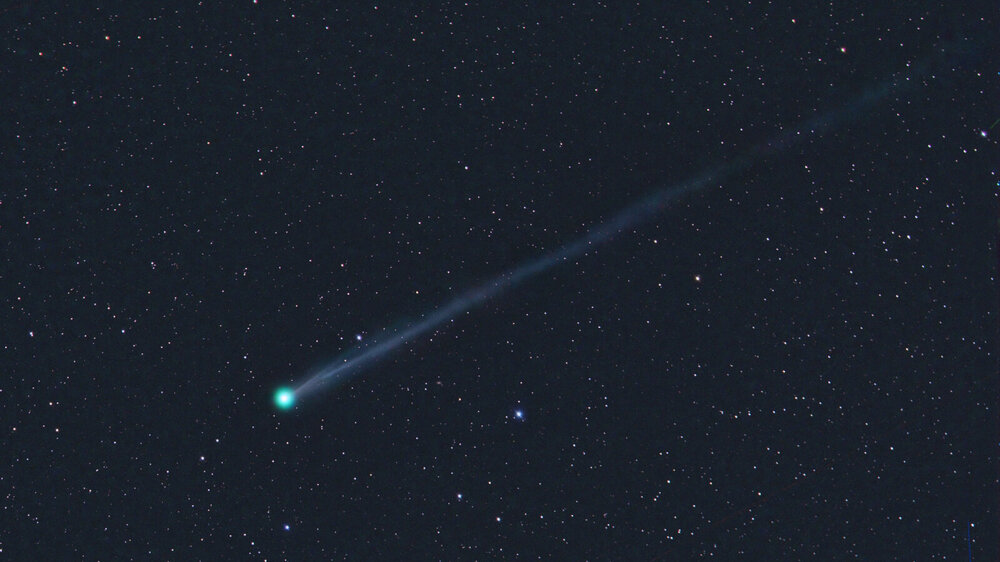
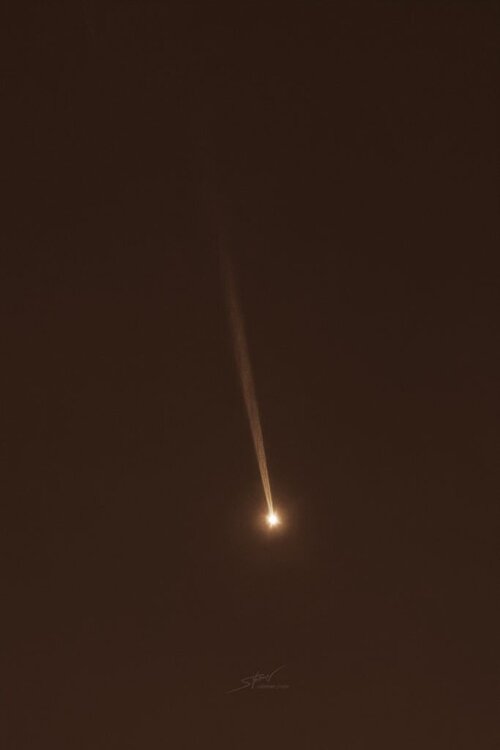
In 66, Halley's Comet was observed, but comet visibility does not last a whole year. At the same time, Flavius also speaks of a star in the form of a sword, which is very similar to the sodium tail of Mercury (photo), which is somewhat different from the type of comets. Perhaps in the copies and translations of his texts that have come down to us, an error was made and the year of visibility refers to a planet with a tail resembling a sword.
-
I mean that myths as a reason for research can be scientifically confirmed. At least partially
-
This all requires clarification, it is difficult for me to make precise calculations, and even more so it is variable. Perhaps it was a transit, not an eclipse, or maybe the overlap is larger than the sun or just an exaggeration. I believe the size is twice or more than the Earth. The speed at perihelion is 41 km / s. Observations create a problem because there are none during that period, although in less than a year it should have been close. The time of crossing the solar system is known - half a year crossing the orbit of Mersa (2 times) 2 years orbit of Jupiter. The only thing that can be connected is the mention of celestial objects by Flavius, dating back to the time shortly before the Jewish War of 66-71: “They did not believe in the clear signs that foreshadowed the coming destruction, and did not ponder them. Like deaf and blind, and without mind, they missed the clear voice of Heaven, which repeatedly warned them. These were the signs. A star appeared over the city, having the form of a sword, and for a whole year a comet stood. Just before the fall from the Romans and the declaration of war, when the people gathered for the feast of unleavened bread, on the eighth day of the month of Xantica, at the ninth hour of the night, the altar and the temple were suddenly illuminated with such a bright light as in broad daylight, and this bright radiance lasted about half an hour.” And a strange parallel with Jesus: “Before sunset, over the whole country, chariots were seen racing in the clouds and armed detachments surrounding the cities. Then, on the feast of Pentecost, the priests, as they claimed, having entered at night, according to the custom of the service, into the inner porch, first heard a kind of bustle and noise, after which many voices were heard: “Come on, let us leave here!” The following fact is even more significant. A certain Joshua, the son of Anan, a simple man from the village, four years before the war, when deep peace and complete prosperity reigned in the city, arrived there for that feast when, according to custom, all the Jews build tabernacles to honor God, and near the temple he suddenly began to proclaim: “A voice from the east, a voice from the west, a voice from the four winds, a voice crying over Jerusalem and the temple, a voice crying over the bridegrooms and brides, a voice crying over all the people!” Day and night he cried out the same thing, running through all the streets of the city. Some noble citizens, vexed by this ominous cry, seized him and punished him with blows very cruelly. But without saying anything in his own defense, or especially against his tormentors, he continued to repeat his former words. The representatives of the people thought - as it was in reality - that this man was guided by some higher power, and they brought him to the Roman procurator; but even there, being torn to pieces with whips to the bone, he uttered neither a plea for mercy nor a tear, but in the most pitiful voice repeated only after each blow: "Oh, woe to you Jerusalem!" This can be interpreted as a trail of captured debris or an error in the dates. If the dates are shifted, 33-66 is also suspicious, then this corresponds to +-1 year of relative rapprochement
-
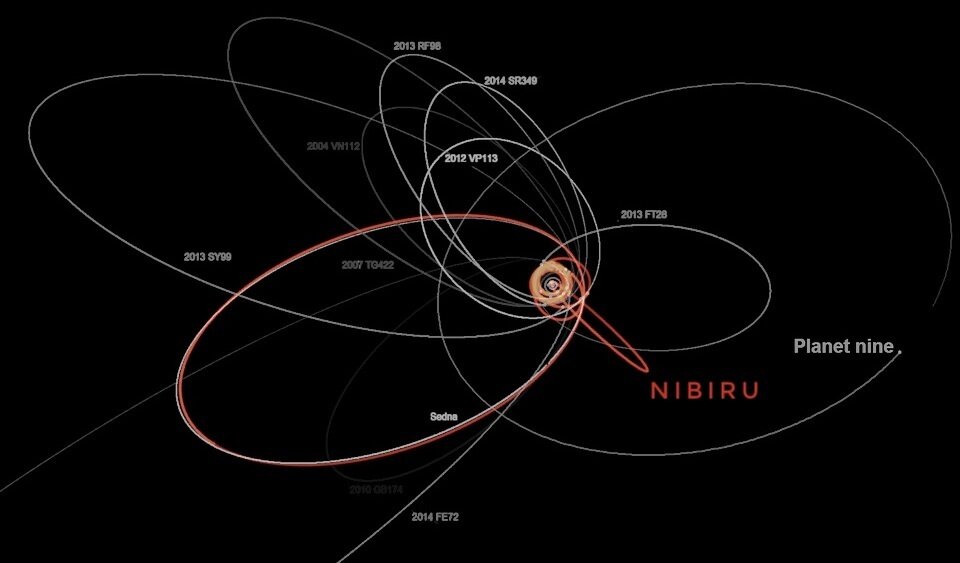
Based on ancient myths and hard scientific data, we will try to determine the feasibility of the scenario in which the eclipse at the crucifixion and the “global flood” were caused by an unknown celestial body in an elongated orbit, periodically approaching the Earth. The starting point will be the supposed solar eclipse during the crucifixion, then we will look at information from Sumerian sources and compare it with climate and TNO data to find the trace left by this body in history. The probable date of the crucifixion is considered to be April 3, 33, which is based on geological activity data confirming an earthquake in Judea during this period, https://www.livescience.com/20605-jesus-crucifixion.html which in turn may indicate a short-term gravitational influence of an unknown celestial body on the Earth. “From six o’clock darkness came over the whole earth until nine o’clock. And the curtain of the temple was rent in two from top to bottom, and the earth shook, the rocks were scattered…” The long duration of the eclipse, from 12:00 to 15:00 according to modern concepts, may indicate that the unknown planet moved synchronously with the Earth in the plane of the ecliptic or at some angle, crossing it at the moment of the eclipse. The duration may also indicate the impressive size of this body, and the fact that it was at a significant distance from the Earth, which gave a small angular velocity. An important condition is that it was not observed from the Earth either before or after the eclipse, which means that it was always on the side of the Sun, the name of a very elongated orbit. All this gives us a fairly narrow framework to approximately determine the perihelion of ~0.9 AU and its longitude of 192.82°, as the position of the Earth on April 3, 33. And if we track the direction of the aphelion of this orbit, we get right into the region of trans-Neptunian objects (TNO), which makes us think more seriously. But first, let's try to find the period by tracking the previous approach. We will allow ourselves to assume that the Babylonian cosmogony, especially the famous poem about the creation of the world, does contain retold information about a certain celestial catastrophe that the Sumerian civilization experienced at the dawn of its existence. We will not go into the details of the interpretation due to its complexity, but only assume that the antediluvian period and the period after are divided precisely by this event. The earliest mention of a flood in the myth of Ziusudra (c. 2900 BC) tells us that the last kingdom before the flood was in Shuruppak, which according to modern data falls at the end of 4000 BC. As the myth says: "Then the flood passed over the earth" "After the flood passed, and the kingdom came down from heaven, the kingdom was in Kish." A major flood occurred in Shuruppak and some other Sumerian cities (Ur, Uruk and Kish) around 3200-3000 BC. At a depth of 4-5 meters, the Schmidt expedition discovered a layer of river sediments made of clay and silt. The Pior oscillation, a sharply onset cold and wet period in the climatic history of the Holocene from 3200 to 2900 BC, dates back to approximately this period. The spatial extent of the change is unclear; moreover, it does not appear as a major or even identifiable event in hemispheric temperature reconstructions. In the Middle East, the surface of the Dead Sea rose by almost 100 meters, then dropped to levels close to today's. Some commentators have linked this climate change to the end of the Uruk period, the Dark Ages associated with the Gilgamesh flood, and the Great Flood of Genesis. The causes of the Piora Oscillation are a matter of debate. Ice cores from Greenland show an increase in methane and sulfates around 3250 BCE, suggesting a catastrophe, either a volcanic eruption or a meteorite or asteroid impact. https://ru.m.wikipedia.org/wiki/Пиорское_волокнание In various Old Testament traditions, the year of the flood is close to 3250 BC. According to the Hebrew text, the Great Flood began in 1656 from the Creation of the world (Adam). According to the Byzantine era, this corresponds to 3853 BC. Some Septuagint codes give 3247 BC. The beginning of the Jewish era is also close to 3761 BC. According to ancient Armenian legend, in 3669 BC, the patriarch Noah founded an ancient settlement in Armenia after the flood and called it "Nakhichevan" (Noah's original place of residence). This sudden and possibly catastrophic climate change could be the result of a gravitational perturbation due to a brief encounter with a hypothetical planet in an elongated orbit. Its period can therefore be taken as 3250 years or one of these dates. We can now visualize the orbit. To do this, we use a scaled-down version of Space Flight Simulator with realistic orbits and Sedna as a reference. We then superimpose this (highlighted) on the orbits of the TNOs (pic.) The result is a clear trace of a past impact and a troublemaker that broke through the outer belts of the Sun with systems lurked behind the sun in an extreme orbit. This suggests a direct connection between the tilt of the earth's axis and the tilts of the orbits of TNOs in the range of 21.56° - 24.05°. Perhaps the version about the planet Tiamat in the asteroid belt, which became the Earth, is also true. It is noteworthy that the best resonances are given by the period of 3761 years. Resonance with Pluto: 91:6 (deviation 0.17%, probability 35%) - one of the most accurate among all the periods considered (3669, 3853, 3247, 3274 years). Resonances with TNOs: Three exact resonances with a deviation of <0.5%: 2013 RF98: 11:7 (0.09%, 25%). 2007 TG422: 19:7 (0.16%, 20%). 2004 VN112: 31:20 (0.24%, 25%). Additional resonances with TNO: 2013 FT28 (5:4, 0.41%, 25%), 2014 FE72 (39:2, 0.51%, 20%). Resonances with Neptune: 23:1 (1.05%, 40%). 45:2 (1.15%, 35%). Less accurate than the period of 3853 (0.46%), but comparable with others. Therefore, we will include 3751 in the parameters of a hypothetical planet, which can rightfully be called Nibiru. Period 3761 years Semi-axis 242 AU Eccentricity 0.99 Perihelion ~1.0 AU Orbital inclination 23.4° Longitude of ascending node ≈192.82°° “Let his name be Nebiru, who holds the middle, Let him fix the paths of the stars in the sky, Let him feed all the gods like sheep.”
-
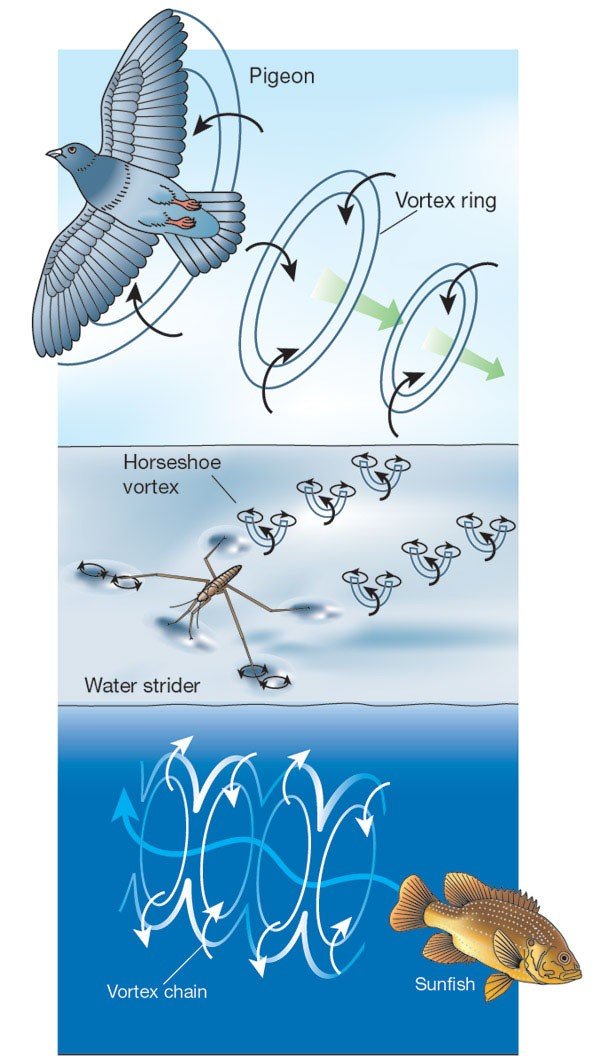
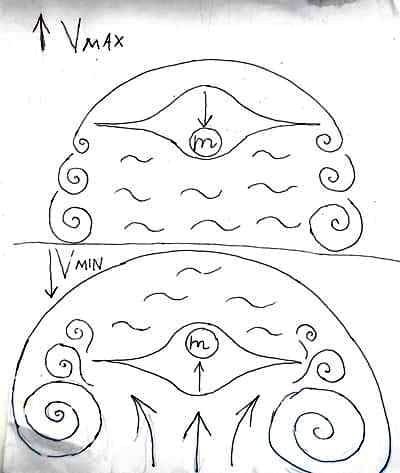
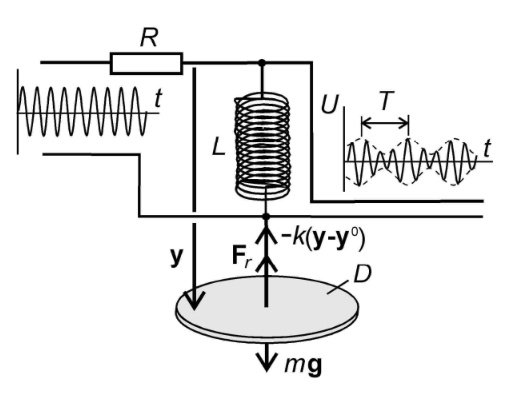
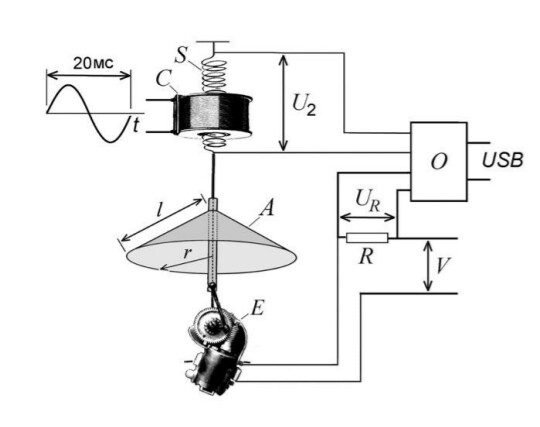
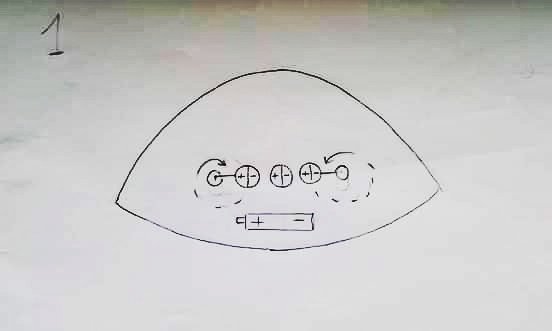
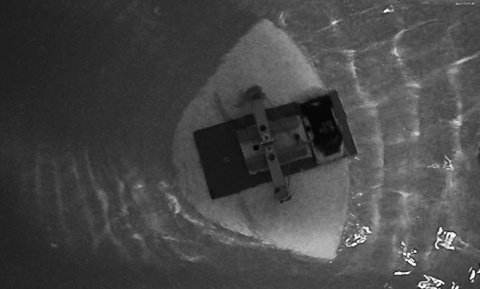
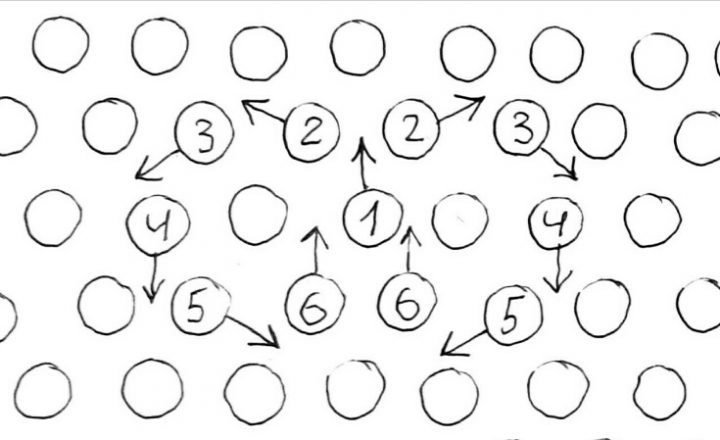
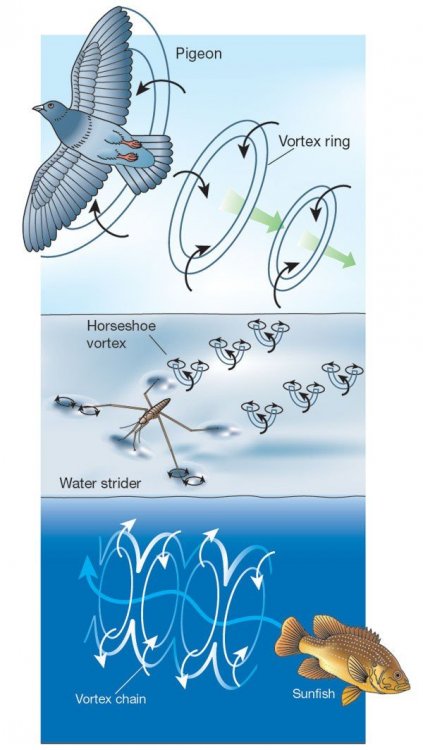
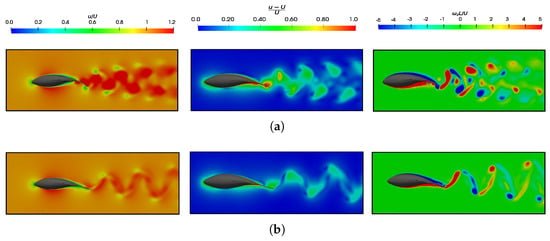
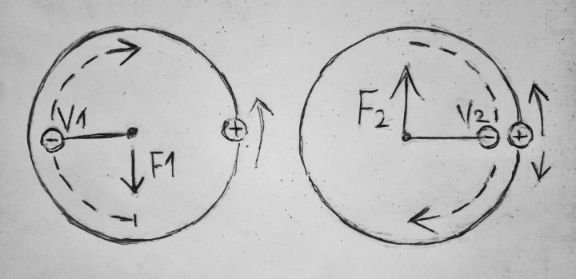
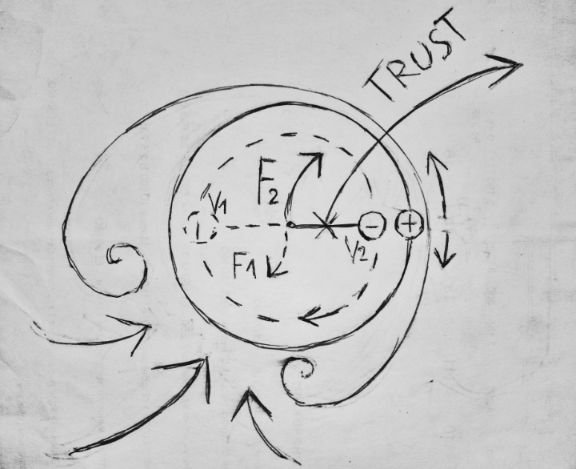
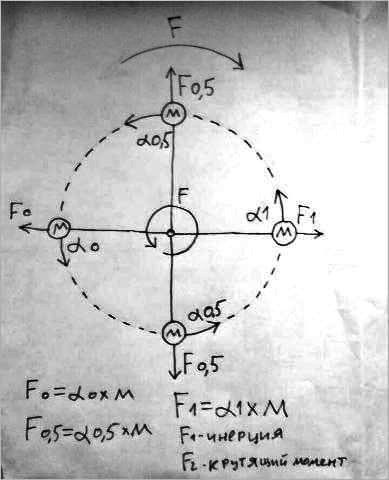
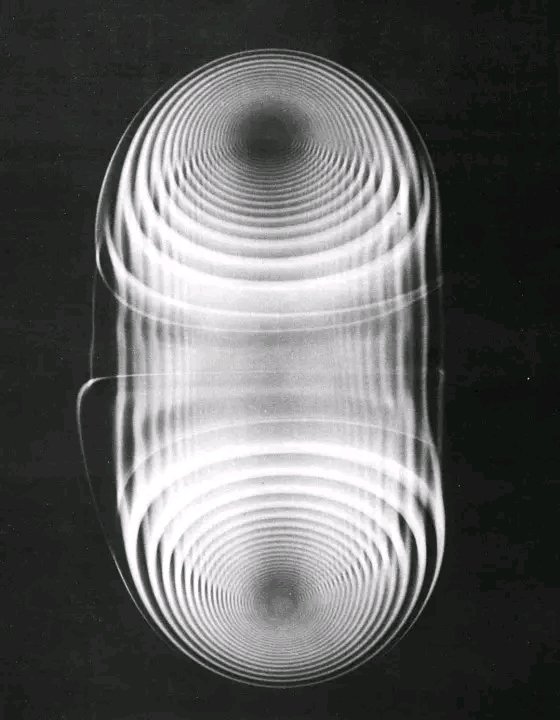
Vibroboat hydrodynamics. The phenomenon that makes the vibroboat move is poorly understood. And from what I know, the most in-depth study on this topic is mine. I posted it here more than once, but the topic was closed due to lack of confirmation. But now I was able to find two other studies that confirm it. First, pay attention to the experiment in the video below. Here, the plate rises up and stops. At the same time, the turbulent vortex that follows it catches up with it and crashes, reflecting to the sides and expanding. This gives the plate an impulse. https://youtu.be/GA2aj0JWuZA?si=1KPOQD9jG7fI1UH6 I can also provide a link to the Aerospace Engineering subreddit where this was posted here, so that you can see that no one denied it, but also did not give a detailed explanation. https://www.reddit.com/r/AerospaceEngineering/comments/1ak5m0s/can_anyone_explain_or_name_the_aerodynamic_effect/ The logical conclusion is that if the plate goes down at a lower speed than up, then the turbulence formed above it, and therefore the momentum imparted to the plate, will be less. And if we imagine a boat as a plate that oscillates perpendicular to the plane, quickly in one direction and slowly in the other, the resulting force will create a thrust in the direction of the fast oscillations. In confirmation of this, there are two studies in Russian sources concerning vibration-based aircraft. Since access is via VPN, I have attached the article files below. A translator will be required. Gerasimov S.A. ATTACHED MASS AND AERODYNAMIC DRAG IN OSCILLATION DYNAMICS // Fundamental Research. – 2008. – No. 7. – P. 10-13; https://fundamental-research.ru/ru/article/view?id=3433 Quotes: “The experimental setup is fairly simple and is essentially shown in Fig. 1. This is a simple RL circuit in which the role of inductance is played by an elastic element (spring) L, and the resistance of the resistor is about 1 kOhm. The spring stiffness coefficient k=9.6 N/m, the attenuation coefficient of harmonic oscillations (the reciprocal of the time interval during which the amplitude decreases by e times) is no more than 0.005.” “The following conclusion turned out to be more than unexpected. Traditional experimental data on aerodynamic drag coefficients are not applicable to describing oscillations of extended bodies. In this case, the oscillations occur with a drag coefficient almost six times greater than the C value obtained by blowing the plate in a wind tunnel.” According to the effect observed in the video, each time the plate finds itself at the extreme point of oscillations, it receives an impulse from the vortex following it, which leads to an increase in drag compared to blowing in a wind tunnel. Gerasimov S.A. On experimental aerodynamics of an oscillator with an umbrella-shaped wing DOI: 10.17117/na.2016.06.02.208 Page 208. Citations: The drag force of the environment, acting on one of the bodies of the oscillating system, can create a lift force. To do this, it is necessary to ensure an asymmetry of the drag force. One of the ways to do this is to use an asymmetric wing oscillating in the vertical direction. There is an opinion that in this case the lift force should be directed toward the convex side of the wing. Careful experimental study shows that this is not always the case. The measured lift force created by a cone-shaped wing is significant, but in the opposite direction. Measurements of the energy losses needed to create the lift force are in agreement with this conclusion. It turns out that a wing moving with its tip up forces the air to go downward” “The most important thing is that as the frequency increases, an asymmetrical oscillator with the wing oriented with the tip up becomes heavier.” My explanation is this: because the setup was suspended on a spring, the cone and the motor oscillated as a single unit relative to the suspension, and as a whole they descended faster than they rose. Accordingly, the cone moved down faster than up. This asymmetry of oscillations created a thrust in the direction of the fast movement of the umbrella, i.e. downwards. The shape of the umbrella is of secondary importance. My experiment clearly demonstrated this result. Two oscillators similar to the model oscillator were installed on the boat so that they compensated each other's rotation and led to a rapid displacement of the boat's hull forward and a slow backward. This led to forward movement. The boat hull had a pointed nose like a cone, but when the engine thrust changed in the opposite direction, the boat moved with its tip backwards, which indicates that the shape was of secondary importance. When moving on water, a corresponding wave pattern appeared - short waves ahead in the direction of movement and long waves behind. https://youtu.be/PnTP0lYFCSg?si=P5t0SsxtqxQtcQ9q This can be explained by the fact that behind the boat or plate a rarefied medium is formed, which does not disappear immediately after the motion stops due to its inertia. Instead, a sharp collapse occurs with a delay, with the release of free thermal energy of the medium in the form of directed movement of molecules in a vortex. The flight of birds, the movement of fish and many other flying and swimming creatures are based on this. Many modern studies like this https://www.nature.com/articles/424621a consider the flight of birds as a kind of jet propulsion, during which they throw off vortices, and this creates thrust. This is similar to the principle described above, and these vortices are impulses of collapse reflected from the wing. My research on this topic was published in a non-authoritative, but still peer-reviewed Russian journal https://sci-article.ru/stat.php?i=1601957819 In view of the current situation, I published an English translation here https://doi.org/10.36074/2663-4139.17.01 In the end, in the Russian version of Wikipedia, the article Reactionless drive, in the section explaining the reason for the movement of this device, technically similar to mine, my edit was published, describing this principle of movement in a viscous medium. https://ru.m.wikipedia.org/wiki/Инерцоиды As for the boat with one rotor, its principle of movement is approximately the same as that of the boat with two. But it differs in more complicated movements due to the lack of compensation. The picture below shows a diagram of a boat with a pendulum in two positions. On the left, the pendulum is removed from the magnet and has a normal speed V1 per half-turn. In this case, the force V1 is applied to the axis. The stator rotates in the opposite direction, but this is significantly compensated by friction with water. On the right, the pendulum accelerates and slows down as it passes by the magnet. In this case, the average speed V2 on this half-turn is greater than V1. Accordingly, the force F2 applied to the axis is greater. The rotation of the body occurs in both directions at different speeds (the arrows are of different sizes), which is also significantly compensated by friction. In the next picture, the pendulum makes a half-turn at a speed of V2, creating a force F2 applied to the axis. In this case, the accelerating magnet of the stator moves towards the accelerating pendulum faster than it follows it when it passes by and slows down. Therefore, the common center of mass of the system, marked with a cross, shifts with the greatest speed in the direction of the arrow TRUST. The force vector changes in time and therefore this arrow is bent. During this, an asymmetric vortex is formed, which gives traction. Accordingly, when the pendulum makes another half-turn at a low speed, this vortex on the opposite side is blurred and its force is weaker. Article files 1 (1) (1).pdf na.2016.06.02.208(1) (1).pdf This does not contradict. An electron can be considered as a vortex. A vortex can also have the properties of a particle - have momentum and be reflected, being a structure localized in space. A vortex can be described as a rotor with orbitals. https://commons.m.wikimedia.org/wiki/File:Rotational_vortex.gif#mw-jump-to-license And it can also be considered as a three-dimensional standing wave, since it has layers of different density. In addition, a vortex can change its configuration like a harmonic as a result of external influence, like an atom at an energy level above the main one. You can see all this here https://youtu.be/oUSLfehZaIk?si=aaeyeMOh6tMoM44- Although the vortex is not an exact copy of the atom, similar vortex processes such as toroidal fields and magnetic loops exist in electromagnetism and the vortex can be a manifestation of these fundamental forces in the macro world. Regarding the AI text. I know that it can be manipulated. I deliberately tried to get from it the assumptions that I need based on the search results. 1 (1) (1).pdf

-
I will offer you a simpler experiment. Place your palm in the water and move it back and forth to create resistance. When moving backwards you will feel more resistance than when moving forward. This energy is taken from the water, it is its free thermal energy. This is explained by the effect of added mass. The asymmetry of the pendulum's oscillations, acceleration and deceleration, allows this to be used. I will need time to give a more detailed explanation, I can do this later.
-01.jpeg.40c44c7cc13897a27671b8c00b973dc4.jpeg)
-01-02.jpeg.4ac9d92a381378cd9e25aa9704d87c5d.jpeg)