
exchemist
Senior Members
-
Joined
-
Last visited
Everything posted by exchemist
-
In view of @swansont 's comments, perhaps it would be worth you checking and letting us know where your image comes from. The thing about the craters is odd.
-
Haha. He survived somehow but it was a sweaty evening and we went somewhere else the following night. I'm actually gradually testing myself to see if the intolerance to oysters that I picked up about 20 years ago has gone. I tried a couple at the Loch Fyne Oyster Bar the year before last and was fine. It wasn't a full allergic reaction I used to get, just nausea and diarrhoea. Suspect it was brought on by one in France eaten in summertime (they don't seem to worry about whether or not there is a R in the month) and then I found every time I had them I would feel lousy for 24hrs, so I gave them up. These things do sometimes pass. One of my brothers became intolerant to crustaceans for about a decade - but now he's fine again.
-
Yeah but this photo has clearly been faked, by er,er, the shadowy cabal of paedophile Illuminati Lizard People, er, in a secret unminuted meeting of the Bilderberg Group......[repeat and fade].......😆
-
Yes I read recently that it is now recommended to expose young children to small amounts of peanuts in order to prevent them becoming allergic later. (I remember a terrifying evening in Amsterdam with a work colleague who announced he had a life-threatening allergy to peanuts.........just as we were sitting down to dinner in an Indonesian restaurant! ARRGH!!! What a fuckwit.)
-
You could get a job at the Sirius Cybernetics Corporation. 😁
-
This seems to favour the Old Friends hypothesis and to distinguish this clearly from the Hygiene Hypothesis. In other words, early exposure of infants to a wide variety of non-pathogenic micro organisms is beneficial, but should on no account be confused with the popular notion in some quarters that catching childhood diseases is somehow good, which it emphatically isn’t. It seems to start with natural childbirth (contact with vaginal and faecal micro organisms from the mother), continue with breast feeding and then with playing outside on the ground, with pets or farm animals and so on. I also noted in passing that roasted peanuts are more allergenic than raw ones. (I’ve always rather hated roasted peanuts, as it happens, but love fresh ones. As a kid I used to eat the raw peanuts my grandmother had to feed the birds in the garden.)
-
You mean the EU, presumably. The UK is in Europe, after all 😉. (I submit herewith my entry for today’s pedantry prize.)
-
I was asking you about what information sources you were relying, when you spoke of information being available from countries of the former USSR. I suspect, you see, that the phenomenon you describe, of bloggers engaged by the state to promote the state’s viewpoints, does not really exist on a significant scale in Western Europe. In the US, I would have said the same until very recently, though this is changing under Trump, due to the power over social media wielded by people like Musk. Whereas in the former East Bloc, where for decades it was normal for the state to engage in disguised attempts to manipulate opinion, I can imagine this would be a concern people might have, causing them to make the effort to monitor it.
-
Yes I suppose that's true. Exhibit A might be the Pimlico District Heating Undertaking in London, which was built to use waste heat from Battersea Power Station, just across the river. When that closed, they had to build a separate boiler (coal-fired!) to run the system.
-
Maybe this volatile liquid is what @swansont had in mind with his suggestion about turbines. I would agree that if one can get a working fluid at ~100C, say, extracting heat from a chip at 120C, there is some chance of getting it to do some useful work, though perhaps not much better than the old atmospheric steam engines, pre superheating. One could certainly run a domestic hot water and central heating system if heat at 100C is available.
-
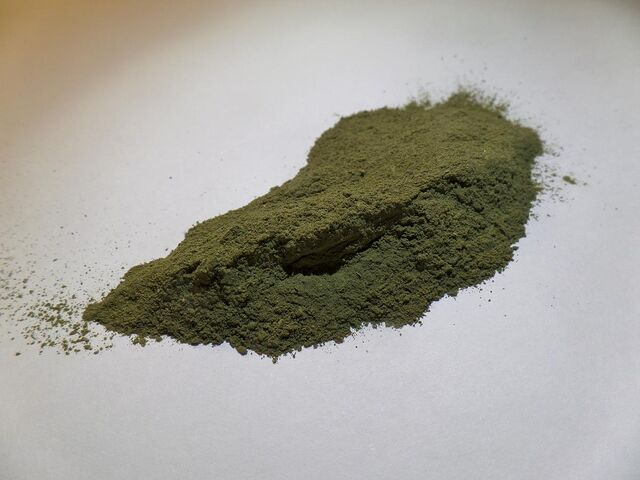
The picture I found was this: Whereas simple iron (II) citrate was indeed brownish grey-green:
-
I think you are the exploding thymus gland/spontaneous combustion guy.😆
-
Well citrate can chelate with Fe in various ways, so perhaps there is a bright green complex you can get under reducing conditions. I found a picture of a fairly bright green powder on the web, called sodium iron citrate, but could not find a chemical formula for it. You may well be right that exclusion of oxygen is the key, as Fe II oxidises to Fe III so readily. It will be interesting to see what happens to the colour when you expose it to the air.
-
Information from what sources, and how is credibility established?
-
Actually, after a bit of digging I came across this: https://electronics.stackexchange.com/questions/60273/max-operating-temp-of-ics. which suggests the chips themselves may be able to operate up to 125C. So then it's a question of what is the max temp of the coolant that carries the heat away from the chip. I assumed this would be air ventilation and that the liquid coolant would be used to cool the air, but maybe I'm wrong and the chips are in an oil bath or something. (Deep fried?😁)
-
I remain curious as to the temperature of the heat this system can provide. I don’t know but would guess computers would run at a maximum of about 50C. That’s barely enough to run radiators, let alone generate domestic hot water. There don’t seem to be any temperatures quoted. Can computer processors run at 70-80C?
-
OK, fair enough. But still the temperature difference above ambient won't be that much so it can't be very efficient.
-
Not turbines, surely? The temperature of the waste heat won't be high enough. Space heating is about all it would be good for, I should have thought. But certainly district heating would be feasible.
-
And now the suspected spammer in question has just run up the Jolly Roger: https://scienceforums.net/topic/135719-sfn-migrated-and-upgraded/page/5/#comment-1303754 And that’s after sleeping for 10 days, mark you.
-
I would say anything made up of entities with rest mass. So not including radiation.
-
Yes still down today. Looks like a serious issue.
-
My guess is they have always come at intervals but only recently have our sensors become good enough firstly to spot them and secondly to determine that they come from outside the solar system. However maybe someone with more knowledge will comment.
-
Hmm, I wonder if whatever makes the sugar brown (obviously not sucrose but something more complex from the sugar cane) is going green under acid conditions from the lemon juice. You could try with a bit of just sugar solution plus a few drops of lemon juice and see if there is a colour change.
-
Maybe - and see what @CharonY has to say. I have no experience with this, apart from a bit of green growth I get on my transparent plastic water filter every few months. Hope I’m off-track. Is it green all way through or just on the glass surface?
-
Golly! No idea. Hope it’s not chlorophyll from some opportunistic invader!