srivera
New Members
-
Joined
-
Last visited
Everything posted by srivera
-
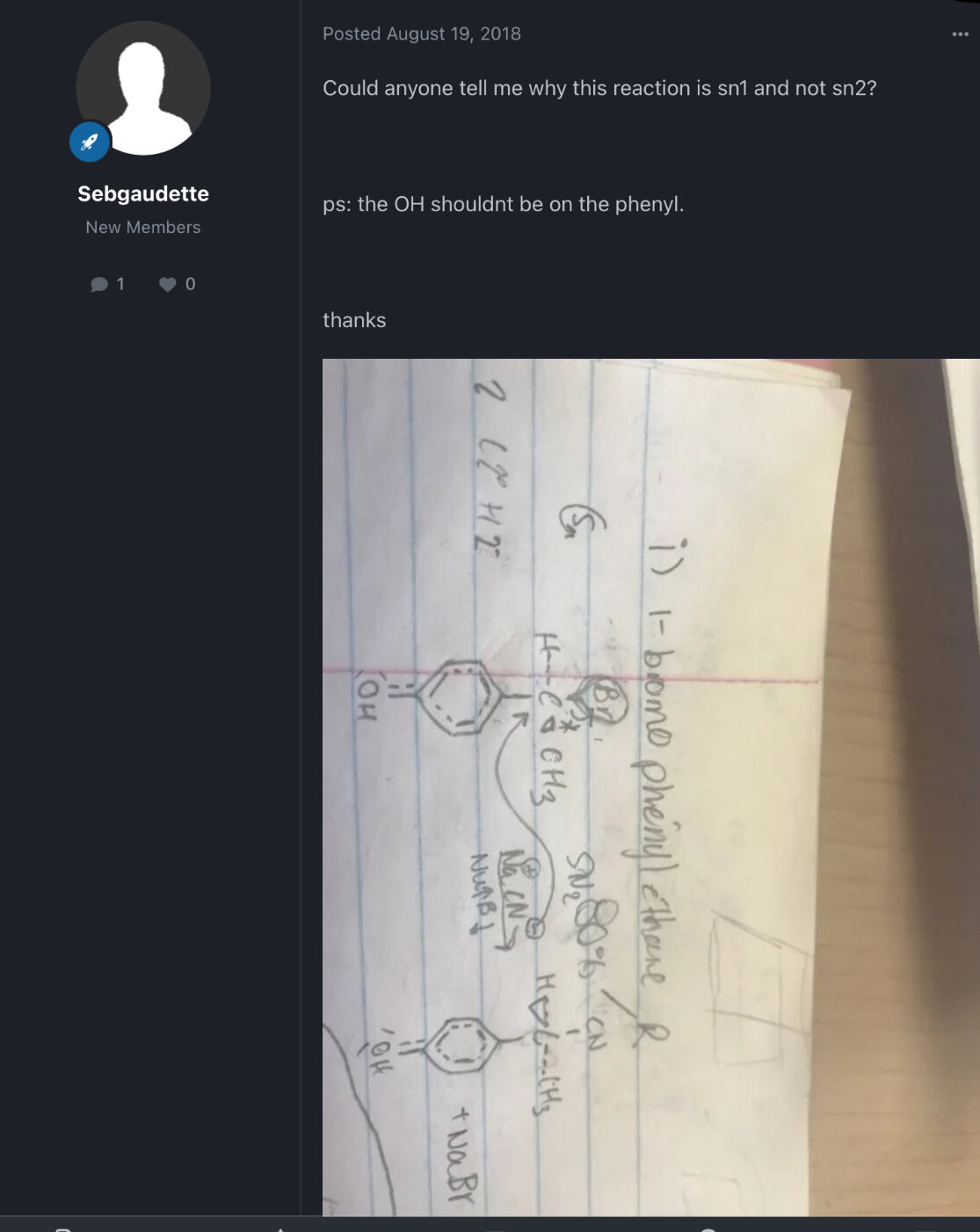
The reaction follows the SN1 mechanism instead of SN2 due to the substrate structure and the stability provided by the phenyl ring. Although the bromine is attached to a primary carbon, the phenyl ring can stabilize the intermediate carbocation through resonance, which favors the SN1 mechanism, where a carbocation is formed before the nucleophile attacks. In an SN2 reaction, the direct attack of the nucleophile on a primary carbon would be more typical, but in this case, the formation of the carbocation is more likely. Additionally, if the solvent is polar protic, such as water or alcohol, it can help stabilize the carbocation, further favoring the SN1 mechanism.