Ser Gio
Members
-
Joined
-
Last visited
-
Regarding nucleosynthesis: if nucleosynthesis was based on more elementary material constituents, we are simply postponing the question: where does their synthesis come from? Personally, I prefer to think that energy is an essential building block in the construction of matter rather than imagining that these building blocks appeared from 'nothing,' or rather, from a "singularity." As for the rest, I don't intend to dwell on Lockyer's theory. I have presented a calculation that should, in my opinion, pique the curiosity of anyone who has studied physics at any advanced level... But I'm not forcing anyone to find it interesting. Some may find it interesting. That's their choice.
-
I don't understand your objection: during primordial nucleosynthesis, matter was created from energy. We also know the equivalence E=mc^2. But it seems to me that you support the separation between matter and energy, is that it? If so, we each have a different postulate, and it's normal that we don't arrive at the same conclusions. The postulate that matter = energy is not 'my' postulate; I inherited it from the scientific literature. It explains many physical phenomena, nuclear reactions for example: the enormous amount of energy produced comes from the conversion of mass into energy. (But since the energy produced wasn't enough to explain all the missing mass, we came up with neutrinos.) I'll leave it to Lockyer to call the nested energy layers of his model 'neutrinos'. At his time, this may have been a good idea. But what interests me is the calculation, not the words that we put on it. PS : A better argument: we know how to create a positron/electron pair (with Spin ;-)) from energy (laser) : the conversion of radiation into matter is indeed a possible physical phenomenon, it's not a postulate. ________________________________________________________ In the article submitted to PrePrints, the JavaScript code I attached was unfortunately modified for security reasons and became unusable. Last year, I wrote a blog post just to explain this calculation. Here you'll find the script ready to use (and instructions for those unfamiliar with JavaScript). Here's the link; you just need to replace each § with a / (slash), and each * with a . (dot) https:§§science-wide-open*blogspot*com§024§10§relative-mass-proton-electron*html
-
They did ! But at a temperature > 10^12 K. Can we reproduce the conditions of the early universe in the laboratory ? Lockyer calls it neutrinos. I prefer to call it energy. I don't know exactly the way energy travels as 'neutrinos' I talk about positrons capturing energy here: https://ai.vixra.org/abs/2508.0014
-
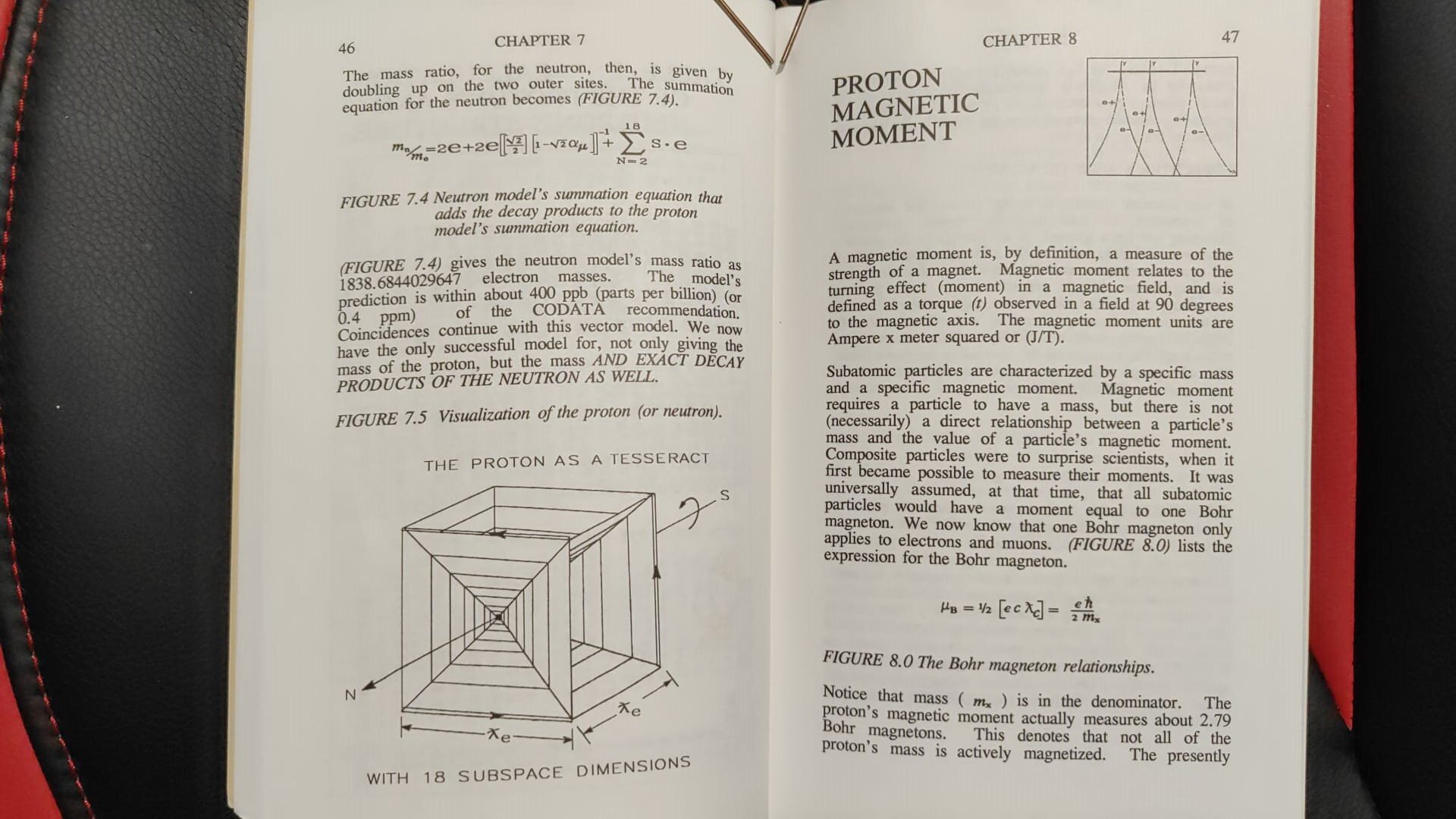
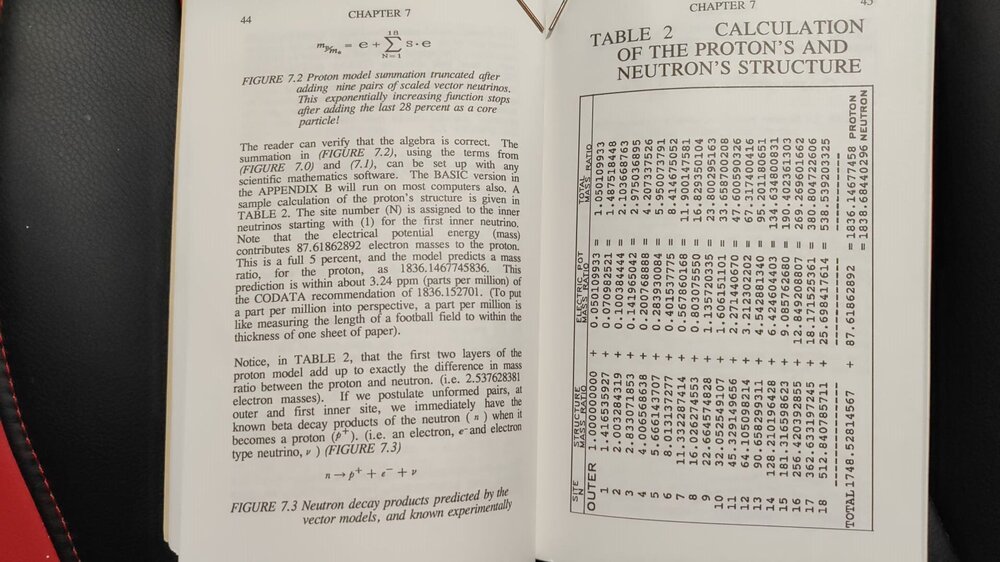
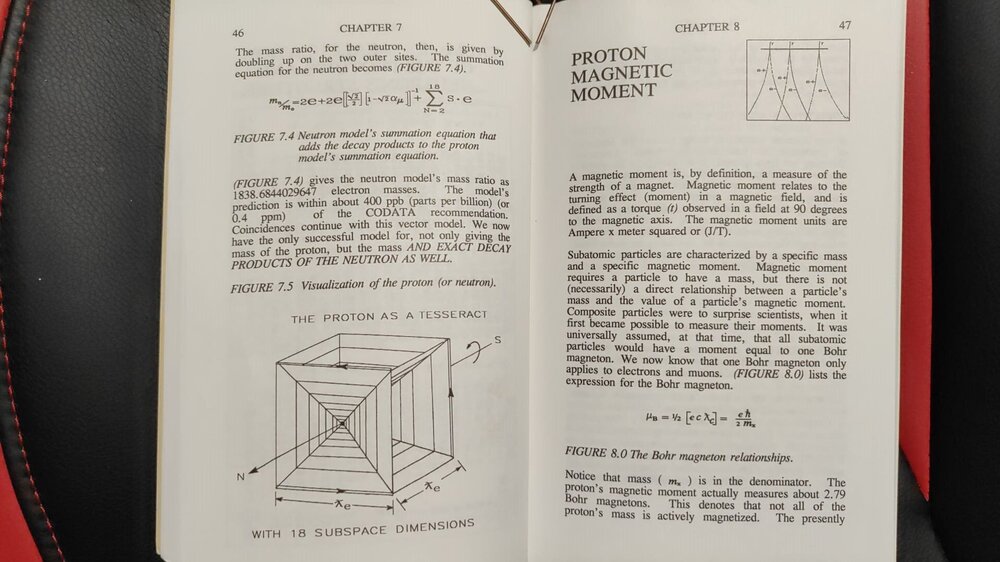
His theory was written long before anyone knew what neutrinos were (do we already know that?). Basically, neutrinos correspond to the missing mass in certain nuclear reactions. And just as Lockyer's theory shows, the proton and the neutron are particles made of energy, he imagined that the inner layers were made of neutrinos. But for me, that wasn't at all what interested me: it was the calculation itself that contained the shadow of a reality I wanted to understand. Like you, the 'cube' didn't seem possible to me; it was more of a computational artifice, a model. Moreover, a little further into the calculation, the nested 3D cubes become nested circles (the cube was used to explain the radius of the concentric circles, in particular sqrt(2). But sqrt(2) can have other origins. The charge is in the first layer of the proton (the positron, which serves as a container for the energy). Charges generate fields, which are the origin of forces. This is precisely what needs to be explained. All the questions raised by such a structure (like Russian dolls) have been the basis of my reflections for a very long time, and little by little, I have been putting the pieces of the puzzle together. This will be what I will discuss in my future posts here, if you are interested. Note: If you double levels 1 and 2, you get the mass of a neutron. Haha, I know you're scratching your head! It's more fun than learning (or reciting) theories by heart. This is where you have to step out of your comfort zone. 🤨
-
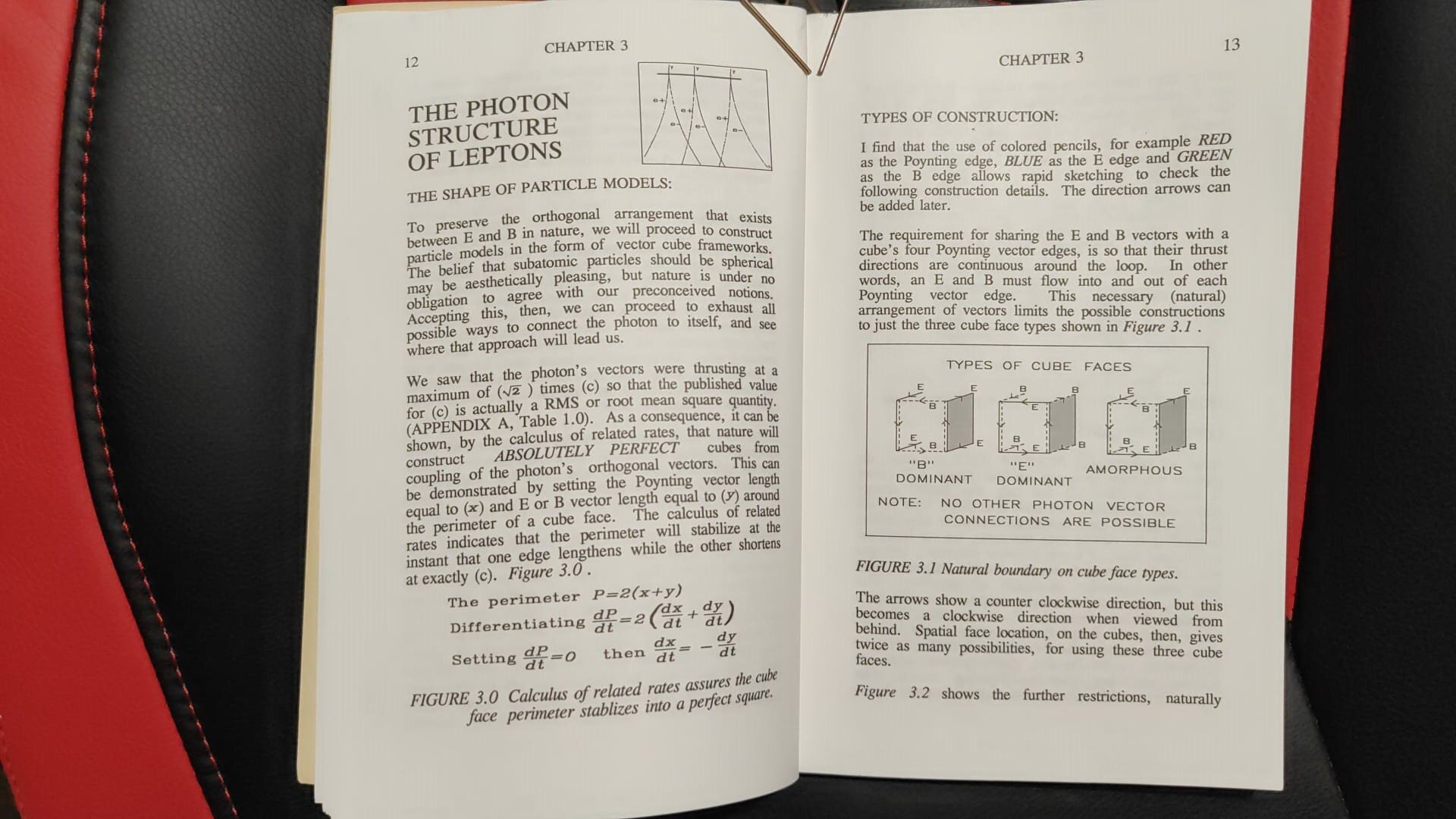
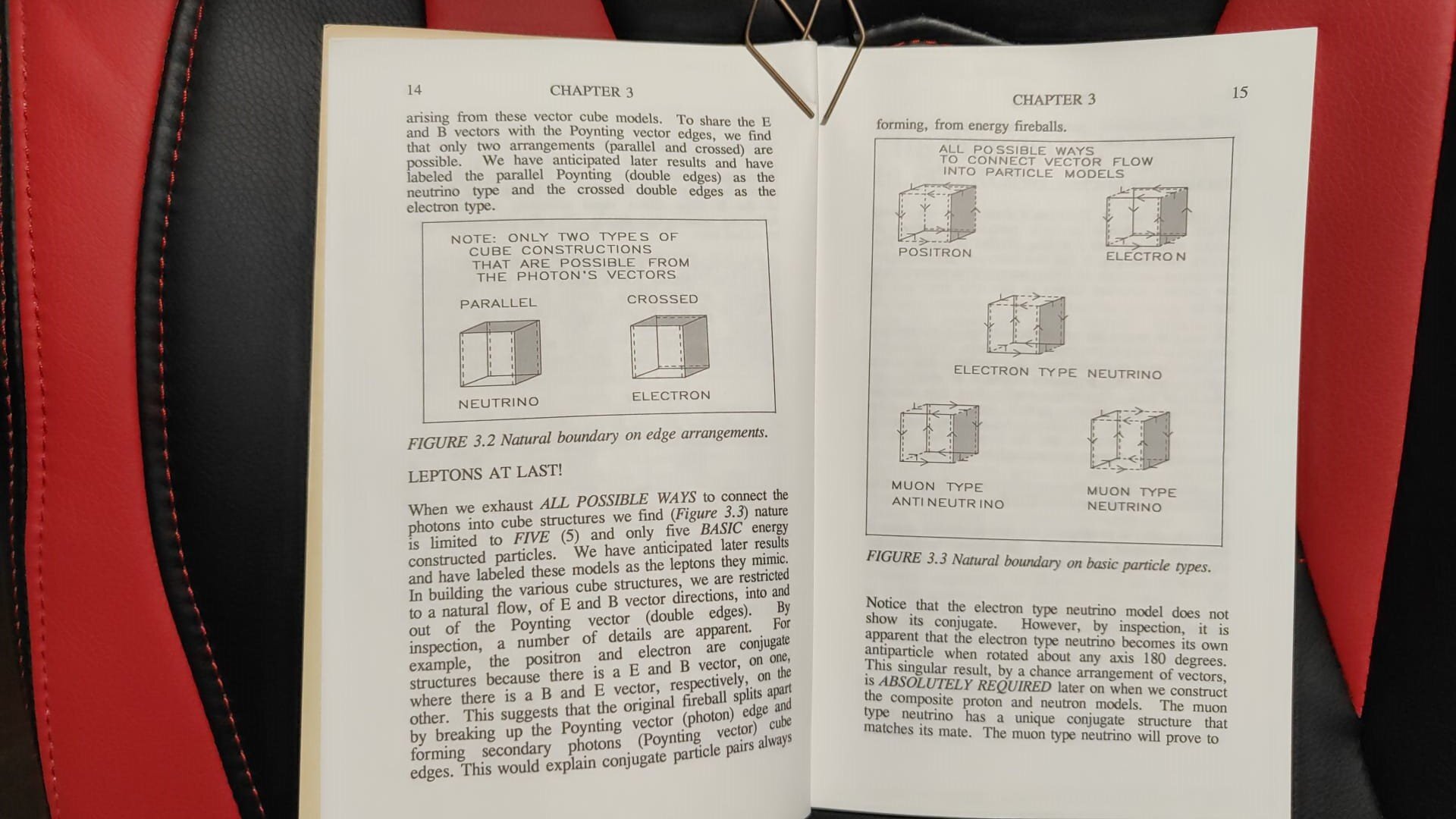
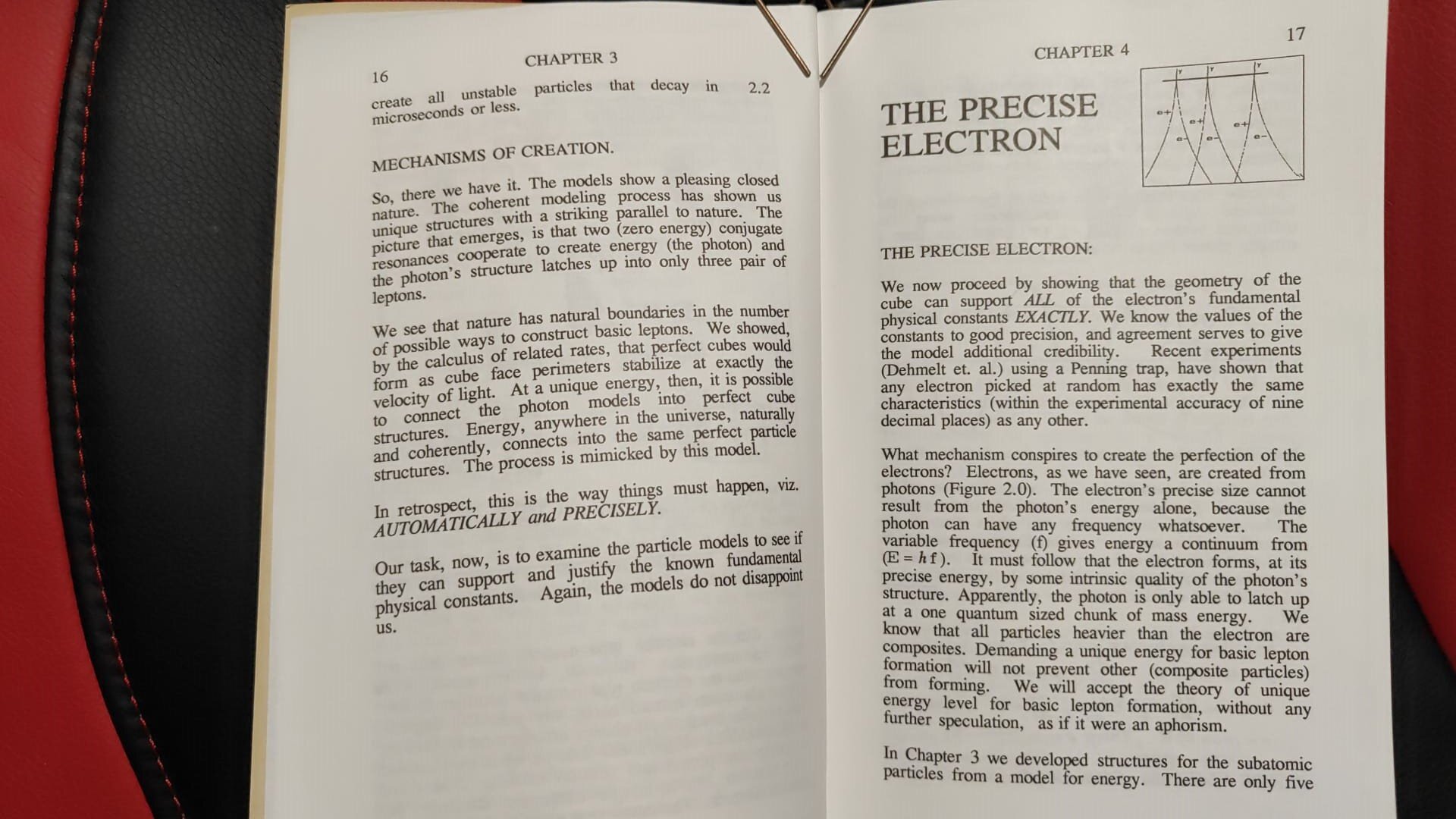
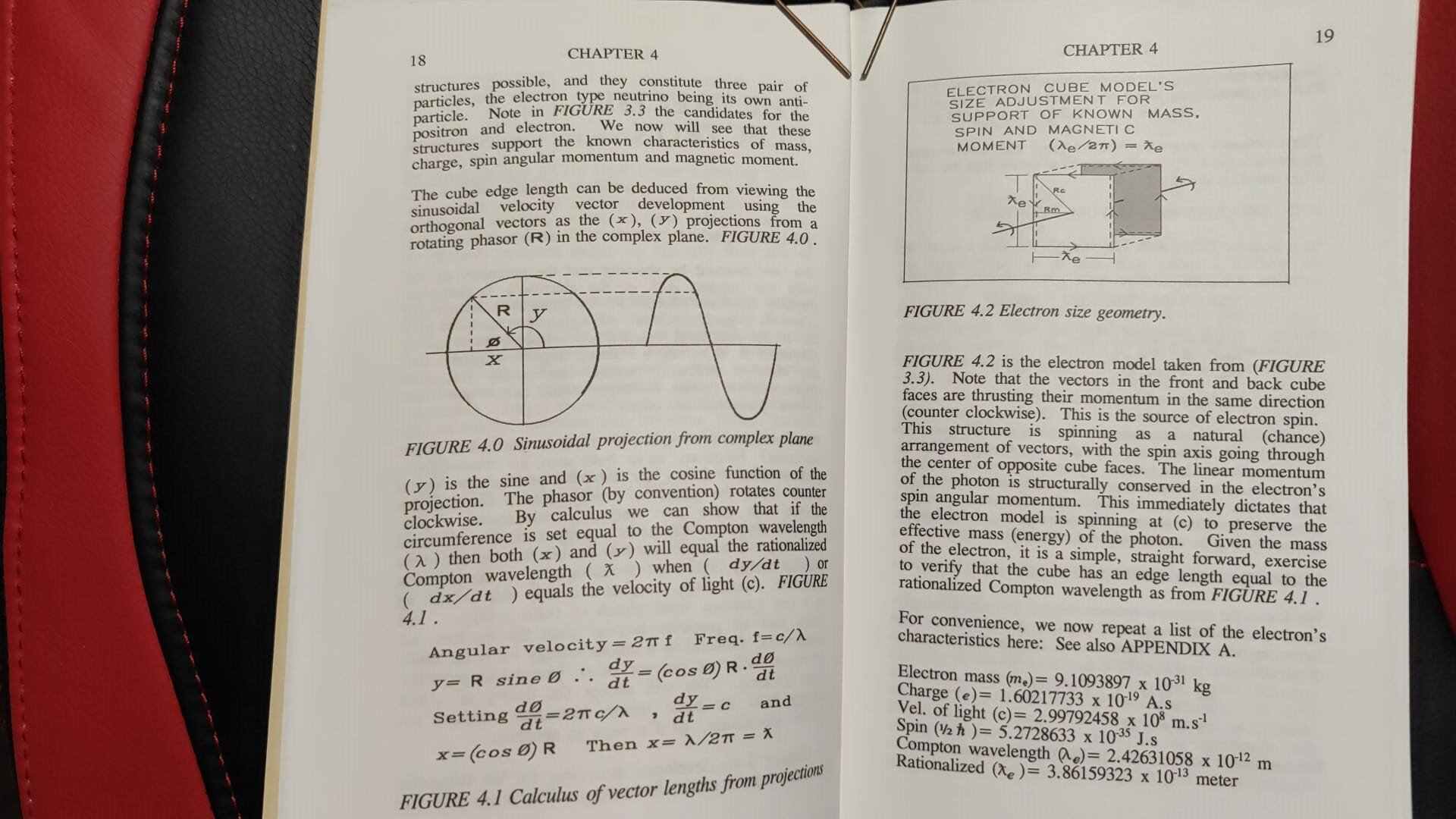
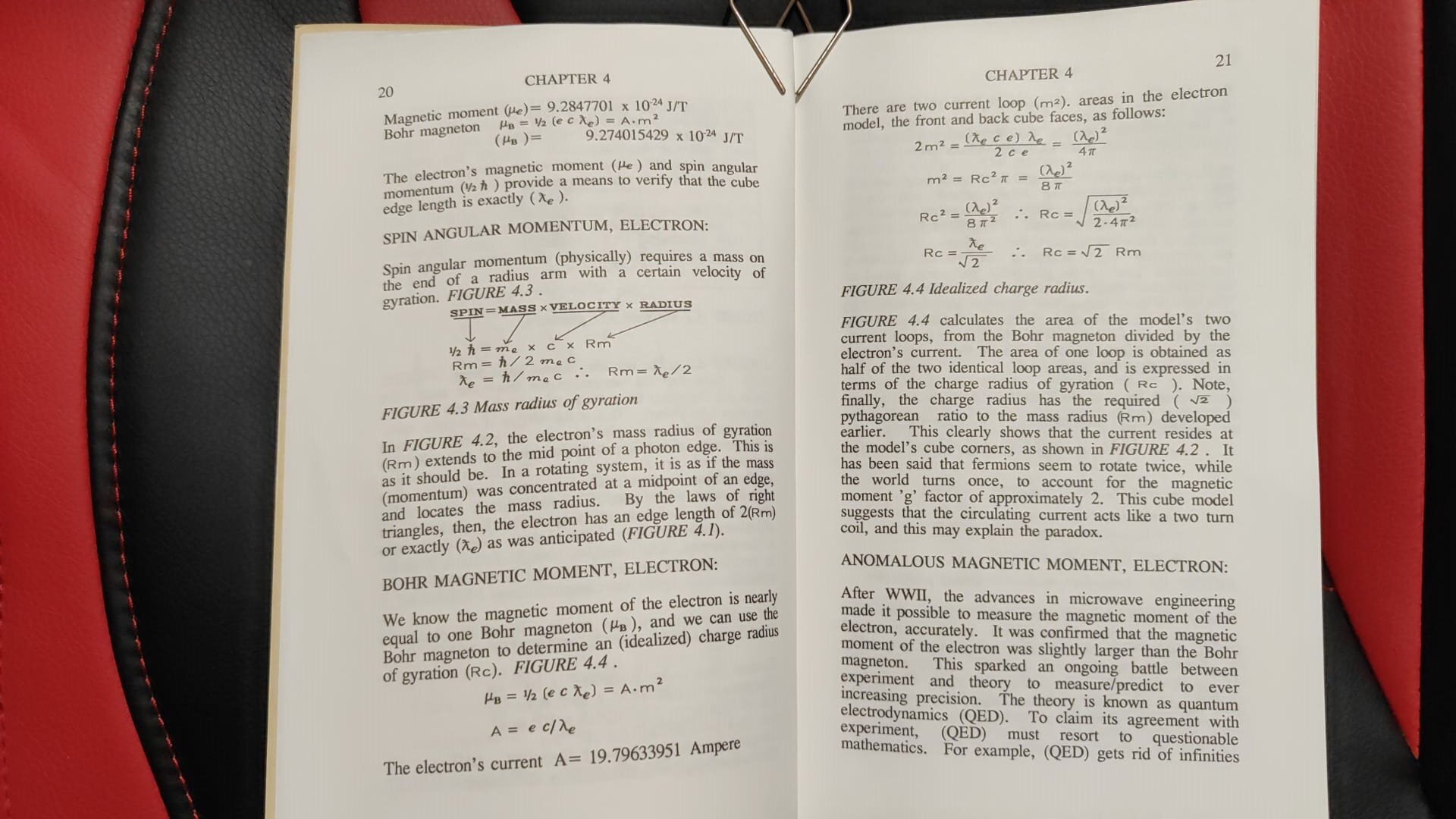
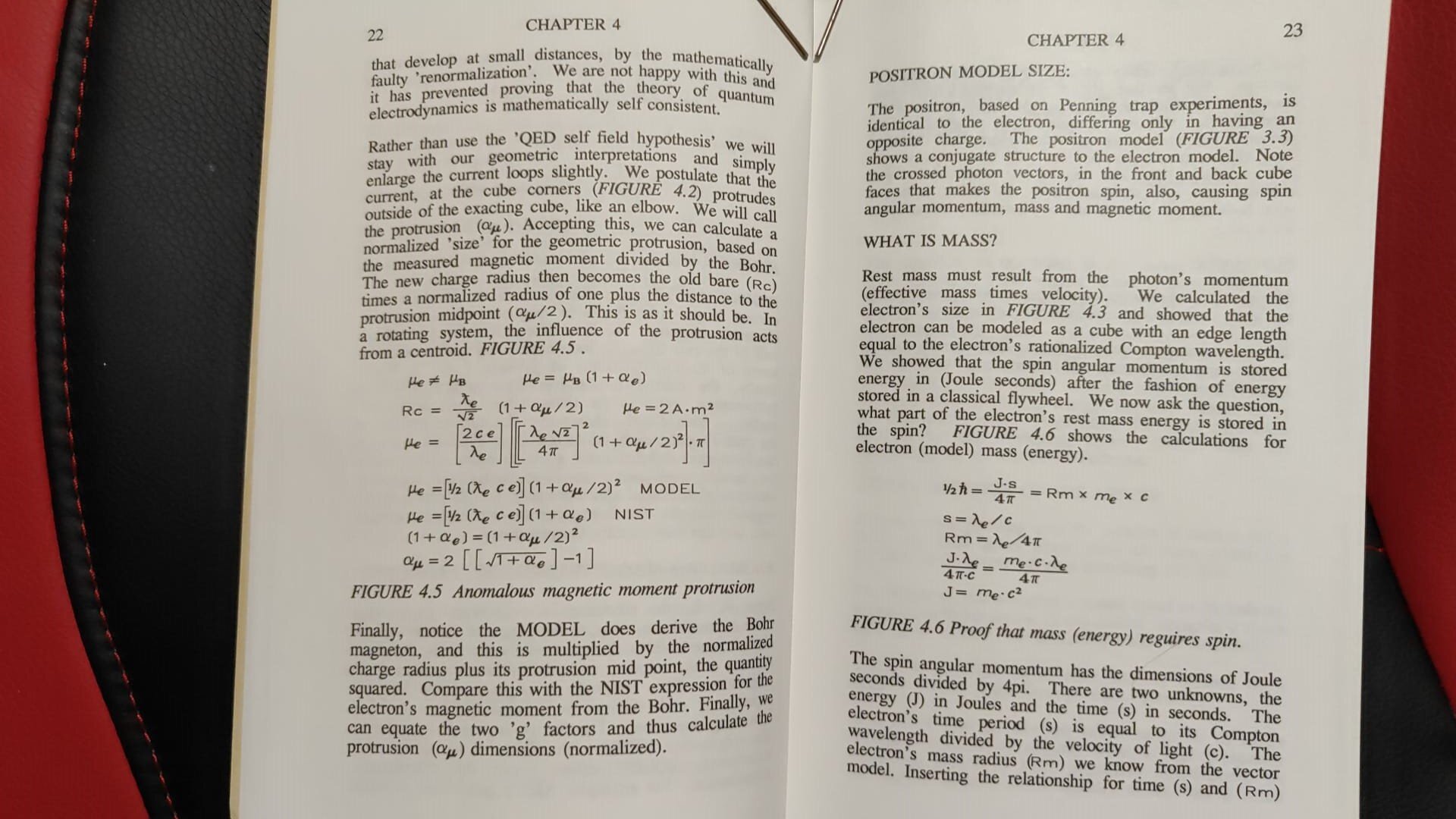
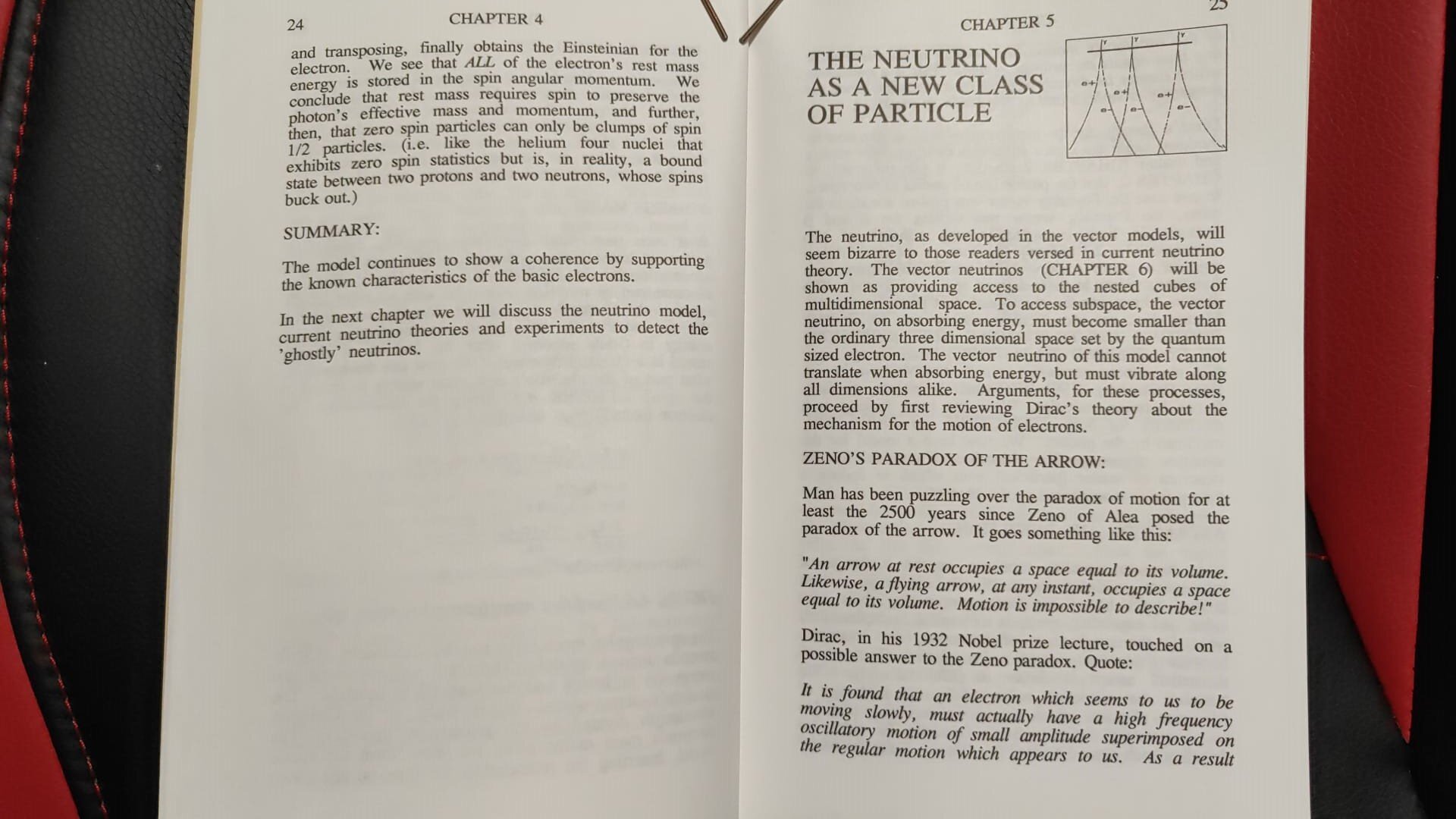
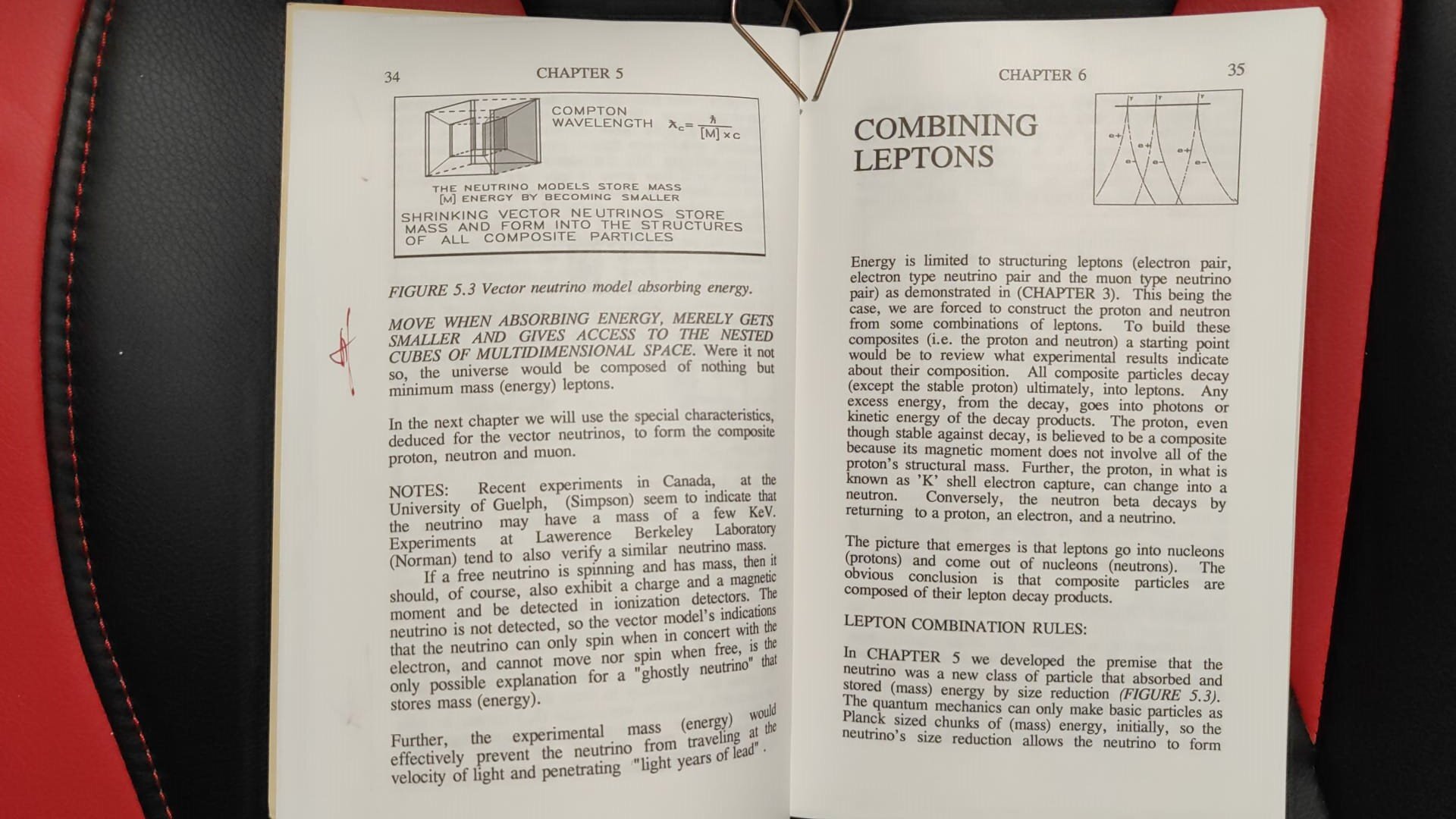
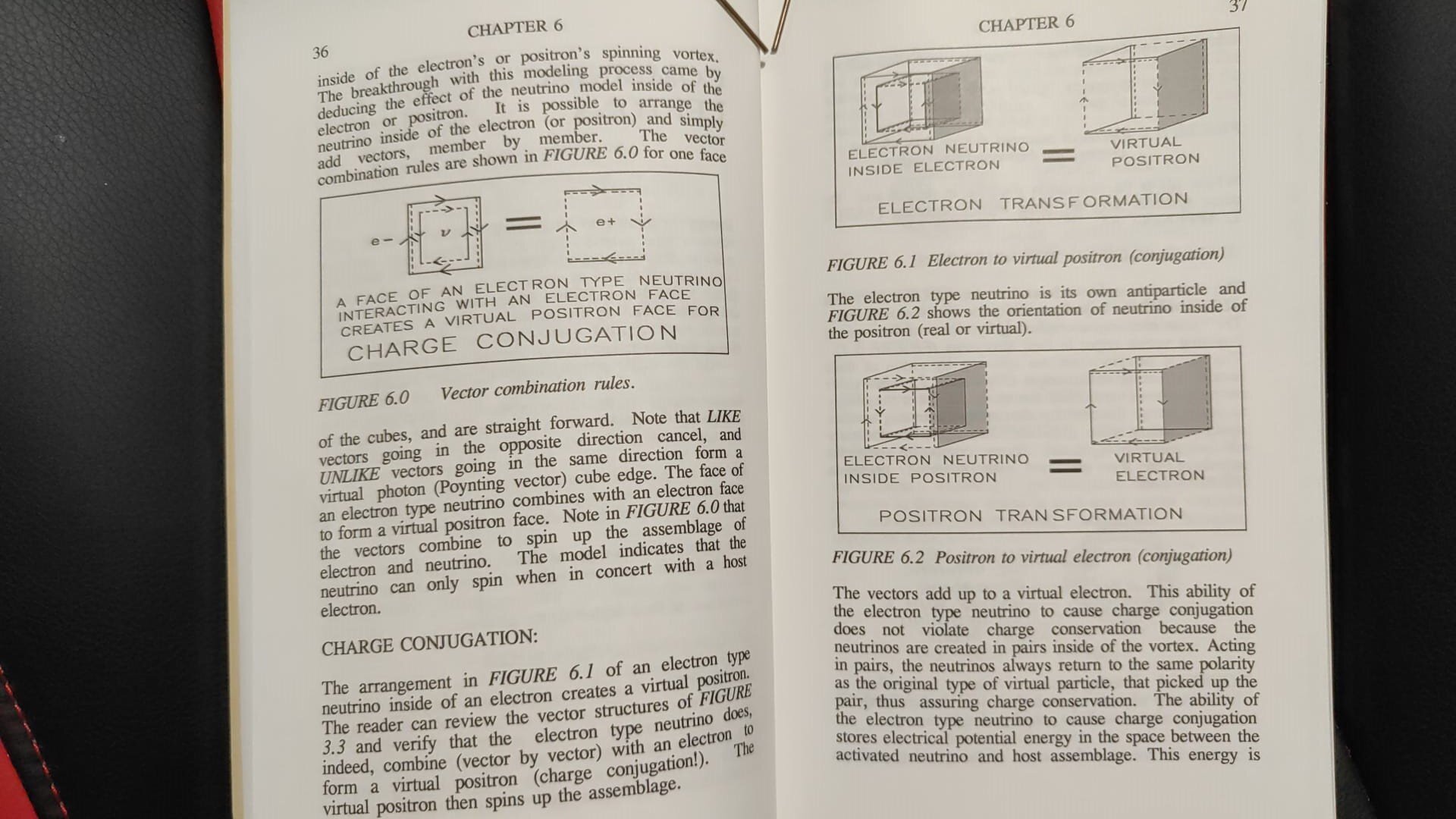
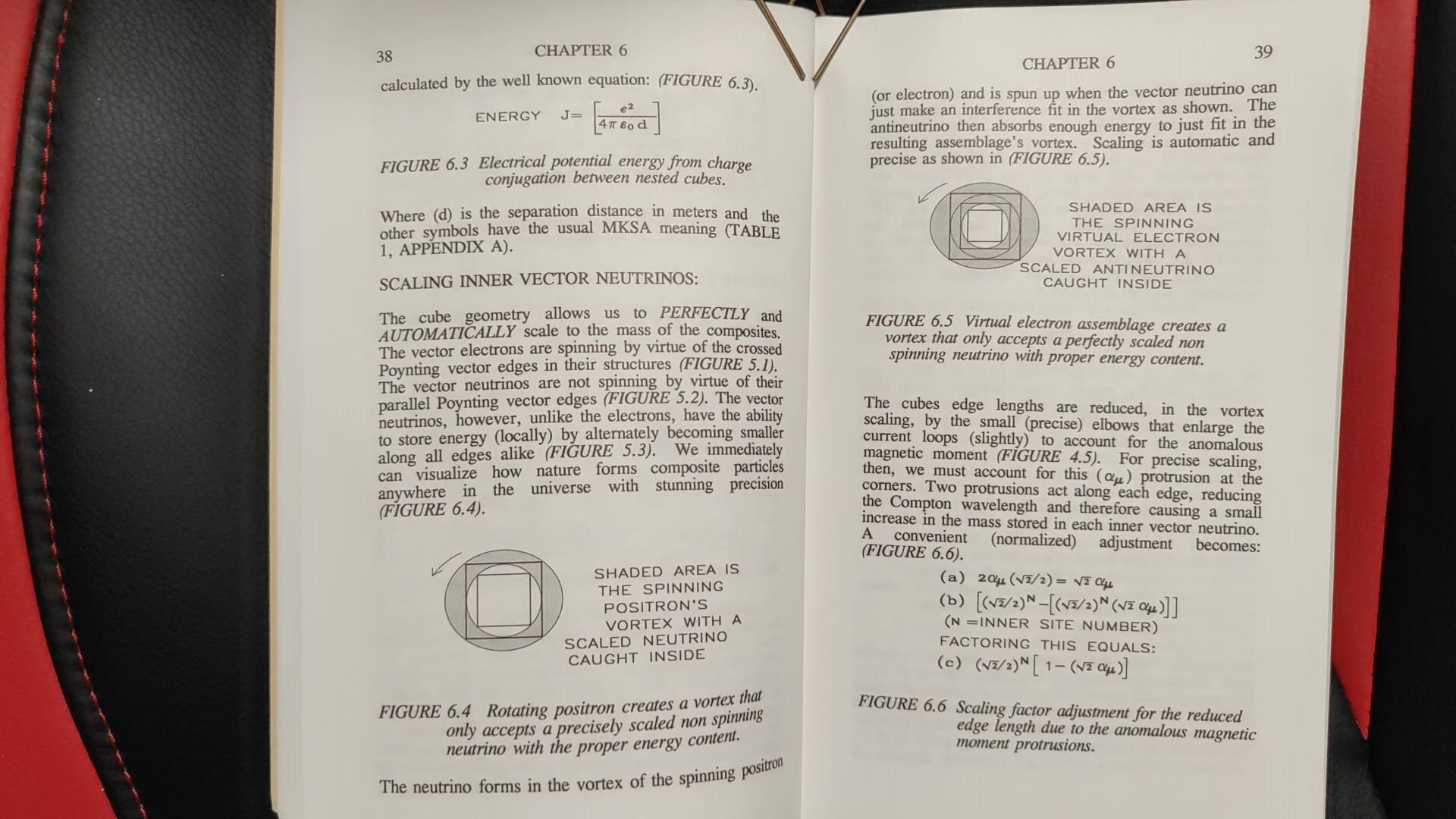
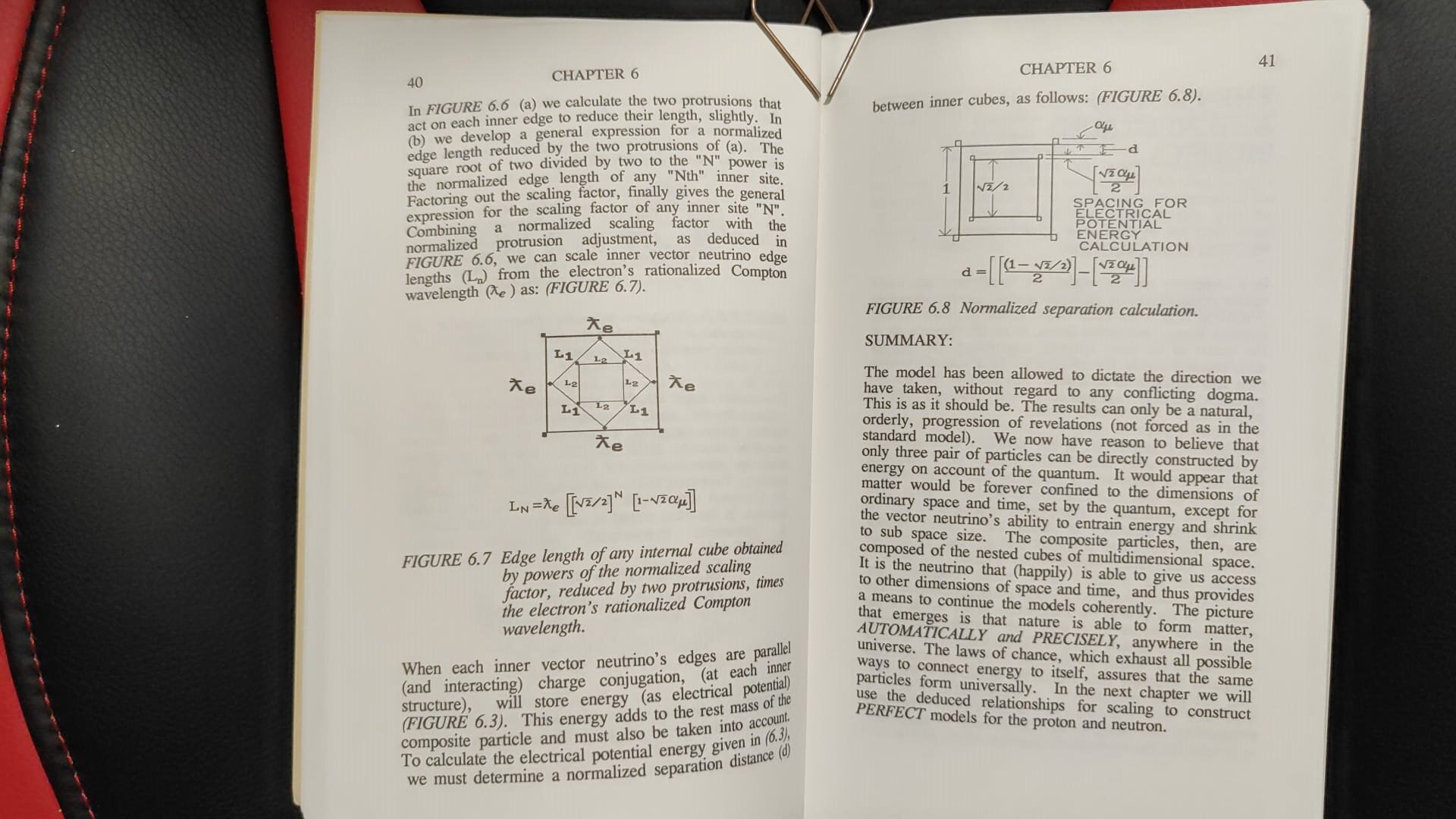
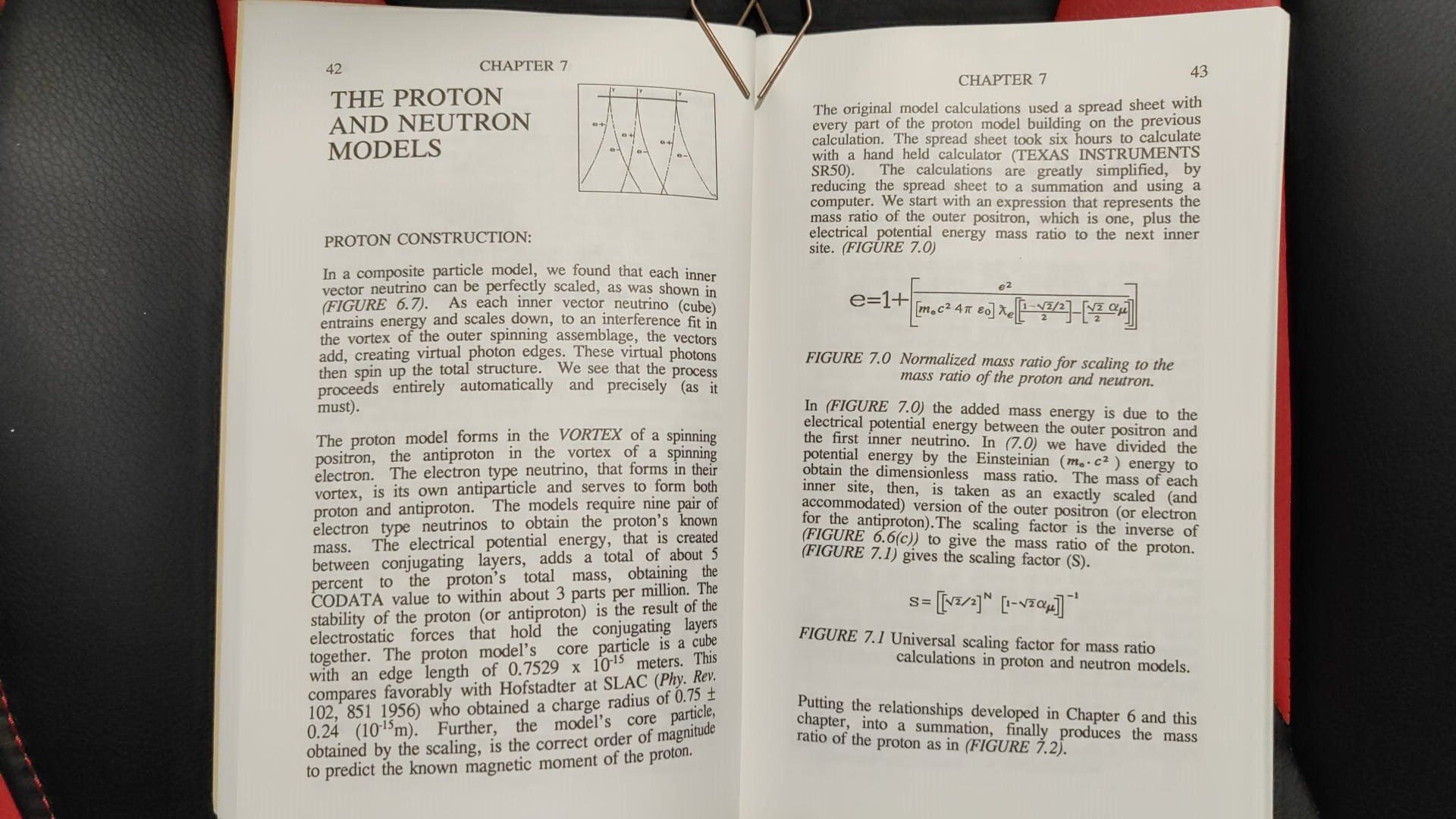
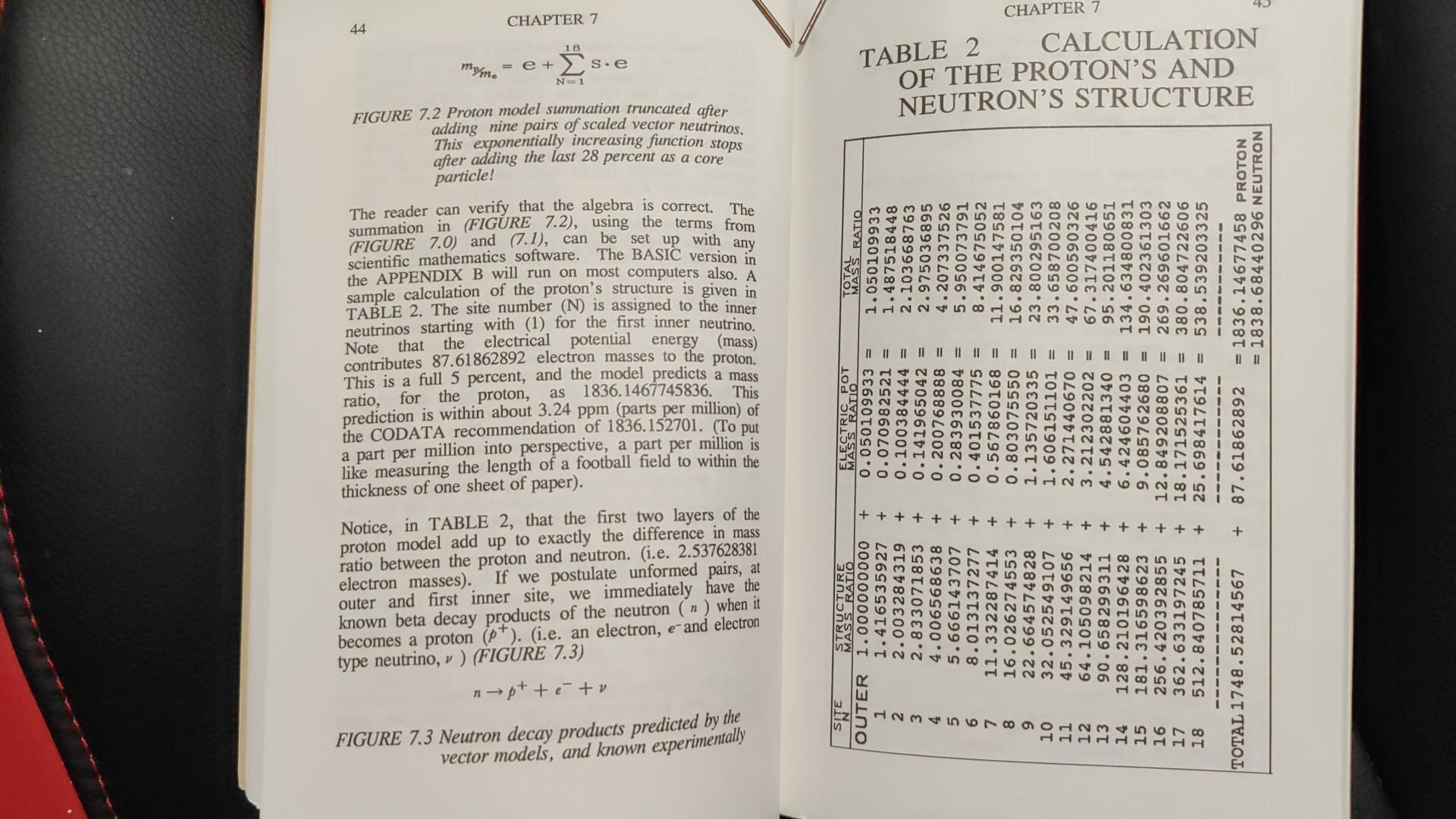
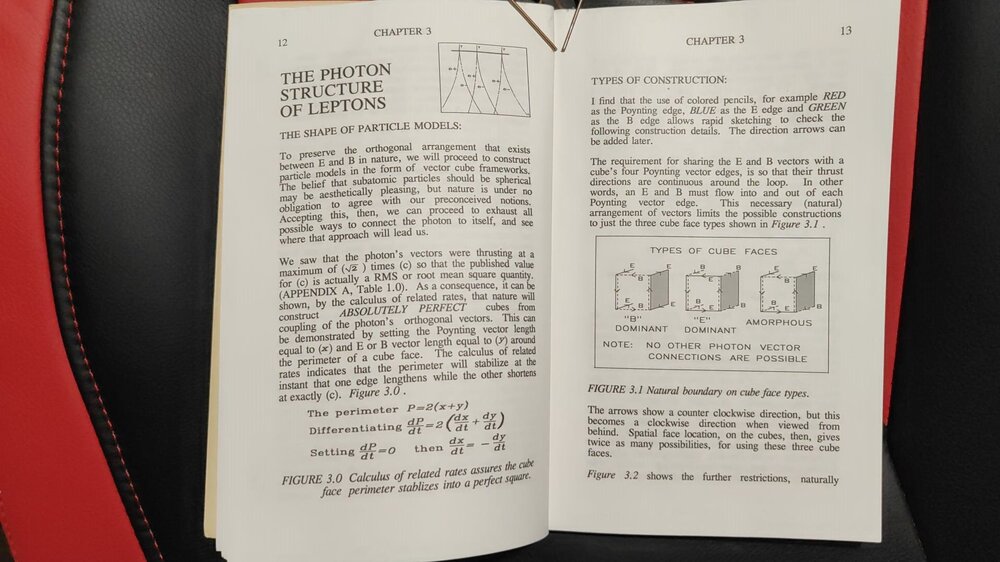
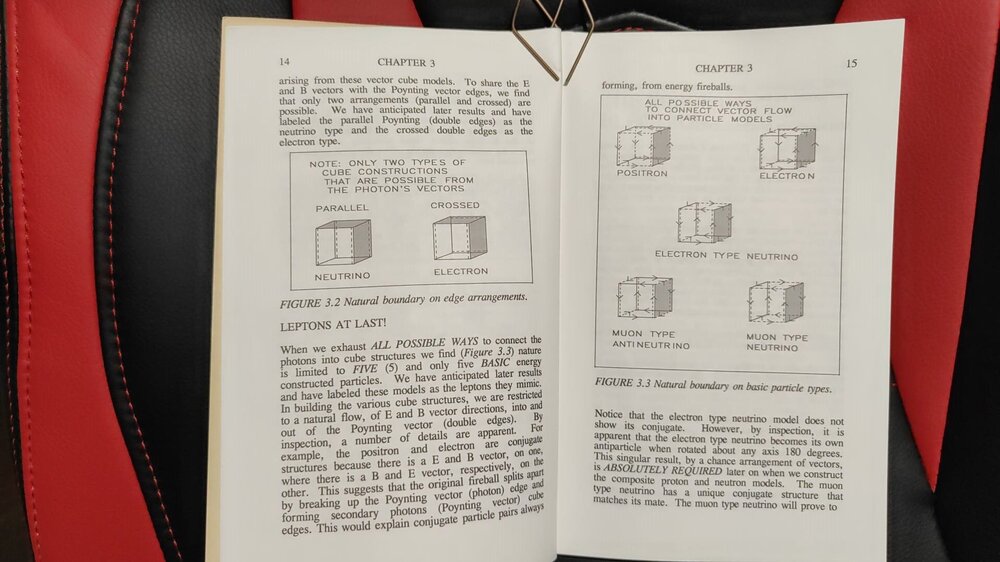
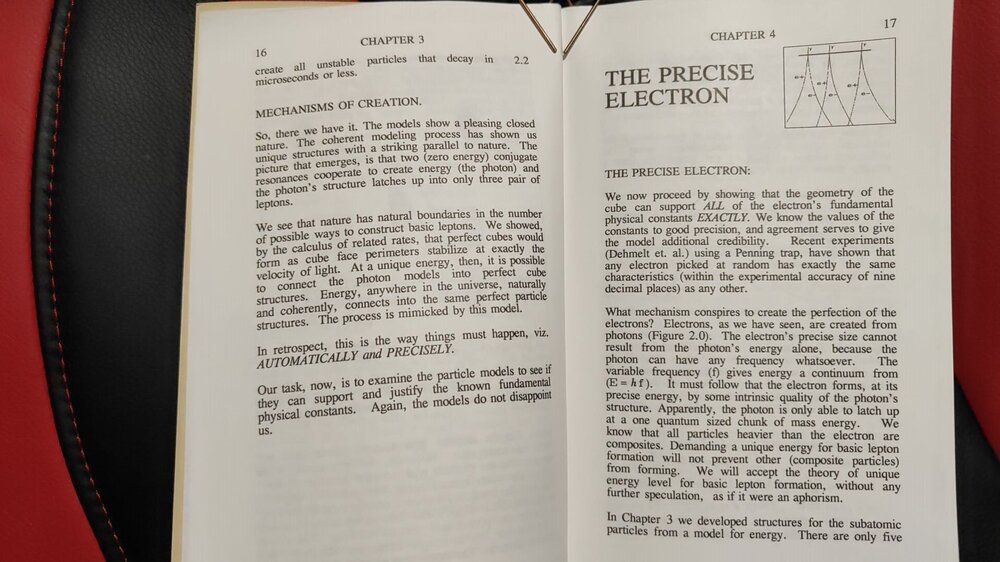
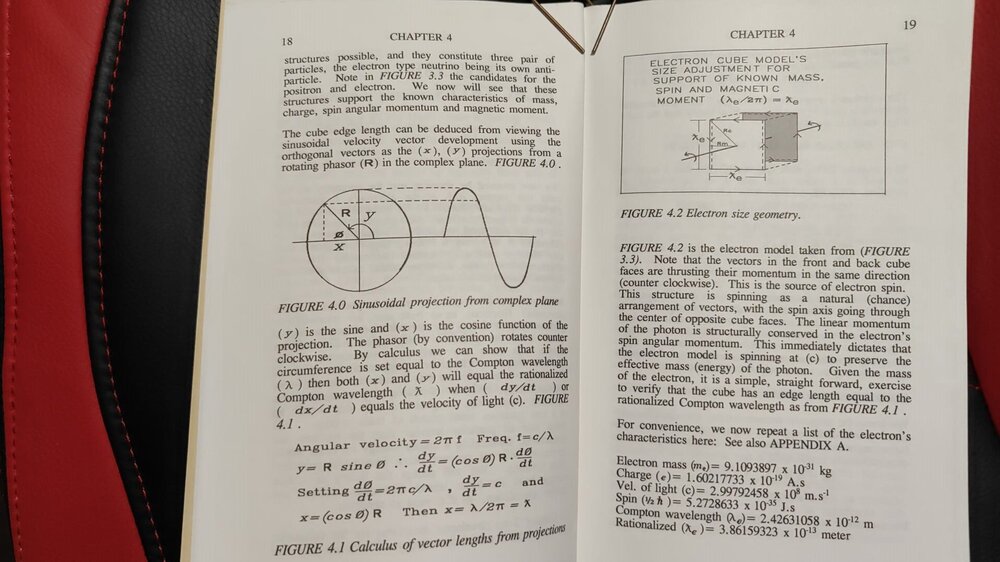
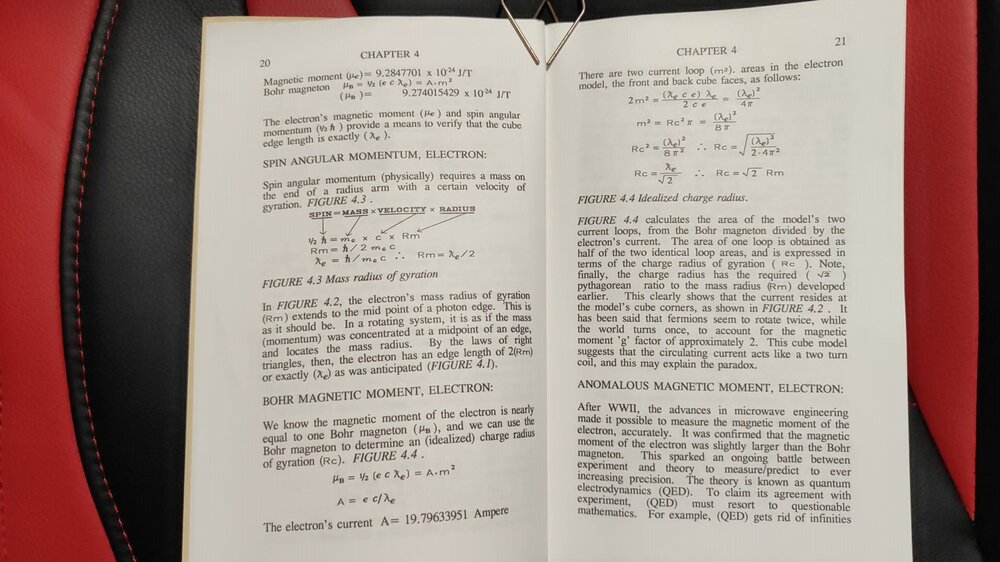
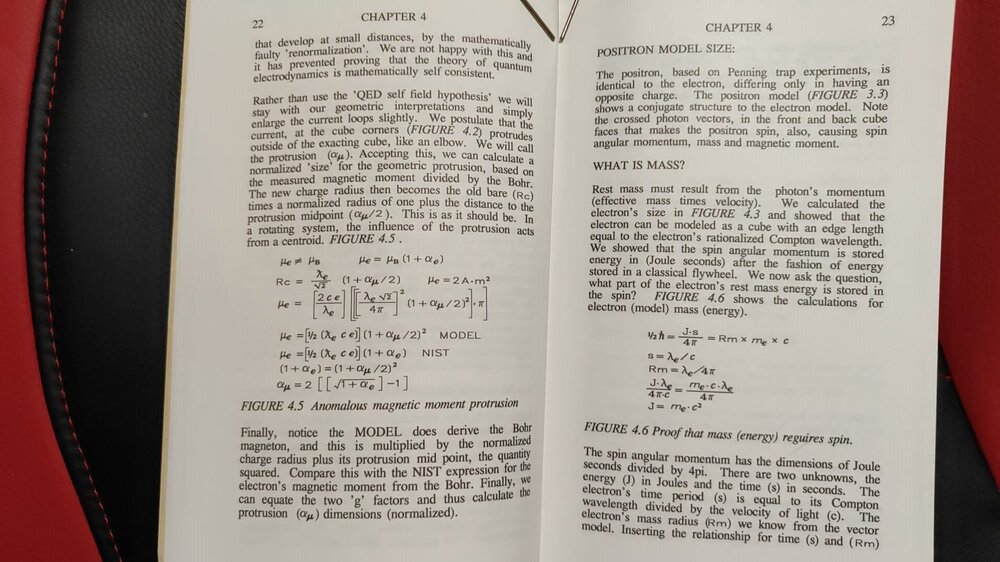
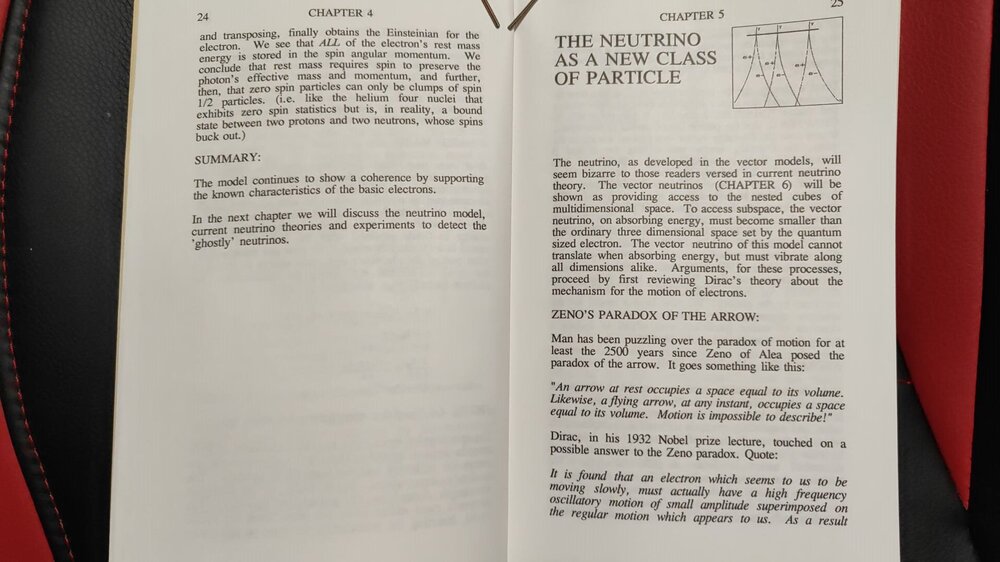
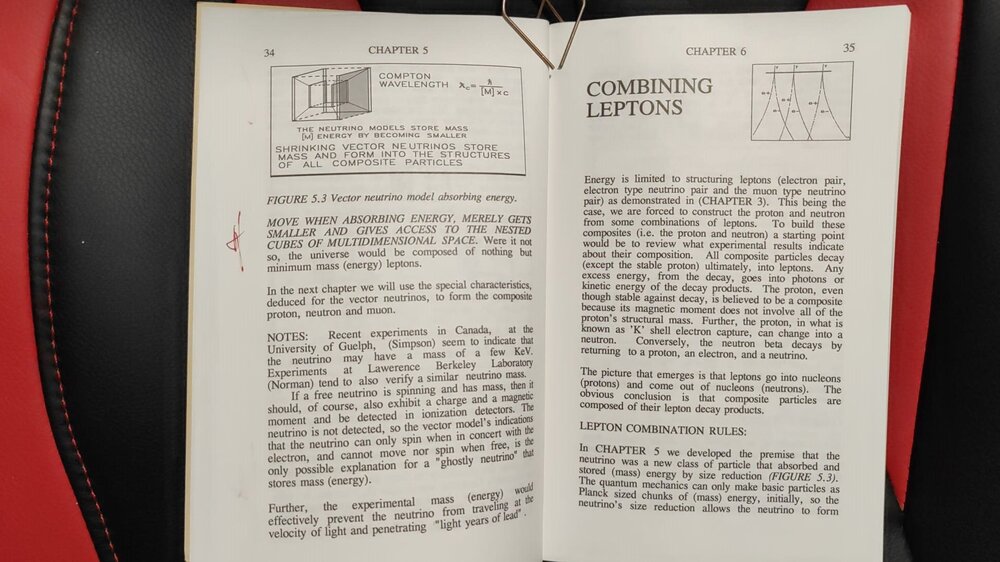
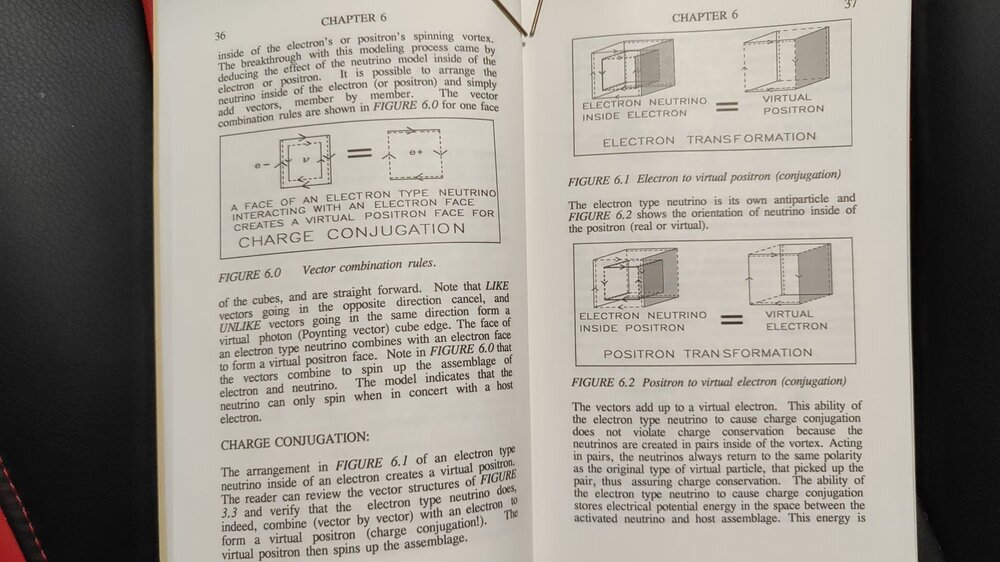
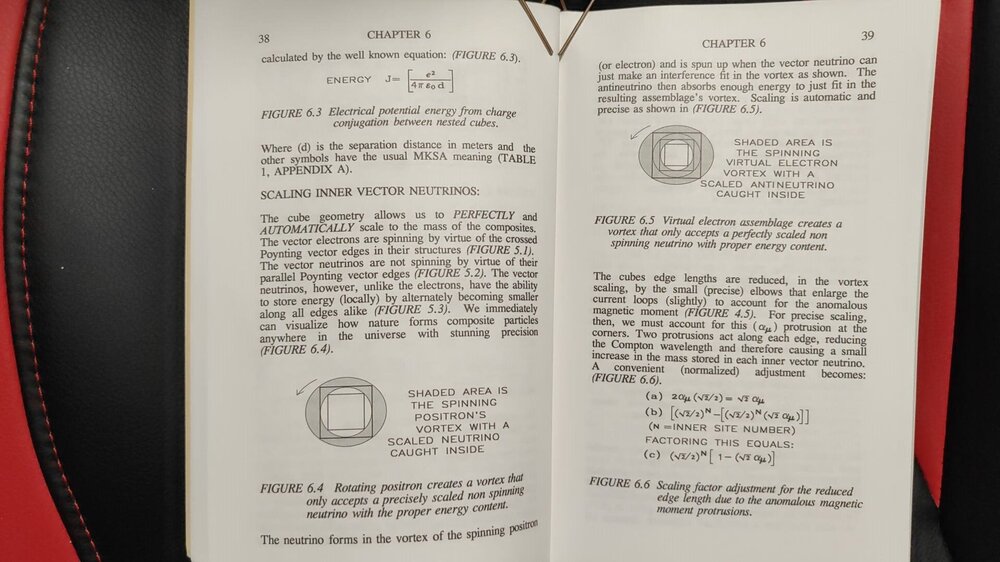
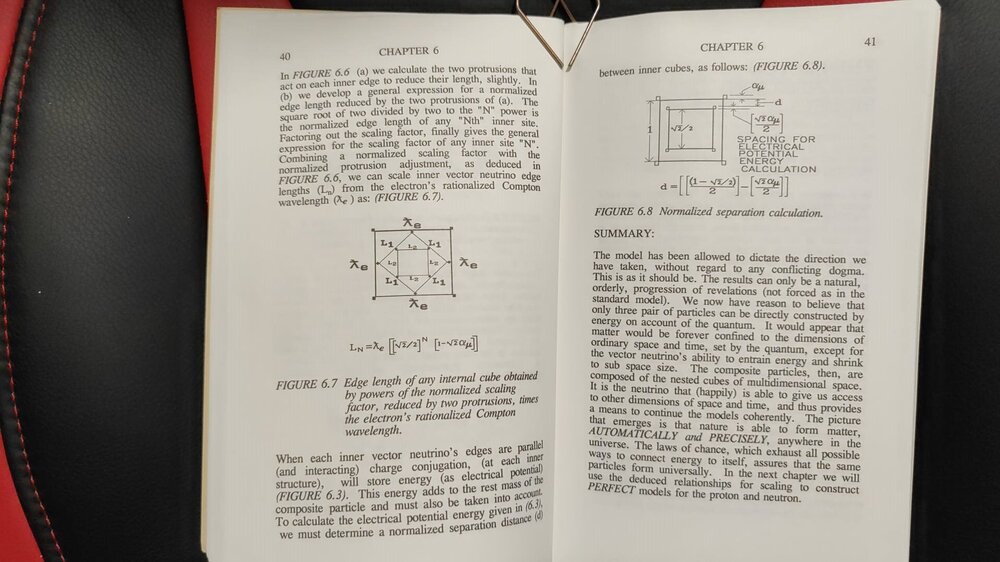
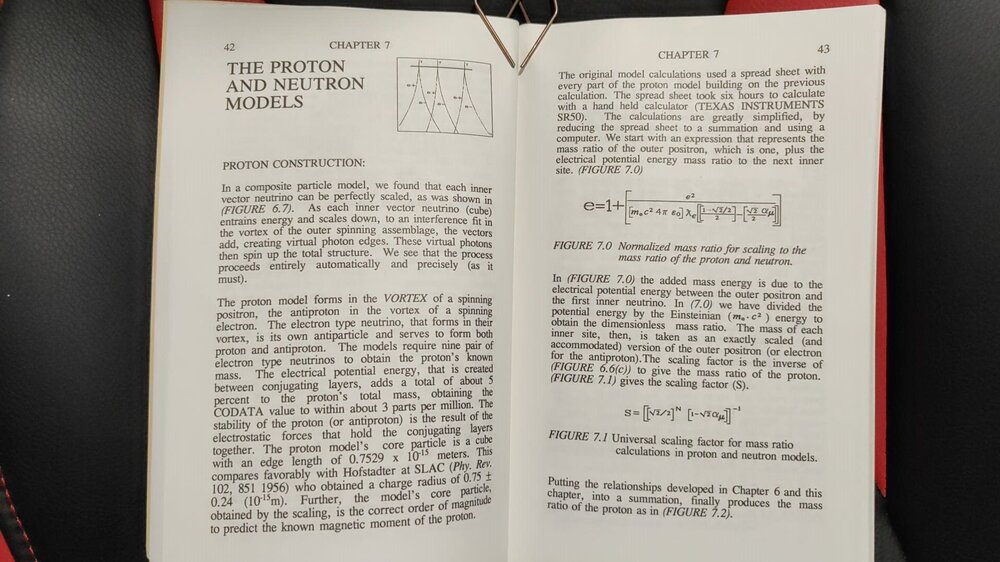
Here are the principal pages. Note that I have a JavaScript program available for anyone who would like to try it out.
-
Okay: I can't just copy the Latex formulas from my article, I'd have to retype them one by one in this editor? And all the theory too... That would be a huge time-consuming process, which I don't have because I'm still working on other publications. I think this is the best solution. I'll take some photos to post here.
-
I don't think I can copy Latex formulas here. Is there a way to preview a message before posting it ? Okay, let's test a Latex formula: \begin{equation} m = \frac{e^2}{m_e 4 \pi c^2 \lambda'_e d \epsilon_0}, \quad d = \frac{1 - \sqrt{2}/2}{2} - \frac{a_u}{\sqrt{2}}, \quad a_u = 2 \left( \sqrt{1 + \frac{\alpha}{2\pi}} - 1 \right). \end{equation} EDIT : ok the test failed. But let's get back to the point: I told you about a calculation proposed by T. Lockyer that gives the proton/electron mass ratio with the first seven significant digits correct. You have several options: - You can look at the calculation itself to verify that there's no fraud, then, after checking, try to understand what it can tell us about physical reality, or you can shrug your shoulders and tell yourself that T. Lockyer has a very, very low chance of stumbling upon such precision by chance, but he won the lottery. - You want to understand the theory behind his calculation: in this case, the best thing would be to buy his book, but there are very few in circulation, and certainly not enough for everyone who might be interested. You also have the option of reading the article I wrote on the subject, but it only presents the formulas that produce the final calculation, without the full theory behind it. I didn't dare; the article would never have been accepted on PrePrints, and it would require recopying a large portion of his book, which I don't think is allowed. In his model, the proton has a cubic structure (yes, that was almost enough for me to close the book too). Within this cube are other cubes indented like Russian dolls, with sides successively reduced by a factor of sqrt(2). To explain the cubic aspect, he starts with the structure of the photon, decomposed into two mutually perpendicular waves (electric and magnetic). Arranged in a certain way, these waves form a cube of standing waves. But he must correct the side length of the first cube by a factor he deduces from the proton's magnetic moment (which slightly 'shrinks' the size of the cube => decrease in wavelengths => increase in the energy of all waves => increase in the final mass of the proton (about 5%). That's what I can tell you for now. I can try taking a photo of a few pages from the book and posting them here: is that a problem? I can also take a photo of the BASIC code of the program he put at the end of his book and which I translated into JavaScript to check if there was an ad hoc parameter introduced to improve the accuracy. For your information, he did indeed add a small, ad hoc correction to his calculation, in keeping with the Standard Model, which I removed. To my surprise, instead of breaking the result, it greatly improved it: from the first 6 exact significant digits, we go to the first 7. I can also give you my JavaScript program to save you time. A long time ago, I tried to discuss this calculation in a forum, and was laughed at: it was numerology, and there was no point even being interested in it. And as usual, "personal theories are forbidden from discussion here," even though it wasn't a personal theory since it was first published in the 1970s, I believe (my book was published in 1992). (What good is a forum if not for adults to discuss topics that interest them?) I don't pretend to tell you why this calculation is important or not: that will be up to each of you to make up your own mind.
-
No, the theory is by Thomas N. Lockyer. Summarizing this theory is not easy, as it is presented in pieces scattered throughout his book. I would like to be able to copy a few chapters in full, but I don't think I have the right. I would have liked to ask his permission, but he died long ago. I think I have the right to send excerpts privately. I can take photos of the pages and send them by email. To verify his calculations, I translated his BASIC program (in the appendix to his book) into JavaScript. I had posted it on a blog. Contact me privately and I'll give you the address. With this program, I verified that you can't cheat to find the desired mass. I'll be too busy in the next few days, but then I'll come here to post the calculations in Latex. I will also give you some indications for anyone who wants to try to find the mass of the Muon or the Tauon by postulating a structure of the same kind. I tried for a long time but I did not succeed. I ended up considering that the mass of these particles had another reason for being. But if someone is able to calculate the mass of the Muon or the Tauon in the manner of Lockyer, this will call into question my theory (which I do not like very much) and I will be very happy to explore this new direction.
-
Do you want me to transcribe part of the document here ? Ok, I'll try, but later because it will take some time to summarize it...
-
Hi ! An unknown physicist named Thomas Lockyer has produced an absolutely astonishing calculation. 🦄 He calculates the proton/electron mass ratio to the first seven significant digits. For the record, the Standard Model is able to produce the first two significant digits at best. Lockyer's calculation does not contain any bias that would allow it to obtain the desired result because it is a finite sum (of increasing energies) with each member increasing by a ratio sqrt(2). He uses only physical constants (CODATA values). The starting point of the calculation is the magnetic moment of the electron. For more details, Google "A Photon-Based Vector Particle Model for Proton and Neutron Masses" + PrePrints. This isn't numerology... although on another forum, a physicist (he introduced himself as such, so I'm willing to believe him) told me it is. What do you think?
-
Are you kidding? Watch again around the 18-second mark of the video: https://www.independent.co.uk/tv/news/ufo-congress-hearing-video-yemen-b2823663.html
-
Knowing the missile's speed and mass, and its deflection angle after impact, it's possible to calculate the mass of the orb. Has this been done? What's most astonishing is that the orb, after being deflected, corrects its trajectory so that it returns to its pre-impact trajectory. How is it possible that an inert mass can react like that? ^^