
Bender
-
Joined
-
Last visited
Posts posted by Bender
-
-
19 hours ago, Dylan T. said:
I don't understand what you said
In general
Let's start with the function of the lens in our eye. You can only focus (see sharp) on one distance at a time. If you focus on an object close to you, you see everything at a distance blurry (you will also see objects blurry which are even closer ). When focussing at the distance, you relax the lens of your eye, changing its shape. You will see objects at a that distance sharp and closer objects blurry.
-
-
1 hour ago, StringJunky said:
Then you are seeing blurred in that section.
Which is a passive effect i.e. I'm not actively blurring my vision. But as I already said, I can actively blur my vision for close objects. I can also focus on something close, which passively blurs objects in the distance. What I cannot do is actively blur objects in the distance (ie without "cheating" by focussing on a nearby object).
-
5 hours ago, StringJunky said:
Put something close up to your eye when you do that... is it sharp?
Of course not.
5 hours ago, J.C.MacSwell said:My guess is that it is useful to defocus visually when you want to focus mentally on the periphery of your vision, possibly in one area of the periphery or possibly for the appearance of something, say when hunting or even fighting). I really have nothing to back that up other than to say I feel it works for me (not that I hunt or fight, but in a number of similar ways). It is a related technique to "glancing around" but I (feel again) it has advantages in some circumstances, and sometimes switching back and forth between the two techniques. I'm not sure everyone doesn't do this whether they realize it or not.
When I focus on my peripheral vision, eg in pattern finding games, there is no blurring. Wouldn't that also blur the periphery?
-
-
-
-
-
http://netti.nic.fi/~054028/images/LeviTheory.pdf
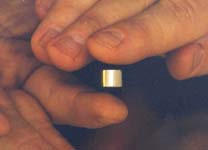
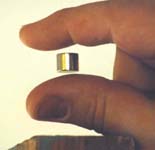
http://www.physics.ucla.edu/marty/diamag/
Are such materials as concrete, asphalt, sand, stone diamagnetics or paramagnetics?
It depends on the minerals inside the concrete, asphalt, sand and stone. Some, such as magnetite, is even ferromagnetic.
-
-

Voluntary Blurry Vision?
in Anatomy, Physiology and Neuroscience
The default state for me seems to be seeing distant objects sharp.
Our lens only changes focus and nothing else.