cpino
Members
-
Joined
-
Last visited
-
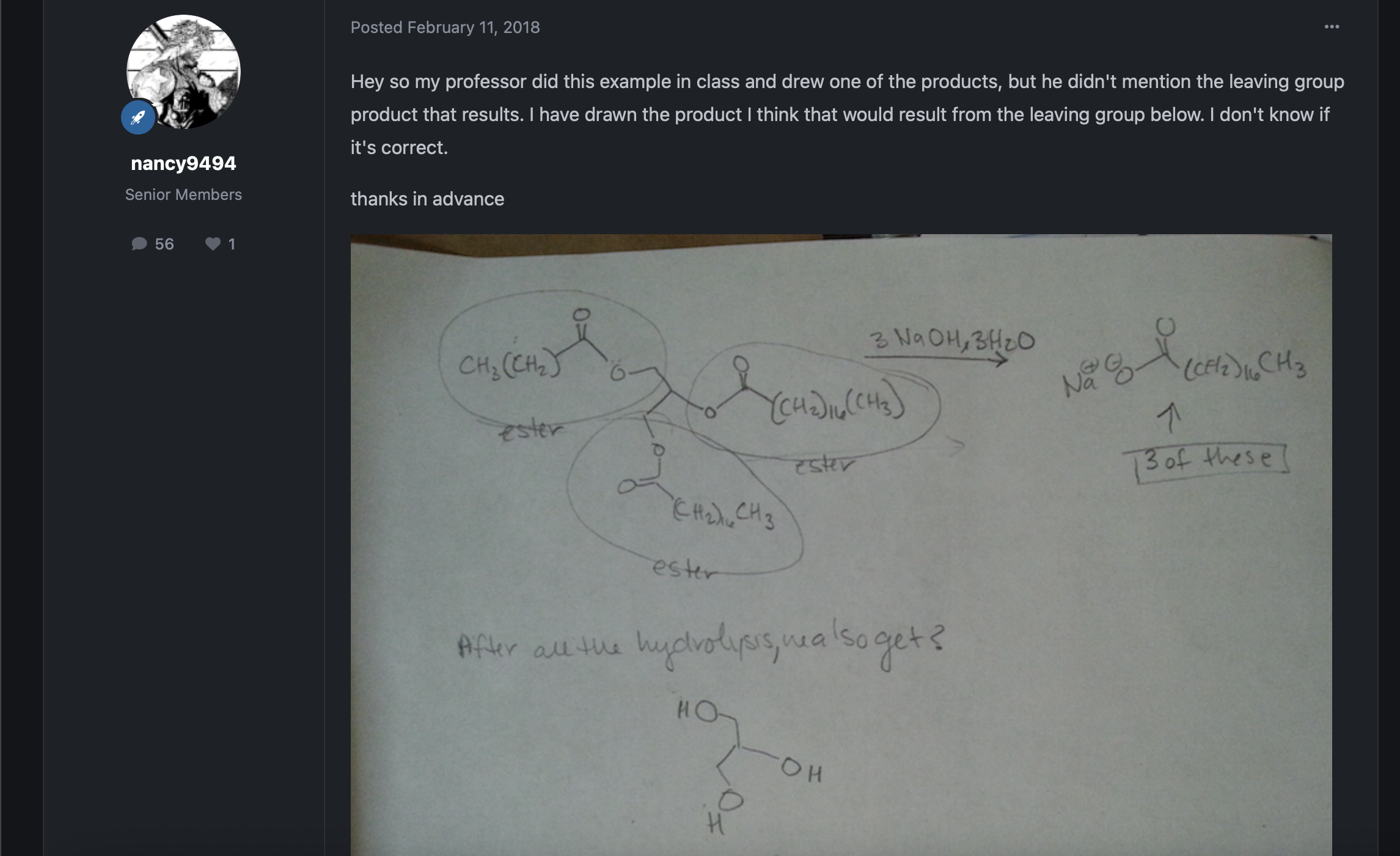
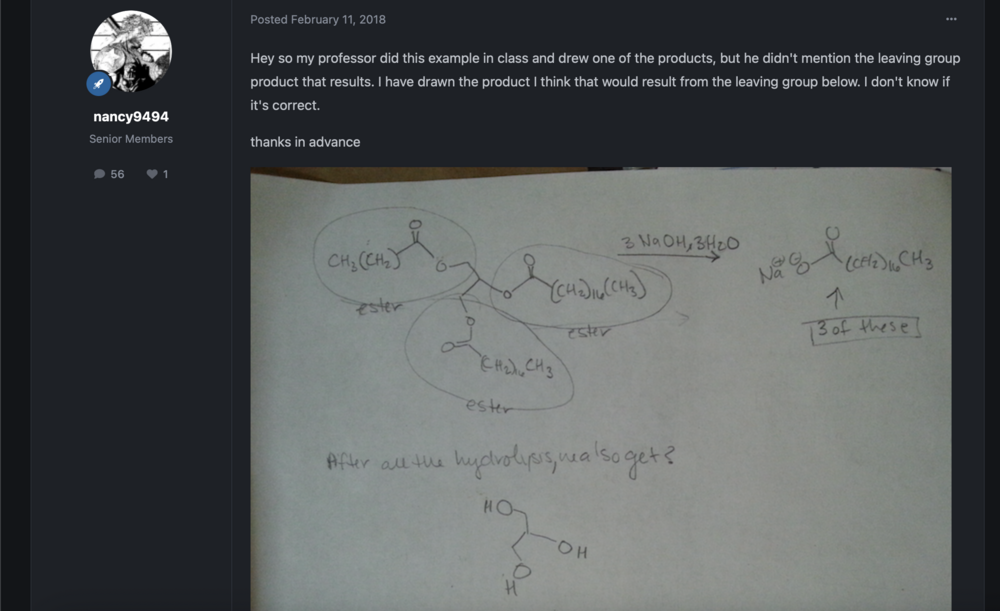
To answer this user's question, the product shown is correct. When a triglyceride reacts with three equivalents of sodium hydroxide (NaOH), each ester bond breaks because the hydroxide ion attacks the carbon in the carbonyl group. This reaction produces three sodium carboxylate salts (soaps) and glycerol. During the process, the hydroxide ion breaks the bonds and releases part of the glycerol molecule, which turns into an alcohol. In the end, the products are glycerol and three sodium carboxylates. The carboxylates change into free fatty acids if the mixture is made acidic.
-
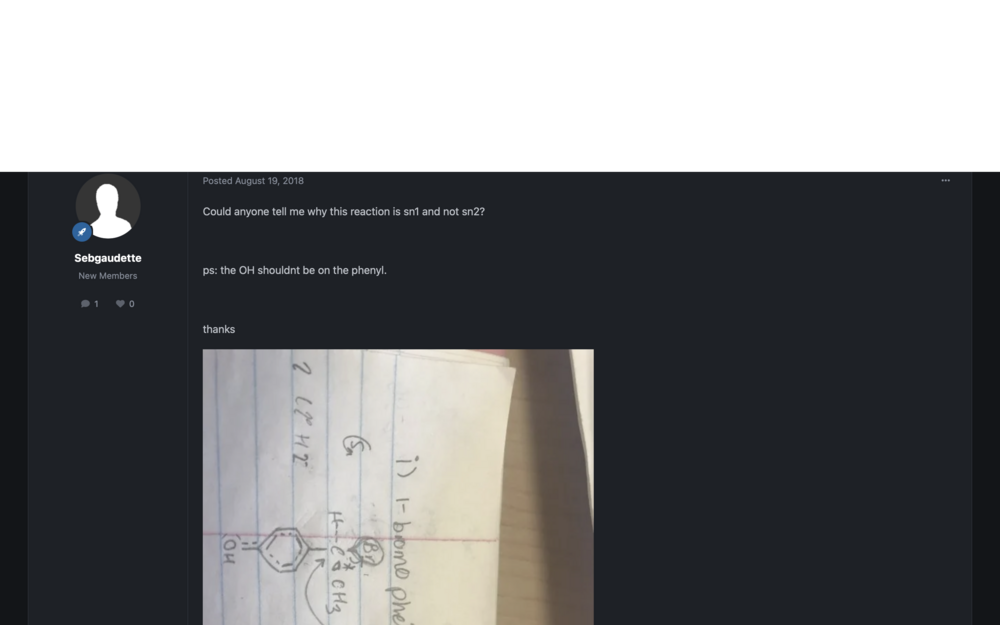
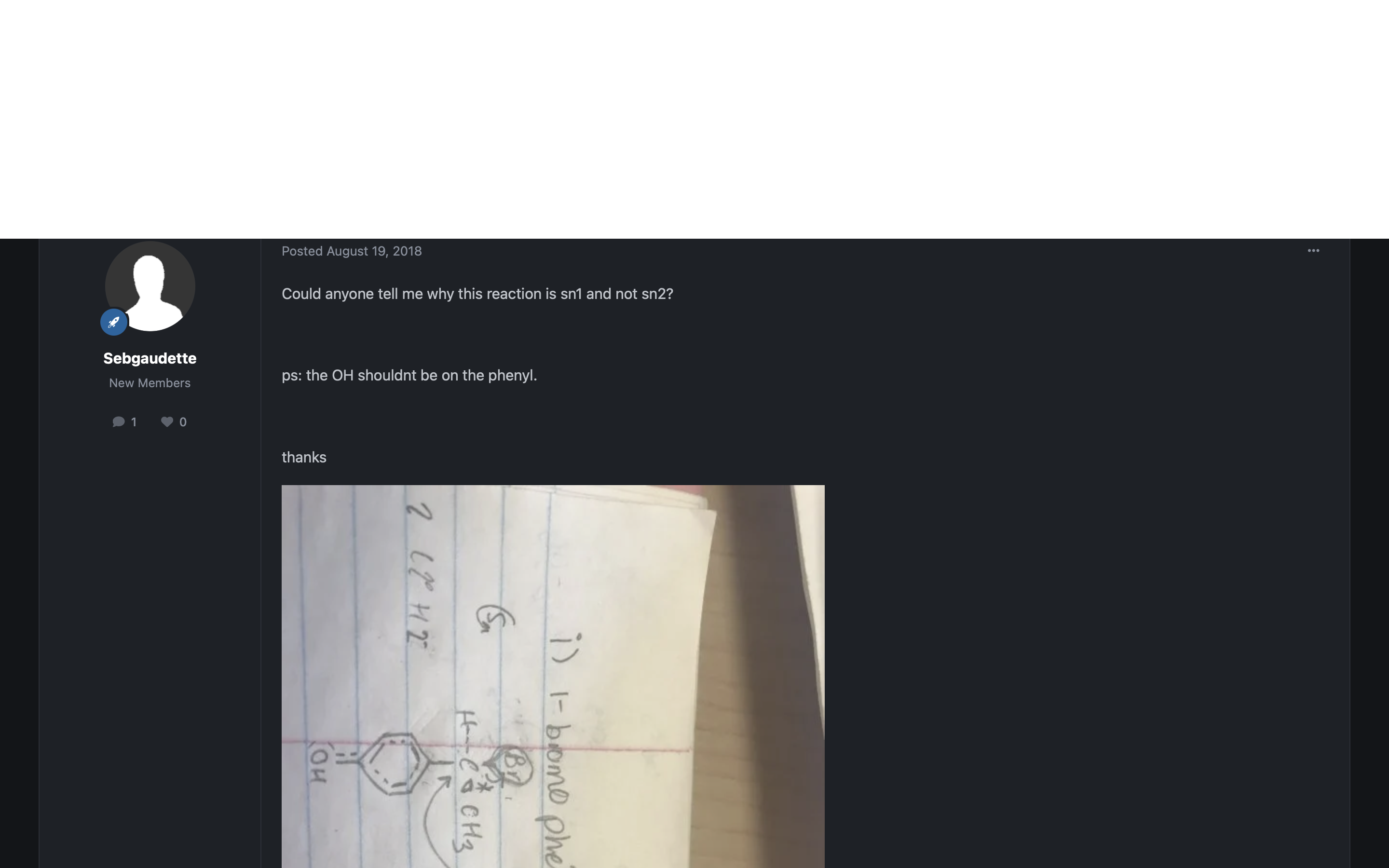
To answer the question posted by this user, this reaction proceeds through and SN1 mechanism because when the bromine atom leaves, it generates a highly stable benzylic carbocation. The positive charge on this intermediate is delocalized through the aromatic ring by resonance, which significantly stabilizes it. An SN2 mechanism would not be favorable in this case because the carbon bonded to bromine is statically hindered, preventing a nucleophile from attacking directly. Therefore, the reaction follows the SN1 mechanism.