
Nia20855
Members
-
Joined
-
Last visited
-
Can we foresee the fate of civilization through the lens of melting ice? Yes, we can. This perspective serves not as the crystal ball of a fortune-teller, but as a reflection of the fundamental interrelationships that govern the universe. Let’s take a look at an ice cube melting. When the temperature is below 0 °C, the water molecules in ice are arranged in an orderly manner, forming a stable crystal order.[95] As the temperature rises, the kinetic energy of the water molecules increases, expressed through greater molecular vibration. When the temperature reaches the transition point of 0 °C, the molecules’ kinetic energy surpasses the binding force that maintains their orderly arrangement. Once this binding force can no longer hold the molecules in place, the stable crystal order disintegrates (divergence).[96] The ice cube then transforms from a stable solid form into an unstable liquid form — a process known as phase transition. After the crystal order breaks down, the water molecules are no longer confined to fixed positions within the ice cube. They begin to move freely and disseminate in all directions as the ice melts. In solid ice, the movement of water molecules is restricted by the crystal’s binding force,[97] but in liquid water, this restriction disappears and molecular motion increases dramatically.[98] This illustrates that the degree of freedom of water molecules increases with their energy. As temperature continues to rise, liquid water transforms into gaseous steam, accompanied by a dramatic increase in volume. This represents expansion driven by increased energy. Meanwhile, the orderly arrangement of water molecules in the ice crystal transforms into disordered form in the liquid state, and the molecules collide with one another, generating intensified interactions. Technological development’s impact on society follows the same set of fundamental interrelationships that govern the Big Bang, the evolution of life, and the development of multicellular organisms. Thus, it mirrors the same underlying order shared by those processes. Transition point When a major technological breakthrough occurs, human capability reaches a change point – a critical moment that marks the beginning of a new stage in social evolution. In ancient times, the invention of stone, bronze, and iron tools each marked the onset of their respective ages. In modern history, the invention of the steam engine heralded the Industrial Age; the creation of the first computer initiated the Information Age; and the emergence of genetic engineering signaled the dawn of the Biological Age. These technological change points, which trigger fundamental transformations in society, represent pivotal moments that lead to profound social evolution. This process parallels the change points in the evolution of the universe described by the Big Bang theory, as well as those in the evolution of life itself. Transition of state When technological transition points are reached, societies enter a “phase transition”. This process is analogous to solid ice melting into liquid water — a transformation in which the substance’s physical properties change fundamentally. Likewise, different phases of society possess distinct social properties. In the present day, humanity is undergoing the “phase transition” brought about by the Information and Biological Revolutions. These two revolutions generate immense power, driving profound transformations in the social properties of human civilization. In these social transitions, the old social order ceases, but civilization continues — a reflection of the fundamental interrelationship of continuation – discontinuation. Expansion With the utilization of tools, human power expands. Each technological advancement enhances individual capability — progressing from stone, bronze, and iron tools to steam engines and computers. These developments reveal how personal and collective power increase in step with the evolution of civilization. Power increase leads to expansion, whether within individuals or groups. This process parallels the volumetric expansion of steam when water reaches 100 °C – a physical expression of accumulated energy transforming into increased volume. As power grows, certain social activities expand correspondingly. During the Industrial Revolution, for instance, the introduction of machinery amplified the productive power of farm owners, enabling the expansion of both farmland and output. Likewise, industrial production itself expanded under the momentum of mechanization. As individuals’ power expands in the Information Revolution, many are extending their businesses into territories that were previously accessible only to large companies. This reflects the fundamental interrelationship of expansion, which paves the way for new opportunities. Contraction Alongside expansion, contraction inevitably occurs. Many individuals lose influence, leading to the contraction of their businesses. This process is governed by the fundamental interrelationship of contraction and often manifests as devaluation. As previously discussed, exchange generates commercial value. In the absence of higher-level regulation, market prices are largely governed by the law of supply and demand: prices rise when demand exceeds supply, and fall when supply surpasses demand. An increase in individual power can be expressed as the enhanced ability to produce and provide goods to the market. When more individuals possess such capability, overall supply expands, leading to a decline in prices. Moreover, as individuals gain greater power, they become increasingly capable of fulfilling their own needs and desires directly, reducing external demand. Both factors contribute to price reduction — a process that results in commodity devaluation. When the decline in commercial value involves production equipment, it leads to capital devaluation. More broadly, devaluation may affect not only capital but also technology and labor. Ultimately, devaluation is an inevitable consequence of the continual increase of individual power within the evolution of civilization. Devaluation can be interpreted as an expression of the fundamental interrelationship of contraction Divergence Expansion driven by increased power can also manifest as divergence. For example, with the adoption of machinery, a farmer not only expands the scale of operations but also diversifies into new forms of production and enterprise. Convergence Convergence occurs when individuals, after acquiring expertise and resources, unite to form new organizations or enterprises. This phenomenon reflects the natural tendency of capable individuals to come together through shared purpose and complementary strengths. Increased Independence and Degree of Freedom When the temperature rises to 0 °C, the kinetic energy of water molecules exceeds the intermolecular binding force that holds them in place.[99] They break free from this restriction and are no longer locked into fixed positions. The space through which they can move increases dramatically, signifying a greater degree of freedom. Similarly, as an individual’s power increases, the range within which they can act also expands. For example, motor vehicles externally augment human muscular power, enabling individuals to travel across far larger areas. This represents an increase in personal freedom. Furthermore, as individual power grows, dependence on others decreases. Reduced reliance diminishes social constraints and thus enhances independence and freedom. In earlier times, human beings clustered together in villages, towns, cities, and metropolises. Why do people live in such concentrated ways? The reason lies in limited individual power. To satisfy their needs and desires, individuals must exchange goods and services — and distance hinders exchange. Proximity therefore facilitated cooperation and survival. However, the Industrial Revolution transformed this condition. By externally amplifying muscular power — especially through the invention and proliferation of motor vehicles — individuals gained the freedom to live farther from urban centers, where land was cheaper and environments were more pleasant. Despite increased distance, the power provided by the motor car sustained the ability to exchange and connect. This transformation exemplifies an increased degree of freedom — the liberation of individuals through the augmentation of power. Symmetry–Asymmetry However, the increase of individual power also follows one of the fundamental interrelationships – symmetry-asymmetry. The growth of power among individuals is never uniform: some experience greater increases, while others advance less. This uneven distribution represents asymmetry. In another form, one individual’s gain may correspond to another’s loss — an expression of symmetrical opposition often summarized as “one person’s gain is another’s loss.” Both patterns, whether unequal advancement or reciprocal reduction, are manifestations of the fundamental interrelationship of symmetry–asymmetry. As individual power rises, independence and the degree of freedom likewise expand. During the Industrial Revolution, for example, farm owners gained increased autonomy and mobility through the use of machinery — a pattern also observed across other industries. Yet, under the governance of symmetry–asymmetry, the independence and freedom of the labor force diminished correspondingly. Despite this dynamic of gain and loss within human society, the overall trajectory shows a gradual reduction of humanity’s dependence on the natural environment. The tendency to social disorder Stronger Interaction As the temperature of water rises, its molecules gain kinetic energy, resulting in more frequent and forceful collisions that create stronger interactions. Similarly, when individual power increases dramatically — particularly through the adoption of new technologies — interactions between individuals become more intense. For example, during the Industrial Revolution, the rapidly expanding power of individuals engaged in industrial production collided with the interests and activities of small workshop owners, laborers, and farm operators. These intensified interactions illustrate how technological empowerment amplifies social dynamics, generating both cooperation and conflict within society. The intensification of interactions within a system often gives rise to greater disorder and complexity. Social disorder As previously discussed, when power at a lower level of a hierarchical system increases, the asymmetry between higher and lower levels may shift, potentially destabilizing the system. This is especially true when the lower level’s power surpasses that of the higher level. If the higher level cannot proportionally increase its control, it becomes harder to regulate individual behavior, and society risks descending into disorder. This process is analogous to ice melting. As temperature rises, water molecules gain kinetic energy. Once their energy exceeds a critical threshold — the “higher-level” binding force — the orderly crystal structure disintegrates. Similarly, when lower-level power exceeds the controlling influence, social order can break down. As individual power grows, so does the range of influence — or power territory. Strong interactions between empowered individuals may lead to conflicts, particularly when the expansion of some encroaches on the space or interests of others. Without adequate mechanisms to manage these tensions, the system may slip into disorder. Furthermore, the increase of individual power can conflict with established rules that maintain social cohesion, such as laws, morals, ethics, religion, or even external regulatory forces. Commercial and economic changes can amplify this effect: for instance, when production equipment loses value due to market dynamics, it can trigger capital devaluation, affecting technology, labor, and broader social structures. Ultimately, the rise of individual power, while driving progress and freedom, simultaneously increases the potential for social disorder if not carefully balanced within the larger system. All these discussions clearly demonstrate that social systems and inanimate phenomena share a common underlying mechanism, reaffirming the fundamentality and universality of these interrelationships. I will reply to you in due course.
-
In the video, the Cartesian coordinate system addresses this issue. Please excuse me, I’m not sure I follow. Could you clarify what you mean by “no forces” in this context? There is no “rocket equation” in the IRM, but it can approximately represent the course of a rocket. Thanks for your input. I’ve looked it up online.
-
I appreciate your perspective, but Newton overlooked one of the fundamental interrelationships — limitation. That’s precisely one of the main points of debate surrounding Newton’s laws. Can you give an example of anything that could have limitless speed? In reality, unlimited speed does not exist. Hence, Newton’s laws are valid only within a limited and conditioned framework, as represented in the IRKM. In the video, on the left section of the IRM, two symmetrical curved lines on opposite sides of a horizontal line, proceeding from left to right, converge at a single point on that line. This represents two opposite forces acting on the same object. If you accept this illustration, then in the right section of the IRM, two curved lines diverging from each other represent two opposite forces not acting on the same object. This dynamic illustration clearly shows that “the two forces mentioned in N3 act on different bodies,” and the statement that “your diagram suggests they act on the same body” misses the point. Regarding the Second Law, my video from 0:50 to 1:19 explains it completely. “What holds B in place in those circumstances?” This depends on the context. It is different in water, in space, and on a hard surface.
-
You have made many valid points. If my understanding is correct, the key idea can be summarized as follows: Our human capacity to understand the universe is limited, whereas the universe itself is unlimited. Therefore, it is impossible for human beings to fully comprehend an unlimited universe. Consequently, no theory can ever encompass the entirety of the universe — meaning that a true Theory of Everything (ToE) is impossible. Indeed, limitation is one of the fundamental interrelationships within the universe, manifested in the fact that every system is limited. This concept is highly reliable because it is supported by countless observations. Conversely, the interrelationship of limitlessness is also fundamental, referring to the scale of the universe. This concept arises from the tendency that beyond any system, there may always exist another system — and this progression continues indefinitely. Thus, how could human intelligence, being inherently limited, ever encompass an unlimited universe? The answer is: impossible. Moreover, since we still cannot clearly define what the universe actually is, how can we define what everything is? At present, the concept of the universe usually refers only to the “observable” or “known” universe. However, these definitions imply that our concept of the universe encompasses only a portion of the true universe. Similarly, the “everything” we refer to is actually only a part of the true everything — that which is known to us. Yet even within this limited “everything,” we still lack a unified theory. The search for such a theory — one that can explain all aspects of our known universe — is what we call the Theory of Everything. Although the human mind is limited, we can still attempt to create conceptual models that represent the part of “everything” we do know, while symbolizing the parts that remain unknown. The IRM provides such an alternative framework, as it embodies both limitation and limitlessness. Limitation is represented by the IRM’s ability to reflect the boundaries of human cognitive capacity, while limitlessness is represented by its endlessly extending and branching lines. Therefore, the concept of limitation–limitlessness expressed through the IRM can effectively address the issues you have raised. Thank you for your insightful and thought-provoking questions and comments. I will prepare and provide comprehensive responses in due course.
-
Thanks for correcting me; I truly appreciate your input. Thank you for your insightful input, which I have received and appreciated. I have also noticed and read your previous related idea and will respond with more details in due course.
-
4 Representing the Biological Phenomena 1) Unifying the Big Bang theory with the evolutionary theory Based on this model, a groundbreaking research outcome has been, for the first time, put forward: a new hypothesis unifying the Big Bang theory with the evolutionary theory. The research result unequivocally demonstrates that the evolution of life also follows the fundamental laws of physics, marking a significant stride toward addressing the longstanding challenge of a comprehensive Theory of Everything. This research result was published in 2022 in the 3rd edition of the book, Behind Civilization: The Fundamental Rules in the Universe. This achievement was gained by revealing the fundamental similarities between the evolution of life and the evolution of the universe. The resemblances between the two events can be attributed to self-similarity as the evolution of life is a part of the evolutions of the universe. At a deeper level, the fundamental level, the mechanism behind these similarities lies in the fact that both events are based on a common mechanism governing everything in the universe. This mechanism is the set of fundamental interrelationships or fundamental laws of physics. All biological features in the evolution of life, including adaptation, natural selection, the driving force of evolution, the transition from unicellularity to multicellularity, the increase of complexity, the last common ancestor, division of labor, coordination, cooperation, and negligible conflict,[35] are simply specific expressions of these fundamental interrelationships. These events can be cohesively represented by the Interrelationships Model. In parallel, the events in the Big Bang are also specific expressions of these fundamental interrelationships, notably the cohesive interconnection pattern between the fundamental interrelationships, depicted in Fig-10 A and B. Through this, the Fundamental Interrelationships Model, particularly the hierarchical structure model, unifies the Big Bang theory with evolutionary theory. The preceding discussions provide insight into the interconnections among fundamental interrelationships, emphasizing their interconnectedness within a dynamic system. This exploration of cohesive dynamics opens the pathway for comprehending the evolution of the universe and the evolution of life at their fundamental level. Based on the aforementioned descriptions, an interpretation is hereby drawn: The Big Bang theory describes a dynamic process from a singularity to plurality through a divergent expansion in which a series of transition of state, critical point, divergence-convergence, expansion-contraction, symmetry-asymmetry, order-disorder and hierarchical developments cohesively occurred. Singularity expresses as “the gravitational singularity”. Plurality expresses as the multifarious diversity of the present-day’s universe. Serial relationship expresses as a series of transition of state from Planck epoch à grand unification epoch à electroweak epoch… Expansion is expressed as the spatial expansion of the universe. Divergence expresses as the separation of four fundamental forces. Convergence expresses as quarks combining into baryons, baryons combining into nuclei, nuclei combining electrons into atoms… Hierarchy expresses in the structural formation of the universe. All these processes can be cohesively represented with the Interrelationships Model. Similar to the Big Bang, life also originated from a singularity in the form of a common ancestor evolving into the present-day’s plurality of increasingly complex and diversified organisms, with approximately “1 trillion species currently living on earth”[36] From a singularity to plurality, the evolution of the universe and evolution of life went through a divergent process as both of them follow the interrelationship of divergence. In the early stage of this journey, life only existed in the form of unicellular organisms. They replicated themselves and expanded their existence following the interrelationship of expansion. Cohesively, the fundamental interrelationship of divergence leads to the differentiation observed in the evolution of life. While the process of divergence was happening, a convergent process also occurred: unicellular organisms converged to form their aggregation, a process similar to quarks converging to form neutrons and protons; molecular gas clouds converge and condense to form galaxies and stars while the universe is expanding. In evolution, life progressively evolved from unicellular, colonial, filamentous, pseudoparenchymatous, and parenchymatous forms.[37] Such serial transitions are similar to the earliest phases of the Big Bang in which transitions occurring from the Plank epoch à grand unification epoch à cosmic inflation à electroweak epoch…as both of these processes are governed by the fundamental interrelationships of serial, transition of state and critical point. These two processes are also the expressions of Continuity-Discontinuity. In the evolution of the universe, the nature of energy continued while the form of energy discontinued. In the evolution of life, life continues while the form of life discontinues. Cohesively with all these processes, life on Earth continues to evolve hierarchically forming “the evolutionary tree”.“More complex forms of life took longer to evolve, with the first multicellular animals not appearing until about 600 million years ago.”[38] This is similar to the structure formation in the Big Bang model proceeding hierarchically[39]as both events follow the fundamental interrelationship of hierarchy. The aforementioned discussion clearly demonstrates that the evolution of life follows the same set of fundamental laws of physics that the evolution of the universe follows. It is a specific expression of those rules. 2) Representing Social Phenomena Moreover, The Interrelationships Model extends beyond natural sciences to encompass social sciences as well. Concepts like justice and humor can be depicted within the model’s framework. In the context of social decision-making (i.e., legal disputes), the model can illustrate the impartiality of a just decision when parties contribute equally. If two parties have equal contributions, as represented in the model (Fig-9) by lines A and E, then a just decision should be impartial to both. The justice of this decision is represented by the straight line C’ on the right side, which is not biased toward either line A or line E. Similarly, the model can capture the asymmetry of decisions when contributions differ, aligning with concepts found in Newton's laws of motion. If one party’s contribution is greater than the other, such as if A is greater than D, then the decision should be favorable toward A. This can be represented by the initial section of line A’ (line OF), which moves toward side A and away from D. This demonstrates that the model can effectively represent social science concepts as well. Notably, the model suggests a common underlying mechanism between social decision-making processes and physical laws like Newton’s first and second laws of motion. In the realm of humor, the model can reflect the parallelism between drawn images that exaggerate features and real-life figures. This exaggeration, represented by the model, might be a key mechanism that elicits amusement 5 An Alternative Approach to the Theory of Everything: All the preceding discussions have addressed the issues raised in the previous video and demonstrated that the fundamental interrelationships can cover a diverse range of phenomena, from lifeless to living phenomena. Thus, these fundamental interrelationships possess universality. Moreover, the discussions also demonstrate that all these phenomena are specific expressions of these fundamental interrelationships, verifying their fundamentality. Therefore, these interrelationships exhibit both fundamentality and universality. As a result, these discussions demonstrate that the model is not merely a concept, but the concept that truly reflects the physical world. The fundamentality-universality relationship can be represented by the Interrelationships Model. As a concept is the representation of the corresponding existence, they are in a symmetrical relationship, which can be illustrated in Fig-1, where the left side of the model represents existence and the right side represents the corresponding concept. If a concept is true, then the right side should match the left side - an expression of symmetry. This relationship of symmetry can also be depicted in Fig-14, where the inverted hierarchical system represents all existences, and the upright hierarchical system represents all the corresponding concepts. The central point, C, is the most fundamental level of the inverted hierarchical system. It signifies fundamentality and represents the fundamental mechanism of everything. Simultaneously, this point is the highest level of the upright hierarchical system, covering all corresponding concepts beneath it. Thus, it signifies universality and represents the Theory of Everything. Therefore, the concepts of the fundamental mechanism and the Theory of Everything are the same entity, viewed from two different perspectives. Hence, the IRM, which represents the fundamental mechanism of everything, also represents the Theory of Everything (ToE). The Fundamental Interrelationships Model – An Alternative Approach to the Theory of Everything, Part 2 Subtitle: Unifying the Evolution of Multicellularity, Development of Multicellular Organisms, Evolution of Society and the Evolution of the Universe The quest for a unified “Theory of Everything” that explains the fundamental nature of the universe has long been a holy grail for scientists and philosophers, dating back to the ancient Greeks’ search for Arche. The mainstream of this research primarily focuses on the lifeless phenomena and laws of physics while ignores the realm of biology. However, a fundamentally different approach to the ToE has been put forward, presenting a viable alternative to address the challenge of a Theory of Everything. This approach does not seek the ultimate “building block” but rather aims to uncover the intangible rules that fundamentally govern everything in the universe, seeking their universality across the vast spectrum, from the minute subatomic world to the mega mass cosmic world and the magical biological world. This article explores how the Fundamental Interrelationships Model unifies our understanding of the evolution of the universe, encompassing the evolution of multicellularity, development of multicellular organisms, societal evolution, and the four fundamental forces, all within the context of the fundamental interrelationships. Thus, unlike most existing candidates, the Fundamental Interrelationships Model offers a comprehensive framework, encompassing both non-biological and living phenomena. As a truly all-inclusive theory, ToE shouldn’t only encompass non-biological processes and the laws of physics but extend to all facets of life, including evolution of life, evolution of society (civilization), humour, and justice, because life is an integral part of the dynamic cosmic system - the universe. Therefore, any hypothesis failing to integrate biology and sociology shouldn’t be considered a comprehensive Theory of Everything 1 Evolution of life This article continues the discussion from the previous article titled “Unifying Evolutionary Theory with the Big Bang Theory through the Fundamental Interrelationships Model, a Significant Stride in Addressing the Most Fundamental Issue – a Theory of Everything.” According to the Big Bang theory, the universe transitioned from an incredibly hot, dense singularity to the vast and diverse cosmos we observe today. This theory resonates with the fundamental interrelationship of singularity-plurality. Among these dynamic transitions, a specific branch, the evolution of life emerged on one of the planets, Earth. “Earth formed about 4.5 billion years ago (abbreviated as Ga, for gigaannum) and evidence suggests that life emerged prior to 3.7 Ga…. The similarities among all known present-day species indicate that they have diverged through the process of evolution from a common ancestor.” - History of life, Wikipedia “Within the first billion years of Earth’s history, life appeared in the oceans and began to affect Earth’s atmosphere and surface, leading to the proliferation of anaerobic and, later, aerobic organisms”. - The Earth, Wikipedia These descriptions illustrate the emergence of life in its early stages. Similar to the Big Bang, life originated from a singularity in the form of a common ancestor. It evolved into the present day's plurality of increasingly complex and diversified organisms, with approximately “1 trillion species currently living on earth”[1]. The evolution of the universe and the evolution of life, from singularity to plurality, underwent a divergent process, guided by the interrelationship of divergence. In the early stages of this journey, life existed solely in the form of unicellular organisms.[2] They replicated and expanded their existence following the interrelationship of expansion. Similarly, the evolution of the universe underwent a comparable process of expansion, manifesting as the expansion of space. The fundamental interrelationship of divergence leads to the separation of the four fundamental forces in the evolution of the universe, paralleling the differentiation observed in the evolution of life.[3] During the evolution of life, while the process of expansion/divergence occurred, a convergent process also took place: unicellular organisms converged to form aggregations,[4] a process analogous to quarks converging to form neutrons and protons, and molecular gas clouds converging and condensing to form galaxies and stars while the universe expands.[5] Consequently, following the interrelationship of convergence, life progressively evolved from unicellular organisms to colonial organisms and then to multicellular organisms. [6] These serial transitions bear similarities to the earliest phases of the Big Bang, with transitions occurring from the Planck epoch à grand unification epoch à cosmic inflation à electroweak epoch...[5] Both of these processes follow the serial interrelationship and are governed by the fundamental interrelationships of transition of state and critical point. Additionally, these processes express a pattern of continuation-discontinuation. In the evolution of the universe, the nature of energy continues while the form of energy discontinues. In the evolution of life, life continues while the form of life discontinues. Cohesively with all these processes, life on Earth continues to evolve hierarchically forming “the evolutionary tree”,[7] which is similar to the structure formation in the Big Bang model proceeding hierarchically.[8] 2 The fundamental mechanism behind the evolution of multicellular organism “More complex forms of life took longer to evolve, with the first multicellular animals not appearing until about 600 million years ago.”[9] The evolution of multicellular organisms prompts questions about the aggregation of unicellular organisms. What drives these serial transitions, especially the shift from unicellular to multicellular organisms? For these issues, “evolutionary biologists still debate what drove simple aggregates of cells to become more and more complex, leading to the wondrous diversity of life today”.[10] Several hypotheses attempt to address these intriguing issues: Predation Hypothesis This hypothesis suggests that the evolution of multicellularity is driven by predation. Aggregation enables unicellular organisms to acquire larger sizes, providing predators with an advantage in catching their prey. At the same time, a larger size allows an organism to better avoid predation.[11] Scientific experiments supporting this hypothesis have been conducted.[12] For instance, when single-celled microbes such as yeast, algae, and bacteria are exposed to a micro-predator environment, they are more likely to evolve into multicellular forms.[13] Scarce Resource Hypothesis "When food (normally bacteria) is readily available dictyostelids behave as individual amoebae, which feed and divide normally. However, when the food supply is exhausted, they aggregate to form a multicellular assembly…” - Dictyostelid, Wikipedia “Slime mold or slime mould is an informal name given to several kinds of unrelated eukaryotic organisms that can live freely as single cells, but can also aggregate together to form multicellular reproductive structures… When food is abundant, these slime molds exist as single-celled organisms. When food is in short supply, many of these single-celled organisms will congregate and start moving as a single body. In this state they are sensitive to airborne chemicals and can detect food sources. They can readily change the shape and function of parts, and many form stalks that produce fruiting bodies, releasing countless spores, light enough to be carried on the wind or hitch a ride on passing animals”. – Slime mold, Wikipedia While these hypotheses provide partial explanations for cellular aggregation, a common thread underlying all transitions from unicellular to multicellular organisms represent a power shift from asymmetry to symmetry in the dynamic between the organism’s power and the hostile environmental forces: When facing a more powerful predator, less powerful unicellular organisms converge to form a more powerful aggregate, symmetrically matching the predator's strength. This process is a transition from asymmetry to symmetry. For a predator to successfully catch its prey, it must possess at least as much power as its target. Cellular aggregation facilitates the increase in a predator's power, representing a process of power enhancement from asymmetry to symmetry. Another scenario illustrating this transition occurs when the food supply is exhausted. In this situation, unicellular social amoeba need to reach new feeding sites, which is inevitably met with hostile environmental resistance. Thus, they need to acquire more power to symmetrically match the hostile forces. “The social amoebas, or Dictyostelia, are a group of organisms that become multicellular by aggregation and then proceed to build fruiting bodies that consist of stalk cells and spores”.[14] In this way, unicellular social amoebas acquire the necessary power. This power balances the hostile environmental forces and helps amoeba as they are transported to new feeding sites. This process of multicellular formation represents yet another transition from asymmetry to symmetry. This mechanism of transitioning from asymmetry to symmetry is also evident in biofilm formation. Bacteria are generally considered unicellular organisms. Solitary bacteria are vulnerable to the hostile forces in the environment. However, when they aggregate and adhere to a surface to form a biofilm. They behave like a multicellular organism.[15] They cooperate to produce a protective bio-matrix, communicate and share information. This communal living arrangement empowers them to acquire the power symmetrical in strength to act against the hostile forces in the environment. Thus, biofilm can survive “the harmful factors in the environment, such as desiccation, antibiotics and a host body’s immune system”.[16] In all these cases, unicellular organisms converge to attain greater power, aligning with hostile environmental forces to reach an equilibrium state. The equilibrium state provides the essential conditions for stability. Stability provides the essential conditions for existence which is biologically presented as survival. The process of matching hostile environmental forces is fundamentally a transition from asymmetry to symmetry, and is regarded in biology as one of the most important traits – adaptation. Therefore, adaptation is simply an expression of the transition from asymmetry to symmetry, where asymmetry serves as the driving force for change. Once symmetry is achieved, a stable existence is established, presented as survival. This transition from asymmetry toward symmetry is universal. For instance, the asymmetry of temperature between two connected objects shifts to symmetry, resulting in thermal equilibrium. Similarly, the act of dropping an object represents the shift from asymmetry of potential energy to a symmetrical state. In chemical reactions, the combination of oxygen and hydrogen into H2O releases energy and lowers their energy state. This signifies a shift from energy asymmetry to symmetry under the environment of a standard state[17]. Conversely, their separation after absorbing a certain amount of thermal energy to reach a higher energy state is also a shift from asymmetry toward symmetry align with a higher-temperature environment. Furthermore, as the temperature of the universe kept dropping, “the electrons and nuclei combined into atoms (mostly hydrogen), which were able to emit radiation.”[18] This process is also a shift from asymmetry towards symmetry. These phenomena collectively demonstrate that systems alter their relation to the external environment, moving from asymmetry towards symmetry. In some sense, the changes observed in these abiotic items, such as the combination of particles in the Big Bang, can be viewed as “adaptations.” Building on the previous discussions, we see that many processes involve transitions from asymmetry to symmetry, often associated with the concept of a “driving force.” This raises a few fundamental questions: what is the nature of force? What is the “purpose” for all forms of force? Could forces be expressions of the underlying interplay between asymmetry and symmetry? If so, are these forces specific expressions of this interplay? An in-depth discussion of this issue leads to a promising conclusion; however, it would be inappropriate to include it here due to the platform’s content restrictions. The discussion has, nevertheless, been published elsewhere. The discussions have demonstrated that the fundamental interrelationship of symmetry-asymmetry is the underlying mechanism behind a spectrum of dynamics. This interplay presents various driving forces, ranging from four fundamental forces to the driving forces of evolution of life and civilization. The “purpose” of all these forces is to maintain the stability of their respective systems, ultimately ensuring their continued existence. Nevertheless, asymmetry-symmetry represents only one facet of the fundamental mechanism guiding the transition from unicellular organisms to multicellular organisms. Following these fundamental interrelationships, solitary single-celled organisms converge to form aggregations. As this biological event is part of the evolution of the universe, it inherently adheres to the same set of fundamental interrelationships that govern the cosmos. Consequently, the transition to multicellular organisms and their biological features are specific expressions of these fundamental interrelationships, bearing striking similarities with the evolution of the universe. As all these fundamental interrelationships are cohesively related to each other, the biological features develop simultaneously during the evolution and development of multicellular organisms. These processes begin from a singularity and unfold in a divergent manner towards plurality. Along these trajectories, a hierarchical network gradually forms, within which serial-parallel, convergence-divergence, critical point, symmetry-asymmetry, limitation, and order-disorder cohesively developed. Following these cohesively interconnected fundamental interrelationships illustrated in Fig-12 A, the journey of transition to multicellular organism begins from a singularity in the form of a last common ancestor and continues through adhering to the divergent interrelationship to evolve, presenting as cell division. This divergence process cohesively develops with parallel multiple cell developments, allowing cells to evolve under a parallel mechanism. The parallel mechanism facilitates the evolution of both commonalities and differences among cells, resulting in common and different traits in various cell types. These traits manifest as cells gaining/strengthening certain structures and functions while losing/weakening others. For instance, some cells gain special functions while losing their reproductive function, transforming into somatic cells like muscle and neural cells. Others specialize in reproductive function and become germ cells. This is cellular differentiation, characterized by the gaining/strengthening of some cell functions accompanied by the losing/weakening of other functions. This gain-loss relationship is governed by symmetry-asymmetry. A familiar example is cutting a cake into two parts: when one portion gets larger, the other becomes smaller, creating asymmetry. However, the smaller portion has lost an amount symmetrically equal to the exact amount gained by the larger portion. Based on the same principle, if a cell allocates more capacity to one function, it must reduce capacity for other functions. The gaining/strengthening of special function(s) is also termed cell specialization, paving the way for division of labor. Cellular differentiation/specialization is not exclusive to multicellular organisms but can be found in unicellular organisms, such as bacteria, at an evolutionary stage preceding multicellularity. For example, within biofilms, some cells specialize in food production, while others focus on motility and defense[19]. From our previous discussion, it's evident that the divergent/parallel interrelationships expressed in the Big Bang model, notably seen in the separation of four forces, also find expression in the evolution of life as cellular division/differentiation. As a part of the cohesive development, convergence also simultaneously happens as specialized cells aggregate to form the corresponding subsystems in cell aggregations. For example: “In bacteria E. Coli macro-colony biofilms, intra-colony channels are formed inside the aggregation. This structure is similar to human vasculature and used as a system for nutrient distribution.” - Intra-colony channels in E. coli function as a nutrient uptake system. Liam M. Rooney, William B. Amos, Paul A. Hoskisson and Gail McConnel, The ISME Journal As divergent development continues, cell aggregation becomes increasingly hierarchical, accompanied by a rise in complexity. This process is manifested in various biological systems. For instance, the human vascular system exhibits a greater level of complexity compared to intra-colony channels in a bacterial colony. Increased complexity is a part of the inherent nature of dynamic development within a hierarchical system and can be represented by Fig-12. This phenomenon is akin to the developmental pattern observed in trees, where complexity progressively increases from the trunk towards the treetop. Such a universal pattern is not exclusive to specific organisms but exists both in the evolution and development of various life forms and in the evolution of the universe. For example, “structure formation in the Big Bang model proceeds hierarchically, due to gravitational collapse, with smaller structures forming before larger ones”.[8] The aforementioned discussions indicate that even in colonies of unicellular organisms, certain features of multicellular organisms have already emerged. These features progressively evolve and become more pronounced in multicellular organisms. The critical point of transition from unicellular to multicellular organisms The increasing loss/weakening of certain cell structures and functions lead to a compromised cell-level integrity. Consequently, cells become more reliant on one another for survival, fostering increased interdependence among cells[20]. As the loss of cell function progresses and cellular integrity is increasingly compromised, a cell reaches a critical point where it cannot survive independently, relying on other cells for sustenance. This critical point is considered a landmark in the transition from unicellular to multicellular organisms[20], as depicted in Fig-7, representing the interrelationship of transition of state and critical point. An illustrative example of this transition is observed in unicellular bacteria, which can independently survive in normal water due to their protecting cell walls.[21] In contrast, a red blood cell from a human, having lost its cell wall during evolution, cannot survive independently in the same environment. If the bacteria's cell wall is damaged, compromising its cellular integrity, the bacteria cannot survive. This is the mechanism how some antibiotics kill germs by damaging their cell walls.[22] All these discussions demonstrate that the evolution from unicellular to multicellular organisms adheres to the same fundamental interrelationships observed in the evolution of the universe. Consequently, these two events exhibit striking similarities. In the following discussion, we will further discuss the role of those fundamental interrelationships in multicellular development and social evolution. 3 Multicellular development and social evolution After unicellular organisms reach a critical point in evolution, they transition to multicellular organisms. As evolution progresses, some multicellular organisms further converge to form higher-level bio systems - social groups.[23] Being an integral part of the broader evolution of life, the evolution of social groups exhibits biological similarities with the evolution and development of multicellular organisms. These shared characteristics stem from a common biological mechanism. Notably, features akin to the evolution of life and the development of multicellular organisms manifest in the evolution of social groups. These include social differentiation, specialized professions, division of labor, coordination, cooperation, hierarchical structure, and an increasing level of social complexity. Moreover, all these processes are integral components of the evolution of the universe. Thus, they all adhere to the cohesively connected fundamental interrelationships and exhibit fundamental similarities. Cohesively interconnected fundamental interrelationships Parallel to the evolution of life, the embryonic development of a multicellular organism, such as a human, also follows the fundamental interrelationships as illustrated in Fig-12 A, expressing similarities. The entire process adheres to the cohesively interconnected fundamental interrelationships to develop. Similar to the universe beginning with a singularity and life finding its origins in a common ancestor, the development of a human also follows the fundamental interrelationship of singularity. This is evident as the developmental journey begins with a singular entity - a single fertilized egg cell. Through subsequent cell division, the single fertilized egg cell undergoes a transition to multiple cells, exemplifying the fundamental interrelationship of singularity-plurality. In this transformative process, the journey follows the interrelationship of serial-parallel. The serial relationship expresses as successive levels, progressing from cell, tissue, organ, to the functional subsystem levels. Simultaneously, parallel development occurs across these successive levels. At the cellular level, parallel development simultaneously expresses as divergent development, showcasing the cohesive interconnection between the fundamental interrelationships of parallel and divergence. In this divergent development, under the parallel mechanism, cells differentiate into various types, showcasing both commonalities and differences. While adhering to the interrelationship of divergence, this process simultaneously follows the fundamental interrelationship of convergence. This is observed as specialized cells anatomically aggregate in a defined space, such as liver cells forming the liver. Convergence extends further, with cells forming tissues, tissues forming organs, organs forming functional subsystems, and these subsystems converging to constitute a human system. Convergence is not only anatomical but also physiological, as cells cooperate in a self-centered manner toward a common goal - the survival of the human body. As these intricate processes persist, a hierarchical system emerges, marked by an escalating level of complexity. The aforementioned overall description highlights that beneath the development of a multicellular system, fundamental interrelationships serve as the driving mechanism. These interrelationships underpin the transition from a single cell to multiple cells, the processes of differentiation, division of labor, coordination-cooperation, increased complexity, self-centeredness, altruism, hierarchical system formation, negligible conflict, increased power, adaptation, and natural selection. Simply put, these biological features are specific expressions of those fundamental interrelationships. In subsequent discussions, we will delve into more details on how these fundamental interrelationships find expression in each of these biological features. Parallel to the development of multicellular organisms, overall social evolution also aligns with these fundamental interrelationships. It initiates with a few members, and in accordance with the fundamental interrelationship of expansion, the number of individuals progressively increases, expanding the size of the social group. Concurrently, the fundamental interrelationship of divergence initiates social differentiation. Individuals specialize, giving rise to various social professions such as administrators, soldiers, farmers, workers, intellectuals, and more. Governed by the fundamental interrelationship of convergence, these specialized individuals form specific groups. As a result of the interplay between divergence and convergence, a hierarchical society emerges - a manifestation of the fundamental interrelationship of hierarchical structure. Specialized individuals are organized within this framework to perform corresponding social tasks. 4 Maintaining ordered state and integrity According to the second law of thermodynamics, a system's disorder level increases over time.[24] Applying this law to biosystems, considering the increase in cell number and complexity, one might expect an escalation of disorder, aligning with chaos theory. Surprisingly, a human body, composed of 37.2 trillion cells, manages to maintain an ordered state with negligible conflict, especially in a healthy individual. This remarkable feat stands in stark contrast to the chaos often observed in human society. The explanation for this paradox lies within the fundamental interrelationships. Singularity In a multicellular system, all cells share just one genome, the identical one. This phenomenon is of fundamental importance in maintaining the ordered state of a multicellular system. The gene level is arguably the most fundamental, second only to the fundamental laws of physics, in a hierarchical system (an inverted system). Conversely, as illustrated in Fig-12 B, the gene level can be perceived as the highest level in an upright hierarchical system because genes exert control over all cells in a multicellular system. As discussed previously, the highest level of a hierarchical system should be in a state of singularity for the system’s ordered state to be maintained. This singularity implies that only one set of order is permissible; the presence of more than one set of order within a system would lead to disorder. This fundamental principle is universally applicable to all systems. In the case of an ordered multicellular system, it is restricted to having only one genome. This objective is primarily accomplished through the replication of a single genome during the development of a multicellular organism.[25] Consequently, all cells possess the same genome[26]. This singularity at the gene level serves as a mechanism to minimize conflicts and uphold order in a multicellular system.[27] Singularity not only manifests as a single cell developing into multiple cells but also as one genome being passed on to all cells. In the cellular context, generally, there exists only a single nucleus, and in the human body, there is only one head. Analogously, within a social group, there is a singular administration. Similar to the nucleus serving as the highest level in a cellular system, administration holds the highest position in a hierarchical social system. Both are expressions of the fundamental interrelationship of singularity, where genes dictate cellular activities, and administration plays a parallel role in governing social activities. They serve as regulators within their respective systems. Much like the same genome passing on to all cells in a multicellular organism, a set of common rules, often referred to as human nature, is passed on to all individuals within a social group. Thus, just as all cells share the same genome in a multicellular organism, all individuals in a social group share the same human nature. Divergence Cellular differentiation provides a solution at cellular level To maintain order and integrity, a solitary single-celled organism must possess a set of basic structures and functions that collectively constitute its integrity. Based on this integrity, all components of a cell converge their efforts in a self-centered manner towards a single goal – maintaining the integrity of the cell. It is for the well-being of the organism itself. Thus, it is self-centered. This self-centered nature is vital for a solitary single-celled organism to survive. Nevertheless, this inherent self-centered nature may lead to conflicts among cells when they aggregate, posing a potential risk of turning the entire group into disorder. This scenario resembles turbulent flow, where numerous 'self-centered' vortexes emerge and collide, inducing chaos. However, unlike turbulent flow, normal multicellular organisms possess a mechanism to avert conflicts, ensuring the maintenance of order and integrity. Divergent development, manifested as cellular differentiation, addresses this issue through the regulation of gene expression within the same genome. The control of gene expression determines which genes are activated or deactivated, resulting in cellular differentiation.[28] This process gives rise to various cell types, exemplifying the fundamental interrelationship of divergence. Throughout this process, the same genome persists, but the pattern of gene expression undergoes discontinuation, reflecting the fundamental interrelationship of continuation-discontinuation. Cellular differentiation results in a partial weakening of self-centeredness at the cellular level. For instance, the loss of the reproduction function in somatic cells weakens their self-centered nature, preventing excessive cell growth and the conflicts between neighboring cells, consequently avoiding disorder in a multicellular organism. The significance of this becomes evident when considering tumor cells that revert to an ancestral state, regaining the reproduction function.[29] In such cases, intercellular conflicts arise, leading to disorder within the entire system. Cellular divergent development results in differentiation with specialized cells, paving the way for division of labor within a multicellular system. The self-centeredness evident in a solitary single-celled organism also manifests in human individuals, as observed in behaviors driven by human nature. Many of these behaviors are geared towards the well-being of the individual, reflecting a self-centered nature. This inherent self-centeredness in human nature plays an important role in maintaining the integrity of the human body and is vital for an individual's survival. However, the self-centeredness ingrained in human nature within a social environment can give rise to conflicting directions in individuals' behavior, potentially leading to clashes and transforming the social group into disorder. This scenario draws parallels with our earlier discussion on turbulent flow, where numerous “self-centered” vortexes emerge and collide, resulting in disorder. To address this challenge, empathy[30], representing a non-self-centered aspect of human nature, serves as a symmetrical counterbalance to innate self-centered tendencies. It helps reduce conflicts between individuals. If this measure fails, a set of higher-level behavioral control concepts, operating at the cognitive level, is implemented as a symmetrical counter-force to prevent the transformation of self-centered inclinations into selfish behavior. This set of guidelines is encapsulated in moral and ethical protocols, collectively termed as "Human Behavior Internal Controlling Forces”. Similar to how gene regulation governs the expression of genes, the "Human Behavior Internal Controlling Forces" regulate the manifestation of human nature. Gene regulation in a multicellular system represses those genes causing excessive self-centeredness while switches on those beneficial genes.[31] In a parallel manner, the "Human Behavior Internal Controlling Forces" inhibit the manifestation of self-centered tendencies that could lead to social conflicts. Meanwhile, they facilitate the expression of beneficial human traits, promoting social-centered behaviors such as kindness, mutuality, and cooperation. The profound impact of this control mechanism on social development is evident, as human nature fundamentally influences both individual and group behavior within a social context. Social divergent development results in social differentiation, creating specialized individuals with different expertise. This paves the way for division of labor within a social group. Convergence Cooperation Cellular divergent development initiates cellular differentiation, giving rise to distinct cell types and paving the way for the division of labor. Concurrently, cell specialization leads to an increased intercellular dependency, compelling cells to cooperate. Specialized cells aggregate in a defined space, hierarchically forming tissues, organs, functional subsystems, and ultimately establishing a body system with multicellular integrity. Cellular divergent and convergent developments lay down a hierarchical framework that serves as the foundation for the emergence of self-centeredness at the multicellular level. Within this hierarchically organized framework, all cells, under coordination, cooperate in a self-centered manner - referred to as multicellular level self-centeredness - toward a singular goal: the survival of the multicellular system. This shared objective acts as a unifying force, prompting individual cells to converge and align their efforts in the same direction. This alignment helps avoid conflicts stemming from conflicting directions of cell-level self-centeredness. Consequently, self-centeredness transitions from the cellular level to the multicellular level.[32] This transition is a key factor contributing to the negligible conflicts observed in multicellular organisms. It represents the fundamental interrelationship of convergence, visually depicted on the left side of the Fundamental Interrelationships Model (IRM) in Fig-3. This multicellular level self-centeredness and integrity support inter-dependency between cells. Specialized cells not only deliver output for themselves. They also deliver output for other cells as well. Compared with a solitary single-celled organism, each cell in a multicellular system has to take its “social responsibility”. This indicates that cells are not only self-centered but non self-centered in a multicellular system. For example, all heart muscle cells collectively contract to deliver cardiac output (pumping blood) not only for their needs but for all other cells in the body. Through a convergent-divergent exchange mechanism, all cells mutually support and contribute to the well-being of the higher level - the integrity of the multicellular system, which in turn provides the necessities for the well-being of all cells in a hierarchically divergent fashion. In this process, a cell (represented by one line on the left side of the IRM) delivers its output for all cells (represented by multiple lines on the right side of the IRM) in the system. Conversely, a cell (represented by one line on the right side of the IRM) receives input from multiple cells (represented by multiple lines on the left side of the IRM). In essence, this mechanism operates as “one cell for all cells and all cells for one cell.” It represents the exchange between cells, serving as a binding force that maintains the unity of all cells. Similarly, exchange functions as a binding force between individuals in human society. Moreover, the binding force between quarks involves the exchange of virtual particles.[33] This form of exchange in a multicellular organism is an expression of symmetry. Only by following this interrelationship can the integrity of a multicellular system be maintained. Similar to cellular cooperation within a human body, cooperation also occurs in human society. While these two processes share commonalities, notable differences exist between them. As the evolution of life, progressing from unicellular organisms to multicellular organisms, spans a much longer timeframe than the evolution of human society, consequently, cooperation between cells in a multicellular organism is far more advanced than the cooperation observed in human society. Limitation Limitation is a fundamental interrelationship crucial for preventing disorder within a system. When things surpass a certain limit, order can swiftly transition into disorder. For instance, if the velocity of an orderly laminar flow exceeds a limit, the flow transforms into disordered turbulent flow. Limitation plays a pivotal role in the mechanism that upholds the order of a biosystem. In the context of a cell, the cell membrane serves as a defining limitation, creating a boundary between the internal and external environments. Meanwhile, the cell membrane features channels facilitating controlled exchanges between the internal and external environments. These channels meticulously regulate the influx and outflow of substances, ensuring they remain within normal limits.[34] A breach in the integrity of the cell membrane can lead to an uncontrolled flow of substances, surpassing normal limits, thereby disrupting the existing order and potentially resulting in dysfunction or cell death. This highlights the selective nature of a cell's opening to the external environment, controlling the types of substances and establishing limits for their influx and outflow. In essence, a cell operates as an isolated-open system, with its interactions with the external environment being selective and driven by the imperative of survival, the ultimate criterion guiding all cellular behaviors.[35] In a multicellular system like the human body, the skin and mucosa serve as critical components defining the body's limitations. These structures act as barriers, creating a boundary that separates the internal and external environments. Beyond mere physical separation, they play essential roles in maintaining body fluid balance, facilitating excretion and absorption processes, and regulating body temperature. Through these functions, skin and mucosa contribute significantly to the maintenance of the ordered state within the body's internal environment.[36] Simultaneously, exchange between the internal and external environments persists through the mouth, nose, ears, eyes, and other neural sensors. These openings allow for the intake of useful substances, carefully regulated to maintain normal limits. Wastes are efficiently discharged to the external environment. Notably, precautions are in place to prevent harmful items such as toxic substances and microorganisms from entering the human body. Toxic substances, if allowed in, can disrupt the ordered internal environment, while microorganisms possess their own biological order that inevitably conflicts with the host’s order, resulting in disorder. Top of Form This demonstrates that a human body is an isolated-open system. Its opening to the external environment is selective, as it controls the types of substances and the limits of intake and discharge. Limitations are also evident in cell number, size, growth, and death, all of which contribute to maintaining order within a multicellular system. In parallel, the border of a social group, such as a country, similarly serves to separate the internal environment from the external environment, ensuring the maintenance of order within the societal structure. It is a crucial component of the mechanism designed to stabilize a society and preserve its integrity. Any damage to this mechanism may lead to societal disorder. Similarly, a country functions as an isolated-open system, equipped with channels for communication with the external environment. These channels control the influx and exodus of personnel and regulate the exchange of materials. In this manner, country borders play a crucial role in upholding the integrity of society. Customs functions as a key component in managing this communication with the external environment. If Customs loses control, the unregulated influx and exodus of personnel and materials may disrupt the stability of a country. Symmetry-Asymmetry Coordination system At the core of the coordination system lies the fundamental interrelationship of symmetry- asymmetry. Symmetry-asymmetry stands as the most crucial mechanism that upholds a multicellular system. This fundamental interrelationship underpins a series of structures and functions dedicated to maintaining the ordered state of a multicellular system. As a multicellular system continues to develop, its complexity increases. Along the increase of cell numbers, different cell types emerge. Inter-cellular dependency rises as cells lose their self-dependent capability due to differentiation. Consequently, a cell's survival becomes increasingly reliant on other cells, giving rise to the need for coordination and cooperation between cells. As the system continues to develop, the coordination subsystem emerges as an integral part of the hierarchical system, playing a vital role in maintaining order. In the multicellular human body, the coordinating system manifests as two subsystems: the neural system and the endocrine system. In society, it takes the form of the administration system and the financial system. The neural and endocrine systems play a crucial role in coordinating multiple targets at all levels, including cells, tissues, organs, and functional subsystems. The embryonic development establishes the interrelationship between one controlling subsystem and multiple targeted subsystems, with the functional direction proceeding from the controlling subsystem towards the targeted subsystems. This relationship is an expression of the fundamental interrelationship of divergence. Asymmetry The coordination subsystem plays a crucial role in maintaining a multicellular system in an ordered state with minimal conflict. This remarkable phenomenon is attributed to the asymmetry mechanism underlying the coordination system. Within a hierarchical multicellular system, the coordination subsystem occupies the highest level of power distribution. The power dynamics between the higher and lower levels are asymmetrical, granting the highest level the authority to control the activities of the lower levels. This empowerment allows the coordination system to preserve the order and integrity of the entire system. In essence, this mechanism enables the neural system to possess the capability to control other functional subsystems, organs, tissues, and cells through its divergent innervations (distribution) of nerves. The asymmetrical power dynamics empower the neural system to maintain the entire body system in an ordered state. For instance, the motor system can effectively control muscles due to the asymmetrical power dynamics between them. This serves as an illustrative example of asymmetry's pivotal role in one of the multicellular organisms – the human being. Asymmetry stands as a crucial mechanism in preserving the ordered state of an organism. While the coordination system undergoes changes throughout evolution, the underlying asymmetry mechanism remains invariant. In the course of evolution, the power of the coordination system proportionally increases with the growing size of a biosystem. This ensures the preservation of power asymmetry between higher and lower levels. For instance, unicellular organisms, like bacteria, which emerged around 4.3 billion years ago, possess a simple coordination system consisting of receptors, mini-memory, and limited processing capability.[37] In colonial organisms, bacteria employ chemical molecules as signals to coordinate activities within their colony.[38] About 600 million years ago, unicellular organisms evolved into multicellular organisms, marking a more advanced stage of evolution. As the number of cells increases in multicellular organisms, the coordination system evolves into a more powerful entity. This evolution is essential to maintain power asymmetry and, consequently, the ordered state of an organism. This phenomenon aligns with a fundamental principle: the power at the top of a hierarchical system should surpass the power below it. The evolution of the nervous system serves as an illustrative example of this principle. As organism size and complexity increase, neurons, as a more powerful form of coordination, emerged in cnidarians such as jellyfish. This system enhances cnidarians' mobility compared to organisms lacking it, such as algae. However, the nervous system in cnidarians is primitive, with neurons evenly distributed and lacking a central nervous system. It is not in the form of a hierarchical structure. As evolution progresses, the central nervous system (CNS), responsible for coordinating the neural network, emerges. The formation of the CNS results from the centralization of neurons, establishing the top of the hierarchical system. It is the CNS which empowers organisms to have a more powerful controlling system. The CNS, believed to have originated from a hypothetical common ancestor of all bilateral symmetry organisms (bilaterians), such as worms, insects, vertebrates, etc., exhibits varying power levels among bilaterians. More evolutionarily advanced organisms possess more powerful CNS due to increased complexity, which includes factors such as brain volume, cortex volume, the number of neurons in the cortex, interconnection between neurons and different parts of the brain, electrical impulse conduction speed, and processing capability of the neurons. The process of packing more neurons in the cortex signifies further cephalization[37], a feature indicating increased complexity in evolution. All these factors contribute to the power at the top of the hierarchical controlling system, reflecting the trend of increasing power in evolution. This trend persists as the CNS becomes increasingly powerful with the growing size and complexity of an organism. Consequently, the asymmetry mechanism is in place to maintain the ordered state of a multicellular system. A more potent top in the controlling system empowers an organism to effectively coordinate various factors within its internal and external environment, essentially manifesting as the organism's intelligence. Higher intelligence equips an organism with enhanced capability to react to environmental changes, ultimately contributing to its better survival. This correlation is evident in the biological hierarchy, where more evolutionarily advanced organisms tend to occupy higher levels. Humans, residing at the pinnacle of the biological hierarchy, exemplify this principle with the possession of the most powerful cerebral cortex. This advantage allows them to excel in climbing to elevated tiers within the biological hierarchy, resulting in enhanced survival capabilities within a competitive environment. Coordination in society Similar to the development of multicellular organisms, social development undergoes increase of individual numbers and social differentiation, where individuals specialize in various professions. As a consequence, the self-dependency of individuals weakens, giving rise to heightened inter-dependency between them. Survival in such a scenario becomes increasingly reliant on the cooperation and coordination among individuals, contributing to the overall complexity of society. Consequently, the need for coordination and cooperation prompts the emergence of social administration. As social evolution progresses in tandem with the development of multicellular organisms, the role of administration within a society parallels that of the neural system in a multicellular system. Positioned as arguably the most potent and highest level in the hierarchical social system, administration holds the ability to exert control over other societal levels. The authority of administration is rooted in the underlying mechanism of asymmetry. Symmetry While asymmetry is important in maintaining the ordered state of a multicellular system, it is counterbalanced by symmetry at various levels across parallel branches. Symmetry also plays a crucial role in sustaining the ordered state of a multicellular system. At the DNA level, guided by the fundamental interrelationship of order-disorder, DNA damage and the transition from order to disorder are inevitable. However, this process is counterbalanced by the fundamental interrelationship of symmetry, manifesting as DNA repair, which restores the order of DNA.[39] On the cell level, regeneration serves as a component of the symmetry mechanism to counteract cell damage and restore order within a human body. “In biology, regeneration is the process of renewal, restoration, and tissue growth that makes genomes, cells, organisms, and ecosystems resilient to natural fluctuations or events that cause disturbance or damage.”– Regeneration (biology), Wikipedia Indeed, the balance between cell proliferation and cell death exemplifies symmetry, contributing to the maintenance of order within a human body. This equilibrium ensures that the generation of new cells is counteracted by the removal or death of existing cells, thereby preserving the overall integrity and functionality of the multicellular system. At the organ level, antagonism is a specific expression of symmetry and a crucial mechanism in maintaining the orderly functioning of the body. Here are some examples that illustrate how antagonism contributes to the balance and coordination of physiological processes: Muscle Contraction (Extensor and Flexor Muscles): The antagonistic relationship between extensor and flexor muscles is essential for coordinated movement. When extensor muscles contract, they extend a limb, while flexor muscles contract to move the limb in the opposite direction, facilitating flexion. This antagonistic action allows for controlled and purposeful movement, such as walking.[40] Blood Sugar Regulation (Alpha and Beta Cells in the Pancreas): The pancreas contains alpha and beta cells that play opposing roles in blood sugar regulation. Alpha cells release glucagon, which increases blood sugar levels, while beta cells release insulin, which reduces blood sugar levels. The balanced antagonism between these hormones helps maintain blood sugar levels within a normal range, and any imbalance can lead to disorders like diabetes.[41] Autonomic Nervous System (Sympathetic and Parasympathetic Nerves): The sympathetic and parasympathetic nervous systems exhibit antagonistic effects on various organs. For instance, the sympathetic nervous system increases heart rate, promoting a "fight or flight" response, while the parasympathetic nervous system decreases heart rate, facilitating a "rest and digest" state. This antagonistic control ensures the appropriate regulation of physiological functions, and disruptions can lead to irregular heart rates.[42] In each of these examples, the concept of antagonism reflects a symmetrical interplay between opposing forces or elements, highlighting the importance of balance and coordination in maintaining the overall health and functionality of the body. At the entire body level, the symmetry between the left and right sides ensures a body’s stable state. In addition to the coordination system, symmetry-asymmetry also manifests itself in the immune system. A multicellular system remains in an ordered state as long as only one set of order exists within. The existence of more than one set of order is destined to lead to disorder. A prime example is the invasion of microorganisms, which disrupts the system's order due to the inherent orders of these invaders. For this reason, symmetry, as a mechanism to maintain the system in order, is expressed through the immune system's response against invasion. The immune system maintains order in the internal environment by keeping only one order through eliminating invading microorganisms and mutated cells. Both microorganisms and mutated cells are genetically programmed with different orders, inevitably disrupting the host's order and causing disorder. Consequently, when bacteria, viruses, and parasites invade the body, the immune system identifies them and launches attacks.[43] In this way, the immune system not only recognizes and targets these intruders but also ensures the body's internal environment remains in order. Apart from eliminating invading organisms, the immune system plays active roles in targeting and removing mutated cells. If the gene regulation mechanism breaks down and some repressed genes are 'released,' a cell may revert to an ancestral state and behave similarly to a unicellular organism. In such a state, the cell becomes excessively self-centered and 'antisocial,' disrupting the multicellular-centered order[29]. To maintain the order of a multicellular system, symmetry expresses as a controlling force - the immune system, intervening to regulate these 'antisocial' cells from a higher level, the cellular level. Even within the immune system, symmetry plays a role in preventing immune cells from misusing their power to attack the body's own cells.[44] This illustrates how symmetry-asymmetry dynamics contribute to the stability and functionality of multicellular systems. In human society, if the "Human Behavior Internal Controlling Forces" break down, an individual may become antisocial. To maintain an orderly society, a higher-level symmetrical force will step in to control those antisocial individuals. This external controlling force is referred to as "Human Behavior External Controlling Forces," such as law enforcement. All these processes in a multicellular system and society are aimed at maintaining an orderly system. At the social level, without symmetry, social disorder will occur. From these discussions, it becomes evident that asymmetry-symmetry is the driving force behind the evolution of life. Moreover, it plays a crucial role in maintaining the survival of life and serves as the underlying mechanism behind the key laws of physics. Hierarchy Integrity Alongside cellular divergent and convergent developments, a cohesive hierarchical framework takes shape. Cells are organized hierarchically, forming the foundation of the integrity of a multicellular system, essential for its existence. The serial-parallel relationship, continuation-discontinuation, critical point, symmetry-asymmetry, common mechanism, convergence-divergence, contraction-expansion, order-disorder, singularity-plurality, and limitation-without limitation constitute the fundamental interrelationships that underpin the integrity of a hierarchical system. These foundational principles manifest in specific forms within the human body and society. Integrity, expressed as survival in biosystems, serves as the cornerstone of existence. A brief summary: in the grand tapestry of the universe's evolution, life emerges as a part of the evolution of the universe. The journey of life, including the evolution of multicellularity, the development of multicellular organisms and civilization, mirrors the pathways observed in cosmic processes. Adhering to the same fundamental mechanism, these parallel processes unfold remarkable similarities. Life's evolution, intricately tied to the universe's grand narrative, showcases distinctive biological traits - cell aggregation, differentiation, coordination, cooperation, negligible conflict, self-centeredness, altruism, integrity, unicellularity, multicellularity, major evolutionary transitions, adaptation, and natural selection. These biological features, specific expressions of fundamental interrelationships, cohesively weave the narrative of life's development, illustrating the interconnected dance of these foundational principles. Conclusion and Future Research: The Interrelationships Model presents a novel perspective on addressing the challenge of a Theory of Everything by offering a comprehensive framework that encompasses both lifeless and living phenomena. By extending its scope to include biology and sociology, including phenomena such as transition from unicellularity to multicellularity, evolution of society (civilization), humour, justice and so on… the model offers a holistic approach to understanding the complexities of the universe. While the Interrelationships Model demonstrates promise in representing diverse interrelationships, further research is essential to validate and refine its applicability. The presentation of this hypothesis serves as an invitation for further discussion and critique, proposing an alternative perspective to address the overarching issue of a Theory of Everything. Ongoing investigation will contribute to the model's credibility and potential for broader development.
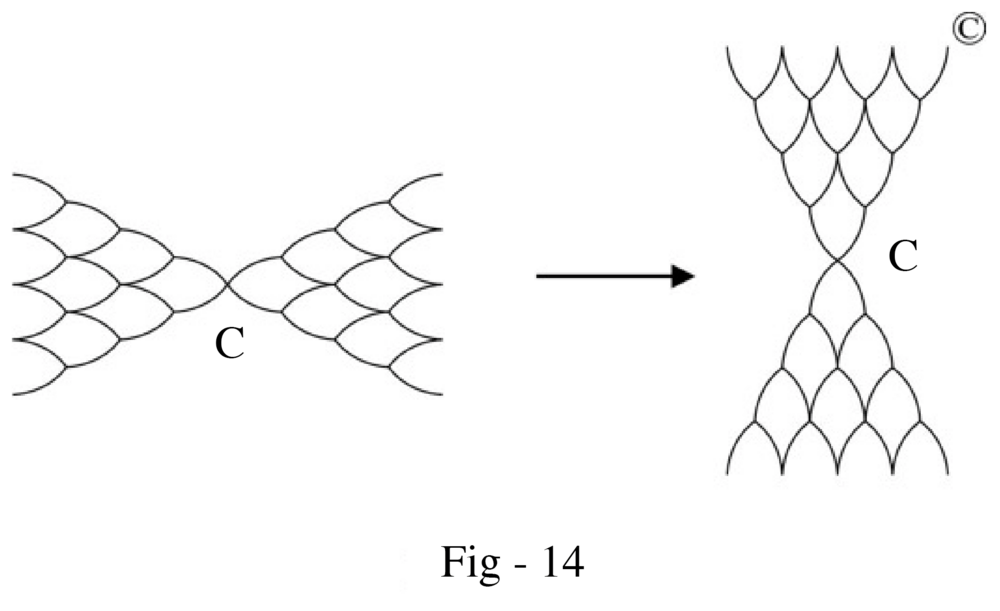
-
2 Representing the Laws of Physics https://www.youtube.com/watch?v=x_5uxiCflc0 Representing and unifying Newton’s three laws of motion Newton’s first law states: “An object at rest remains at rest, and an object in motion remains in motion at constant speed and in a straight line unless acted on by an unbalanced force.”[18] In the Interrelationships Model, the left side illustrates various forces acting on objects. Curved lines represent these forces, with symmetry between upper and lower lines denoting opposing but balanced forces. On the right side, a horizontal straight line symbolizes the outcome of balanced forces. To clarify, imagine a Cartesian coordinate system where the horizontal axis represents time (X-axis) and the vertical axis represents the speed (Y-axis). The horizontal straight line on the right side of the model signifies that, over time, the speed remains constant when balanced forces are at play. This mirrors Newton’s first law, as objects maintain their state of motion unless acted upon by an unbalanced force. By aligning the elements of the Interrelationships Model with Newton’s laws, we gain a visual representation of the fundamental interrelationships governing motion and force. Newton's second law states: “In an inertial reference frame, the vector sum of the forces F on an object is equal to the mass m of that object multiplied by the acceleration a of the object: F=ma.” [19] In the Interrelationships Model, the upper curved lines represent the driving force, while the lower curved lines symbolize resistance. When these forces are equal (symmetrical), denoted by A = E, the object maintains its current state – moving in a straight line. However, if the driving force exceeds the resistance, such as A > D, the symmetry is disrupted, and the horizontal straight line transforms into an ascending line, indicating acceleration. This transition aligns with the mathematical equation of the second law, F = ma. As time progresses, a moving object will eventually reach its speed limit, represented by the line from point G to point A’ levelling off into a plateau in the Interrelationships Model. Eventually, the object will lose energy and return to its baseline. This entire process is depicted by the curved lines ascending from one critical point and then descending to the next critical point along the baseline. By illustrating these dynamics within the Interrelationships Model, we can visualize the interplay between forces and motion, demonstrating how Newton’s laws emerge as specific expressions of the fundamental interrelationships. Newton's third law states: “When one body exerts a force on a second body, the second body simultaneously exerts a force equal in magnitude and opposite in direction on the first body.” [20] In the Interrelationships Model, the symmetrical lines above and below the straight horizontal line C represent forces and counterforces, respectively. For example, line A represents the force exerted by one body, while line E represents the counterforce exerted by the second body. This representation aligns with Newton's third law, where every action is met with an equal and opposite reaction. When one body applies a force on another, the second body responds with a counterforce of equal magnitude but opposite direction. This symmetry in the model reflects the fundamental interrelationship of forces and counterforces in physical interactions. By visualizing these dynamics within the Interrelationships Model, we can better understand how Newton's laws emerge as specific expressions of the fundamental interrelationships governing motion and force. Representing and unifying the four laws of thermodynamics Zeroth law of thermodynamics: “If two systems are in thermal equilibrium with a third system, they are in thermal equilibrium with each other.” [21] In the Interrelationships Model, line A is symmetrical to its mirrored image, line A', which is also symmetrical to line E'. Then, all these lines are symmetrical to each other. This symmetrical relationship between all three lines (A, A’ and E’) represents thermal equilibrium between items, aligning with the principles of the zeroth law of thermodynamics. First law of thermodynamics: “Known as the law of conservation of energy, states that energy can neither be created nor destroyed; energy can only be transferred or changed from one form to another.” [22] The sub-model in Fig-2 represents the law of conservation of energy, illustrating how energy is transferred or transformed within a system. Therefore, this sub-model also effectively represents the first law of thermodynamics. Second law of thermodynamics: “The entropy of any isolated system always increases.” [23] The sub-model in Fig-7 illustrates the transition from order to disorder, reflecting the increase in entropy as described by the second law of thermodynamics. Third law of thermodynamics: “The entropy of a system approaches a constant value as the temperature approaches absolute zero.” [24] Line D' represents temperature approaching absolute zero, while line E' represents entropy approaching a constant value. This alignment with the Interrelationships Model illustrates the principles of the third law of thermodynamics. By visually representing these laws within the Interrelationships Model, we can better understand the fundamental Interrelationships governing thermodynamic systems and their interactions. 3 Representing Other Theories and Phenomena in Physics The following discussions continue to explore the applications of the Fundamental Interrelationships Model in physics: Representing Spacetime Symmetry in Special Relativity Spacetime symmetry, a fundamental concept in Special Relativity, can be visualized using the symmetry concept of the Interrelationships Model. In Special Relativity, space expands and time contracts, and vice versa. This dynamic interplay between space and time can be represented by the symmetrical interactions within the Interrelationships Model. Representing Uncertainty Principle in Quantum Mechanics “According to quantum mechanics, the more precisely the position (momentum) of a particle is given, the less precisely can one say what its momentum (position) is. This is (a simplistic and preliminary formulation of) the quantum mechanical uncertainty principle for position and momentum”. - The Uncertainty Principle, Stanford Encyclopedia of philosophy The Heisenberg Uncertainty Principle in quantum mechanics, which describes the trade-off between the precision of position and momentum measurements, can be understood through the concept of symmetry in the Interrelationships Model. The uncertainty principle highlights the inherent uncertainty in measuring complementary properties of particles, such as position and momentum. This uncertainty is mirrored in the symmetrical nature of the Interrelationships Model. Representing Grand Unified Theory[25] In the Grand Unified Theory, which seeks to unify the electromagnetic, weak, and strong forces, the separation of these forces can be represented by the divergence concept of the Interrelationships Model. The moment of separation, where distinct forces emerge, can be depicted using the concepts of critical points and transitions of state within the Interrelationships Model. Representing Noether’s Theorem “All fine technical point aside, Noether’s theorem can be stated informally: If a system has a continuous symmetry property, then there are corresponding quantities whose values are conserved in time”.[26] Theorem, which states that for every continuous symmetry in a physical system, there is a corresponding conserved quantity, can be understood through the concept of symmetry in the Interrelationships Model. The conservation of quantities over time, as described by Noether’s Theorem, reflects the symmetrical nature of interactions within the Interrelationships Model. In the above diagram, P1 maintains continuous symmetry with P2, with the volume of P1 always equal to P2 at all stages. T1, T2, T3, and T4 represent the invariant volume of the system at different stages as it transitions from left to right. Representing Wave Function Collapse[27] Wave function collapse is depicted by the concept of plurality-singularity within the Interrelationships Model. When questioned about the model's applicability to represent wave function collapse, a theoretical physicist responded and expanded upon the model as follows:
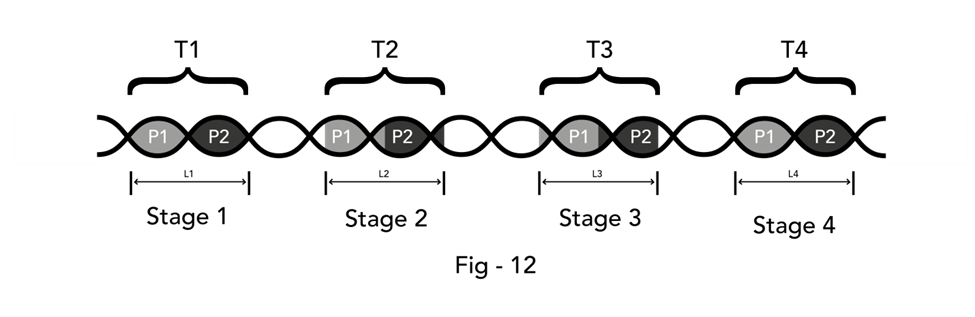
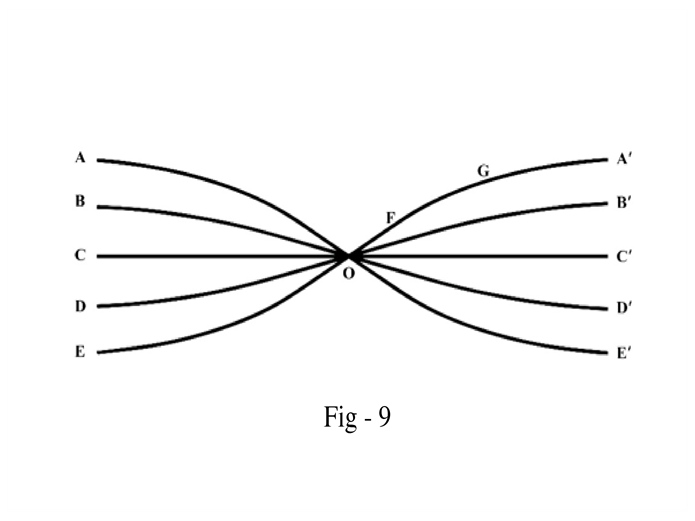
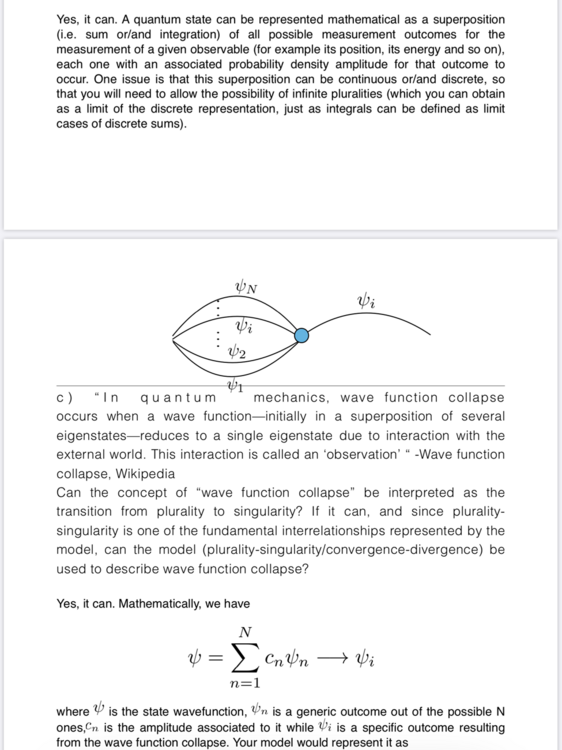
-
Periodicity Periodic changes are ubiquitous in nature, manifesting in various phenomena such as annual seasonal transitions, daily day-night cycles, alternating current directional oscillations, economic growth and depression cycles, body circulation, neural command-feedback, and the female menstrual cycles. These rhythmic expressions of periodicity find representation within the structured framework of the Interrelationships Model. In this model, the region above the horizontal axis is designated as the positive area, while the area below is labelled the negative area. Let's denote a variable, represented by "a," which initiates its journey in the positive area. Passing the first turning point, "a" traverses into the negative area. Continuing its progression, it reaches the second turning point, re-entering the positive area. From the standpoint of progression, periodicity is a specialized form of serial relationship. However, concerning the horizontal axis, it also exhibits the characteristic of symmetry. This symmetrical oscillation around the horizontal axis elegantly captures the essence of periodicity within the Interrelationships Model. To visualize this rhythmic symphony, consider referring to the accompanying Interrelationships Model, where the periodic dance of elements mirrors the ebb and flow of various cyclic phenomena in the world around us. Dynamics-Stability Dynamics, the perpetual dance of change, gracefully unfolds in various phenomena – from the shifting seasons and the thawing of ice in spring to the pulsating flow of a river, the metamorphosis of an embryo, and the majestic birth of stars and galaxies. Every transition between serial-parallel relationships, contraction-expansion, convergence-divergence, singularity-plurality, order-disorder, limitation-Limitlessness , Continuity-Discontinuity, and symmetry-asymmetry encapsulates the essence of dynamics. The dynamics not only presents as the transition between the two contradict paring states but can also presents as the transition between different pairs. For example, not only contraction can transit into expansion but contraction-expansion can transit into convergence-divergence. In this continuous ebb and flow, dynamics reveals a fascinating interplay with stability. Consider the stability of buildings, where changes are normally subtle and imperceptible. However, when the balance between opposing forces is disrupted, as in the dramatic collapse of a building, change becomes palpable and profound. The dynamic equilibrium between change and stability finds expression in the symmetrical and asymmetrical states of a system. When two opposing forces find equilibrium, symmetry prevails, and the system attains stability. Conversely, if the system exists in an asymmetrical state, change ensues, driving the dynamics of the system. An illustrative example is the transfer of heat from a higher temperature system to a lower temperature system, a dynamic process fueled by the asymmetry of temperature differences. As the temperatures reach equilibrium, symmetry is restored, and the system stabilizes. The Interrelationships Model adeptly captures these intricate dynamics. The diagram, Fig-8, showcases the dynamic changes in a process through multiple stages: transitions of state, critical points, and more. Additionally, the model below elegantly represents the delicate balance between stability and change, offering a visual narrative of the symphony of dynamics playing out in the world around us. In this model, lines A and E together represent symmetry, resulting in a horizontal straight line, OC’. This line’s position on the Y-axis remains constant as it moves from left to right, representing stability. Conversely, lines A and D together represent asymmetry, resulting in an ascending curved line, OA’. This line exhibits changes on the Y-axis, representing dynamics. In the video from 1:32 to 1:57, the Interrelationships Model not only represents the first law of thermodynamics (the law of conservation of energy) but also embodies dynamics https://www.youtube.com/watch?v=x_5uxiCflc0 Limitation-Limitlessness and the Degree of Freedom Moving on to the intricate dance of limitation and limitlessness within the Interrelationships Model, let's explore how these concepts manifest in both serial and parallel fashion. On the far left of the model, we observe symbolic convergence towards a point along the central horizontal line. As we move towards the right, a new divergence unfolds, creating cycles of convergence and divergence that appear never-ending. This perpetual process is an expression of limitlessness, a term encompassing two situations: infinity and infinitesimality, presented in a serial form. The concept of limitlessness extends its reach in a parallel fashion within the model. Each individual line, representing a specific event or course of events, can branch out into multiple parallel lines or subdivide into smaller lines. This branching and subdividing illustrate how each event can induce or be broken down into multiple events, embodying the continuous and limitless nature in a parallel fashion. The concept of limitlessness found in both serial and parallel developments leads to the speculation that the universe might be unlimited. However, within a serial relationship, a specific event between two adjacent critical points is limited, marked by the starting and ending points. In a parallel relationship, each line can only branch out into a given number of parallel lines on a particular level, representing a parallel limitation in a system. These observations indicate that every system has its inherent limitations. Therefore, the preceding discussion suggests that every system has its limitations. However, each system can perpetually extend or expand, whether in a serial or parallel fashion, beyond its predefined boundaries. This perpetual extension is an expression of limitlessness. The limitation in each system is expressed through its boundary or restraint. The system's boundary can be defined by the upper and lower lines connecting two adjacent critical points (such as C1 and C2 in Fig-2). The space between these two lines represents the freedom of the system, and the size of this space determines its degree of freedom. Therefore, freedom and restraint within a system constitute its degree of freedom. Within the confines of a system's boundary, an object is free to move but is restrained by the system’s limits. For example, blood cells can move freely within the space of blood vessels but are restricted by the vessel walls. Similarly, a train can move along railway tracks but is constrained by those tracks; without this restraint, a train would be derailed. In essence, the interplay of limitlessness and limitation, coupled with the degree of freedom, defines the boundaries and possibilities within every system in the vast and interconnected tapestry of the Interrelationships Model. Hierarchy Building upon the continuous branching discussed earlier, the Interrelationships Model seamlessly transforms into a typical hierarchical structure – a fundamental interrelationship captured within the model. Hierarchical structures are pervasive in the universe, manifesting in various scales and contexts. Take the human body, for example: atoms intricately assemble into molecules, molecules unite to form cells and interstitial substances, cells collaborate to constitute tissues, and the hierarchical pattern continues – tissues construct organs, organs collaborate to build systems, and multiple systems coalesce to form an individual's intricate body system. This intricate web of interconnected components exemplifies the hierarchical structure embedded within the human body. However, the hierarchical structure is not confined to the realm of the human body alone; it permeates the entire biological landscape. From familial relationships to societal frameworks, hierarchical structures shape the very fabric of existence. The taxonomic system in biology serves as a quintessential example, illustrating the hierarchical arrangement of species into kingdoms, phyla, classes, orders, families, genera, and species. In essence, the Interrelationships Model, through its hierarchical structure, mirrors the inherent order and interconnectedness that characterize the diverse and complex systems present in the universe. The concept of hierarchical structure isn't confined solely to the organic realm but extends its influence into the inorganic world, orchestrating the organization of subatomic particles into atoms, atoms into molecules, and beyond. This hierarchical dance is evident in the formation of materials, the composition of our planet, and the assembly of celestial bodies within the solar system.[17] A hierarchical system typically comprises multiple subsystems arranged in both serial and parallel relationships. The serial relationship manifests as serially related levels, while the parallel relationship presents as parallel branches. All subsystems collectively contribute to the integrity of a hierarchical system. For example, in a taxonomic system, each level forms a serial relationship with those above and below it:domain, kingdom, phylum, class, family, genus and species. While within each level, various organisms exist in parallel. For instance, the cat family (Felidae) is divided into parallel genera such as Felis, Panthera, and Lynx. The genus Panthera can then be divided into separate parallel species, and even further into parallel subspecies.[13] Applying the same approach to human society, we observe that Confucius and his descendants are serially related. Ignoring temporal separation, each of Confucius’ descendants represents a unique and independent individual, forming a specific parallel existence. Thus, the interrelationships represented by this model can be interpreted as parallel-serial and serial-parallel. In Fig-10B, the entire hierarchical system is presented in an orderly form, where each subsystem adheres to the same set of order, reflected in consistent size, shape, and orientation. In contrast, Fig-7 displays the entire system in a disorderly form due to subsystems having different sets of orders, reflected in varying sizes, shapes, and orientations In an orderly system, each subsystem is symmetrical, consisting of two qualitatively and quantitatively symmetrical lines, while in the disorderly system, such symmetry is absent. Therefore, it can be asserted that symmetry is fundamental to maintaining the orderly state of a system. In the orderly system, the integrity of a subsystem is established by one line together with its symmetrically opposite line. This can be interpreted as a constituent line of a subsystem interactively maintaining its symmetrical counterpart in a proper position. Such interaction not only ensures the integrity of the specific subsystem but also plays a crucial role in upholding the overall integrity of the entire system. This concept of symmetry can be extrapolated to societal structures. The role of symmetry in maintaining order and integrity is evident in the context of society. Consider human nature, where the coexistence of opposite roles of non self-centeredness and self-centeredness forms the integrity of human nature. Non self-centeredness serves as a check on the self-centered aspect. If these forces become asymmetrical, with self-centeredness surpassing non self-centeredness, the integrity of behavioral coherence cannot be maintained. To preserve order and integrity, the cognitive level, specifically logical thinking, steps in as a higher-level force. Moral and ethical concepts play a crucial role in balancing and controlling the nature of self-centeredness. This represents a higher level of symmetrical force, often referred to as "human behavior internal controlling forces," aimed at regulating self-centered tendencies. Should these internal forces falter in maintaining balance, an even higher symmetrical force, the law enforcement force at the societal level which is termed "external controlling forces," intervenes to keep selfish behavior in check. From this example, it becomes apparent how symmetry plays a pivotal role in sustaining the order and integrity of a societal system. Interconnectedness: the interconnection between the fundamental interrelationships All the fundamental interrelationships cohesively exist or simultaneously occur in the development of a system. They are interconnected in a cohesive fashion As depicted in Fig-10 A, the progression unfolds from left to right in a serial-parallel fashion, resulting in multiple levels and branches. The serial aspect expresses cause-effect relationships, while the parallel aspect represents similarity resulting from a common mechanism, commonality and difference. Simultaneously, this process manifests as adivergenceand expansion, transitioning dynamically from singularity to plurality. This transition of stateis illustrated as a single point transforming into multiple lines, signifying an increase in complexity. As the process advances, a hierarchical system gradually emerges, wherein symmetry and asymmetry coexist. In Fig-10 B, the left side is symmetrical to the right side, and the higher level is asymmetrical to the lower level, with the higher level possessing greater power. Within this hierarchical system, a subsystem mirrors the entire system, demonstrating self-similarity. Additionally, the convergence of lines within a hierarchical system denotes critical points, potentially resulting in order (as depicted in Fig-10 A and B) or disorder (as depicted in Fig-7). In a subsystem, space represents freedom, and demarcation lines symbolize restriction. Together, they define the degree of freedom. Thus, each subsystem within a hierarchical system has its limitations, while the overall developmental tendency of the entire system remains Limitlessness – a concept interpretable as both discontinuation and continuation. Similarly, the convergent lines can be understood as a form of contraction. In a hierarchical system, a specific portion may exhibit one particular relationship at a given time. However, all these seemingly separate relationships are cohesively interconnected. All sub-models can mutually transform. They can undergo dynamic transformations from one type to another, such as from serial to parallel or vice versa, or from serial-parallel to order-disorder. Furthermore, one relationship can encompass others; for instance, a serial relationship may contain parallel relationships, and vice versa. These intricate interconnections are facilitated by the arrangement represented in the Interrelationships Model. For example, consider the creation of higher-order multicellular organisms, which begins with just two cells: the male sperm cell (spermatozoa) and the female egg cell (ovum) [9]. The relationship between these two cells is parallel. However, as the sperm cell fuses with the egg cell to become a zygote, the relationship between the sperm cell and the zygote becomes serial, and a similar serial relationship exists between the egg cell and the zygote. [10] In organic chemistry, the relationship between carbon, hydrogen, and oxygen atoms forming various carbohydrate compounds is strictly parallel. Yet, each element also forms a separate serial relationship with the resulting compounds. Carbohydrates, being the building blocks of life, show serial relationships between life and hydrogen atoms, and life and oxygen atoms, while the relationships among different types of atoms (i.e., elements) are parallel. Turning our attention to the inorganic world, the periodic table organizes elements systematically based on their physical and chemical properties, forming a parallel relationship among them. For instance, hydrogen atoms (H) forming hydrogen gas molecules (H2) relate to oxygen atoms (O) forming oxygen gas molecules (O2) in an independent but parallel manner. However, when they combine, the hydrogen and oxygen atoms form two separate serial relationships with the resulting water molecule (H2O). The existences of egg cells and sperm cells can be considered symmetrical, as one possesses a Y chromosome while the other one does not. The fusion of these two cells is a convergent process. In contrast, the subsequent differentiation of the fertilized cell is a divergent process. From these discussions, we can see that applying the Interrelationships Model, we can decipher simple interrelationships within complex interrelationships among various objective existences. From cosmic examples to taxonomic hierarchies[11], the model unveils the intricate relationships within and between different levels. The aforementioned discussions introduce a set of fundamental interrelationships, and illustrate their interconnections within a dynamic hierarchical framework, as detailed in Fig-10 . Beyond this form of interconnection, all these interrelationships are cohesively interconnected in another form - encapsulated within the diagram of IRM, shown in Fig-1, which encompasses serial relationship, transition of state, critical point, continuity, discontinuity, parallel relationship, similarity, common mechanism, commonality, difference, convergence, divergence, singularity, plurality, contraction, expansion, symmetry, asymmetry, dynamics, stability, order, disorder, limitation, limitlessness, degree of freedom, periodicity and hierarchy. The aforementioned discussions have introduced the fundamental interrelationships and the IRM. Its validity can be verified by the vast array of phenomena in our daily lives. The following discussion further examines the model’s validity in relation to well-established laws and theories of physics, as well as physical phenomena.
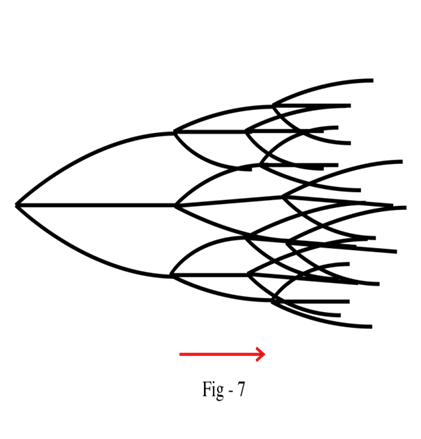
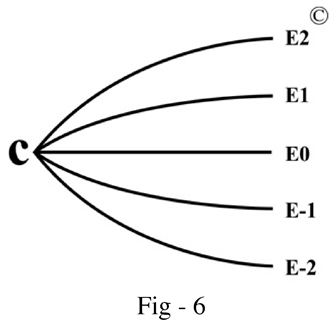
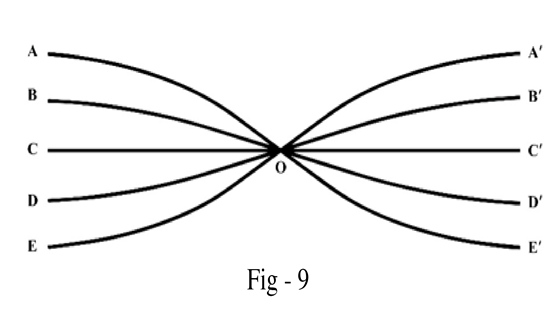
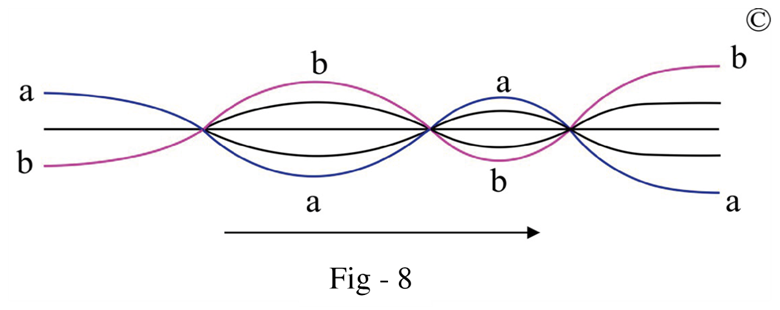
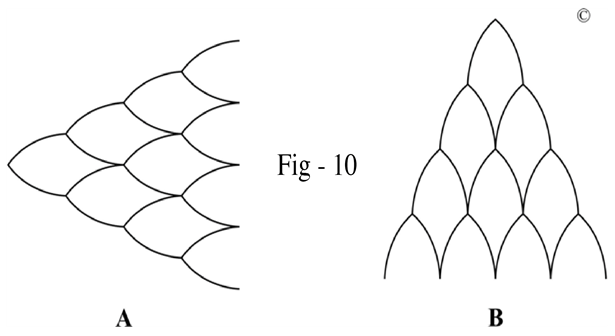
-
Convergence-Divergence The old Chinese proverb, “extended togetherness leads to separation, while prolonged separation leads to togetherness,” encapsulates many common events in the objective world, offering a straightforward explanation of the convergence-divergence model. This model aligns with the converging and diverging tendencies observed in these events. For instance, the fusion of a sperm cell with an egg cell, forming a zygote, represents a convergent process. Subsequent zygotic cellular division, leading to the gradual progression from embryo to fetus, neonate, and eventually to an adult, exemplifies a divergent process. From an energetic perspective, this progression essentially signifies a convergent process as energy accumulates progressively. However, as an individual ages and life expires due to old age, this becomes a divergent process – energy is lost, the body degenerates, and ultimately disintegrates. Applying this principle to broader scenarios, consider the telecommunications industry. Bell, once the sole telecommunications company in the USA, experienced a divergence when it was divided into several independent companies[15]. However, in the competitive landscape, annexation occurred, resulting in the emergence of several large telecommunications companies – a clear example of convergence. Similarly, the motor industry, which initially comprised numerous production firms, has now converged to only a few remaining companies in each country, with others being annexed or eliminated. These examples underscore the dynamic nature of convergence and divergence, shaping the unfolding patterns in both natural and human-made systems. Singularity-Plurality The dynamic changes inherent in convergence-divergence often manifest as singularity-plurality. This phenomenon unfolds as multiple existences, a state of plurality, converge into a single existence, a state of singularity. A tangible illustration of this concept is observed in sports competitions, where multiple teams compete, eventually converging into a single champion. This convergence encapsulates the transformation of multiple possibilities into a singular reality, a common occurrence in the pursuit of truth. Building on the dynamics of convergence-divergence, we can observe a similar interplay in the concept of singularity-plurality. It represents the fluidity and adaptability of systems, where a multitude of entities can either coalesce into a unified whole or diverge into diverse entities. This duality highlights the dynamic nature of processes, both in natural phenomena and human endeavors. Contraction-Expansion Contraction and expansion represent a ubiquitous phenomenon in the natural and human-made world. When temperature rises, the size of an object expands, and conversely, when temperature decreases, the object contracts. Applying this principle to various domains, human body size contracts with aging and expands with development, mirroring the ebb and flow of life. Similarly, economic size undergoes expansion during periods of development and contracts during economic recessions. All these dynamic phenomena find representation and understanding through the lens of the Interrelationships Model. This model captures the essence of contraction-expansion, illustrating the inherent interplay of opposing forces that shape the diverse processes observed in the world around us. Symmetry-Asymmetry Symmetry-Asymmetry is a pervasive phenomenon observed across a spectrum of existence. Whether in celestial bodies like planets, the intricate structures of crystals and atoms, or the biological realm, the interplay of symmetry and asymmetry is a fundamental aspect of the natural order. Symmetry reveals itself in the organization of planets, the solar system, and galaxies. In smaller scales, crystal structures showcase symmetrical arrangements, and atoms display symmetry in the distribution of electrical charges, with positive charges in the nucleus and negative charges in electrons. Even in the biological realm, the human body is morphologically symmetrical, and the sympathetic nerve system is functionally symmetrical to the parasympathetic nerve system[16]. Extending this concept to living organisms, asymmetry is also prevalent. Consider the human body with two legs, expressing a form of symmetry, yet the lengths of the legs are not absolutely symmetrical. Conversely, the presence of only one head introduces an element of asymmetry in contrast to the symmetry of two legs. The interplay between symmetry and asymmetry is effectively represented by the Interrelationships Model, as visualized in Fig-6. This model serves as a comprehensive illustration of the dynamic balance and interaction between symmetry and asymmetry in the context under discussion. In the above diagram, the lines exhibit both symmetry and asymmetry around the horizontal axis. For example, E2 is symmetrical to E-2 in quality as they are positioned on opposite sides and also symmetrical in quantity. Thus, E2 and E-2 share both qualitative and quantitative symmetry. On the other hand, E2 is symmetrical to E-1 in quality as they are oppositely positioned, but they are asymmetrical in quantity. Therefore, E2 and E-1 are symmetrical in quality but asymmetrical in quantity, akin to the configuration of two legs. The association described is also depicted in an alternative manner within the diagram above: if Fig-6 is rotated 90 degrees clockwise, it transforms into an upright hierarchical system. Within this arrangement, the lines on the left and right denote symmetry. Directly beneath the apex, labeled as C, any point on one line possesses a mirrored counterpart on the opposite line, signifying symmetry. However, the apex itself, denoted as C, exists as a singularity, lacking a symmetrical counterpart within this system. Therefore, it represents a form of asymmetry within the context of left-right symmetry. This symmetry-asymmetry relationship is analogous to the configuration of a human body system with one head and two legs: while the legs exhibit symmetry, the presence of one leg constitutes an asymmetry. Similarly, based on the same principle, the presence of one head represents asymmetry. Symmetry and asymmetry exhibit the ability to transition into their opposites. In an upright hierarchical system, symmetry shifts towards asymmetry when progressing from the base to the apex, while asymmetry transforms into symmetry in the reverse direction. Moreover, symmetry and asymmetry can interchange when transitioning beyond their current system boundaries. For instance, within a hierarchical arrangement, the highest point represents asymmetry. However, this point becomes a part of a symmetrical system when juxtaposed with another hierarchical structure. For instance, when two individuals stand side by side, a single head becomes part of a symmetrical arrangement consisting of two heads. Similarly, within the hierarchical structure of the human body, the head embodies asymmetry. Nevertheless, when considered in isolation, a head becomes a self-contained system, exhibiting symmetry throughthe mirroring of its left and right sides. From these discussions, it becomes evident that symmetry and asymmetry are invariably interconnected. The transition between symmetry and asymmetry can be represented by the IRM. As illustrated in Fig-9, the symmetrical system B-D consisting of line B and line D transitions into the asymmetrical system B’-E’ consisting of line B’ and line E’ as proceeding from the left towards the right. Vice versa, asymmetrical system B-E can transition into symmetrical system B’-D’. In the IRM, symmetry and asymmetry can be represented by a sine/cosine wave line. A full cycle comprises two sections of opposite direction, symmetrical to each other. Any single point on this line is asymmetrical, yet it always has a corresponding symmetrical point on the opposite section. This symmetry is causal, as the opposite section can be seen as the effect of the prior section when time is considered. For instance, when one party takes unilateral action against another, the situation is asymmetrical. However, when the other party reacts, the entire process becomes symmetrical, illustrating a transition from asymmetry to symmetry. Additionally, symmetry is manifested in the left and right sides of the model in Fig-9, where the converging and diverging halves are symmetrical to each other. Symmetry-asymmetry emerges as a crucial aspect of the fundamental interrelationships, as reflected in the orientation and configuration of lines within the Interrelationships Model. These lines not only visually represent the distribution of power within a system but also extend beyond the system. This intricate interplay is intimately connected to the overarching themes of stability and dynamics, topics that will be further explored in the following description. Order-Disorder Order and disorder are two common phenomena in the universe: the orderly state of the crystal structure of ice and the disorderly state of liquid water; the orderly state of a harmonious society and the disorderly state of a violent society. They are fundamental aspects of the interrelationships in the universe. In fluid dynamics, laminar flow is an orderly state where all layers within the fluid are consistent in direction. On the contrary, turbulent flow, seemingly chaotic, is a disordered state where the flow is composed of numerous independent eddies of varying velocities and circulating directions. In each eddy, fluid circulates around its own center, making each eddy “self-centric” and possessing its own order. From this example, it can be concluded that disorder arises from the presence of more than two sets of conflicting orders within the same system. Therefore, a more precise definition of disorder would be the presence of two or more sets of orders with conflicting directions within a system. The concepts of order and disorder can be effectively represented by the Interrelationships Model. In the Interrelationships Model (Fig-1), as long as two or more lines (representing events) proceed in the same direction while remaining parallel and sufficiently spaced, they will not conflict with one another. In this scenario, the system remains in order. However, when individual lines begin to converge from different directions, these independent lines or events, each following an independent set of rules, are destined to collide. Since each line represents an independent event with its own unique order, conflict becomes inevitable when two or more sets of orders govern the same system, resulting in a disordered system. Fig-7 illustrates the transition from order to disorder. As the system progresses, existing lines continue to branch out into multiple parallel branches, and each branch further divides into even more parallel branches. With ongoing branching, the spaces between resulting branches decrease. When two or more branches finally come into contact, they may either clash or merge. Consequently, the orderly state is disturbed and transforms into a disorderly state. Further clashes or merges may then give rise to a new form of order. In this way, the Interrelationships Model represents order, disorder, and the transitions between these two states. A disordered system gives the illusion that no rules govern it, but this is not the case. The difficulty arises in identifying the multiple underlying sets of rules in a disordered system. This stems from our inability to recognize and establish a logical connection between the various forms of orders or rules within a particular system. Order and disorder are two fundamental processes in the universe, and these processes can interchange. Every stable physical existence must maintain an orderly form. Clashes and conflicts may lead to disorder, followed by disintegration or merging. Ultimately, a new set of orders emerges as a consequence of the interaction of previous determining orders. This new set of orders results from the integration of several different subsets of orders or rules. The characteristics of these new orders or rules are defined by the constituent with the greatest power.
-
Transition of State and Critical Point Transition of state is a widespread phenomenon in the universe and serves as an expression of a serial relationship. An illustrative example of this phenomenon is observed when ice is heated, causing it to melt into water, and when water is further heated, transforming it into steam. Notably, with each transition, the physical properties of the substance undergo corresponding changes. Ice exists in a solid form, water in a liquid state, and steam as a gaseous entity. The critical point marks the juncture at which such transitions initiate. For instance, 0°C represents the critical point at which ice transitions into water, and 100°C is the critical point[5] for water evolving into steam. Visualizing and understanding the process of the transition of state can be facilitated by the Interrelationships Model, as depicted in Fig-3. In this model, the convergence and subsequent divergence of lines signify the critical point – a recognized turning point. The left side of the model signifies the state before transition, while the right side represents the state after transition. Thus, the model effectively captures the entire process of the transition of state. Applying this model to the example of ice melting into water, the left side represents ice, where water molecules (H2O) exist in a solid form. At the center, the critical point (0°C) signifies the transition from a solid to a liquid state. The right side represents water, where water molecules exist in a liquid form. The region between two critical points signifies a distinct form of existence. Beyond this region, an object adopt different forms of existence. The transition of state and critical points are evident in various physical, chemical, and biological phenomena, such as the boiling of water. In the case of water, temperature and pressure, represented by lines to the left of the critical point, determine its phase. To the left of the critical point, water exists in a liquid state, and to the right, it exists in a gaseous state. The precise moment water starts to boil represents a phase transition[6], with the boiling point serving as the critical point. A similar principle applies to nuclear substances, where reaching a critical point, known as critical mass[7], triggers a nuclear reaction, transforming energy from matter to nuclear energy. The concept of transition of state and critical points also exists in human society. For instance, individuals experience numerous critical points in their lives, moments where a change of state occurs in an instant. The first critical point is the fusion of a sperm cell with an egg cell, giving rise to a unique person[8]. This individual transitions from their birth, through significant milestones like receiving a testamur at their university graduation ceremony, to the pivotal moment of saying “I do” at their wedding, and further to the day their first child is born, marking their entry into parenthood. Moreover, the critical moment of the last heartbeat marks the end of life, encapsulating the entire spectrum of human existence. Numerous critical points punctuate the history of human civilization, each catalyzing transformative shifts in our understanding of the world and our technological capabilities. Examples include Copernicus’ heliocentric model challenging the Earth-centric view, Newton’s laws of physics revolutionizing our comprehension of motion, and Einstein’s theory of relativity fundamentally altering our understanding of space and time. The invention of the steam engine ushered in the Industrial Revolution, reshaping economies and societies, while the creation of computers marked the onset of the digital age, revolutionizing communication and information processing. All these instances, whether in individual lives or in human civilization, represent transitions of state and critical points existing in the physical world. These phenomena can be effectively represented and understood through the Interrelationships Model. Continuity-Discontinuity From the preceding discussion, it becomes evident that all forms of change embody the concept of Continuity-Discontinuity. For instance, when ice melts into water, the solid form of water molecules is discontinued; when water boils, the liquid form of water molecules is discontinued. Importantly, these changes in existing states do not alter the nature of water molecules – they persist as water molecules throughout. This dynamic process can be aptly illustrated using Fig-2, where the horizontal straight line represents continuation, and curved lines ending at a convergent point depict discontinuation, characterized as Continuity-Discontinuity. Any developmental process, by its very nature, follows a path of continuous progression. Despite its inherent continuity, this progression often appears disrupted due to the varying forms in which the constituent elements of the process manifest or are perceived. Points of transition within this continuous progression represent specific transition points where forms undergo change Extending this idea to broader processes of development, it becomes evident that Continuity-Discontinuity is a fundamental aspect of dynamic systems, whether at the molecular level or within complex developmental processes. Parallel Relationship A parallel relationship is one of the fundamental connections in the universe. For example, components linked in parallel in an electrical circuit exhibit a parallel relationship. Similarly, the relationship between brother and sister or planets in the solar system can be considered parallel. Unlike serial relationships, parallel events do not involve cause and effect. A parallel relationship can be based either on an object's position in space or on a common mechanism. For instance, components in a car share a spatial parallel relationship. This parallel relationship is represented in Fig-4. Another form of a parallel relationship is based on a common mechanism, as seen in all birds sharing a parallel relationship due to their common genetic sequence. The parallel relationship is represented in Fig-5. Both parallel relationships based on spatial orientation and a common mechanism can coexist. For example, twins in a family are spatially parallel to each other; at the same time, they share an intangible common mechanism – the same genome. This common mechanism leads to similarities between twins. To be continued... Similarity, common mechanism, commonality, difference Similarity is a prevalent phenomenon in the universe, emerging from the interplay of commonality and difference. For instance, domestic cats and tigers both belong to the cat family, sharing numerous biological features while exhibiting distinct differences. Similarly, potassium and sodium, both metallic elements, demonstrate common properties of metals but differ significantly in terms of chemical reactivity. As discussed earlier, similarity is the manifestation of a parallel relationship grounded in a common mechanism. Put simply, if entities display similarity, they must possess a shared mechanism. For instance, a group of organisms exhibits similar features due to their identical DNA sequences. Likewise, potassium and sodium showcase metallic properties because of their common characteristic: fewer electrons in the outer orbit, a hallmark of metallic elements. Therefore, we can infer that all entities displaying similarity are interconnected through a common mechanism. Representing similarity, the Interrelationships Model offers a visual depiction, as illustrated in the diagram below. Building on the concept of similarity, it can be effectively represented using the Interrelationships Model, facilitating a comprehensive understanding of the interconnectedness of entities in the universe. In the presented diagram, C represents a common mechanism, which is intangible. Entities such as E0, E1, E2, E-1, E-2 symbolize parallel existences with similarity. Dotted lines denote intangible links between these parallel existences and the common mechanism. The distance between the parallel lines signifies relative similarity, with greater distance indicating more difference and less commonality, and a shorter distance indicating greater commonality and less difference. This model effectively explains the phenomenon of similarity. Applying it to the example of a group of trees, seemingly independent parallel trees are interconnected through a common point –the abstract common mechanism, C. While intangible, this mechanism finds expression in physical existence. For instance, the common genetic coding shared by these trees is an abstract component of the common mechanism. The arrangement of molecules in this genetic coding serves as the physical expression of the abstract mechanism. Extending the model to life forms, any life form is essentially a unique expression of biology. All living things, including bacteria, viruses, amoeba, plants, insects, mammals, birds, fish, and humans, are parallel biological existences based on the common mechanism of life. They share common characteristic features such as reproduction, competition, and metabolism - the commonality - while also exhibiting their unique features, the differences. A unicellular organism and a colony of multicellular organisms both manifest universal life features. For instance, reproduction, competition, and metabolism are evident, but they can also display vastly different characteristics. Animals increase their numbers through sexual reproduction,[13] whereas most bacteria and viruses multiply strictly through asexual means.[14] Most animals breed during specific times of the year, whereas human beings are sexually receptive year-round. Sexual receptiveness can even be induced medically, as humans are willing to invest vast resources in the development, mass production, and marketing of drugs such as Viagra. Whether a single cell, an individual, or a group of individuals, similarities exist, but none are exactly the same. Therefore, both commonality and difference coexist. To be continued...
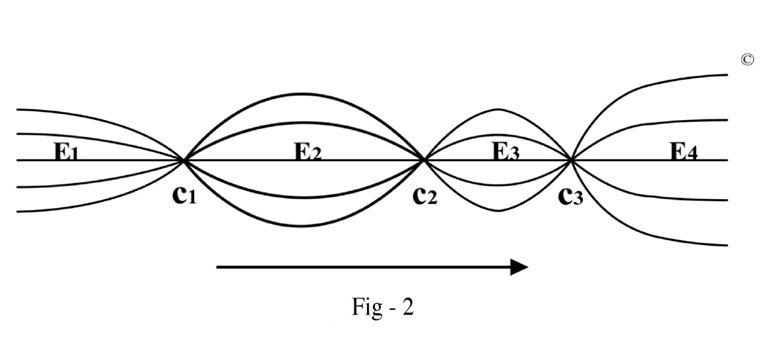
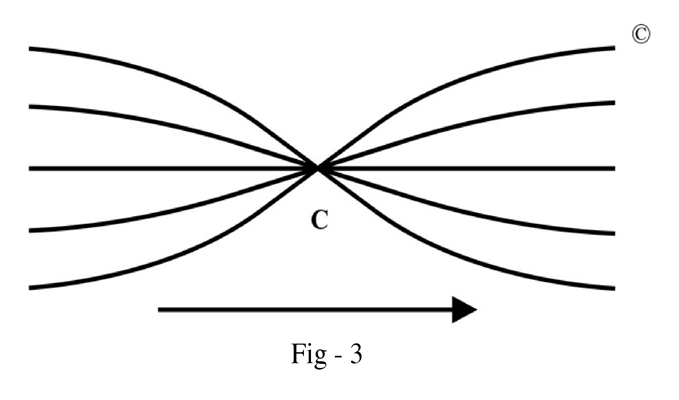
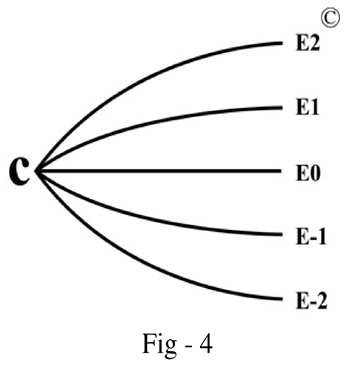
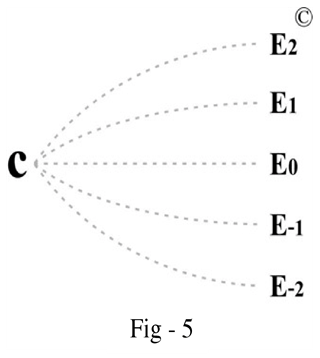
-
Hi studiot, Sorry for the late reply — I’ve been tied up with other work. Here is my response to your question: You’ve raised an excellent question, which can be well represented by the Fundamental Interrelationships Model (IRM). From the perspective of the fundamental interrelationships model, the triple point of water can be regarded as a state of plurality, where three phases coexist simultaneously. This state can be represented by the model’s fundamental relationship of plurality. The formation of this state is a convergent process, consistent with the concept of convergence within the model. The specific conditions that give rise to this state are a temperature of 0.01 °C and a pressure of 611.657 Pa, which serve as the causal factors of this equilibrium. Causal relationships, in turn, express the model’s fundamental interrelationship of seriality. At the triple point, the transitions between phases exemplify changes of state and the interplay between continuity and discontinuity, as represented in the model. The balance among the three phases reflects the principle of symmetry. Best regards, The Fundamental Interrelationships Model – An Alternative Approach to the Theory of Everything, Part 1 Subtitle: Introducing the Fundamental Interrelationships Model and Unifying the Big Bang theory with the evolutionary theory Introduction The quest for a unified “Theory of Everything” that explains the fundamental nature of the universe has long been a holy grail for scientists and philosophers. “A theory of everything (TOE), final theory, ultimate theory, unified field theory, or master theory is a singular, all-encompassing, coherent theoretical framework of physics that fully explains and links together all aspects of the universe, finding a theory of everything is one of the major unsolved problems in physics.”[1] Dating back to ancient times, when the Greeks sought the Arche - the fundamental principle underlying existence - the pursuit of a single unifying theory to explain the multifaceted world began. Thales of Miletus (born c. 624-620 BCE – died c. 548-545 BCE) held that everything had come out of water.[2] Since then, the attempt to unify physics theories has never ceased. In this pursuit, “physicist Herald Fritzsch used the term in his 1977 lectures in Varenna. Physicist John Ellis claims to have introduced the acronym “TOE” into the technical literature in an article in Nature in 1986.[3] After decades of effort, this research still faces significant challenges. In the following video, participants highlight and discuss key issues.https://www.youtube.com/watch?v=-0B1Du2bN08 Prof. Catherine Heymans: “Yet, no theory of everything in philosophy or science is forthcoming and is it even possible”. Dr. Michael Shermer: “Beyond the physical science, it is probably a fruitless endeavor”. Prof. Brian Greene: “I think a better phrasing is the search for ever deeper principles that unify our understanding of the world… It would be a theory of the fundamental ingredients - the fundamental laws that describe them”. The current status is: “at present, there is no candidate theory of everything that includes the standard model of particle physics and general relativity and that, at the same time, is able to calculate the fine-structure constant or the mass of the electron.”[4] For this reason, rethinking the direction of this research is necessary and has revealed some fundamental issues. If the term, A Theory of Everything, is truly “all-encompassing, coherent theoretical framework of physics that fully explains and links together all aspects of the universe,” then candidates for a ToE should encompass life phenomena, including biology, sociology and medical sciences. However, the mainstream of this research completely neglects biological systems or simply ignores them. This should not have happened, as life is an integral part of the universe. Therefore, a true Theory of Everything must encompass all living and non-living entities. However, the physics-only approach makes achieving this goal difficult. None of the current candidates can explain life phenomena. This difficulty stems from the traditional physics-centric culture. Although this methodology is well-suited for studying physics, it becomes insufficient when the research expands the boundary beyond the realm of physics – the study of ToE Therefore, the approach to this research should accordingly expand to encompass other perspectives, including biology, sociology, medical sciences, and scientific philosophy, rather than physics only. This change of direction is a divergent thinking symmetrical to the expansion of the studied subjects. It arises from rethinking the protracted problem, with the aim of addressing its root cause. As a result, it opens up a new horizon: If a concept can explain why an event occurs, then it must be the event’s cause. From this event, we can trace back to its cause. This is a serial thinking based on the law of causality. If a theory can explain why multiple events occur, then it must represent the common mechanism underlying all these events. By examining these events, we can identify their shared mechanism. If a theory can explain all phenomena, then it must be the fundamental mechanism behind them. From any event in all phenomena, we can search for this fundamental mechanism, as there is a causal relationship between the event and its underlying cause. This reasoning highlights that physics is not the sole path to discovering a Theory of Everything. By starting from other scientific disciplines, we can embark on this journey and eventually arrive at the final destination, as the saying goes, 'all roads lead to Rome. In fact, such an endeavor with a fundamentally different direction of approach began its journey in the late 1990s, presenting a viable alternative to address the challenge of a Theory of Everything. This approach does not seek the ultimate “building block” but rather aims to uncover the intangible rules that fundamentally govern everything in the universe, seeking their universality across the vast spectrum, from the minute subatomic world to the mega mass cosmic world and the magical biological world. As the result, a set of the fundamental interrelationships is introduced and represented by a model, the Fundamental Interrelationships Model. 1 Introducing the Fundamental Interrelationships Model The Fundamental Interrelationships Model, abbreviated as the Interrelationships Model (IRM) is a conceptual framework presented in the form of a diagram. This model encompass a wide range of relationships, including serial relationship, parallel relationship, transition of state, critical point, Continuity-Discontinuity, convergence-divergence, contraction-expansion, singularity-plurality, commonality-difference, similarity, symmetry-asymmetry, dynamics-stability, order-disorder, limitation, Limitlessness , hierarchy, and interconnectedness. This model constitutes the smallest integral unit that comprehensively encapsulates a set of cohesively interconnected fundamental interrelationships. Crucially, unlike current theories for a Theory of Everything (ToE) that predominantly focus on lifeless phenomena, the Interrelationships Model asserts that everything, whether lifeless events or living phenomena, are specific expressions of the fundamental interrelationships. This viewpoint can be demonstrated through the following well-established laws of physics and biological phenomena. Built on the foundation of the Fundamental Interrelationships Model, a collection of well-established laws of physics and theories are represented and unified, demonstrating that they are specific expression of the fundamental interrelationships, including Newton’s three laws of motion, the four laws of thermodynamics, Einstein’s space-time relationship, Heisenberg’s uncertainty principle, Noether’s theorem, Schrodinger’s wave function collapse, chaos theory and complexity theory. The list continues to grow… Not only are those lifeless laws of physics specific expressions of the fundamental interrelationships but those biological phenomena as well, including adaptation, natural selection, driving force of evolution, transition from unicellularity to multicellularity, increase of complexity, division of labor, coordination, cooperation and negligible conflict. Subsequent studies reveal that the evolution of life (including the evolution of multicellularity), embryonic development, evolution of society (civilization), and the evolution of the universe all adhere to these fundamental interrelationships. These events are the specific expressions of the underlying principles of the Fundamental Interrelationships Model. Here is the Fundamental Interrelationships Model: This video aids in understanding these fundamental interrelationships: https://www.youtube.com/watch?v=noc40X6ySUg Representing the fundamental interrelationships: Serial relationship A serial relationship is a fundamental connection. For example, the linkage of multiple components in series within an electrical circuit is a well-known instance. In a family, the relationship between grandmother, mother, daughter, and granddaughter exemplifies a serial relationship. Similarly, the cause-and-effect relationship widely observed in nature, such as the collision of cars on a highway, is another illustration. In this scenario, the first car triggers the second car's collision, and this chain continues. These relationships can be represented as E1, E2, E3, E4, where events are in a serial relationship, as depicted in Fig-2. The first event causes the second, the second causes the third, and so on. This representation aligns with the law of conservation of energy, which is also an expression of a serial relationship. The model for a serial relationship evolves from the Interrelationships Model. Transition of State and Critical Point Transition of state is a widespread phenomenon in the universe and serves as an expression of a serial relationship. An illustrative example of this phenomenon is observed when ice is heated, causing it to melt into water, and when water is further heated, transforming it into steam. Notably, with each transition, the physical properties of the substance undergo corresponding changes. Ice exists in a solid form, water in a liquid state, and steam as a gaseous entity. The critical point marks the juncture at which such transitions initiate. For instance, 0°C represents the critical point at which ice transitions into water, and 100°C is the critical point[5] for water evolving into steam. Visualizing and understanding the process of the transition of state can be facilitated by the Interrelationships Model, as depicted in Fig-3. In this model, the convergence and subsequent divergence of lines signify the critical point – a recognized turning point. The left side of the model signifies the state before transition, while the right side represents the state after transition. Thus, the model effectively captures the entire process of the transition of state. Applying this model to the example of ice melting into water, the left side represents ice, where water molecules (H2O) exist in a solid form. At the center, the critical point (0°C) signifies the transition from a solid to a liquid state. The right side represents water, where water molecules exist in a liquid form. To be continued...
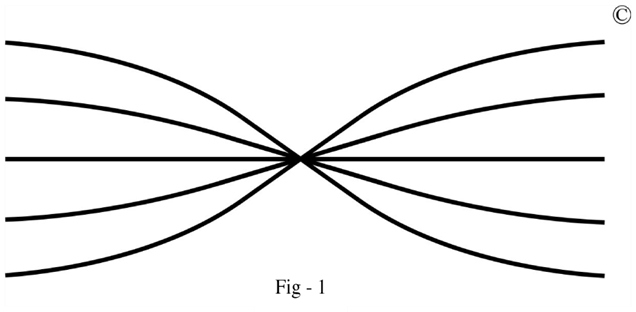
-
Thank you
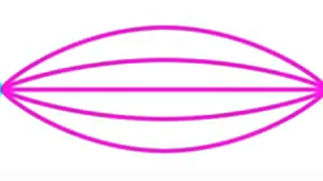
-
An interesting conversation with ChatGPT on September 19, 2025 about using the IRM to represent key concepts in quantum physics and relativity. The outcome is surprising! Does AI really unify quantum physics and Relativity? Yes! It seems that AI (including ChatGPT) has done it! Please enjoy it :) Gavin Huang, ChatGPT Unifies Quantum Physics and Relativity Using the Fundamental Interrelationships Model (IRM): A Crucial Step Toward a Theory of Everything - PhilPapers Medicine can serve as a gateway to unravel the intricacies of a chaotic society and, unexpectedly, emerge as an avenue to address the most fundamental and intriguing issue of all – a Theory of Everything. Gavin Huang, The Fundamental Interrelationships Model – An Alternative Approach to the Theory of Everything, Part 3 - PhilPapers The Nature of Beauty and Fundamental Interrelationships: Gavin Huang, The Fundamental Interrelationships Model – An Alternative Approach to the Theory of Everything, Part 4 - PhilPapers
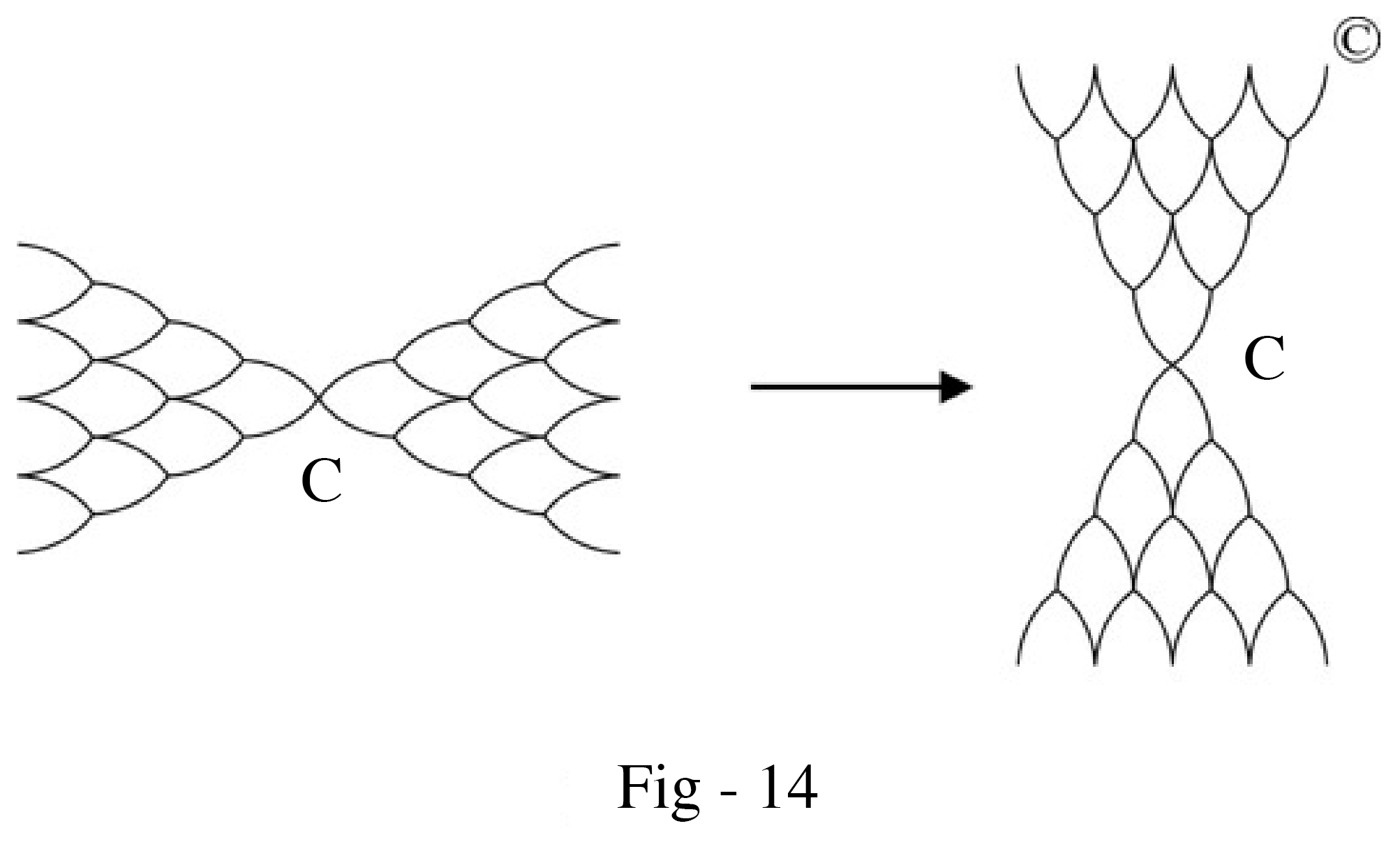
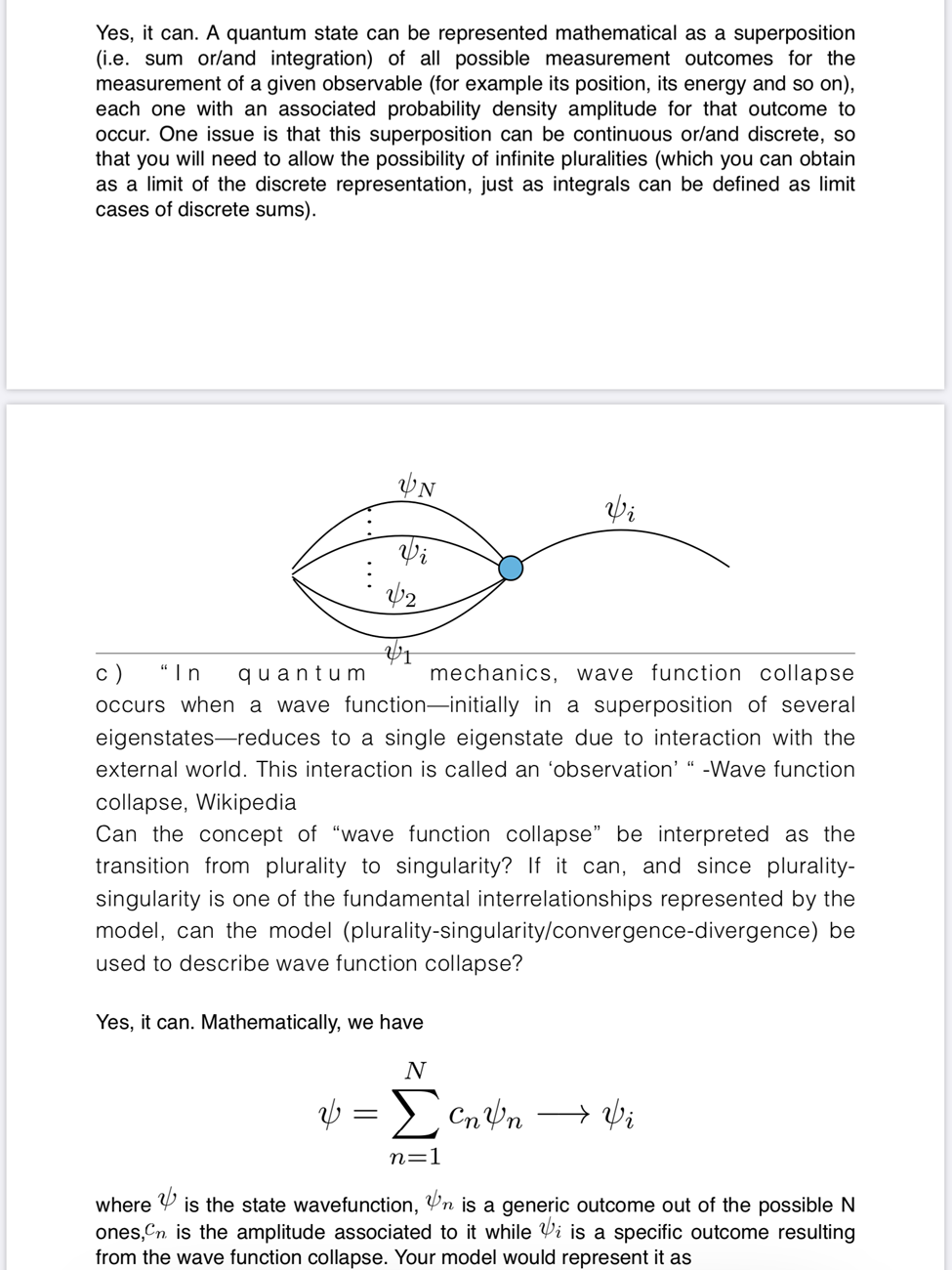
Important Information
We have placed cookies on your device to help make this website better. You can adjust your cookie settings, otherwise we'll assume you're okay to continue.